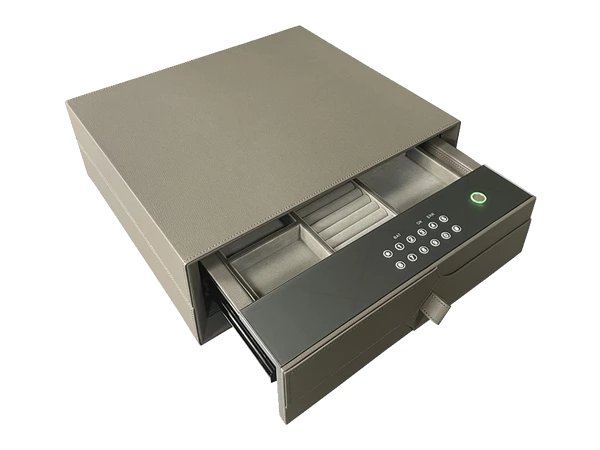
Smart Safe Drawer Structural Design Analysis
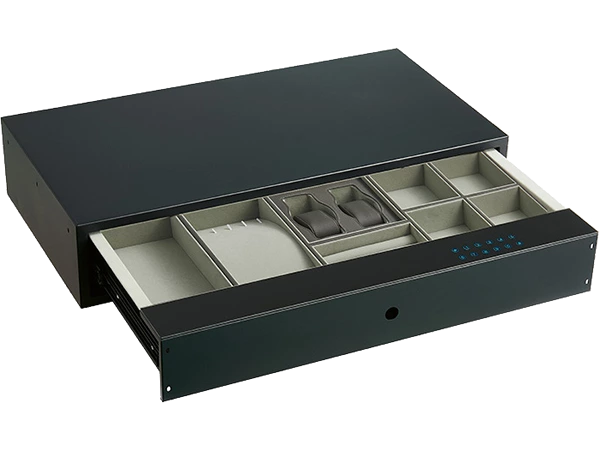
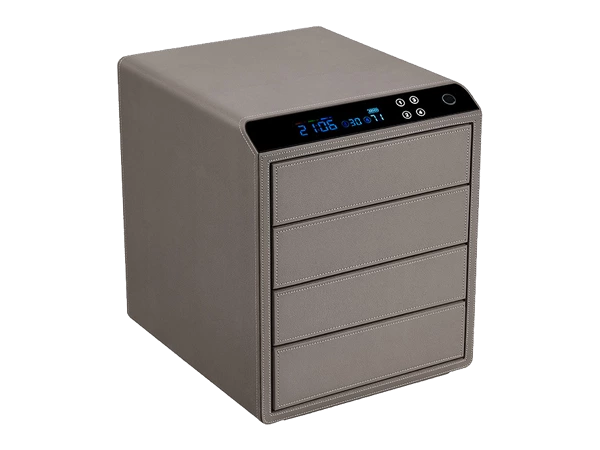
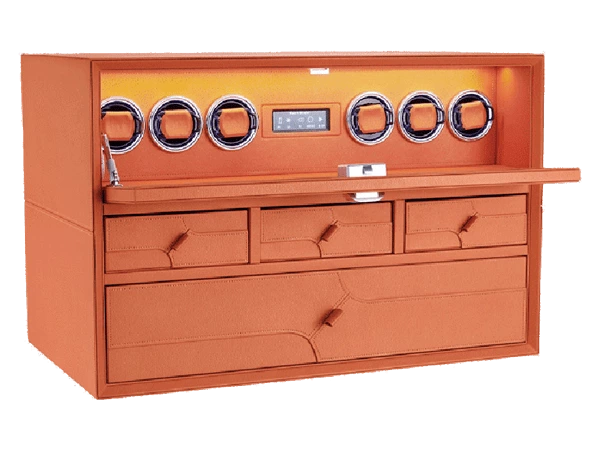
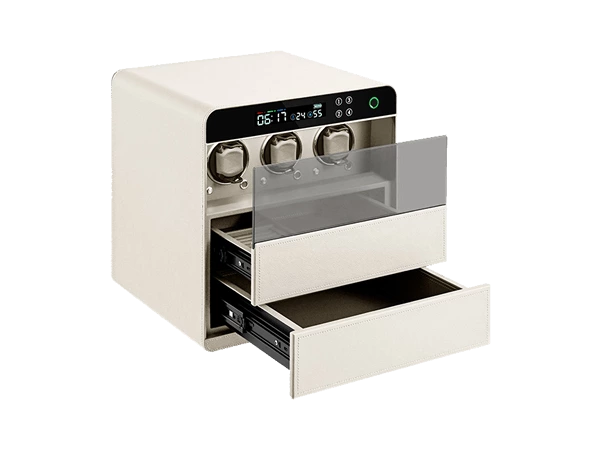
Smart safe drawer systems are typically developed as embedded electromechanical modules designed for integration into furniture structures. Unlike standalone security devices, their structural design is constrained not only by security requirements but also by spatial compatibility, mechanical movement behavior, and long-term cyclic stability within furniture environments. As a result, the overall system is best understood as a combination of mechanical structure, electronic control, and actuator-driven locking architecture.
From a structural engineering perspective, a smart safe drawer system is composed of several interdependent layers. The outer structural frame is responsible for load distribution and installation stability within the furniture cabinet. This frame is usually adapted to wood-based or metal-based furniture structures, requiring precise dimensional coordination to ensure alignment with drawer tracks and surrounding panels. Even minor deviations in installation tolerance can affect sliding smoothness and locking accuracy, particularly in high-frequency usage environments.
The drawer mechanism itself is generally based on linear sliding systems, which may use ball-bearing rails or damping slide structures depending on application requirements. The mechanical behavior of these rails directly influences the operational stability of the system. In most designs, the drawer must maintain consistent horizontal motion under repeated loading conditions while avoiding lateral deflection that could interfere with the locking engagement point. This makes rail stiffness, material fatigue resistance, and lubrication stability critical design variables.
At the core of the system is the locking assembly, which is typically an electromechanical actuator system. This component translates electronic signals into mechanical motion, usually through a solenoid or motor-driven locking bolt. The locking point must be precisely aligned with the drawer frame to ensure reliable engagement. In engineering terms, this requires careful calibration of stroke distance, response timing, and mechanical tolerance between moving parts. Any misalignment between the actuator and the locking interface can lead to partial locking or system failure under load.
The electronic control module is integrated into the internal housing of the drawer system. It generally includes a microcontroller unit, sensor interface, and power regulation circuit. This module is responsible for processing authentication input signals and executing locking commands. In fingerprint-based systems, the sensor module communicates with the control board through a secure data interface, and the system performs local verification before triggering mechanical actuation. The placement of this module is often constrained by both electromagnetic shielding requirements and space limitations within the furniture structure.
Another critical aspect of structural design is power management. Smart safe drawer systems may operate on battery power or external low-voltage supply depending on installation context. Battery-powered configurations require additional consideration for energy efficiency, standby current optimization, and mechanical fail-safe design. In contrast, externally powered systems must account for cable routing within furniture structures, ensuring that wiring does not interfere with drawer movement or mechanical wear over time.
Thermal and environmental stability also play an important role in structural design. Since these systems are often embedded in enclosed furniture spaces, heat dissipation from electronic components must be managed passively. Material selection for housing components therefore includes considerations such as thermal conductivity, dimensional stability under temperature variation, and long-term deformation resistance. Wood-based installations may introduce additional variables such as humidity-induced expansion, which must be compensated in mechanical tolerances.
From a system integration perspective, the most critical challenge in smart safe drawer design is achieving consistent coordination between mechanical motion and electronic control timing. The locking mechanism must engage only when the drawer reaches a fully closed position, which requires synchronization between mechanical end-stop detection and electronic signal processing. This is typically achieved through position sensors or timing-based control logic, depending on system complexity.
In manufacturing practice, structural design must also account for modular assembly. Smart safe drawer systems are often produced as semi-finished modules that are later integrated into furniture production lines. This requires standardized mounting interfaces, consistent dimensional specifications, and simplified wiring architecture to ensure compatibility with different furniture designs.
Overall, the structural design of smart safe drawer systems represents a convergence of mechanical engineering, embedded electronics, and furniture integration requirements. The performance of the system is not determined by a single component but by the coordination of structural stability, actuator precision, electronic reliability, and environmental adaptability within a confined furniture-based installation space.
FAQ
1.What is the main structural difference of a smart safe drawer compared to traditional safes?
A smart safe drawer is designed as an embedded module integrated into furniture, while traditional safes are standalone reinforced enclosures.
2.What is the most critical mechanical component in a smart safe drawer system?
The drawer sliding mechanism and locking actuator are the most critical components, as they directly affect motion stability and security engagement accuracy.
3.How does the locking mechanism operate in smart safe drawers?
It uses an electromechanical actuator that responds to electronic signals from a control module, engaging a locking bolt when authentication is verified.
4.What factors affect the structural reliability of smart safe drawers?
Key factors include rail precision, actuator alignment, electronic timing control, and material stability under environmental changes.
5.Are smart safe drawers sensitive to installation accuracy?
Yes, installation tolerance significantly affects both sliding performance and locking reliability, especially in furniture-integrated environments.