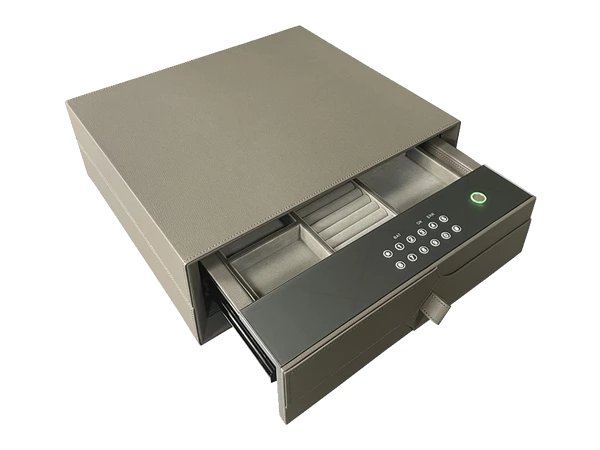
Hidden Safe Ideas: Jewelry Drawer Safe Designs for Wardrobes
Jewelry, watches, passports, cash and other personal valuables are often kept in a bedroom simply because that is where people use them most. The problem is that conventional freestanding safes can take up valuable floor space, look out of place in a carefully designed interior, or make their location too obvious. For modern homes and custom wardrobe projects, a hidden drawer safe provides a more discreet alternative.
Instead of placing a visible safe beside a wardrobe, a built-in drawer design can become part of the cabinetry itself. From the outside, the installation can remain visually consistent with the surrounding furniture. Inside, however, the drawer can provide controlled access, organized storage and a dedicated space for jewelry, watches and important documents.This combination of security and interior integration is why jewelry drawer safes are becoming increasingly relevant for walk-in closets, dressing rooms, luxury bedrooms, custom cabinetry and high-end furniture projects.
What Is a Hidden Jewelry Drawer Safe?
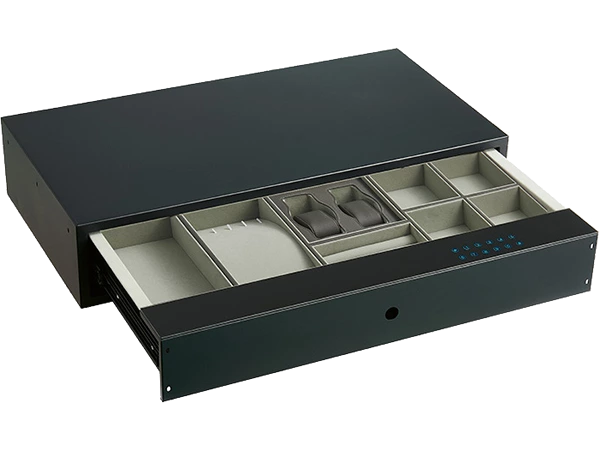
A hidden jewelry drawer safe is a secure storage unit designed to be installed inside a wardrobe, cabinet, closet or other piece of furniture. Unlike a traditional freestanding safe, it usually follows a low-profile horizontal structure so that it can fit naturally into a drawer position.The concept is relatively simple. The safe is installed as part of the furniture layout, while the locking mechanism remains accessible from the front. Depending on the model, access may be controlled by fingerprint recognition, a digital password, an emergency key or a combination of these methods.What makes this format particularly useful is that the storage space can be designed around the valuables being protected. Watches do not need to sit loose beside necklaces, and rings do not have to share the same compartment as passports or documents. A properly designed jewelry drawer safe can combine security with a more practical internal organization system.For homeowners, this means valuables remain close to the place where they are normally used. For wardrobe manufacturers and interior designers, it also provides an opportunity to include secure storage without introducing a visually bulky product into the room.
Why Hide a Safe Inside a Wardrobe?
There is a practical reason that wardrobe integration works so well. Bedrooms and dressing rooms are already natural storage areas for jewelry, watches, accessories and personal documents. Adding secure storage within the same area can make everyday use more convenient while keeping the room visually clean.A traditional safe may require a separate corner, cabinet or visible floor position. A hidden safe in a wardrobe, by contrast, can use space that is already part of the furniture plan. This is particularly useful in apartments, hotel suites and luxury dressing rooms where every section of cabinetry has a specific function.Discretion is another advantage. A wardrobe-integrated safe does not need to become a visual feature. When the overall cabinet design is planned correctly, the secure drawer can sit alongside clothing drawers, watch storage, jewelry organizers or accessory compartments without disrupting the interior style.The result is not simply a smaller safe. It is a different way of approaching secure storage: the product becomes part of the furniture rather than an object added after the room is completed.
Hidden Drawer Safe vs Traditional Freestanding Safe
The most suitable solution depends on how the room is used and what needs to be stored.
| Consideration | Hidden Drawer Safe | Freestanding Safe |
| Installation | Integrated into wardrobe or cabinetry | Placed independently |
| Space usage | Uses existing furniture space | Requires dedicated floor or cabinet space |
| Appearance | Discreet and furniture-friendly | Usually more visible |
| Daily access | Convenient for jewelry and watches | May require accessing another area |
| Interior layout | Can be designed for small valuables | Often larger general-purpose interior |
| Project suitability | Ideal for custom furniture and closet projects | Suitable for independent placement |
| Customization | Dimensions and interiors can be coordinated with cabinetry | Usually selected from fixed external sizes |
A freestanding safe can still be the right solution when larger storage capacity is the priority. However, for jewelry, watches, passports and other frequently accessed valuables, a built-in drawer safe often provides a better balance between convenience, organization and interior design.
Where Can a Hidden Drawer Safe Be Installed?
The most common location is inside a bedroom wardrobe, but the concept is much broader than a standard closet drawer.In a walk-in closet, a safe can be positioned below a jewelry display section or integrated into an island cabinet. In a dressing room, it can sit below accessory storage. Custom furniture manufacturers may also integrate the same type of unit into bedside cabinets, bedroom casework, dressing tables or private office cabinetry.For hotels and serviced residences, a built-in format can help create a more refined guest-room experience because the safe does not necessarily need to look like a separate appliance. Interior designers working on luxury villas may also specify the safe during the wardrobe planning stage so that dimensions, drawer height and surrounding panels are coordinated from the beginning.This early coordination matters. Trying to place a safe into an already completed wardrobe can create unnecessary limitations. When the safe dimensions are considered together with the furniture drawing, the finished installation is usually cleaner and more practical.
Choosing the Right Size for a Wardrobe Safe
External dimensions should be one of the first considerations when selecting a wardrobe safe. A unit that is too deep may interfere with the cabinet structure, while a safe that is too tall can reduce usable drawer space above or below it.For custom projects, the available cabinet width, internal depth, drawer opening and front-panel dimensions should be checked before the safe is specified. The surrounding furniture structure also needs enough room for installation and operation.Internal dimensions matter just as much. Someone storing two watches, several rings and a passport will require a very different interior from a collector storing multiple watches, necklaces and important documents.For B2B projects, it is therefore more useful to think in terms of the final application rather than selecting a safe only by its nominal external size. A wardrobe manufacturer may require a shallow horizontal model, while a jewelry retailer or private collection project may place greater emphasis on internal compartment capacity.
Fingerprint and Digital Password Access
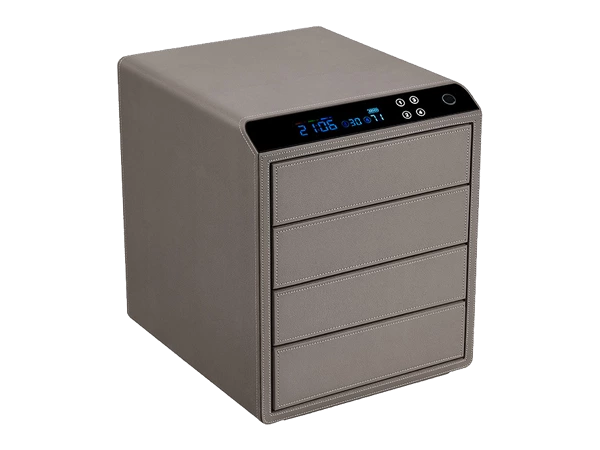
Convenient access is especially important for a safe that may be opened every day.A biometric drawer safe can use fingerprint recognition to provide quick access without requiring the user to enter a password each time. This makes fingerprint locking particularly suitable for jewelry and watches that are regularly worn and returned to storage.Digital password access remains useful as an alternative method and can be more suitable for situations where several authorized users need access. Some designs combine fingerprint and password functions, while an emergency key may be included as a backup access method depending on the lock configuration.The ideal system is not necessarily the one with the largest number of functions. It should match the intended user and installation environment. A private residential wardrobe, a luxury hotel suite and a customized furniture project may each have different expectations regarding access control and daily operation.
Interior Organization Matters as Much as Security
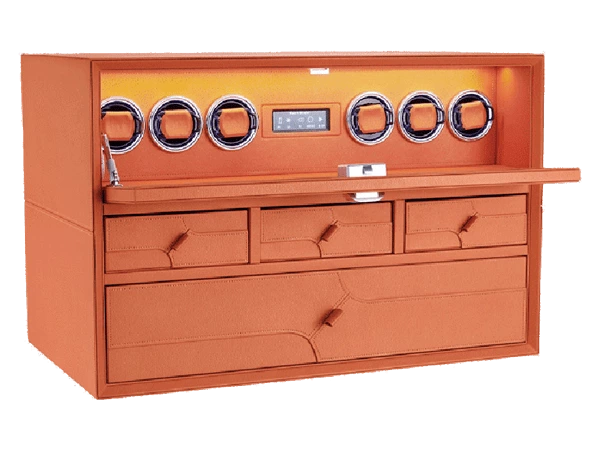
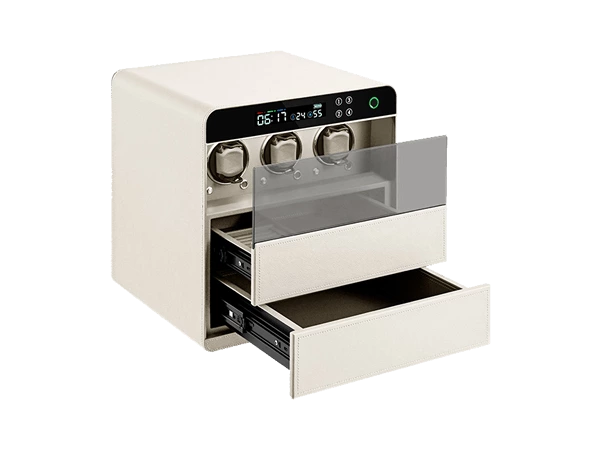
A secure metal drawer alone does not automatically create a good jewelry storage solution.Jewelry and watches benefit from an interior that separates different items and reduces unnecessary movement. Rings, bracelets, earrings, necklaces and watches have different shapes, and storing everything in one open compartment can make the safe less convenient to use.A premium hidden jewelry drawer safe may therefore include soft-lined trays, removable jewelry organizers, watch sections or divided storage areas. Microfiber, leather-look materials and other decorative linings can also help the interior match the positioning of a high-end wardrobe.For watch owners, separate watch cushions or compartments can make the space more organized. For mixed valuables, a combination of jewelry sections and open storage can accommodate passports, cash, certificates and smaller personal documents.This internal arrangement is particularly important for designers and dealers serving high-value residential customers. The buyer is not only purchasing protection; they are also expecting the product to feel appropriate inside a luxury dressing environment.
Designing a Safe for a Luxury Wardrobe
A well-integrated wardrobe safe should feel intentional rather than added as an afterthought.The visible front of the safe needs to coordinate with the available drawer opening, while the body should remain proportionate to the surrounding cabinet structure. Interior finishes can also influence the overall result. A soft gray microfiber lining, for example, creates a very different visual impression from a standard bare steel interior.For luxury residential projects, small details can carry considerable weight. The movement of the drawer, the alignment of the front panel, the appearance of the fingerprint lock and the organization of the interior all affect how the product is perceived.This is one reason custom wardrobe companies and interior designers may prefer to work with a manufacturer before production begins. Dimensions, locking options, internal layouts and decorative finishes can then be discussed together rather than treating the safe as a fixed accessory selected at the end of the project.
What Should Be Stored in a Jewelry Drawer Safe?
The drawer format is particularly suitable for compact, high-value items that benefit from organized daily access. Jewelry, luxury watches, passports, cash, important certificates, spare keys and smaller personal documents are typical examples.The exact storage configuration should follow the user's habits. Someone with a large watch collection may prefer wider watch compartments, while a jewelry-focused design may require more divided sections for rings, earrings, bracelets and necklaces.For mixed storage, one practical approach is to reserve part of the drawer for jewelry organization and leave another section open for documents or accessories. This gives the safe more flexibility without making the interior unnecessarily complex.The important point is that the interior should be planned around real use. A beautifully finished safe becomes inconvenient very quickly if the compartments do not match what the owner actually stores.
Hidden Safe Ideas for Different Interior Projects
A wardrobe drawer is only one possibility. The same secure storage concept can be adapted to several furniture layouts.In a master bedroom, a safe may be integrated into a built-in closet close to the dressing area. In a large walk-in wardrobe, it can sit inside a central island below watch or jewelry displays. For compact apartments, a shallow drawer design can help make better use of limited cabinetry space.Luxury hotels may use integrated safes in wardrobes or guest-room furniture, while custom furniture manufacturers can incorporate them into complete bedroom collections. Dealers can also offer different safe sizes and interior configurations for customers with varying storage requirements.The underlying principle remains the same: secure storage works best when its location, dimensions and use are considered together.
Customization for Furniture Manufacturers and Interior Projects
For B2B buyers, standard dimensions are not always sufficient.Wardrobe manufacturers may work with several cabinet depths and drawer sizes. Interior designers may need specific finishes for a villa or apartment project. Safe distributors may require different locking configurations for different markets. Hotel projects can involve larger quantities and more standardized specifications.OEM and customized production can address these requirements by adjusting factors such as external dimensions, internal storage layouts, lining materials, lock configurations and selected appearance details.For this reason, project buyers should provide as much information as possible during the early specification stage. Cabinet drawings, required safe dimensions, expected quantities, storage requirements and preferred locking methods can help the manufacturer evaluate the most appropriate solution.A custom wardrobe safe should ultimately solve two problems at the same time: it must protect valuables effectively while fitting the furniture system without compromising the design.
How to Choose a Hidden Drawer Safe Manufacturer
For distributors, furniture factories and project buyers, the product itself is only part of the purchasing decision. Manufacturing capability becomes especially important when the safe needs to fit custom cabinetry.A suitable supplier should be able to understand dimensional requirements, locking options, internal layout expectations and the relationship between the safe and surrounding furniture. Consistency between samples and production orders is also important for projects where multiple wardrobes or hotel rooms use the same specification.Communication during product development can be equally valuable. Buyers may need to confirm dimensions, installation details, interior materials, packaging or branding before mass production begins.For customized projects, providing drawings or cabinet dimensions early can reduce unnecessary revisions and make it easier to determine whether an existing model can be adapted or whether a more customized solution is required.
Is a Hidden Jewelry Drawer Safe Right for Your Project?
A hidden drawer safe is particularly suitable when secure storage needs to remain convenient, discreet and visually integrated with the furniture.It works well for luxury wardrobes, walk-in closets, dressing rooms, high-end bedrooms, custom cabinetry and hospitality projects where a traditional exposed safe may not suit the overall design. It is also a practical choice for users who regularly access jewelry, watches or personal documents and want those items stored near their dressing area.The most successful installation usually starts before the wardrobe is manufactured. When the safe size, internal layout and lock system are selected together with the furniture plan, it becomes much easier to create a clean and functional result.For furniture manufacturers, designers and distributors, this type of product also creates an opportunity to offer secure storage as part of a more complete wardrobe solution rather than selling the safe as a separate accessory.
Frequently Asked Questions About Hidden Drawer Safes
Can a jewelry safe be installed inside an existing wardrobe?
Yes, in many cases it can, but the available width, depth, height and internal cabinet structure must first be checked. Existing wardrobes can be more restrictive than new custom cabinetry, so the safe dimensions should be confirmed carefully before installation. For a new wardrobe project, planning the safe during the furniture design stage normally provides more flexibility.
Is a fingerprint drawer safe suitable for daily use?
A fingerprint locking system is well suited to frequently accessed valuables because it allows fast entry without entering a password every time. It is commonly used for jewelry, watches and personal items stored in bedrooms or walk-in closets. The final lock configuration should still be selected according to the user, project requirements and preferred backup access method.
Can the inside of a jewelry drawer safe be customized?
Depending on the product and order requirements, the internal layout can be designed for different types of valuables. Watch compartments, ring sections, jewelry trays, divided organizers and open storage areas are common options. For B2B projects, the internal arrangement can be discussed according to the target market or customer's storage requirements.
What should furniture manufacturers provide when ordering a custom wardrobe safe?
The most useful information includes the available cabinet dimensions, expected safe dimensions, preferred locking method, required internal storage layout, order quantity and any appearance or branding requirements. Cabinet drawings are especially helpful because they allow the safe manufacturer to understand how the product will be integrated into the furniture.
Are hidden drawer safes only suitable for residential wardrobes?
No. Although luxury homes and walk-in closets are common applications, drawer safes can also be used in hotels, serviced residences, apartments, private offices and custom furniture projects. Distributors and furniture manufacturers can also specify different designs according to local market requirements.