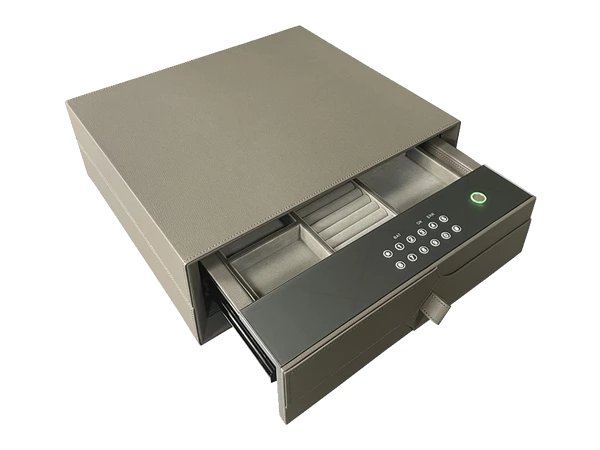
Closet Safes for Modern Homes: Secure Storage for Jewelry, Watches and Valuables
Modern homes are changing the way secure storage is planned. Instead of placing a safe in a utility room or adding one after the rest of the interior is complete, homeowners and designers are increasingly integrating secure storage directly into bedrooms, wardrobes and dressing areas. This is especially practical for jewelry, watches and personal documents that are used regularly and need to remain close to the owner's daily routine.
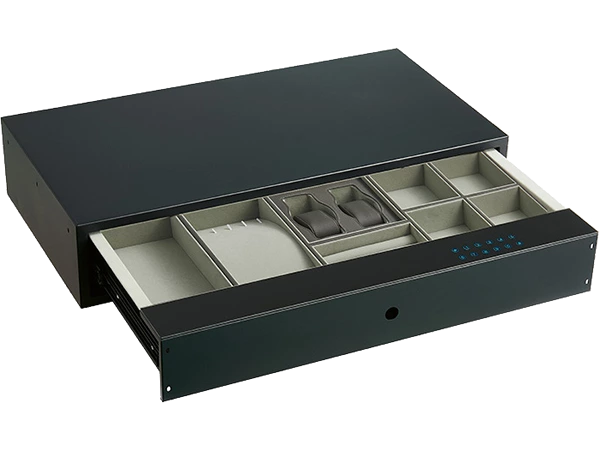
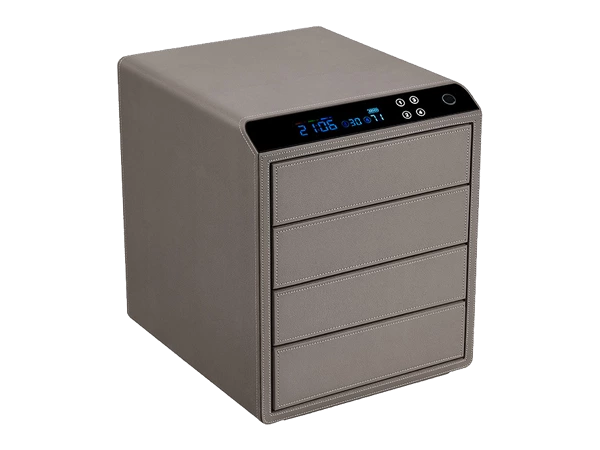
A closet safe is designed around this idea. It provides controlled storage inside or alongside wardrobe cabinetry while allowing the room to retain a clean and coordinated appearance. Depending on the model, the safe may be hidden behind cabinetry, built into a drawer section, installed inside a wardrobe compartment or incorporated into a larger custom furniture system.
The value of a closet safe goes beyond simply hiding valuables. A well-planned design can improve organization, make frequently used items easier to access and reduce the need to move watches, jewelry and documents between different rooms. For luxury homes, the ability to combine secure storage with custom interiors and furniture integration is one of the main reasons closet safes have become increasingly relevant.
What Is a Closet Safe?
A closet safe is a secure storage unit designed for installation inside a wardrobe, walk-in closet, dressing room or custom cabinetry. It may use a traditional front-opening safe door, a pull-out drawer format or another built-in structure depending on the project. The defining feature is not the shape of the safe but the fact that it is planned around a closet or wardrobe environment.
This is different from simply placing a conventional safe on a closet shelf. A purpose-planned closet safe considers the available cabinet width, depth and height, along with door clearance, drawer extension, furniture panels and any power required for electronic functions. These factors allow the product to fit naturally within the furniture rather than appearing as a separate object.
The interior can also be adapted to the valuables being stored. Watches may use individual holders, jewelry can be separated into divided trays, and passports or documents can occupy their own flat compartments. The result is a storage system that combines controlled access with organization and furniture integration.
Why Modern Homes Are Integrating Safes Into Closets
One of the main reasons is convenience. Watches and jewelry are often selected while dressing, so storing them in a walk-in closet or bedroom wardrobe reduces the need to move between different parts of the home. This becomes especially useful for homeowners who rotate between several watches or wear fine jewelry frequently.Interior design is another factor. In a modern bedroom or dressing room, a large visible steel safe may not fit the visual language of the space. A built-in or hidden closet safe can remain discreet while allowing the surrounding cabinetry to maintain a more refined appearance.
Space efficiency also matters. A wardrobe already occupies part of the room, so integrating secure storage into that structure can make better use of the available area than adding another freestanding product elsewhere. For smaller bedrooms and carefully planned luxury interiors, this can be an important advantage.However, furniture integration should not be treated as a substitute for physical security. The safe still needs to be evaluated according to its actual construction, locking system, installation and any relevant tested specifications. A product is not automatically more secure simply because it is hidden inside cabinetry.
Hidden Closet Safe vs Freestanding Safe
A hidden closet safe and a freestanding safe can both be appropriate, but they are designed around different priorities. The closet format is usually chosen when interior integration, daily access and organization are important, while a freestanding safe may be better where large capacity or independent placement is required.
| Feature | Built-In / Hidden Closet Safe | Freestanding Safe |
| Installation | Integrated into wardrobe or cabinetry | Independent placement |
| Visual Integration | High | Depends on location |
| Daily Access | Convenient within dressing area | Depends on installation position |
| Jewelry Organization | Can be highly customized | Depends on internal layout |
| Watch Storage | Dedicated holders can be included | Requires suitable interior configuration |
| Smart Access | Fingerprint or password depending on model | Available depending on model |
| Space Efficiency | Uses existing cabinetry space | Requires separate floor or cabinet space |
| Custom Dimensions | Useful for joinery projects | Depends on manufacturer |
| Interior Design Coordination | Strong | Usually secondary |
| Typical Application | Walk-in closets, dressing rooms, bedrooms | General home, office or storage areas |
The comparison is not about which product is universally better. A freestanding safe may provide more vertical capacity and can be easier to position when furniture integration is not necessary. A closet safe becomes more useful when the secure storage needs to work with a specific wardrobe layout or when the owner wants watches and jewelry close to the dressing area.The correct choice should therefore begin with the room, the valuables and the owner's access habits. Lock type and appearance matter, but they should not be considered in isolation from the rest of the project.
Smart Closet Safes: Fingerprint and Password Access
Modern closet safes often use electronic or biometric access because the product may be opened regularly. Fingerprint recognition allows registered users to access the safe without carrying a physical key, while a digital password provides another familiar method. The exact functions depend on the model and should always be confirmed before ordering.This type of access can be particularly practical in a walk-in closet where the safe stores daily-use jewelry or watches. The owner can open the safe while dressing and close it again without a long multi-step process. That convenience is one of the main reasons smart closet safes are attractive in high-end residential applications.
Electronic access also creates installation considerations. Batteries, charging requirements or external power may need to be planned depending on the product. If the safe is fully integrated into cabinetry, future maintenance access should be considered so that electronic components can be serviced without dismantling the entire wardrobe.Fingerprint access should still be understood as an access-control feature rather than proof of a particular physical security level. The safe body, locking mechanism, installation and any verified certification remain separate aspects of the product.
Closet Safes for Jewelry
Jewelry is one of the most common reasons homeowners want secure storage in a dressing room. Rings, necklaces, earrings and bracelets are small, valuable and often used frequently, which makes both organization and access important. A closet jewelry safe can provide dedicated compartments instead of leaving everything inside individual boxes or pouches.Divided trays help keep pieces separated and easier to find. Smaller sections can be used for rings and earrings, while longer areas can accommodate bracelets or necklaces. Soft materials such as leather or microfiber can provide a more refined contact surface and make the interior feel consistent with premium wardrobe design.
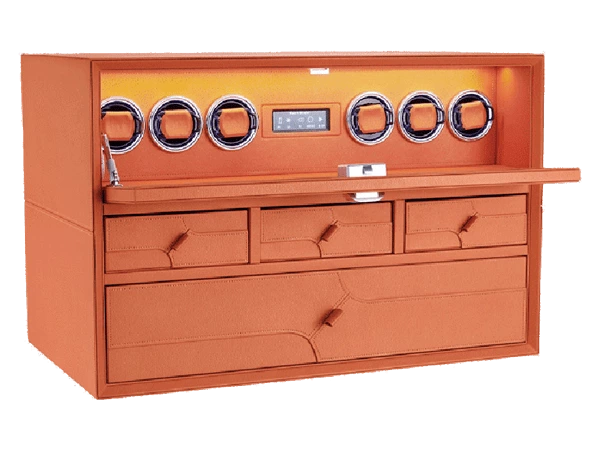
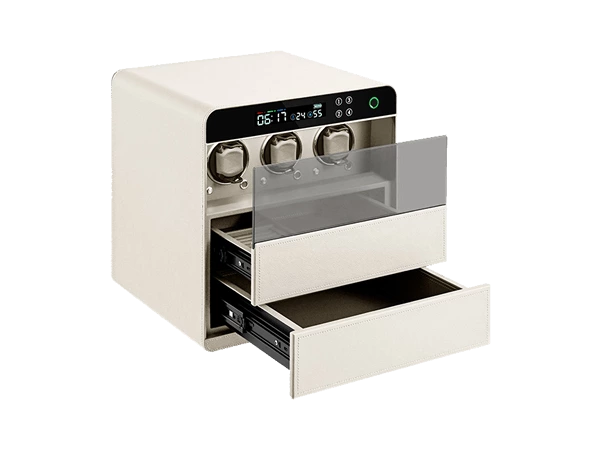
Multi-layer safe designs are particularly useful for larger collections. One drawer can be dedicated to everyday jewelry, another to less frequently used pieces, while watches and documents remain in separate sections. This approach prevents the owner from moving multiple items every time one piece is needed.The internal design should follow the collection rather than a fixed factory layout. A buyer with many necklaces may need more long compartments, while someone with a large ring collection may prefer more small divided sections. Custom interior planning can make a significant difference to how practical the safe remains over time.
Closet Safes for Watches and Watch Collections
Watches have different storage requirements from jewelry because the case, bracelet and strap dimensions vary significantly. A purpose-designed closet watch safe can use individual padded holders that keep each watch separated while making the collection easy to view from above or from the front.For collectors with automatic watches, some specialized safe models may also incorporate powered watch winder modules. These can be useful for selected automatic pieces when the owner wants them kept on an appropriate winding program. Manual-wind and quartz watches do not require such modules, so a mixed interior can often make better use of available space.
Watch storage capacity should also be planned for future growth. A collector who owns ten watches today may prefer a safe with additional passive positions rather than a layout that becomes completely full immediately after installation. The balance between watch storage, jewelry compartments and document space should reflect the owner's actual use.Closet integration can be particularly attractive for watch collectors because the safe remains close to clothing and accessories. A watch can be selected as part of the dressing process rather than retrieved from a separate room, while the rest of the collection remains organized inside the secure compartment.
What Else Can Be Stored in a Closet Safe?
A closet safe can also hold passports, property papers, certificates, keys, personal records and other small valuables. These items often need less specialized storage than watches or jewelry, but they still benefit from clearly defined compartments.Documents should ideally have their own flat storage area rather than being placed underneath jewelry trays. This prevents frequent-access items from becoming difficult to reach and reduces unnecessary movement inside the safe.
Some homeowners also use the safe for small personal accessories, spare keys or family heirlooms. The important point is to avoid designing the entire interior around only one category if the owner intends to store several types of valuables.A multi-purpose closet safe works best when the categories are separated. Watches, jewelry and documents have different shapes and access patterns, so a planned layout is usually more practical than one large open cavity.
How to Integrate a Closet Safe Into a Walk-In Closet
The first step is measuring the available space. Width, depth and height determine the maximum safe size, but the project also needs to consider how the safe opens. A drawer safe requires clear space in front, while a front-opening model needs enough room for the door to swing without hitting surrounding cabinetry.Depth is especially important in wardrobe projects. A safe body, locking system and drawer mechanism all occupy space behind the visible front. A cabinet that appears deep enough for a drawer may still be too shallow for the complete secure structure.
Furniture drawings can make the planning process much more accurate. A drawing shows the relationship between the safe, surrounding panels, shelves and nearby drawers, helping the manufacturer identify potential conflicts before production.Power also needs to be considered if the safe includes electronic access, lighting or watch winder modules. The ideal arrangement keeps cables concealed while still allowing future service access. This is much easier to achieve when the safe is specified before the cabinetry is finalized.
Closet Safe Installation Planning
Closet Safe Planning
│
├── 1. Define the Installation Area
│ ├── Walk-In Closet
│ ├── Bedroom Wardrobe
│ └── Dressing Room Cabinetry
│
├── 2. Confirm Available Space
│ ├── Width
│ ├── Depth
│ ├── Height
│ └── Opening Clearance
│
├── 3. Define Storage Requirements
│ ├── Jewelry
│ ├── Watches
│ ├── Documents
│ └── Other Valuables
│
├── 4. Select Access Method
│ ├── Fingerprint
│ ├── Password
│ └── Other Supported Options
│
├── 5. Confirm Interior Layout
│
└── 6. Coordinate Power, Finish and Installation
This sequence helps prevent the project from starting with appearance alone. Dimensions and storage requirements should be confirmed before finishes and decorative details, because the usable internal space is what determines whether the safe actually solves the owner's needs.
How to Choose the Right Closet Safe
The first question is what the safe will store. A jewelry-focused interior requires many small organized compartments, while a watch collector may need larger padded positions. A homeowner storing mainly documents may need more flat open space and less divided storage.The second question is how often the safe will be used. Frequent daily access can make fingerprint or password control more convenient, while an occasionally used safe may place less emphasis on smart functions. Access frequency also influences where the product should be installed within the wardrobe.
Capacity should be considered with future use in mind. A safe that is exactly full when it is installed leaves no room for additional watches, jewelry or documents. Some reserve capacity can make the product more practical over several years.Finally, consider how the safe relates to the furniture. Cabinet dimensions, front panels, interior finishes and power access should all be coordinated before production. For custom residential projects, sharing wardrobe drawings with the safe manufacturer can prevent many installation problems.
Custom Closet Safes for Luxury Residential Projects
Standard products work well when the available space already matches the safe dimensions, but custom projects often require more coordination. A luxury wardrobe may have a fixed cabinet depth, a specific drawer height or a design language that requires the safe to match leather, wood or other materials.Custom closet safes may therefore involve changes to overall dimensions, drawer quantity, interior organization, access method, finish or branding depending on the product platform. The exact scope should be evaluated according to engineering feasibility rather than assumed to be unlimited.
Interior designers and wardrobe manufacturers benefit from early technical communication. If the safe dimensions are known before cabinet production, the furniture can be designed around the actual product rather than modified later. This also allows electrical access and servicing requirements to be incorporated more cleanly.For developers, distributors and furniture brands, a customized safe can also become part of a broader residential package. Instead of treating secure storage as an optional accessory, it can be planned alongside wardrobes, dressing rooms and bedroom furniture from the beginning.
Which Type of Closet Safe Fits Your Home?
Which Closet Safe Fits the Project?
│
├── Need discreet integration?
│ ├── Yes → Hidden / Built-In Closet Safe
│ └── No → Compare with Conventional Safe
│
├── Store jewelry?
│ ├── Yes → Add Divided Jewelry Drawers
│ └── No → General Storage May Be Enough
│
├── Store watches?
│ ├── Yes → Add Watch Holders
│ └── No → Prioritize Other Storage
│
├── Automatic watch collection?
│ ├── Yes → Evaluate Watch Winder Modules
│ └── No → Passive Watch Storage Is Sufficient
│
├── Frequent daily access?
│ ├── Yes → Smart Fingerprint / Password Access May Help
│ └── No → Choose Access Based on Preference
│
└── New wardrobe project?
├── Yes → Coordinate Safe Dimensions Early
└── No → Measure Existing Cabinet Carefully
The best closet safe is therefore not defined by one feature. The right product is the one that fits the available space, organizes the owner's valuables effectively and provides an access method that suits daily use.
Frequently Asked Questions
What is a closet safe?
A closet safe is a secure storage unit designed for installation inside a wardrobe, walk-in closet or dressing-room cabinetry. It can be built into the furniture, installed behind a cabinet door or designed in a drawer format. The interior may be configured for watches, jewelry, documents and other valuables, while access can use mechanical or electronic systems depending on the model.
Is a hidden closet safe more secure than a visible safe?
Not automatically. Concealment can make a safe less visually prominent, but physical security depends on the construction, lock, installation and relevant product specifications. A hidden safe should therefore be selected according to the same security requirements as any other safe rather than relying only on its location.
Can a closet safe use fingerprint access?
Yes, many smart closet safes can use fingerprint recognition, digital passwords or other supported electronic access systems. This can be convenient when watches or jewelry are accessed regularly. Buyers should confirm the available user capacity, backup access method and power arrangement for the specific model.
Can a closet safe store jewelry and watches together?
Yes, provided the interior is divided properly. Watches can use individual padded holders, while rings, earrings, necklaces and bracelets can be stored in separate jewelry compartments. Multi-layer designs are particularly useful because each category can have its own section without needing to be stacked together.
Can a closet safe include watch winders?
Specialized closet safes can include watch winder modules where the product is designed for them. These modules are intended for suitable automatic watches and require power and internal space. Not every watch needs powered winding, so the number of modules should be planned around the actual collection.
Should I choose a drawer safe or a front-opening closet safe?
The right format depends on the furniture and the type of valuables being stored. Drawer safes provide top-down access and are particularly convenient for jewelry and watches, while front-opening safes may offer greater vertical capacity. The wardrobe layout and available opening clearance should be reviewed before selecting either format.
What size closet safe do I need?
Start with the valuables you currently own, then consider future growth. Measure the available cabinet width, depth and height, but also confirm drawer or door clearance. Internal usable space is more important than external dimensions alone because structural components and locks occupy part of the interior volume.
Can a closet safe be customized to match my wardrobe?
Customization may be possible depending on the product and manufacturer. Dimensions, interior layout, leather or microfiber finishes, colors and access systems may be adjusted where technically feasible. For built-in projects, wardrobe drawings are especially useful because they allow the safe and furniture to be developed around the same dimensions.
Planning a Closet Safe for Your Home or Project
If you are planning secure storage inside a bedroom wardrobe, walk-in closet, dressing room or custom cabinetry project, begin with the available space and the valuables that need to be stored. Confirm the width, depth and height of the installation area, the number of watches or jewelry pieces, preferred access method and any requirement for document storage or powered functions.For interior designers, wardrobe manufacturers, developers and B2B project buyers, early coordination can reduce installation conflicts and make the finished result more integrated. Sharing furniture drawings before the cabinetry is finalized allows the safe dimensions, opening clearance and internal storage layout to be evaluated together.