Smart Drawer Safe vs Traditional Mechanical Safe: Which Fits Modern Luxury Storage?
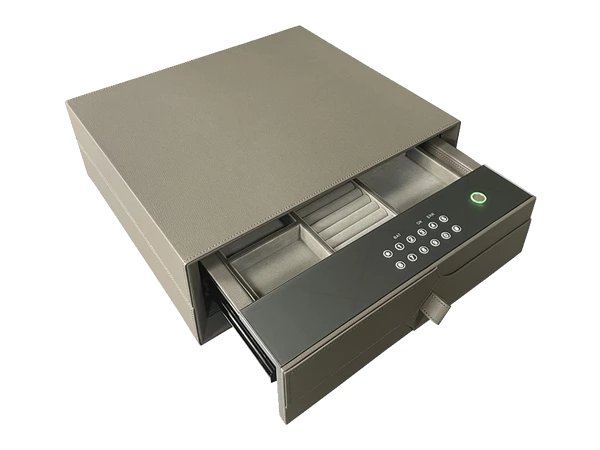
A home safe is no longer always a heavy metal box placed in the corner of a room or hidden behind a wardrobe door. In luxury bedrooms, walk-in closets and custom dressing rooms, secure storage is increasingly being planned as part of the furniture itself. This change has created a different type of product: the smart drawer safe, which combines a secure enclosure with horizontal drawer-style access and electronic or biometric authorization.
Traditional mechanical safes still have an important place in residential and commercial security. Their key-operated or mechanical combination systems are familiar, relatively straightforward and independent of electronic access functions. A smart drawer safe, however, is usually designed around convenience, furniture integration and organized storage for smaller valuables such as watches, jewelry, passports and personal documents.
The question is therefore not simply whether smart technology is better than a mechanical lock. The more useful comparison is how each format works in a real home, what type of valuables it is designed to manage, how often the owner needs access and whether the safe must become part of a wardrobe or custom cabinetry project. Looking at these factors provides a much clearer basis for choosing between the two.
What Is the Main Difference Between a Smart Drawer Safe and a Traditional Mechanical Safe?
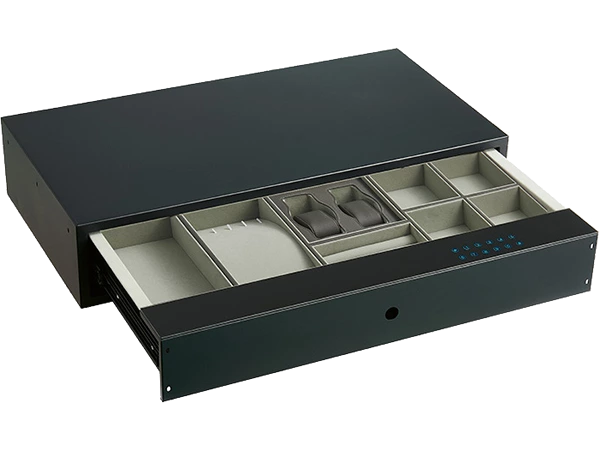
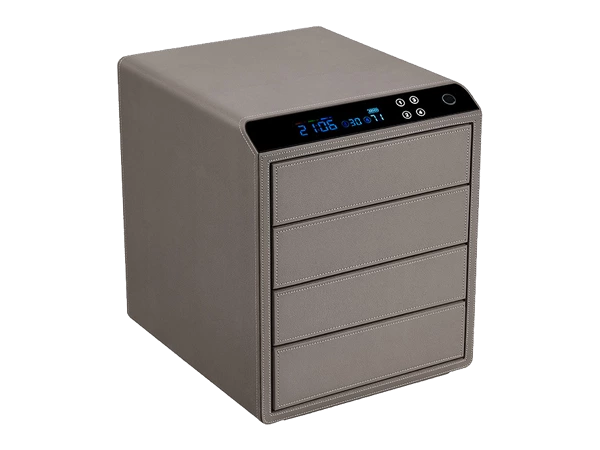
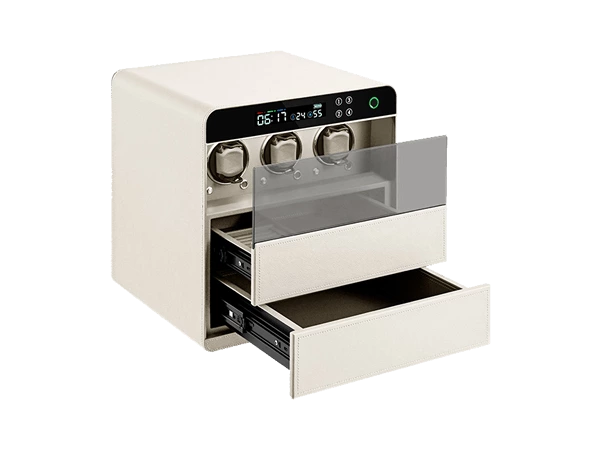
A smart drawer safe is a secure horizontal storage unit that opens like a drawer and normally uses electronic or biometric access, such as fingerprint recognition or a digital password, depending on the model. The product is often designed for integration into wardrobes, closets, dressing rooms or furniture, which means its external dimensions and opening direction are closely connected to the surrounding cabinetry.
A traditional mechanical safe usually uses a key, mechanical combination or another non-electronic locking method. Many models open through a conventional front-hinged door and are designed as freestanding products, floor-mounted units or safes positioned inside a cabinet. Their internal layout may include shelves or compartments, but the design does not necessarily focus on jewelry or watch organization.
The two formats can therefore be understood as serving different priorities. A mechanical safe emphasizes a straightforward locking approach and conventional secure storage, while a smart drawer safe combines controlled storage with electronic access, interior organization and furniture integration. Neither description by itself determines the actual security level, which always depends on the specific construction, lock, installation and verified specifications of the product.
Smart Drawer Safe vs Traditional Mechanical Safe: Side-by-Side Comparison
| Feature | Smart Drawer Safe | Traditional Mechanical Safe | Why It Matters |
| Opening Style | Horizontal pull-out drawer | Usually front-opening hinged door | Influences furniture layout and access |
| Access Method | Fingerprint, password or electronic access depending on model | Key or mechanical combination | Changes daily user experience |
| Furniture Integration | Often designed for wardrobes and cabinetry | Usually secondary to the safe itself | Important in luxury interiors |
| View of Contents | Top-down view | Front-facing view | Affects organization of small valuables |
| Jewelry Storage | Can use divided trays and compartments | Depends on internal shelving | Important for rings, necklaces and bracelets |
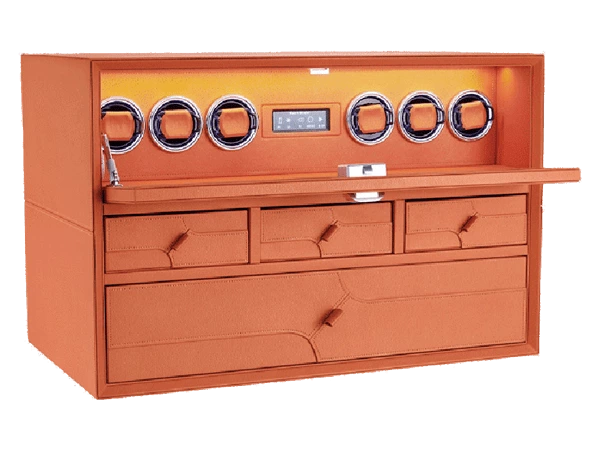
| Watch Storage | Can include individual watch holders | Usually requires added organizers | Relevant to collectors |
| Electronic Functions | Available depending on model | Normally not required | Adds convenience but may require power |
| Power Requirement | Battery or electrical supply depending on configuration | Usually none for mechanical access | Important for installation planning |
| Customization | Dimensions, interiors, finishes and smart access may be configurable | Often more standardized | Relevant to B2B and furniture projects |
| Maintenance | Includes electronic system considerations | Mainly mechanical-system maintenance | Influences long-term ownership |
| Typical Use | Luxury wardrobes, dressing rooms, furniture-integrated storage | General residential or commercial secure storage | Helps identify best-fit application |
The comparison shows why it is difficult to declare one format universally better. A traditional safe may be entirely appropriate for a user who wants straightforward secure storage and rarely opens the product. A smart drawer safe becomes more attractive when the owner uses watches and jewelry regularly and wants the safe to work naturally within the surrounding interior.
Access Method: Fingerprint and Password vs Mechanical Locking
Access is one of the most visible differences between the two systems. A smart drawer safe may use registered fingerprints, a digital password or other supported electronic authorization. For someone who opens the safe regularly, this can make the process feel more natural because there is no need to carry a separate key or rotate a mechanical dial each time.A traditional mechanical safe takes a different approach. Mechanical locks do not depend on batteries, digital controls or electronic readers, which can appeal to buyers who prefer a simpler system. The operating experience may be less integrated with modern furniture, but the lack of an electronic interface can be considered an advantage in applications where electronic functions are not a priority.
Convenience should not be confused with physical security. A fingerprint reader can make authorized access easier, but it does not automatically mean the entire safe is more resistant to attack than a mechanical model. Conversely, a mechanical lock does not automatically make a safe stronger simply because it contains fewer electronic parts. The actual construction, locking components, anchoring and applicable certification remain separate areas that should be evaluated for the specific model.For residential projects, frequency of use is often what makes the difference. If watches or jewelry are accessed several times each week, the convenience of smart access may have considerable practical value. If important documents are opened only a few times a year, a mechanical safe may remain perfectly suitable.
Daily Convenience and the Way Valuables Are Used
A safe that stores frequently used valuables needs to work differently from one used mainly for long-term document storage. This is where drawer-style access can change the user experience. When a smart safe drawer is pulled outward, the owner can see the contents from above, making it easier to select a watch, ring or bracelet without moving other items.This is particularly relevant in a dressing room or walk-in wardrobe. Watches and jewelry are often chosen at the same time as clothing, so keeping them in a secure drawer within the same space can make daily use more convenient. Instead of walking to another room or reaching into a deep front-opening safe, the owner accesses valuables in the same way as other wardrobe accessories.
A traditional mechanical safe can also store these items, but its internal organization depends heavily on the specific interior. Shelves can hold boxes and organizers, although multiple layers may make small valuables less immediately visible. For infrequently accessed items, this may not be a problem at all.The key difference is therefore not that one safe can store watches and the other cannot. Both can hold valuables. The smart drawer format is simply more naturally suited to frequent, organized access where the storage itself forms part of the user's daily routine.
Furniture Integration: Where the Smart Drawer Format Has a Clear Design Advantage
Furniture integration is one of the strongest reasons interior designers and wardrobe manufacturers consider smart drawer safes. A horizontal safe can be designed around the same dimensional logic as other wardrobe drawers, which makes it easier to incorporate into custom cabinetry without visually disrupting the room.A traditional front-opening safe can also be installed inside a wardrobe, but the cabinet must provide enough space for both the wardrobe door and the safe door to operate. This can create a double-opening sequence and may require additional clearance in front of the unit. In some projects this is completely acceptable, while in others it can conflict with a cleaner furniture design.
A smart drawer safe reduces that visual separation by turning the secure storage into part of the cabinetry system. The front panel can potentially be coordinated with the surrounding interior, while the safe body remains behind the visible drawer structure. For luxury residential projects, this helps security equipment feel intentionally planned rather than added later.Integration does require careful measurement. Available width, depth and height, drawer extension, nearby cabinet doors and the space in front of the furniture all matter. If the model includes electronic functions or powered accessories, power routing and future service access should also be discussed before the joinery is finalized.
Interior Organization for Watches, Jewelry and Personal Valuables
A traditional safe often starts with general-purpose internal space, while many smart drawer safes are designed from the beginning around smaller personal valuables. This creates an important difference in how efficiently the interior can be used.Jewelry can be separated into individual sections for rings, earrings, bracelets and necklaces. Watches can be placed on padded holders or dedicated trays so that cases and bracelets do not need to touch each other. Passports, certificates and other personal documents can occupy flatter areas rather than being placed underneath jewelry boxes.
Leather or microfiber-lined interiors may also be used in premium drawer safes where appearance and surface contact matter. These finishes do not replace the physical structure of the safe, but they make the storage area more suitable for luxury watches and jewelry than a completely bare interior.A mechanical safe can be customized with trays as well, so organized storage is not exclusive to smart products. The difference is that drawer safes often make this organization central to the product concept. Their top-down format naturally lends itself to multiple compartments, which is why they are increasingly used in wardrobe and dressing-room projects.
Power, Electronics and Maintenance
One advantage of a traditional mechanical safe is that normal lock operation does not rely on electronic power. A key or mechanical combination can function without a battery or external electrical connection, which keeps the access system relatively simple from an installation perspective.A smart drawer safe usually requires some form of electrical power for fingerprint recognition, digital control or other electronic functions. Depending on the model, this may come from batteries, a rechargeable system or an external power supply. If additional features such as interior lighting or other powered modules are included, the electrical requirements become even more important.
This does not mean electronic safes are necessarily difficult to maintain, but buyers should understand the power arrangement before installation. A built-in safe inside finished cabinetry should not require the entire wardrobe to be dismantled simply to access a serviceable electrical component. Power and maintenance access should therefore be treated as part of the joinery design.Mechanical locks have their own maintenance considerations, and they are not entirely free from wear or service requirements. The difference is mainly the type of system being maintained. Buyers should consider whether they prefer mechanical simplicity or the convenience of electronic authorization and choose according to the intended application.
Security: Smart Technology Is Only One Part of the System
Smart features can sometimes dominate the marketing of electronic safes, but the locking interface is only one part of the product. Fingerprint recognition controls who is authorized to open the safe under normal use, while the physical safe body, locking structure, installation method and surrounding property security determine other aspects of protection.The same principle applies to mechanical safes. A high-quality lock is important, but it cannot compensate for an unsuitable safe body or poor installation. Buyers comparing products should therefore avoid judging security only from the visible control panel or type of key.
For projects requiring a particular burglary-resistance, fire-resistance or insurance-recognized rating, the relevant standard should be defined first. Documentation needs to be confirmed for the exact model being selected, because terms such as “smart,” “mechanical,” “hidden” or “luxury” are product descriptions rather than certified security grades.In a home environment, secure storage should also form part of a wider system. Property access, alarm systems, privacy and safe installation can all affect the overall strategy. Neither a fingerprint safe nor a mechanical safe should be presented as a complete security solution by itself.
Customization and Luxury Residential Projects
Smart drawer safes are often selected for projects where dimensions and appearance need to match a specific interior. A wardrobe manufacturer may have a fixed cabinet depth, an interior designer may require a particular leather color, or a homeowner may want a certain balance between watch storage, jewelry compartments and document space.These requirements can influence much more than the appearance of the safe. Increasing the number of storage compartments affects usable internal volume, while changing overall dimensions can affect the lock position and drawer mechanism. Customization therefore works best when the safe manufacturer receives cabinet drawings and storage requirements early.
Traditional mechanical safes may also be customized, particularly in larger projects, but they are often less dependent on furniture integration. This can make them more flexible when the safe has its own dedicated position and does not need to visually match the surrounding joinery.For B2B buyers, the correct choice often depends on what they are selling. A safe distributor may need a conventional product range that suits many customers, while a custom wardrobe company may prefer a drawer-style system that can become part of its furniture package. Product design should follow the market and installation environment rather than technology trends alone.
Which Safe Fits Different User Needs?
A useful way to compare smart and mechanical safes is to start with behavior rather than with lock technology. Someone who opens the safe every morning to choose a watch has very different priorities from someone storing legal documents for several years.
Which Safe Format Better Matches the Project?
│
├── Are valuables accessed frequently?
│ ├── Yes → Smart Drawer Safe May Offer More Convenience
│ └── No → Continue Comparing Both Options
│
├── Must the safe integrate into a wardrobe or cabinetry?
│ ├── Yes → Smart Drawer / Built-In Safe Is Worth Evaluating
│ └── No → Freestanding or Traditional Safe May Be Suitable
│
├── Are watches and jewelry a major part of the storage?
│ ├── Yes → Prioritize Organized Interior Storage
│ └── No → General-Purpose Safe Interior May Be Enough
│
├── Is independence from electronic power a priority?
│ ├── Yes → Mechanical Safe Has a Clear Advantage
│ └── No → Electronic Access Can Be Considered
│
└── Is custom furniture integration important?
├── Yes → Coordinate Safe and Cabinet Dimensions Early
└── No → Compare Capacity, Security Specification and Access Preference
This framework also explains why two homeowners with similar-value possessions may make different decisions. Their valuables, routines, room layouts and preferences may be completely different, so a universal answer would oversimplify the choice.
A Typical Luxury Wardrobe Application
Consider a typical walk-in wardrobe where the owner keeps several watches, fine jewelry, passports and personal documents. These items are accessed regularly, and the room has been designed with custom cabinetry rather than freestanding furniture. In this environment, a smart drawer safe may fit naturally below hanging storage or inside a dedicated accessory cabinet.The horizontal interior can be divided so watches have individual padded positions, rings and earrings use smaller compartments, necklaces remain separated and documents occupy a dedicated section. Fingerprint or password access can support convenient daily use, while the safe remains integrated into the wardrobe rather than standing visibly elsewhere in the room.
If the same homeowner rarely used these valuables and had a separate utility or security room, a traditional mechanical safe might be entirely appropriate. The furniture-integration advantage of the drawer format would become less important, and independence from electronic functions might be more attractive.The application therefore demonstrates why product selection should follow the room and the owner's habits. Smart features are useful when they solve a real convenience or integration problem, not simply because electronic technology is newer.
Smart Drawer Safe vs Traditional Safe: Which Should You Choose?
Choose a smart drawer safe when frequent access, furniture integration and organized storage are major priorities. It is particularly well suited to wardrobes, dressing rooms and luxury residential cabinetry where watches, jewelry and personal valuables need to remain close to daily-use areas. Fingerprint or password access can add convenience, while custom compartments can make the interior much easier to manage.A traditional mechanical safe remains a strong option when electronic features are unnecessary or when independence from batteries and digital controls is a priority. It can also be more suitable where the safe has a dedicated location and does not need to become part of furniture or interior joinery.
For many buyers, the decision is therefore not “smart versus old-fashioned.” It is a choice between two different product architectures. One emphasizes integrated electronic convenience and organized furniture-based storage, while the other emphasizes conventional secure storage with simpler access technology.Before making the final decision, compare the actual model specifications, internal usable space, installation requirements and intended use. Lock type is important, but it should not be the only factor used to judge the product.
Frequently Asked Questions
What is a smart drawer safe?
A smart drawer safe is a secure horizontal storage unit that opens in a drawer-style format and uses electronic or biometric authorization, such as fingerprint recognition or a digital password, depending on the model. It is commonly designed for integration into wardrobes, dressing rooms and custom cabinetry. The interior can include divided storage for watches, jewelry, passports and other personal valuables, making it different from a standard furniture drawer with a simple lock.
What is a traditional mechanical safe?
A traditional mechanical safe uses a non-electronic access mechanism, usually a physical key, mechanical combination or another mechanical locking system. These safes are available in many forms, including freestanding, floor-mounted and cabinet-installed designs. They are often chosen by buyers who value straightforward operation and independence from electronic power, although the actual security level still depends on the safe body, lock and installation.
Is a smart safe more secure than a mechanical safe?
Not automatically. Smart access features such as fingerprint recognition can improve authorized access control and convenience, but they do not by themselves determine the physical security of the safe. A mechanical safe can also provide strong protection when it has suitable construction and installation. Buyers with specific security requirements should compare verified product specifications and certifications rather than judging performance solely by the type of lock.
Is a fingerprint drawer safe better for jewelry and watches?
A fingerprint drawer safe can be especially convenient for watches and jewelry because these valuables are often accessed regularly and benefit from divided horizontal storage. The top-down layout makes it easier to see individual pieces, while custom compartments can keep rings, watches, bracelets and documents separated. The advantage comes mainly from convenience and organization rather than from fingerprint technology alone.
Can a smart drawer safe be installed inside a wardrobe?
Yes, wardrobe integration is one of the main applications for smart drawer safes. The cabinet must provide sufficient width, depth and height, and there needs to be enough free space in front for the drawer to extend fully. Power and service access should also be considered for electronic models. For new cabinetry, it is generally better to confirm the safe dimensions before the wardrobe is manufactured.
Does a smart drawer safe need electricity?
It depends on the model. Some smart safes use batteries or rechargeable power for fingerprint readers and digital controls, while other configurations may require an external power connection. Additional functions such as lighting can also affect the electrical requirement. Buyers should confirm the power arrangement before installation, particularly when the safe will be built permanently into cabinetry.
What is the main advantage of a mechanical safe?
One of the main practical advantages is that a purely mechanical access system does not depend on electronic power for normal lock operation. This can appeal to buyers who prefer a simpler product architecture or who use the safe infrequently. Mechanical safes are also widely available in larger conventional formats, which can be useful where furniture integration and organized jewelry storage are not primary requirements.
Can both smart and mechanical safes be customized?
Yes, customization may be possible for both categories depending on the manufacturer and product platform. Smart drawer safes are particularly suited to projects involving custom dimensions, jewelry dividers, watch holders, interior finishes and furniture integration. Traditional safes can also be adapted in areas such as dimensions and internal storage. The exact customization scope should always be confirmed before production.
Planning the Right Safe for Your Project
If you are planning secure storage for a walk-in wardrobe, dressing room, luxury bedroom, hotel project or custom furniture system, begin with the application rather than the lock type. Define the available dimensions, valuables to be stored, access frequency, internal organization and any cabinetry requirements before deciding whether a smart drawer safe or traditional mechanical safe is the better fit.For custom projects, provide the manufacturer with cabinet drawings, available width, depth and height, watch and jewelry quantities, preferred access method, interior finish and any power requirements. This allows the product structure and the surrounding furniture to be evaluated together before production begins.