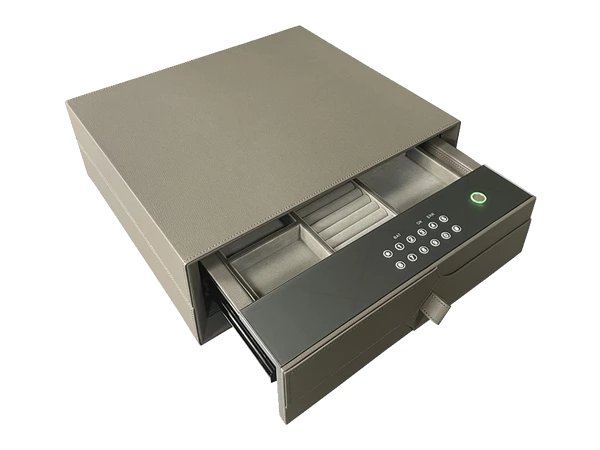
Hidden Home Safe Buying Guide for Luxury Apartments, Villas, and Private Homes
If you had 60 seconds to hide your most prized possession, where would you go? In a luxury villa or penthouse, the best defense isn't always a heavy steel door in the basement; it is the vault that no one—not even a seasoned intruder—knows exists. This principle is known among security architects as "Security by Obscurity," prioritizing absolute concealment over mere brute strength. When protecting heirlooms, property deeds, or significant private reserves, invisibility is just as critical as the thickness of the steel.
According to residential security specialists, relying solely on highly visible, massive safes often creates an unintended vulnerability. A prominent steel box in a master walk-in closet acts as a powerful magnet, instantly signaling to guests, staff, or intruders exactly where your highest-value assets reside. Instead of deterring a breach, a conspicuous safe invites an adversary to focus all their resources on a single point. By evaluating your home through an intruder's eyes, it becomes evident that a concealed safe entirely eliminates this target, neutralizing the threat before a tool ever touches metal.
Understanding the psychology of property crime requires looking at the "Thief's Clock." Industry data reveals that the vast majority of residential intrusions are high-stress events governed by a strict 10-minute rule. Intruders operate within a remarkably narrow window before the risk of detection by private security or law enforcement becomes overwhelmingly high. If an unauthorized individual spends their entire allotted time simply trying to locate your secure home storage, your assets remain pristine, effectively defeating the attempt through time attrition alone.
Mastering this balance between high-end lifestyle convenience and invisible protection is the true hallmark of a sophisticated residence. Navigating these exact challenges is essential, whether you are managing the floor-load restrictions of a high-rise apartment or outfitting a sprawling private estate. By implementing these foundational home security practices, you will ensure your most valued possessions remain effortlessly accessible to you, yet completely nonexistent to the rest of the world.

Penthouse Security: How to Conceal Safes in Luxury Apartments Without Structural Damage
High-rise luxury living offers incredible views and elite amenities, but it presents unique challenges when securing your valuables. You likely already know that genuine high-security safes are exceptionally heavy, often weighing well over a thousand pounds. Placing this much mass in a penthouse requires an understanding of point-load distribution—the concentration of weight on a specific area of your floor. Think of it like installing a grand concert piano; without specialized weight-dispersing plates beneath the safe, that concentrated pressure could severely damage premium flooring or violate structural building codes.
Bypassing these weight restrictions while maintaining a flawless interior aesthetic introduces the concept of furniture-safe hybridization. Instead of leaving a steel box exposed, security architects now engineer high-end furniture to act as both a disguise and a structural asset. A heavy oak credenza, a reinforced wardrobe armoire, or a custom-built dressing vanity can seamlessly enclose a safe. This strategy not only completely masks the unit from casual observers or household staff, but the wide base of the host furniture inherently spreads the safe's heavy footprint across a much larger surface area.
Figuring out how to hide a safe in a luxury apartment often hits a secondary roadblock when it comes to securing the unit, as most high-end lease agreements strictly forbid drilling heavy lag bolts deep into concrete subfloors. Fortunately, modern installation relies on non-invasive anchoring methods. Professional installers can use industrial-strength chemical adhesives that securely bind the safe to the floor without permanent damage, or they can bolt the safe directly into the reinforced furniture housing it. This creates a combined mass that is effectively impossible for intruders to lift or shift, all without violating your lease.
Before commissioning a luxury home safe, it is vital to perform a straightforward, three-step evaluation of your intended space to ensure both compliance and absolute security:
- Floor Load Verification: Have your installation team verify your specific building's pounds-per-square-foot structural limit to determine the maximum safe size your floor can support.
- Anchoring Strategy: Review your property guidelines to see if shallow wall-stud bolting is permitted, or if you must rely entirely on non-destructive adhesives and heavy furniture-binding.
- Concealment Audit: Assess your daily routine to map out hidden storage solutions that keep the unit entirely invisible to guests, yet accessible enough that you won't hesitate to lock up your daily-wear watches.
Perfecting apartment security means outsmarting architectural constraints through clever design rather than brute force. When you successfully blend high-grade protection into your penthouse environment without leaving a trace, you achieve the ultimate peace of mind. However, for those unburdened by high-rise limitations, the rules of concealment change dramatically, opening the door to advanced structural interventions.
Engineering Invisibility: Stealth Installations for Private Villas and Estates
In a private estate, the ultimate security isn’t a massive steel vault door positioned off the main hallway; it is a seamlessly integrated space that remains entirely undetected. Unlike penthouses where strict lease agreements dictate installation limits, owning a villa affords you complete structural control. This freedom allows architectural teams to embed protection directly into the foundation. A discreet floor safe installation for villas transforms the actual bones of your home into an impenetrable, invisible shield for your most prized assets.
Capitalizing on a major renovation or a new build is the perfect time to plan for deep concealment. When evaluating underfloor vs wall mounted security safes, underfloor models offer unmatched burglary resistance because they are encased on five sides by solid, poured concrete. By recessing the unit beneath a customized floorboard or heavy rug in a low-traffic private study, you completely eliminate an intruder's ability to gain leverage with heavy prying tools. The unit simply becomes part of the earth, accessible only to the homeowner who knows exactly which floor panel to lift.
For items you access daily, such as luxury timepieces or passport portfolios, bending down to a floor safe becomes impractical. Wall units offer incredible convenience, provided you select the best concealment locations for wall safes. Rather than hiding it behind a cliché hallway mirror, sophisticated homeowners employ motorized concealment. At the press of a hidden button or a smart-home voice command, a heavy commissioned painting or custom wood panel silently glides open on automated tracks. This approach marries museum-grade aesthetics with frictionless daily access, keeping your lifestyle entirely uninterrupted.
Even with flawless architectural camouflage, security experts always recommend preparing for worst-case scenarios using a "Diversion Strategy." This tactic involves installing a moderately secured, obvious decoy safe containing minor cash and costume jewelry, designed solely to satisfy a burglar's objective so they leave while your primary assets remain hidden. When designing your estate's security matrix, consider how these distinct concealment methods complement each other:
- Floor Safes: Provide the highest security level and large volume for long-term storage like property deeds, but require the most effort for ease of access.
- Motorized Wall Safes: Deliver exceptionally high ease of access and moderate volume, perfectly balancing security and convenience for daily-wear items.
- Diversion Safes: Feature intentionally low security levels and minimal volume, strategically positioned in plain sight to easily misdirect intruders.
Layering these hidden physical defenses ensures that even if an intruder breaches your perimeter alarms, your heirloom pieces remain completely undiscovered. However, structural invisibility is only half of the protection equation. Once that hidden door opens, the steel box itself must be capable of surviving both professional burglary tools and devastating house fires. Knowing exactly how much heat or force that enclosure can withstand is crucial for genuine asset protection.
Demystifying the Specs: What UL and Eurograde Ratings Mean for Your Jewelry and Cash
Discovering a hidden vault is an intruder's ultimate prize, meaning the enclosure's physical strength must perfectly match its camouflage. Locking a basic steel door creates a false sense of security against determined attacks. To truly protect an evolving collection of luxury assets, you must look past marketing terms like "heavy-duty" and demand independent, scientifically verified testing standards.
The true measure of a safe's defensive capabilities begins with Underwriters Laboratories (UL) ratings, specifically the Tool Latent (TL) classifications. When a spec sheet boasts a TL-15 or TL-30 designation, it means the unit successfully resisted a brutal, sustained attack by professional engineers using heavy power tools for 15 or 30 net minutes. This timeframe sounds brief, but in the context of a high-stress home invasion with perimeter alarms blaring, an intruder facing a TL-30 barrier will abandon the effort long before breaching the door.
Across the Atlantic, the industry relies on Eurograde security standards for residential safes, offering an equally rigorous tiered system from Grade 0 to Grade VII. Insurance providers depend heavily on these specific certifications to underwrite policies, directly tying the vault's defensive grade to the maximum dollar amount of contents they will cover. Upgrading to a Grade IV or TL-30 unit is rarely just a personal preference; it is often a mandatory requirement for securing comprehensive coverage for seven-figure watch or gem collections.
However, physical strength against theft solves only half of the environmental threat matrix facing your property. Homeowners frequently confuse burglary resistance with thermal protection, assuming a thick steel wall naturally deflects heat. In reality, steel is a highly efficient thermal conductor, meaning a vault built solely to defeat heavy power tools will rapidly turn into an oven during a severe house fire.
Proper thermal defense requires evaluating fire-rating temperature thresholds based entirely on what sits inside the vault. Paper documents like property deeds or bearer bonds will begin to char at 350°F, while delicate digital media backups melt at just 125°F. Authentic luxury home safe fire and burglary ratings clearly state both the external temperature the safe can endure—often up to 1700°F—and exactly how many hours it will maintain a stable internal climate for those specific materials.
Ultimately, sourcing insurance approved safes for high-value jewelry ensures your physical assets survive the unthinkable, effectively neutralizing threats from both catastrophic fires and sophisticated thieves. Once the structural integrity and thermal defenses are perfectly calibrated to your collection's exact value, the final decision shifts back to your daily lifestyle. The way you interact with this fortress should feel entirely effortless, making the choice of interface a critical component of daily luxury.

Biometric vs. Mechanical: Choosing the Interface for Daily Luxury
Unlocking your vault should feel as seamless as accessing your smartphone, yet fortified by industrial-grade encryption. When buying a safe, the interface you choose ultimately dictates your daily routine and compliance. If you are securing a luxury timepiece you wear every morning, the friction of a slow entry will eventually discourage you from using the vault altogether. This makes high-end biometrics incredibly appealing for rapid, frictionless access, perfectly balancing lifestyle convenience with foundational security.
Transitioning to digital interfaces requires vigilance against subtle vulnerabilities, particularly code-sniffing. This tactic occurs when an observer discreetly tracks your finger movements or uses thermal imaging to memorize your PIN. To neutralize this threat, premium interfaces employ scramble codes, a feature that randomizes the number layout on a digital touchscreen before every single use. Because the digits shift positions each time the screen wakes, your hand motions never form a predictable pattern, allowing you to access your items confidently even with staff or houseguests nearby.
For truly exceptional collections, standard access is often insufficient, necessitating dual-custody locking. Borrowed from commercial banking, this sophisticated protocol requires two entirely distinct authentication methods—such as a fingerprint scan immediately followed by a mechanical key—ensuring no single compromised credential can grant entry. To navigate biometric vs mechanical safe locks effectively for your residence, weigh these distinct profiles:
- Biometrics: Pro: Instant, personalized access ideal for daily-wear items. Con: High-fidelity sensors require clean, dry conditions to function flawlessly.
- Electronic Keypads: Pro: Easily updated access codes for temporary staff or family needs. Con: Vulnerable to observation unless equipped with scramble technology.
- Mechanical Dials: Pro: Completely immune to electronic failure, EMPs, or power loss. Con: The slow entry process discourages frequent, daily use.
Securing a high security biometric safe for private residences ultimately harmonizes effortless convenience with unyielding asset preservation. Yet, even the most sophisticated locking interface cannot defend against the silent, atmospheric threats developing inside the sealed steel chamber, requiring you to look inward to address the internal environment and protect sensitive items from moisture and magnetism.
The Climate Control Crisis: Protecting Watches and Documents from Moisture and Magnetism
You might assume an airtight steel vault provides the ultimate sanctuary, but sealing out the world also traps internal atmospheric threats. Because modern fireproofing relies on a chemical reaction that releases water vapor to keep internal temperatures down, many traditional fireproof safes for document protection inadvertently create a humid microclimate. Over time, this trapped humidity breeds mold, destroying property deeds and ruining the delicate patina of vintage paper. To counteract this, premium security manufacturers engineer hygroscopic safe interiors—specialized, moisture-absorbing linings designed to regulate dampness seamlessly without damaging your sensitive valuables.
Managing this internal weather system requires moving from passive to active defense mechanisms. Passive tools, like basic silica gel packs, simply absorb ambient moisture until saturated, leaving your assets at risk the moment they reach capacity. By contrast, active moisture control for luxury home safes utilizes a low-wattage electric dehumidifier rod, continuously circulating warm air to permanently prevent condensation from settling onto cold interior walls.
Beyond humidity, high-end mechanical timepieces face an entirely invisible enemy inside your vault: electromagnetic interference. The circuitry of a digital keypad, internal wiring for watch winders, or nearby household electrical currents can easily magnetize the delicate hairspring of a luxury watch, instantly ruining its accuracy. To combat this, elite custom luxury safes for watches and collectibles utilize magnetic shielding—an architectural layer of specialized alloys that deflects stray magnetic fields away from your collection, ensuring your mechanical investments run flawlessly upon removal.
A perfectly balanced internal climate guarantees your assets remain pristine, effectively neutralizing the invisible threats hidden within the steel walls. Yet, even a flawlessly engineered, climate-controlled fortress loses its value if an intruder can physically remove the entire unit from your residence. Transitioning from internal preservation to structural anchoring reveals the next critical phase of asset protection: expert installation.
The Expert Installation: Why DIY is the Weakest Link in High-End Security
Purchasing one of the best home safes on the market is only the first step; the true test of your security strategy lies in its physical integration into your residence. When determining where to install a heavy safe in a private home, especially within a penthouse or a historic villa, weight becomes a critical architectural variable. A true high-security vault can easily exceed a thousand pounds while empty. If your floor joists cannot comfortably support a grand piano, placing a dense, steel-plated box in a master bedroom closet could lead to catastrophic structural damage. Professional installation begins with an expert assessment to calculate floor load requirements, ensuring your chosen locati0n provides both unyielding support and discreet accessibility for daily-wear items.
Beyond mere structural support, defeating a coordinated intrusion requires moving past standard hardware to embrace forensic anchoring. Intruders understand that if they cannot crack a lock on-site, a heavy box can still be carried away and breached later at a secure locati0n. To prevent this, elite technicians utilize specialized mounting systems—combining expanding steel bolts with industrial chemical epoxies that bind the vault directly to your home's concrete foundation or steel beams. This creates a permanent, monolithic bond that essentially requires heavy construction equipment to remove, effectively neutralizing the threat of a quick grab-and-go heist without ruining your surrounding custom cabinetry.
Yet, the most robust physical defenses remain compromised if the installation team itself poses a liability. This is why hiring professional safe installers for luxury properties mandates strict professional vetting protocols, ensuring that every technician who crosses your threshold is bonded, comprehensively background-checked, and bound by non-disclosure agreements. Discretion must be engineered into the delivery process itself, utilizing unmarked vehicles to keep your security upgrades invisible to neighbors or household staff. With your physical asset preservation structurally sound and confidentially secured, you can focus on sustainable daily security habits.
Your 30-Day Security Roadmap: Transitioning from Vulnerable to Invulnerable
You now possess the framework to transform exposed collections into fortified, invisible assets. Moving beyond basic secure home storage, you can confidently bridge the gap between merely "hidden" concealment and rigorously "rated" professional protection. This foundation enables you to finalize a comprehensive home security audit and build sustainable daily habits for asset preservation without sacrificing your home's interior elegance.
To secure your collection effectively, follow these actionable steps:
- Inventory your valuables to determine the exact volume and specific fire-rating required.
- Select two installation zones that balance daily wardrobe convenience with complete invisibility.
- Call your insurance broker to discuss how installing a UL-rated unit can substantially lower your premium.
- Verify architectural constraints, such as floor load limits, before selecting heavy-duty models.
- Hire a specialized luxury safe concierge to manage professional, discreet installation.
By integrating these home security tips into your lifestyle, you elevate your residence from beautifully curated to exceptionally secure. The ultimate luxury isn't simply acquiring magnificent heirlooms; it is the quiet certainty that they remain completely untouchable, granting you profound, uninterrupted peace of mind.
Page Summary
A hidden home safe buying guide helps luxury homeowners choose the right safe for valuables without exposing security storage in plain sight. For apartments, villas, penthouses, and private residences, the best home safes should combine discreet installation, strong burglary resistance, fire protection, moisture control, secure anchoring, and convenient daily access. This guide explains what to consider when buying a safe, including hidden storage solutions, floor-load limits, concealed wardrobe installation, UL or Eurograde ratings, biometric and mechanical locks, climate control for watches and documents, and professional installation for secure home storage.
FAQ
1. What is a hidden home safe?
A hidden home safe is a concealed security storage unit designed to protect jewelry, watches, cash, passports, documents, heirlooms, hard drives, and other valuables while staying out of sight. It can be installed inside wardrobes, closets, walls, floors, furniture, dressing rooms, or custom cabinetry.
2. Why should luxury homeowners choose a hidden safe instead of a visible safe?
Luxury homeowners often choose hidden safes because they provide both security and discretion. A visible safe may draw attention to where valuables are stored, while a hidden home safe blends into the interior design and makes it harder for intruders, guests, or staff to locate.
3. What should I consider when buying a safe for a luxury apartment or villa?
When buying a safe, consider safe size, weight, installation location, burglary rating, fire rating, lock type, interior layout, moisture control, anchoring method, and concealment design. For luxury apartments, floor-load limits and non-invasive installation are important; for villas, floor safes, wall safes, and custom wardrobe safes can offer more installation flexibility.
4. What are the best hidden storage solutions for home valuables?
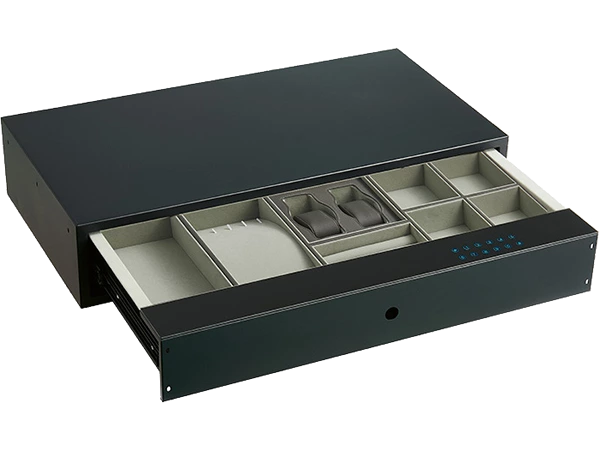
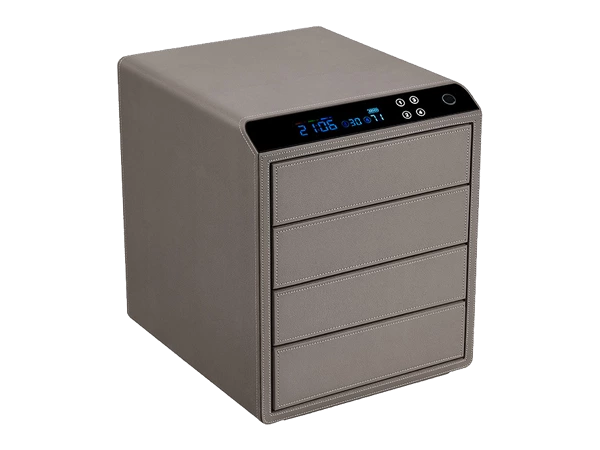
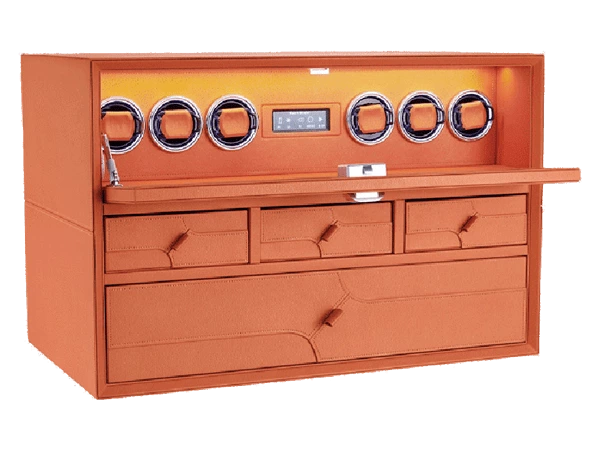
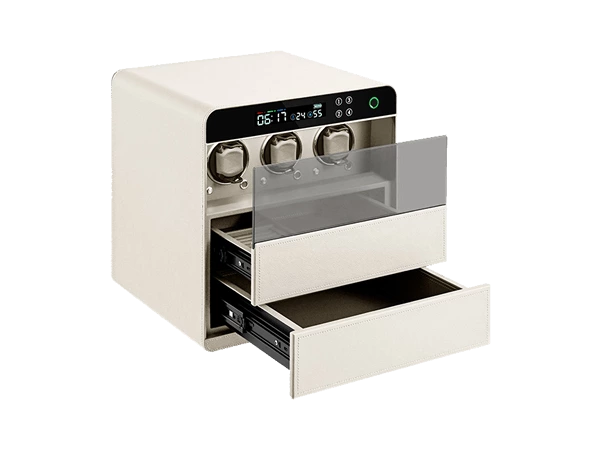
The best hidden storage solutions include wardrobe safes, hidden closet safes, floor safes, wall safes, furniture safes, drawer safes, safe rooms, and custom cabinet-integrated safes. For jewelry and watch collections, a hidden wardrobe safe with soft drawers, watch compartments, LED lighting, and biometric access is often a practical choice.
5. Can a hidden home safe be customized for watches, jewelry, and documents?
Yes. A hidden home safe can be customized with jewelry drawers, watch trays, watch winder modules, document compartments, cash storage sections, leather or microfiber lining, LED lighting, biometric locks, password access, fire-resistant construction, and exterior finishes that match luxury wardrobes or private interiors.