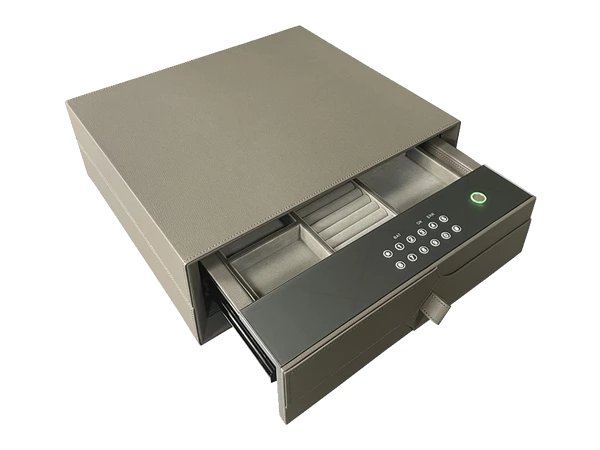
Optimal Luxury Watch Safe Storage: Protect High-Value Timepieces
You’ve spent years curating a collection of mechanical art, perhaps amassing timepieces worth more than a mid-sized SUV. Yet, industry data reveals a startling disconnect: many collectors still trust a $50,000 portfolio to a $200 big-box store safe that a common crowbar can breach in minutes. Relying on these basic metal boxes is like securing a sprawling mansion with a flimsy bathroom latch instead of a high-end alarm system. True luxury watch storage requires bridging this dangerous gap between decorative metal containers and certified, tested protection.
Understanding the stark difference between a generic 'security container' and a genuine burglary-rated safe serves as your first line of defense. According to Underwriters Laboratories (UL), the gold standard in security testing, basic containers primarily deter curious guests, whereas burglary-rated units are engineered to withstand prolonged attacks from power tools and torches. Upgrading to high-end watch safes transforms a stressful vulnerability into total peace of mind. Your investment gains a secure, centralized hub where your Rolex or Cartier is beautifully organized and strictly guarded.
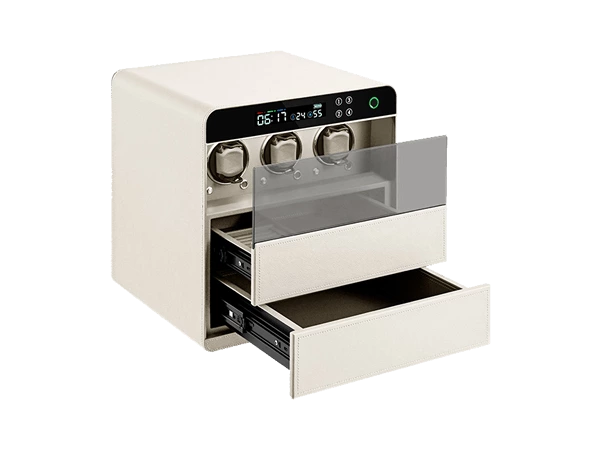
Is your current setup actually preserving your collection, or simply hiding it in the dark? A modern vault is much more than a heavy steel box; it acts as a dedicated mechanical caretaker. Inside, specialized watch winders mimic the natural movement of your wrist to keep delicate internal oils from drying out. Proper luxury watch storage ensures that when you reach for your favorite watch, it is perfectly wound, accurate, and pristine.

Why Your Home Security Starts with UL Ratings: Decoding TL-15 and TL-30 Performance
Many collectors assume a heavy 500-pound safe is automatically secure enough to deter thieves. However, weight alone is never a substitute for true steel thickness and engineering. To properly cover a luxury collection, insurers require you to select a rating based on the total replacement value of your watches. This assurance relies on strict Underwriters Laboratories safety standards, an independent organization that pushes security products to absolute failure. You can always verify this pedigree by reading the inside door plate for an authentic certification.
During these rigorous evaluations, testers use industrial tools to simulate professional attacks. The resulting ratings indicate exactly how much continuous working time an expert thief would need to breach the door:
- Residential Security Container (RSC): Withstands five minutes of aggressive prying and drilling with basic tools.
- TL-15: Defeats professional safecrackers using heavy power tools for 15 straight minutes.
- TL-30: Represents elite protection, as TL-30 rated burglary safes resist sophisticated cutting wheels and torches for a full 30 minutes.
Earning these impressive certifications requires more than just standard iron. Elite vaults utilize ballistic steel construction for private security, creating a hardened barrier that destroys drill bits on contact. They also rely on ingenious internal defenses called relocking devices. Think of a relocker as a hidden mechanical tripwire; if a burglar attempts to drill the primary lock, a fragile internal glass plate shatters, instantly firing backup deadbolts to permanently freeze the door shut.
Stopping a determined intruder with these advanced mechanisms secures your investment against human threats, but burglary is only half the battle. When a household disaster strikes, extreme heat severely threatens the synthetic oils and microscopic gears inside your timepieces. This introduces the severe threat of extreme temperatures, making true fire resistance vital.

The 350-Degree Danger: Why 'Fireproof' Doesn't Always Protect Delicate Watch Movements
Surviving a residential fire requires more than a metal box that refuses to melt. While many commercial safes claim to be loosely 'fire-resistant,' the delicate synthetic oils lubricating your timepiece's microscopic gears will evaporate long before the outer steel compromises. To ensure true preservation, high security residential vaults for collectors rely on strict scientific testing. The genuine standard is a UL Class 350 fire rating, an independent certification guaranteeing the internal temperature will never exceed 350 degrees Fahrenheit, even while the exterior is actively engulfed in a blistering furnace.
Advanced engineering stops this extreme heat using specialized intumescent seals around the door frame. When exposed to soaring temperatures, these heat-activated strips expand up to seven times their original size, hermetically locking the interior against creeping smoke and flames. However, stopping the flames introduces a hidden hazard: steam. Standard document safes often utilize wet insulation that intentionally releases moisture to cool the interior during a fire. While perfectly acceptable for protecting paper deeds, this sudden humidity spike rapidly corrodes delicate metallic components, making a completely dry, climate-managed interior absolutely vital for preventing watch movement damage during storage.
For optimal protection, experts strongly recommend a minimum of 60 to 90 minutes of certified Class 350 protection. This specific window provides ample time for residential emergency services to arrive and extinguish a blaze before internal temperatures ever climb dangerously high. Shielding your investment from devastating heat and professional burglars establishes a perfect protective foundation. Yet, a truly comprehensive vault goes beyond passive defense; it actively maintains your collection's mechanical health.
Exercise for Your Automatic Collection: Integrating Luxury Watch Winders to Preserve Internal Oils
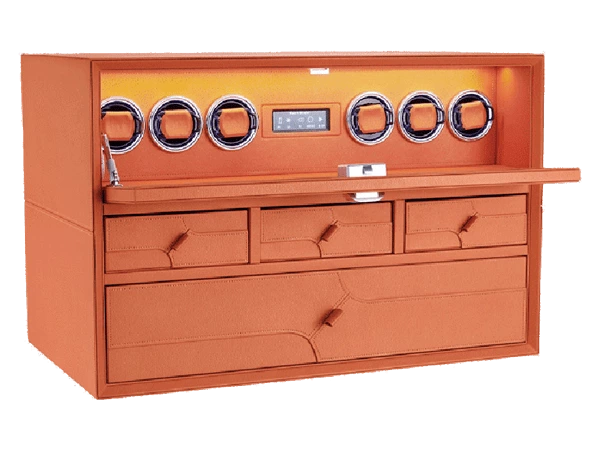
Securing your collection behind solid steel and fireproof seals is only half the equation; mechanical timepieces require motion to survive. Unlike battery-powered quartz watches that tick reliably in a drawer, automatics rely on your daily wrist movement to stay powered and lubricated. Think of integrated watch winders for automatic timepieces as a gentle treadmill for your collection. When left stagnant, the microscopic synthetic oils inside a movement can pool or completely dry out. By keeping the gears turning, you actively prevent premature wear. Considering a full mechanical overhaul from a Swiss manufacturer often exceeds $1,000 per watch, the return on investment for a quality winder becomes immediately clear.
Beyond merely keeping the hands moving, true luxury watch storage provides three distinct mechanical advantages to preserve your investment:
- Constant Oil Distribution: Regular, gentle rotation ensures lubricants stay evenly coated across delicate pinions and jewels, preventing metal-on-metal friction.
- Mainspring Safety: Advanced systems prevent continuous tension, allowing the internal power reserve to safely fluctuate and avoid mainspring fatigue.
- Date-Complication Protection: Keeping perpetual and annual calendars running flawlessly spares you the frustrating, risk-prone task of manually resetting complex date functions.
Every timepiece operates on a unique rhythm, making programmable systems an essential feature within bespoke luxury watch winder safes. A modern Rolex caliber 3235, for instance, requires a specific number of Turns Per Day (TPD) and directional winding—whether clockwise, counter-clockwise, or bi-directional—to perfectly match its internal rotor design. High-end winders allow you to program these exact metrics while utilizing 'mainspring slipping,' a clever built-in clutch mechanism that safely prevents the watch from being overwound. For collectors who value presentation, premium modules even feature a 'Return to 12 o'clock' function, automatically stopping the watch perfectly upright for an elegant display.
While a steady mechanical heartbeat guarantees your pieces are primed for immediate wear, motion alone cannot stop environmental degradation. To truly secure the longevity of these delicate instruments, invisible environmental threats must also be neutralized.

Battling Humidity and Magnetism: Creating an Optimal Internal Microclimate
Even behind thick steel doors, invisible elements can quietly ruin a masterpiece. While most people know excess moisture causes rust, a watch collection requires a unique balancing act. Metal components need a dry space to prevent corrosion, but supple leather straps require slight moisture to avoid cracking. For optimal preservation, luxury watch safe solutions must maintain a relative humidity 'sweet spot' between 35% and 45%, acting much like a climate-controlled wine cellar for your horological investments.
Beyond airborne moisture, another unseen hazard often goes ignored: magnetism. When a mechanical watch is exposed to magnetic fields—whether from unshielded speakers, safe electronics, or improperly designed motorized winders—the tiny coiled hairspring inside the movement can stick to itself. This invisible interference effectively shortens the spring, making the watch run erratically fast. True secure watch storage requires neutralizing these magnetic sources to keep your timepieces perfectly accurate.
Taking control of this internal atmosphere is highly manageable. You can easily climate-proof your safe by implementing a simple four-step system:
- Digital Hygrometers: Install a basic digital monitor to track internal moisture levels at a glance.
- Desiccant Packs: Place rechargeable silica canisters inside to passively absorb excess humidity.
- Electric Dehumidifying Rods: Utilize low-wattage wands to provide active humidity control for luxury watch collections in larger safes.
- Magnetic Shielding: Ensure all internal electronics and winders are properly insulated against stray magnetic fields.
Once your watches are safely nestled in their ideal microclimate, the next critical element is secure and efficient access.
Biometric vs. Mechanical: Choosing an Access System That Balances Speed and Security
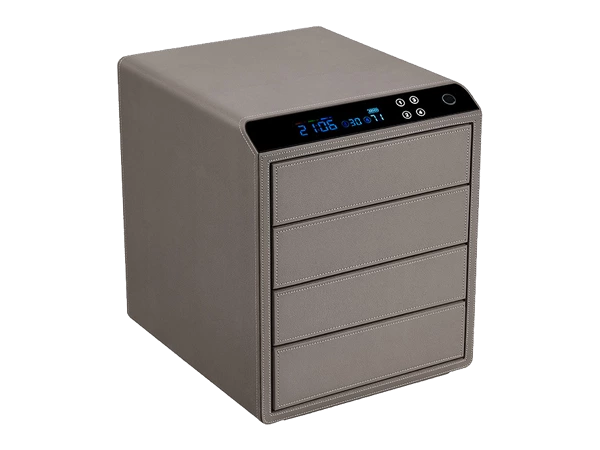
Stepping in front of your safe, the way you unlock that heavy steel door defines your daily experience with your collection. When selecting a vault, collectors typically weigh the lightning-fast convenience of fingerprint scanners against the generational durability of a traditional spin dial. Biometric locks grant instant access, letting you grab a timepiece on your way to an event in under a second. Conversely, mechanical locks offer absolute lifetime reliability—they never require a battery change or suffer from a burnt-out circuit board.
Fortunately, modern security engineering means you no longer have to pick just one. Premium safes now employ redundant locking, meaning they feature two independent locking mechanisms—like an electronic keypad paired with a mechanical dial—working side-by-side. This setup eliminates the risk of battery-dependent systems locking you out; if the digital components fail, the mechanical dial acts as a reliable emergency override. This dual approach also enables multi-factor authentication security systems, requiring both a verified fingerprint and a physical key to open, similar to how secure server rooms operate.
Beyond keeping intruders out, these advanced panels manage who gets in by utilizing dual-user modes, which are ideal for families or business partners. You can program the system so a spouse’s fingerprint grants access instantly, without them needing to memorize complex combinations under pressure. By carefully evaluating biometric versus mechanical dial locks, you ensure effortless access for authorized users while maintaining an impenetrable barrier to outsiders. Naturally, the most sophisticated lock is useless if a thief can simply carry the vault away.
Strategic Placement and Installation: Making a 1,000-Pound Safe Impossible to Move
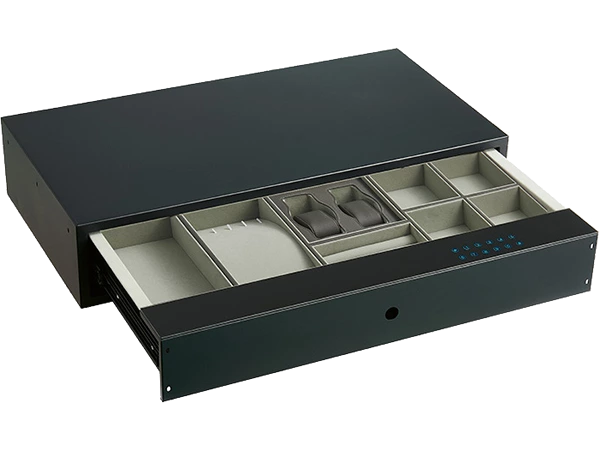
Even the most advanced lock cannot protect your collection if a burglar simply wheels the entire unit out the front door. This alarming scenario, known in the security industry as 'safe kidnapping,' occurs when criminals bypass the locking mechanisms entirely by stealing the box to crack open later. To prevent this, owners of high-end watch safes must strike a delicate balance between daily accessibility and smart concealment. You want your timepieces easily reachable while getting dressed, but invisible to visiting contractors or casual guests.
Finding that perfect locati0n often comes down to the structural realities of your home, specifically a concept called floor loading. Because luxury safes are packed with dense steel and fire-retardant materials, they frequently exceed 1,000 pounds. While a concrete slab foundation on a ground floor can easily support this massive footprint, placing that same weight on a second-story wooden floor requires assessing your home's joists. You must ensure the pounds per square foot do not exceed your floor's structural capacity, which generally involves placing the unit tightly against load-bearing walls.
Once a structurally sound spot is chosen, the true permanence of your security system relies on aggressive anchoring. When installing a heavy-duty floor safe, professionals utilize the '3-bolt rule,' driving at least three thick steel anchor bolts deep into the concrete foundation. This transforms a movable object into a permanent architectural fixture, offering exponentially more physical resistance than discreet hidden wall safes for jewelry, which can sometimes be forcefully pried from between wooden wall studs.
Properly bolting down a structurally supported vault eliminates the final vulnerability in your physical security strategy. You have transformed a heavy metal box into an immovable mechanical caretaker, ensuring your investments remain exactly where they belong.
Your Transition to Total Peace of Mind: The 3-Step Action Plan for Watch Protection
You no longer have to view storing your collection as a stressful trade-off between security and convenience. By moving past standard lockboxes, you can now recognize high-end luxury watch safes as active mechanical caretakers. Your new vault isn’t just an impenetrable steel barrier; it is a vital investment in your collection’s longevity, ensuring complex movements remain pristine, wound, and ready for your wrist at a moment's notice.
To transform this knowledge into immediate action, follow this Collector's Readiness Checklist:
- Appraise and Align: Update your collection's valuation and finalize your choice between a beautifully customized 'Display Safe' or a strictly discreet 'Hidden Vault.'
- Verify Protection: Source insurance-approved vaults for your home and confirm they meet optimal fire safety standards (targeting a minimum 60-minute rating paired with strict thermal seals).
- Maintain the Microclimate: Establish a reliable 6-month maintenance routine to inspect winder motors and refresh internal dehumidifiers.
Finally, leverage your new security infrastructure as a financial advantage. Reach out to your provider, as specialty insurers frequently offer substantial premium discounts for UL-rated storage. Start by organizing your most recent appraisals today, and take the definitive step toward total peace of mind and the flawless preservation of your horological legacy.
Page Summary
Luxury watch safe solutions are designed for collectors who need more than a basic metal lockbox to protect high-value timepieces. A professional watch safe should combine burglary resistance, fire protection, secure watch storage, humidity control, magnetic shielding, biometric or mechanical access, and integrated watch winder modules for automatic watches. This guide explains how high-end watch safes help protect Rolex, Cartier, Patek Philippe, and other luxury watches from theft, heat, moisture, magnetism, scratches, and mechanical inactivity while keeping the collection organized, wound, accurate, and ready to wear.
FAQ
1. What are luxury watch safe solutions?
Luxury watch safe solutions are high-end secure storage systems designed specifically for valuable watch collections. They usually include reinforced safe construction, secure locks, soft interior protection, watch trays, watch winder modules, humidity control, fire protection, and discreet installation options for private homes, villas, wardrobes, and luxury apartments.
2. Why do collectors need high-end watch safes?
Collectors need high-end watch safes because luxury watches require protection from theft, fire, moisture, magnetism, scratches, and unauthorized access. Compared with a basic home safe, a high-end watch safe can also help organize the collection and maintain automatic watches with integrated watch winders.
3. What features should a luxury watch safe include?
A luxury watch safe should include strong steel construction, reliable burglary resistance, fire-resistant protection, biometric or mechanical lock access, soft microfiber or leather lining, adjustable watch trays, programmable watch winders, LED lighting, humidity control, magnetic shielding, and secure anchoring.
4. How does a watch winder safe protect automatic watches?
A watch winder safe protects automatic watches by keeping them securely stored while gently rotating them to simulate wrist movement. This helps automatic watches remain wound, accurate, and ready to wear, while also reducing the need to repeatedly reset complex date, calendar, or moon phase functions.
5. Can luxury watch storage be customized for private wardrobes?
Yes. Luxury watch storage can be customized for walk-in closets, private wardrobes, villa bedrooms, hotel suites, jewelry rooms, and high-end residential projects. Custom options can include watch winder quantity, drawer layout, watch pillow size, leather or microfiber lining, LED lighting, biometric access, password locks, exterior finishes, and hidden cabinet integration.