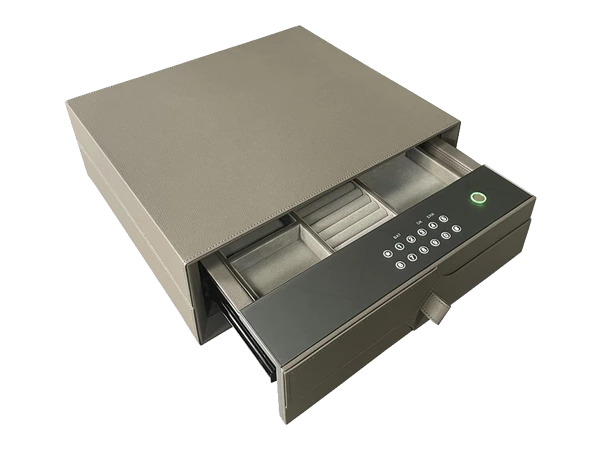
How Built-In Closet Safes Solve Storage and Security Challenges in Luxury Homes
A well-planned safe should protect valuables without making a luxury closet feel like a utility room. A built-in closet safe gives homeowners a more discreet, organized, and design-friendly way to secure jewelry, documents, watches, firearms, heirlooms, and other high-value items. Instead of forcing security into an awkward corner of the home, it turns protection into part of the storage plan.
Why choose a built-in closet safe for a luxury home?
A built-in closet safe works especially well in luxury homes because it combines three needs that often compete with one another: security, convenience, and aesthetics. Traditional safes are often placed in garages, basements, or offices because they are bulky and visually obvious, but those locations can be inconvenient and easier to identify. In a primary closet, the safe can be integrated into cabinetry, concealed behind custom panels, and positioned near the items it protects.That everyday convenience matters. Jewelry, passports, watches, important papers, and personal protection items are more likely to be secured when the safe is easy to access. A closet location also benefits from the more stable, climate-controlled environment of the bedroom area, which can be better suited to sensitive documents, electronics, leather goods, and metals than damp or temperature-swinging storage spaces.
Discretion is the real design advantage
The best home safe solutions do not announce themselves. In luxury closets, discretion can be achieved through millwork, layout, lighting, and smart placement. Hidden closet safes may sit behind a cabinet door that matches the surrounding wardrobe, beneath a false drawer front, behind a mirror panel, or within an accessory wall that looks purely decorative.This does more than preserve the look of the room. A safe that is difficult to locate adds a layer of practical protection. If an intruder does not immediately see the safe, they have less time and opportunity to focus on it. Concealment should never replace a quality lock, strong construction, and proper anchoring, but it can make the overall security strategy stronger.Designers often treat the safe as part of a larger storage sequence. For example, a jewelry safe might be placed near a vanity drawer, watch storage, or eveningwear section. A document safe may sit in a taller cabinet near luggage or travel accessories. When the placement feels natural, the safe supports the rhythm of the closet rather than interrupting it.
Smart integration keeps the closet beautiful and useful
A built-in safe should not create a dead zone in the room. It should be placed where it can open fully, be reached comfortably, and remain visually quiet when not in use. That means thinking beyond the safe’s exterior dimensions and planning for door swing, drawer pullouts, shelves, lighting, and the user’s stance.
Common integration approaches include:
- Cabinet-panel concealment: The safe sits behind a finished door that matches nearby wardrobe fronts.
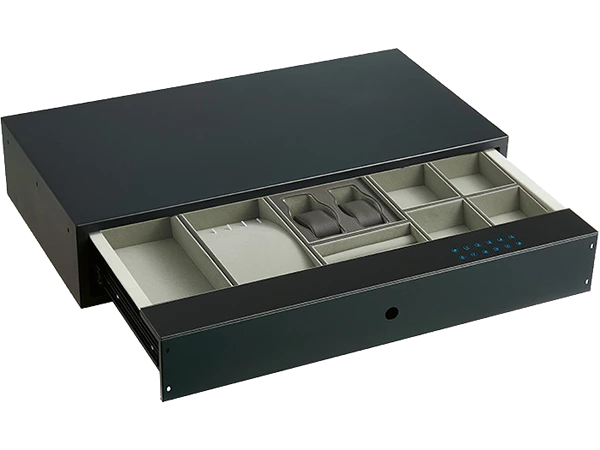
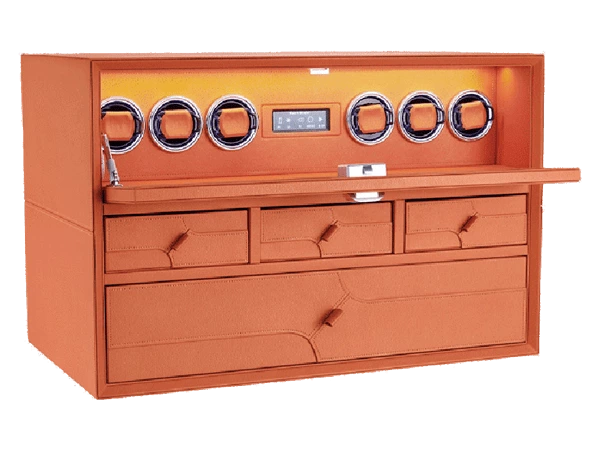
- Boutique jewelry storage: Interior drawers, ring rolls, necklace hooks, and watch cushions keep valuables secure but easy to select.
- Mirror or accessory-wall placement: The safe hides behind a feature that already belongs in a dressing room.
- Layered storage: Clothing, handbags, or shelves around the safe reduce visual attention while maintaining access.
- Dedicated emergency access zones: Items that may need to be reached quickly are stored separately from rarely used documents or heirlooms.
The goal is not simply to hide a box. It is to create security solutions that feel intentional, comfortable, and consistent with the quality of the closet.
What should homeowners consider before installation?
Homeowners should consider size, weight, anchoring, access, lighting, and future storage needs before choosing a closet safe. A safe that is too small quickly becomes frustrating, while one that is too large may complicate cabinetry, flooring, or daily movement. The right choice depends on what will be stored now and what may need protection later.Weight deserves special attention in upper floors, custom cabinetry, or closets with premium flooring. Heavy safes may require planning around floor support, threshold access, and how installers will move the unit into place without damaging finishes. Even compact safes should be anchored properly to a floor, wall studs, or another suitable structure when the product and site conditions allow it.Lighting is another overlooked detail. Closets are often beautiful but shadowed inside cabinets and drawers. Interior safe lighting, nearby task lighting, or motion lighting can make it easier to find a specific watch, document, or piece of jewelry without leaving the safe open longer than necessary.
Before installation, it helps to review:
- Contents: Jewelry, documents, firearms, electronics, cash, collectibles, or sentimental items may require different layouts.
- Frequency of access: Daily-use pieces should be easier to reach than items stored for emergencies or long-term protection.
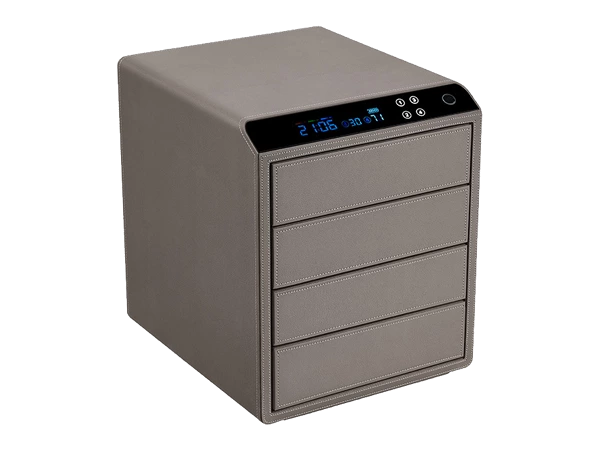
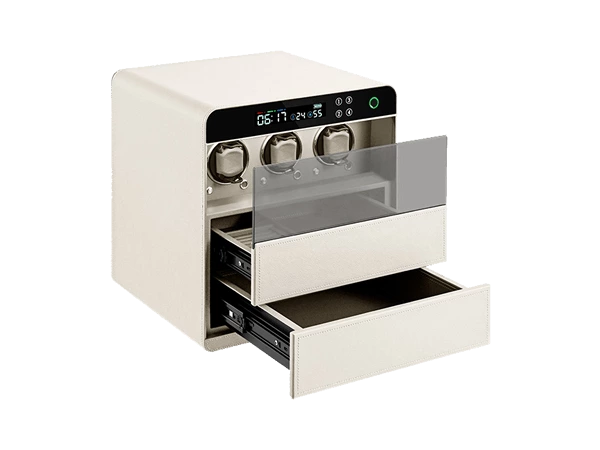
- Lock preference: Mechanical, electronic, and biometric locks each offer different levels of convenience and user comfort.
- Anchoring options: Confirm how the safe can be secured without compromising cabinetry or flooring.
- Clearances: Plan for door swing, drawer extension, shelves, and comfortable body positioning.
- Interior organization: Dividers, cushions, trays, and document slots can prevent damage and clutter.
Lock style shapes the user experience
The lock is one of the most personal parts of the safe because it affects how people interact with it every day. A mechanical lock offers a traditional, battery-free experience and may appeal to homeowners who value simplicity. An electronic keypad can be faster for frequent access, especially when multiple approved users need entry.Biometric options may appeal to homeowners who want quick access without remembering a code, though the best choice depends on the product, user preferences, and comfort with technology. For some households, the ideal solution may combine lock types or include backup access methods. What matters most is choosing a system that authorized users will operate correctly and consistently.This is where closet safe reviews can be useful, not as a substitute for professional advice, but as a way to understand how different locks, interiors, and installation styles perform in real homes. Pay attention to comments about ease of opening, interior layout, noise, lighting, finish quality, and whether the safe feels natural to use within a closet setting.
Planning early creates a cleaner result
The smoothest installations usually happen when the safe is considered early in a renovation, new build, or closet redesign. Early planning allows the cabinetmaker, designer, security professional, and homeowner to coordinate dimensions, access, anchoring, and concealment before the millwork is finalized. It also helps avoid rushed compromises, such as placing the safe where it fits rather than where it works best.A retrofit can still be effective, but it may require more creativity. Existing shelving, drawers, or panels might need adjustment. Flooring protection, delivery path, and cabinet depth become more important. In either case, the safe should be treated as a functional part of the closet, not an afterthought.
Better security can still feel effortless
The best built-in closet safe is one the homeowner actually uses. It should be discreet enough to support security, attractive enough to belong in a luxury interior, and convenient enough to become part of the daily routine. When those pieces come together, valuable items are less likely to be left on counters, in drawers, or in predictable hiding places.For luxury homes, the opportunity is clear: storage and protection do not have to compete. With thoughtful placement, proper anchoring, organized interiors, and design-sensitive concealment, hidden closet safes can provide practical peace of mind while preserving the elegance of the space.