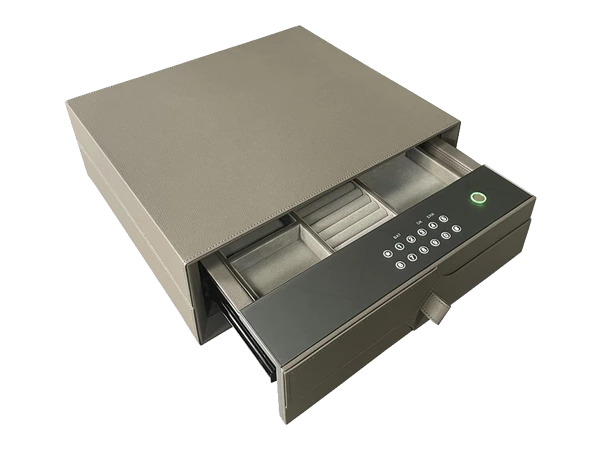
How Do You Build a Watch Safe DIY Limitations and Custom Design Options
A watch safe protects more than a collection; it protects the habits, value, and visibility around the watches you wear and store. A DIY project can work for basic organization, display, and concealment, but true security usually requires a professionally engineered safe body, lock system, interior layout, and, in some cases, integrated winders. This guide walks through how to plan a practical build, where DIY watch storage makes sense, and when a custom watch safe or OEM watch safe solution is the safer path.
Can you build a watch safe yourself?
You can build a watch storage cabinet, a reinforced watch display case, or a concealed diy watch case yourself if your goal is organization and light protection. However, if your goal is burglary resistance, fire protection, humidity control, or insurance-ready security, a DIY build has serious limitations. In that case, the smarter approach is to design the interior yourself and work with a watch safe manufacturer for the safe structure, locking hardware, and technical integration.The main distinction is this: DIY can solve layout and presentation; professional manufacturing solves tested protection. A homemade box may look beautiful, but the hinges, walls, lock, anchoring points, and door tolerances determine whether it functions as a safe.

1. Define what your watch safe needs to protect
Start by listing what you are protecting and how you actually use it. A daily rotation of three watches needs a different setup from a growing collection with straps, papers, tools, jewelry, and automatic watches that benefit from winding. This step prevents you from overbuilding one area while ignoring another.
Write down the essentials:
- Number of watches: Include current pieces and future expansion.
- Watch types: Automatic, manual, quartz, oversized cases, bracelets, straps.
- Accessories: Extra straps, spring bars, warranty cards, boxes, tools, microfiber cloths.
- Access frequency: Daily wear, occasional rotation, long-term storage.
- Protection goals: Dust, scratches, theft deterrence, fire resistance, humidity control, or display.
If your main issue is clutter, a watch organizer diy project may be enough. If the watches carry significant financial or sentimental value, treat the project as a security design problem, not just a woodworking project.
2. Choose between display, concealment, and true safe storage
The next decision is whether your storage should be visible, hidden, or secured. A watch display case is ideal when presentation matters and the room itself is already private and controlled. A hidden cabinet or drawer insert improves discretion, but it does not automatically make the setup secure.
Think of the options in levels:
| Option | Best for | Main limitation |
| DIY watch tray or drawer insert | Organization and scratch prevention | Little theft protection |
| DIY watch case | Portable storage and display | Easy to remove if not secured |
| Reinforced cabinet | Concealment and heavier storage | Only as strong as its lock and installation |
| Professionally built safe | Security-focused storage | Requires budget, space, and planning |
| Custom watch safe | High-value collections and tailored interiors | Longer design and production process |
This comparison helps you avoid calling every box a “safe.” If it can be carried away, pried open easily, or accessed with basic tools, it is better described as storage, not a safe.
3. Plan the interior layout around daily use
A good watch safe feels effortless to use. If the layout is awkward, you may start leaving watches on a dresser, which defeats the purpose of building the storage system in the first place. Map the interior before choosing materials or hardware.
For simple diy watch storage, divide the interior into zones:
- Top section: Frequently worn watches or display cushions.
- Middle section: Drawers for straps, tools, travel cases, and documents.
- Lower section: Less-used watches, boxes, or heavier accessories.
- Side section: Optional winding modules or vertical storage.
Measure watches on cushions, not just case diameters. Bracelets need room to curve naturally, and larger watches may touch if the spacing is too tight. Leave clearance above each cushion so crystals and bezels do not rub against drawer fronts or lids.
4. Select materials that protect the watches
Interior materials matter because watches are handled often and can scratch against rough surfaces. For a DIY build, use smooth drawer slides, soft lining, stable cushions, and non-abrasive surfaces. Avoid unfinished wood contact where oils, dust, or rough grain could affect straps or cases.
Common interior choices include:
- Soft microfiber or suede-like lining for drawers.
- Firm cushions that hold watches without stretching bracelets.
- Dividers that keep cases from touching.
- Low-odor adhesives and finishes that are fully cured before use.
- A removable tray design for cleaning and rearranging.
If you are adapting an existing safe, make sure the interior insert does not interfere with the door bolts, lock cover, relockers, hinges, or ventilation needs. Storage should improve the safe, not compromise its operation.
5. Add security only where DIY makes sense
DIY security upgrades can help with convenience and deterrence, but they should not be confused with certified protection. You can add concealed placement, stronger cabinet construction, a quality lock, anchoring to framing, or a locked interior drawer. These steps may slow casual access and keep watches out of sight.Still, there are limits. A homemade enclosure usually lacks engineered steel construction, proper boltwork, tested lock installation, fire insulation, and pry-resistant door geometry. If you need real burglary resistance, consult a safe professional or watch safe manufacturer before investing heavily in a DIY shell.A practical hybrid approach is often best: buy a properly built safe, then customize the interior for watches. This gives you a stronger outer structure while still allowing a personalized watch storage solutions layout.
What are the biggest DIY watch safe limitations?
The biggest DIY limitations are structural security, fire performance, lock reliability, and integration quality. These are difficult to solve with normal workshop tools because a safe is a system, not just a box with a lock. Even a beautiful diy watch case can fail if the door can be forced, the hinges are exposed, or the whole unit can be removed.
Watch for these problem areas:
- No tested protection: A DIY build usually has no recognized burglary or fire rating.
- Weak lock installation: Good locks require proper mounting, shielding, and bolt engagement.
- Poor anchoring: A portable case or light cabinet can be taken entirely.
- Moisture risk: Overly sealed spaces may trap humidity if not managed.
- Winder complexity: A diy watch winder safe needs power, spacing, heat management, and service access.
- Insurance concerns: Some policies may require specific safe standards or documentation.
This does not mean DIY is useless. It means DIY should be matched to the right goal: organization, presentation, and light deterrence rather than high-security protection.
6. Decide whether to include watch winders
Automatic watches do not always need to stay on winders, but many collectors like the convenience. If you want winders, decide early because they affect space, power, ventilation, noise, and maintenance access. Adding winders after the interior is built can create a cramped layout.
For a DIY watch winder safe concept, plan for:
- Enough depth for rotating modules and watch clearance.
- Cable routing that does not interfere with drawers.
- A power source that is safe and serviceable.
- Airflow or spacing to reduce heat buildup.
- Removable modules in case a winder needs repair.
If the safe will hold valuable watches, consider having the winder system integrated by a specialist. Poor wiring or inaccessible components can turn a convenience feature into a long-term frustration.

7. Sketch a custom design before buying components
Before cutting wood, ordering liners, or buying winders, create a simple scaled sketch. Include the exterior size, door swing, drawer depth, cushion spacing, winder locations, lock position, and anchoring area. This helps you catch problems before they become expensive.
Use this checklist before building:
- Can every watch be removed without bumping another one?
- Does the door open fully in the intended room?
- Are drawers accessible when the door is open?
- Is there room for future watches?
- Are documents and accessories separated from metal tools?
- Can the safe or cabinet be anchored securely?
- Can electronics be serviced without dismantling the interior?
A custom watch safe should feel intentional, not crowded. Negative space is useful because it protects watches, makes the interior easier to clean, and leaves room for the collection to evolve.
8. Build a prototype interior first
If you are committed to DIY, build the interior as a prototype before making the final version. Cardboard, foam board, or inexpensive plywood can help you test spacing, drawer movement, and watch cushion fit. This step is especially useful if your watches vary widely in size.Place the prototype where the final safe or cabinet will go. Practice opening the door, removing a watch, accessing straps, and replacing items in low light. Small annoyances become obvious quickly: drawers may be too shallow, cushions may sit too close together, or winders may block access to storage behind them.Once the layout works, upgrade to final materials. This reduces waste and gives you a more polished result.
When should you choose a custom or OEM watch safe?
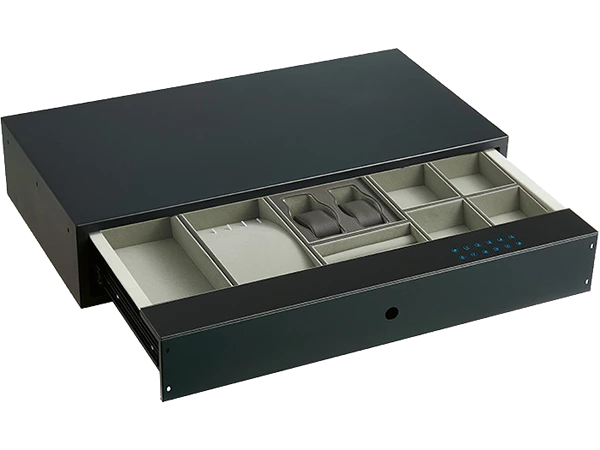
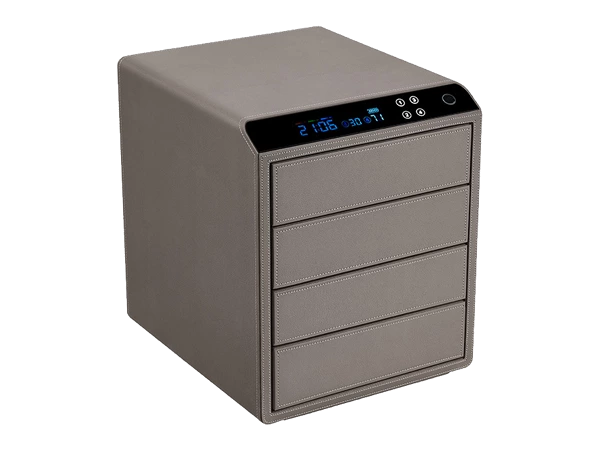
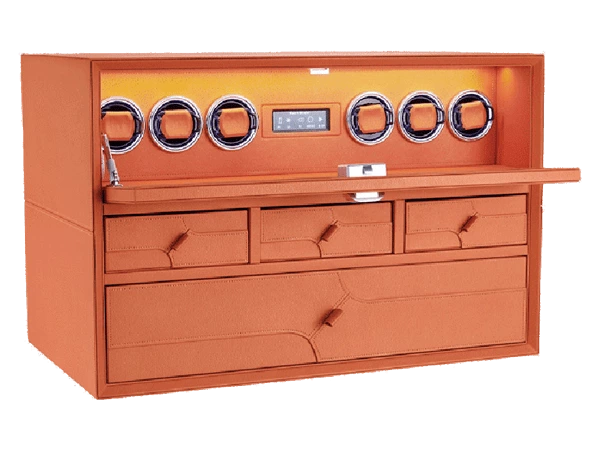
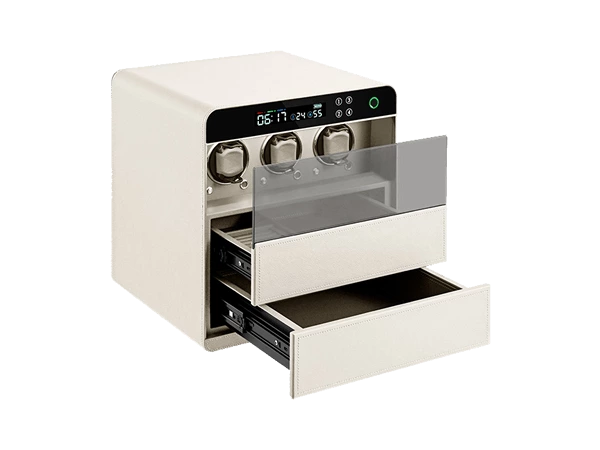
Choose a custom or OEM watch safe when the collection value, security expectations, brand presentation, or technical requirements exceed what a DIY project can reasonably provide. A manufacturer can design around safe construction, lock hardware, interior fit, winder integration, finishing, and repeatable production. This matters for private collectors, retailers, hospitality projects, and brands that need consistent watch storage solutions.
Custom design options may include:
- Drawer-based interiors sized for specific watch counts.
- Integrated watch winders.
- Leather, microfiber, wood, metal, or mixed-material finishes.
- Hidden compartments for documents and accessories.
- Lighting for visibility and presentation.
- Branding for retail, private-label, or OEM watch safe programs.
- Layouts built around existing room dimensions or cabinetry.
The main benefit is alignment. Instead of forcing watches into a generic box, the safe is designed around how the collection is stored, displayed, accessed, and protected.
9. Install the safe with access and discretion in mind
Installation affects performance. A safe placed in an obvious location may attract attention, while one placed too awkwardly may discourage daily use. Choose a location that balances privacy, convenience, floor support, door clearance, and anchoring potential.If anchoring is part of the design, follow the safe maker’s instructions or use a qualified installer. Do not drill into a safe body, floor, or wall without understanding what is behind the surface. Poor installation can damage the safe, reduce protection, or create safety risks.For DIY cabinetry, secure the unit so it cannot tip, shift, or be carried away easily. Even a non-rated cabinet should be stable, discreet, and practical.
10. Maintain the storage system over time
A watch safe is not a “set it and forget it” project. Check the interior regularly for dust, moisture, loose lining, drawer wear, and cushion compression. If the safe includes electronics, inspect cables and winder function periodically.
Keep a simple maintenance routine:
- Wipe interior surfaces with a clean, soft cloth.
- Let finishes and adhesives fully cure before storing watches.
- Keep magnetic tools and harsh chemicals away from watches.
- Review humidity conditions if the storage area feels damp.
- Update the layout when the collection changes.
Good maintenance protects both the watches and the storage investment. It also helps you notice when a DIY solution has reached its limit and a professional safe is the better next step.
Final decision guide
If you want an attractive organizer, start with a watch organizer diy project or a refined diy watch case. If you want a secure place for valuable watches, use a professional safe as the foundation and customize the interior. If you need a polished, scalable, or branded solution, speak with a watch safe manufacturer about a custom watch safe or OEM watch safe program.The best answer to how to build a watch safe is not always to build every part yourself. Build the parts that benefit from your personal preferences, such as layout and display, and rely on professional engineering for the parts that protect the collection.