Should You Keep Luxury Watches in a Safe Pros Cons and Best Practices
A luxury watch is more than an accessory. It can be a daily companion, a milestone purchase, a family heirloom, or the start of a serious collection. The right storage plan protects your watches from theft, moisture, scratches, accidental damage, and the small habits that quietly reduce enjoyment over time.For many collectors, the answer is not simply “buy a safe” or “use a display case.” The best approach combines practical security, careful organization, and realistic access, so your watches stay protected without becoming inconvenient to wear.
Should watches be kept in a safe?
Yes, many luxury watches should be kept in a safe when they are not being worn, especially if they are valuable, rare, sentimental, or difficult to replace. A safe adds a strong layer of protection against opportunistic theft and can also help shield a collection from household accidents, depending on the safe’s construction and placement.That said, a safe is not a complete storage strategy on its own. If it is too small, too light, poorly installed, damp inside, or hard to access, it can create new problems while only giving the impression of security. The smartest luxury watch storage plan treats the safe as one layer in a broader system that includes documentation, insurance, home security, and proper watch cases or trays.

The main benefits of keeping watches in a safe
The biggest reason to keep watches in a safe is simple: watches are small, portable, and often recognizable. A burglar does not need much time or space to remove several pieces from a dresser, closet, nightstand, or visible display cabinet. A well-chosen safe makes that quick grab much harder.A safe can also reduce everyday exposure. Watches left loose on a shelf may be scratched by keys, bumped during cleaning, or handled by someone who does not understand their value. Inside a proper case or tray, and then inside a safe, each piece has a defined place.
Key benefits include:
- Theft deterrence: A heavy, anchored safe is harder to remove or open than a box sitting in a drawer.
- Privacy: Visitors, contractors, cleaners, and casual guests are less likely to see the full collection.
- Better organization: Watch collection storage becomes easier when pieces are grouped in trays, rolls, or labeled compartments.
- Protection from accidental handling: Watches are less likely to be dropped, stacked, or misplaced.
- Peace of mind: Owners can travel, host guests, or leave home knowing their most valuable pieces are not exposed.
For collectors with several pieces, the safe can become the secure “home base” for the collection. Daily wear watches may rotate in and out, while rarely worn, high-value, or sentimental pieces remain secured most of the time.
The drawbacks collectors should consider
Keeping watches in a safe has trade-offs. The most obvious is convenience. If the safe is in a basement, closet, garage, or another inconvenient location, you may stop rotating through your collection and keep wearing the same one or two watches. Storage should protect the collection, not make it disappear from your life.Cost is another factor. A quality watch safe, home safe, or heavy security safe can be a meaningful purchase, especially when installation is included. Smaller safes may be cheaper and easier to place, but if they can be carried away, they may not solve the main security problem.There is also the risk of poor internal conditions. A safe that sits in a damp area, traps humidity, or lacks airflow may not be ideal for straps, boxes, papers, and metal components. Leather straps can suffer in poor conditions, and moisture is never welcome around precision mechanical objects.
Common drawbacks include:
- Reduced access if the safe is hard to reach or slow to open.
- False confidence if the safe is lightweight, visible, or not anchored.
- Space limits when watch boxes, winders, straps, and papers all compete for room.
- Environmental concerns if humidity and temperature are ignored.
- Display limitations for collectors who enjoy seeing their watches every day.
The goal is to understand these drawbacks before buying, so you can choose watch storage solutions that fit your home, habits, and collection size.
Choosing the right watch safe for your collection
A good watch safe should match the value, size, and usage pattern of your collection. Someone with two watches and a simple rotation may need a different setup from a collector with dozens of pieces, original boxes, straps, tools, and documents.A larger safe can be useful if you want room for luxury watch cases, watch rolls, warranty cards, receipts, and other valuables. A smaller quick-access safe may work for a few watches you wear often, but it should still be secured properly. If the safe is easy to pick up and leave with, it is better viewed as a lockbox than a serious security solution.
Look for features that matter specifically for watches:
| Feature | Why it matters for watches |
| Anchoring capability | Helps prevent the entire safe from being removed. |
| Interior lining | Reduces scratches on cases, bracelets, and clasps. |
| Adjustable shelving | Allows space for trays, rolls, and original boxes. |
| Fire-resistant construction | Adds protection for documents, boxes, and valuables. |
| Reliable lock type | Keypad, mechanical, or biometric access should suit your habits. |
| Humidity control options | Helps protect leather straps, papers, and stored watches. |
| Discreet placement | Keeps the safe from becoming an obvious target. |
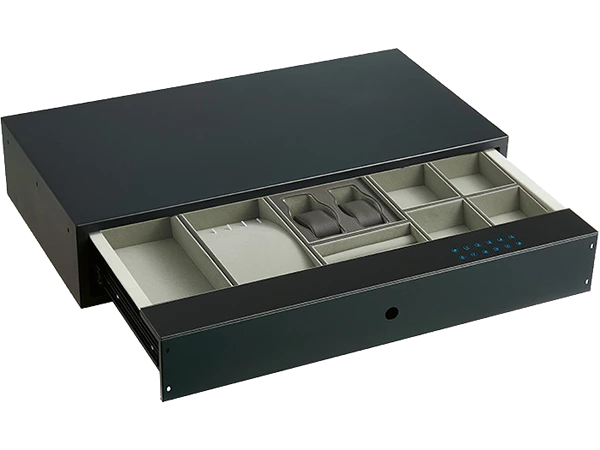
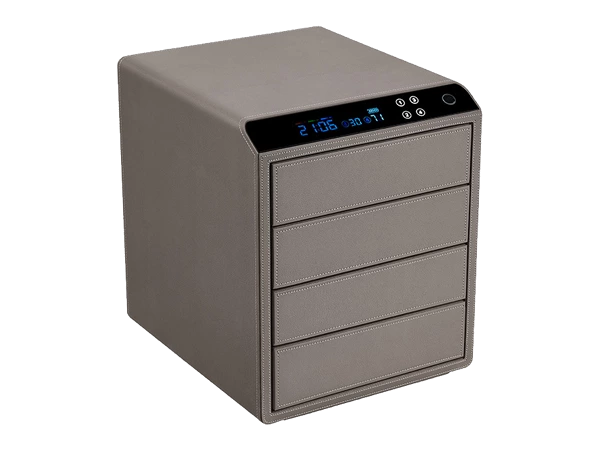
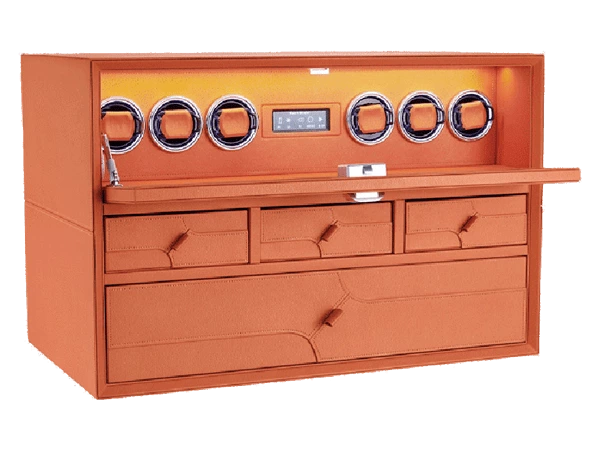
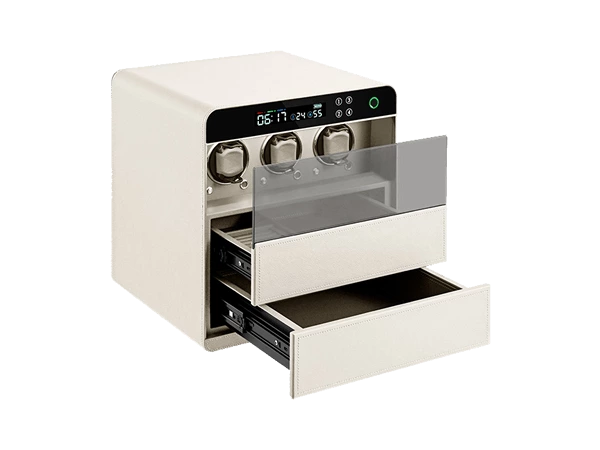
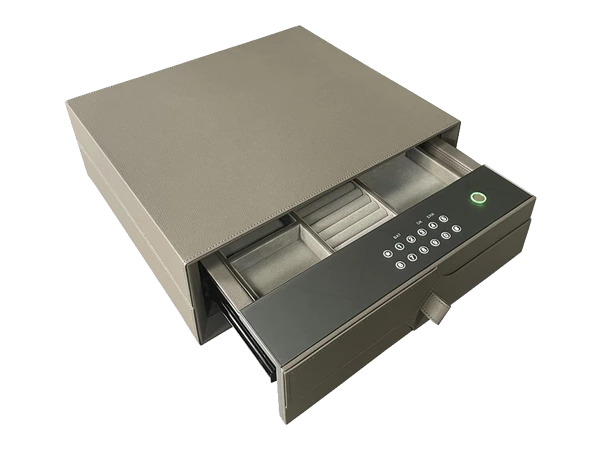
A dedicated watch safe may include drawers, cushions, and sometimes integrated watch winders. These can be elegant, but they are not automatically better than a strong general-purpose safe with well-chosen interior organizers. Focus first on security, installation, and interior conditions; then consider convenience features.
Watch boxes, cases, and trays still matter
Even if you keep watches in a safe, you still need proper internal storage. A metal bracelet resting directly against another case can scratch it. Loose watches can slide, knock together, or put pressure on crowns and pushers. The safe protects the collection from outside threats; the box or tray protects each watch from its neighbors.Luxury watch cases are useful because they keep each piece separated, cushioned, and easy to identify. A compact roll can work well for travel or for a small safe, while a drawer-style tray may be better for a larger safe. For a single owner with several dress, sport, and everyday watches, a men luxury watches storage box may be a practical way to organize the rotation before placing the box inside a larger secure area.
Different watch box designs serve different needs:
- Single-watch pouches are compact and useful for short-term storage or travel.
- Watch rolls save space and work well in safes with limited shelf depth.
- Flat trays make it easy to see the collection at a glance.
- Drawer boxes separate watches, straps, and small accessories.
- Hard travel cases add impact protection when a watch leaves the home.
If you own watches with leather straps, avoid compressing them tightly around cushions that are too large. If you own heavier bracelet watches, make sure dividers are sturdy enough to prevent contact. Small details like cushion size and compartment spacing matter more than they seem.
When display creates risk
Watch display ideas are tempting because beautiful watches are enjoyable to look at. A glass-top case on a dresser or shelf can turn a collection into part of the room, and that visual pleasure is real. The problem is that visibility also creates information.A visible display tells visitors what you own and where it is. That does not mean every guest is a risk, but it does mean the watches are no longer private. For high-value collections, public-facing or easily visible display storage is usually better reserved for lower-value pieces, empty boxes, or situations where the room itself is secured.If you love display, consider a balanced approach. Keep the most valuable watches in a safe and display a smaller, lower-risk rotation. Another option is to use a closed cabinet, concealed drawer, or private dressing area instead of a prominent glass case. The best watch display ideas should make the collection enjoyable without turning it into an invitation.
Best practices for luxury watch storage at home
The safest setup is usually layered. No single safe, alarm, camera, lock, or hiding place solves every risk. But when several sensible measures work together, the collection becomes much harder to find, remove, damage, or forget.
Use this checklist to improve your home storage plan:
- Anchor the safe whenever possible. A heavy safe is better than a light one, but anchoring adds another obstacle.
- Keep the safe discreet. Avoid placing it where guests, delivery workers, or contractors can easily notice it.
- Use cases or trays inside the safe. Do not let watches touch, slide, or stack on each other.
- Control humidity. Consider safe-friendly humidity control products and check conditions periodically.
- Separate documents from daily clutter. Store warranty cards, receipts, and serial details in an organized way.
- Photograph each watch. Include case, dial, bracelet, clasp, serial details where appropriate, and accessories.
- Review insurance needs. Physical security helps, but insurance addresses scenarios storage cannot prevent.
- Limit who knows about the collection. Privacy is part of security.
- Use home security layers. Locks, alarms, cameras, and lighting all support the safe.
- Create a wearing routine. Return watches to the same place after use so nothing is left out overnight.
This approach works because it reduces both random and predictable risks. A watch left on a bathroom counter, tossed into a travel bag, or shown casually to too many people is more vulnerable than one that has a clear storage routine.
Balancing access with security
A watch collection should still be enjoyable. If your storage system is so inconvenient that you avoid wearing your watches, it may be too strict for your lifestyle. The best system separates daily access from long-term protection.One practical method is to create zones. Keep one or two current rotation pieces in a secure but convenient location, while the rest stay in the safe. At the end of the day or week, return everything to its proper place. This keeps the collection active without exposing every watch at once.For example, a collector might use a compact tray in a locked bedroom drawer for the week’s rotation and a larger safe for the full collection. Another might use a quick-access safe for daily wear watches and a more substantial safe for rare or sentimental pieces. The right answer depends on your routine, but the principle is the same: make the secure habit easy enough to repeat.
What about watch winders?
Watch winders can be useful for some automatic watches, especially complicated pieces that are inconvenient to reset. However, they are not necessary for every automatic watch, and they are not a substitute for secure storage. If you use a winder, think about where it sits, how visible it is, and whether it fits inside your safe or secured storage area.A winder on a dresser may be convenient, but it also advertises that watches are nearby. A winder inside a safe can be more secure, though it requires space, power planning, and attention to heat and humidity. For many collectors, a simple case or tray is enough, while winders are reserved for select watches that genuinely benefit from staying running.
Travel and temporary storage deserve extra care
Many watch losses happen outside normal routines. Hotels, gym lockers, rental homes, office drawers, and luggage all create different risks. When traveling, bring fewer watches than you think you need and use a protective travel case that keeps each piece separated.Avoid leaving watches loose in bags or visible in hotel rooms. If you use a room safe, remember that it is a convenience feature, not the same as a well-installed home safe. For especially valuable watches, consider whether wearing one versatile piece is better than traveling with several.Some owners also use tracking devices in luggage, travel cases, or larger storage containers as an added layer. This should not replace careful handling, insurance, or secure storage, but it can support a broader plan.
A practical decision guide
If you are still deciding whether to keep watches in a safe, start with the role each watch plays in your life. A modest daily wearer, a sentimental inherited piece, and a high-value collectible may all deserve different treatment.
Use this simple guide:
- Use a safe for valuable, rare, sentimental, or hard-to-replace watches.
- Use a secure box or tray for short-term rotation pieces that you wear frequently.
- Avoid open display for your most valuable watches unless the room itself is secure.
- Choose larger storage if you want to keep boxes, straps, tools, and paperwork together.
- Prioritize installation over decorative features if theft protection is the main concern.
- Prioritize interior organization if scratches, clutter, and daily usability are your main frustrations.
The question is not only “should you keep watches in a safe?” It is also “which watches, how often, and in what kind of interior setup?” That is where thoughtful watch collection storage becomes more useful than a one-size-fits-all rule.
Final takeaway
For most serious collectors, it is wise to keep watches in a safe when they are not being worn, especially the pieces with meaningful financial or sentimental value. A safe reduces exposure, improves privacy, and gives your collection a consistent home.But the best luxury watch storage is not just a locked box. It combines a properly chosen watch safe, well-fitted cases or trays, discreet placement, humidity awareness, documentation, insurance, and everyday habits you can actually maintain. Protect the watches well, keep them organized, and make access practical enough that you still enjoy wearing them.