How to Choose the Right Closet Safe for Luxury Wardrobe Projects
A closet safe should protect valuables without making a luxury wardrobe feel heavy, awkward, or visually compromised. The best results come from treating the safe as part of the closet architecture from the start, not as an accessory added after the cabinetry is complete. For homeowners, designers, builders, and custom millwork teams, the goal is a simple balance: strong security, discreet integration, and daily usability.
What makes a closet safe work in a luxury wardrobe?
A closet safe works well in a luxury wardrobe when it is planned around the way the owner actually lives. Jewelry, watches, passports, heirlooms, collectibles, and important documents may all require different levels of access, different interior layouts, and different concealment strategies. A safe that looks impressive but is difficult to reach may go unused, while a safe that is too obvious can weaken the entire security concept.
In high-end wardrobe projects, the safe should feel like a natural part of the room’s design language. That means the surrounding cabinetry, door reveals, hardware alignment, materials, lighting, and traffic flow all need to support the placement. A high-end safe does not have to be visually loud to be impressive. In many luxury interiors, the most successful solution is the one guests never notice.
This is why early coordination matters. The homeowner, closet designer, builder, millwork manufacturer, security consultant, and closet safe supplier should understand the intended use before fabrication begins. Once cabinetry is produced, changing the safe size, locati0n, door swing, or support structure can become expensive and disruptive.

Start with the owner’s access pattern
Before choosing a model, finish, or concealment method, define how often the safe will be used. A safe for closet storage that holds rarely accessed documents can be deeper, more concealed, and positioned in a less central zone. A jewelry safe used every morning needs to be convenient, well-lit, ergonomic, and close to the dressing routine.
Think in practical scenarios rather than abstract security preferences. A homeowner who rotates watches daily may need shallow drawers, soft interior lining, and a locati0n near a vanity or dressing island. Someone storing estate documents may prefer a larger safe behind a panel or cabinet door, where daily access is less important. A collector may need adjustable shelving, climate-conscious placement, or separated compartments.
A useful planning question is: “Will the owner actually use this safe every time it matters?” If the answer is no, the design is not finished. Convenience should not replace security, but it must support it.
Common access patterns
- Daily jewelry or watch use: Place the closet safe near a vanity, wardrobe island, or accessory zone. Prioritize drawer-style interiors, lighting, and quick but secure lock operation.
- Occasional document access: Consider a more concealed cabinet bay, wall-integrated locati0n, or lower-traffic area. Interior organization may matter more than instant access.
- Shared household use: Plan for controlled access, backup entry, and clear rules about who can open the safe. Dual-control lock options may be relevant.
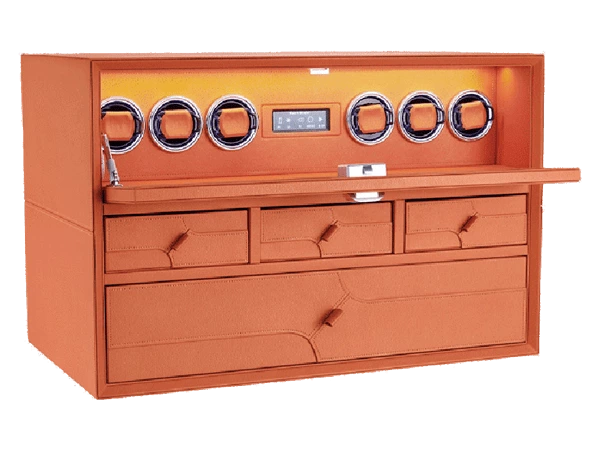
- Collector storage: Review the interior configuration early. Shelving, watch winders, lined drawers, and divided compartments can affect the safe dimensions.
- Travel preparation: If passports, jewelry, and currency are accessed before trips, locate the safe where packing and dressing naturally happen.
Placement drives both security and design
A closet safe can be hidden in several ways, but each placement option carries design and construction trade-offs. The right choice depends on the size of the safe, the surrounding cabinetry, the owner’s routine, and the level of concealment desired. In a luxury wardrobe, placement should also preserve the rhythm of the millwork.
A safe installed behind cabinet doors can be highly practical because it uses familiar wardrobe language. The exterior looks like storage, while the safe remains protected inside. The challenge is depth, hinge clearance, and door swing. If the outer cabinet door and safe door compete for space, the result can feel clumsy.
A closet island can also be an effective locati0n, especially for jewelry and accessories. It keeps valuables near the dressing workflow and allows designers to create a refined presentation. However, an island safe requires careful attention to weight, anchoring, drawer clearances, and sightlines from the closet entrance.
Behind mirrors, decorative panels, or integrated millwork can offer excellent concealment. These solutions work best when the hidden panel repeats a pattern already present in the room. If the panel looks like a strange isolated feature, it may attract attention instead of reducing it.
Placement comparison for luxury closets
| Placement option | Best for | Main advantage | Key consideration |
| Behind cabinet doors | Jewelry, documents, mixed valuables | Blends into wardrobe cabinetry | Requires coordinated door swing and depth |
| Inside closet island | Daily accessories, watches, jewelry | Convenient during dressing | Needs strong structural support and anchoring |
| Behind mirror panel | Discreet storage | Strong concealment when designed well | Must avoid obvious seams or awkward access |
| Behind decorative wall panel | Larger or less-used safe | Can disappear into architectural millwork | Requires precise fabrication and service planning |
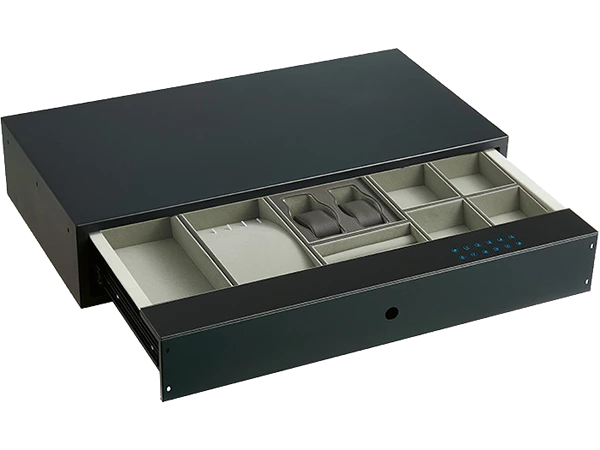
| Drawer-bank integration | Smaller valuables | Familiar and ergonomic | Must not compromise safe rating or locking integrity |
The best placement often comes from asking where valuables naturally enter and leave the owner’s routine. A safe that interrupts the closet’s flow will feel like an obstacle. A safe that supports the flow becomes part of the luxury experience.
How should concealment be handled without making access awkward?
Concealment should make the safe less obvious while still allowing the owner to open it comfortably and consistently. The strongest designs avoid “secret compartment” gimmicks and instead use disciplined millwork: aligned reveals, matching veneers, repeated hardware patterns, controlled lighting, and clean sightlines. If accessing the closet safe requires moving too many items or performing an awkward sequence, the owner may stop using it.
A good concealed design feels intentional from every angle. The panel should not have unusual gaps, mismatched grain, odd proportions, or hardware that breaks the room’s visual logic. Luxury wardrobes rely on repetition and proportion, so the safe area must follow the same rules as the rest of the cabinetry.
At the same time, concealment cannot block service access. Batteries, lock components, hinges, and electronic features may need maintenance. Designers should plan how the safe will be accessed for service without damaging finished millwork.
Concealment principles that keep the room refined
- Repeat existing patterns. Use the same panel widths, door reveals, hardware spacing, and finish direction found elsewhere in the wardrobe.
- Control the first sightline. Avoid placing the safe where it is visible from the closet entrance, bedroom, hallway, or dressing mirror reflection.
- Avoid one-off details. A single unusual panel or handle can draw attention, even if it was meant to hide something.
- Keep movement natural. Hinged panels, sliding panels, and cabinet doors should open in a way that feels consistent with the rest of the closet.
- Plan lighting carefully. Bright accent lighting can unintentionally reveal seams, hardware, or shadows around a concealed compartment.
- Protect ergonomics. The owner should be able to stand comfortably, see the lock, open the door fully, and remove items safely.
Concealment works best when it is quiet. The most elegant safe for closet integration is not necessarily the most theatrical one; it is the one that protects valuables while preserving the calm, polished character of the room.

Structural planning cannot be an afterthought
A high-end safe can be heavy, and its weight affects the cabinetry, subfloor, wall structure, and anchoring strategy. Even a beautifully concealed installation can fail if the safe is placed inside millwork that was not designed to support it. Structural planning should happen before shop drawings are finalized.
The first consideration is support. Cabinet bases, closet islands, and wall bays may need reinforcement, blocking, or engineered support depending on the safe’s dimensions and weight. Upper-level installations deserve extra review because floor capacity and load distribution can become important.
Anchoring is equally important. A safe that is not properly secured may be easier to remove, even if the safe itself is strong. Wall and floor anchoring should be coordinated with the builder or installer so that fasteners connect to appropriate structural elements, not just decorative panels.
Door swing also affects installation quality. Safe doors can be thick and heavy, and they may require more clearance than standard cabinet doors. Designers should confirm that the safe door can open fully without hitting wardrobe doors, drawer fronts, islands, seating, or mirrors.
Pre-fabrication structural checklist
Before cabinetry is ordered or built, confirm:
- Safe dimensions and weight are known and documented.
- Cabinetry support is designed for the safe, not estimated after installation.
- Wall or floor anchoring points are coordinated with framing, blocking, or structural backing.
- Door swing and handle projection are tested against surrounding millwork.
- Service access is available for locks, batteries, hinges, panels, or automation.
- Delivery path is realistic, including stairs, elevators, doorways, and finished flooring protection.
- Electrical requirements are identified if the safe includes lighting, smart lock features, charging, or automated concealment.
- Fire, burglary, or other performance expectations are discussed with a qualified security professional or supplier.
These details may feel technical, but they protect the design investment. A luxury wardrobe is often built with tight tolerances, premium finishes, and carefully sequenced trades. The safer and smoother approach is to design the safe into the project from the beginning.
Locking technology should match real behavior
Lock choice is not only a security decision. It shapes the owner’s daily experience. A lock that is too slow or complicated may frustrate someone who uses the closet safe frequently, while a lock that is convenient but poorly managed may create access concerns.
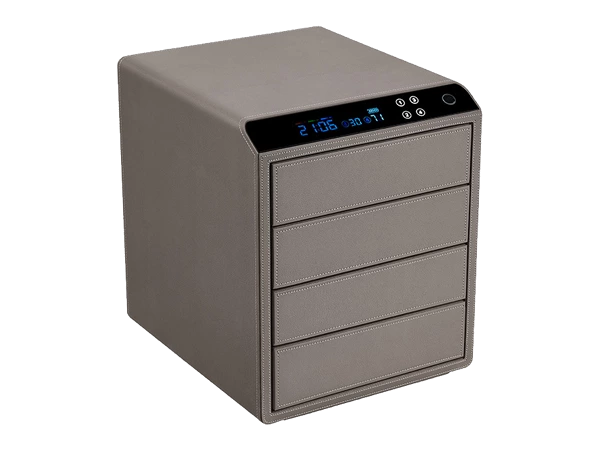
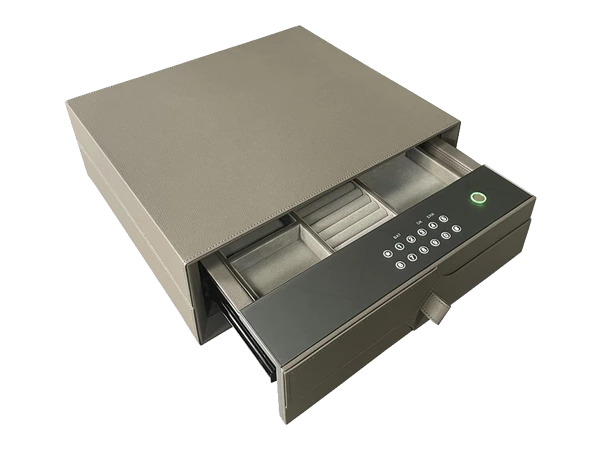
Keypads are common because they are familiar and relatively quick to use. Biometric locks can be appealing in a luxury setting because they feel modern and reduce the need to remember a code, but they should still include reliable backup access. Mechanical locks may suit owners who prefer simplicity and independence from batteries or electronics. Dual-control systems can be useful where two authorized steps are desired before opening.
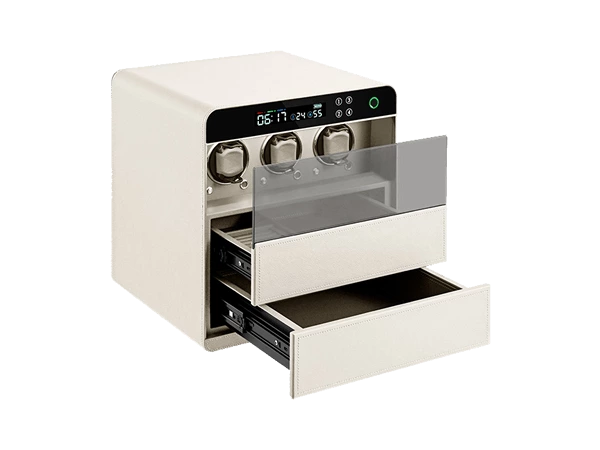
Smart features are increasingly part of luxury safe conversations. Depending on the product, these may include app-connected alerts, audit trails, automatic interior lighting, motorized drawers, or integrated concealment panels. These features can improve convenience, but they also add planning requirements. Power, backup access, privacy, maintenance, and long-term serviceability should be discussed before the design is finalized.
A closet safe factory or OEM closet safe program may offer different locking packages for different project types. For designers and cabinet manufacturers, it is worth asking which lock options are available, how they affect lead times, and whether the locking interface can be coordinated with the aesthetic expectations of the wardrobe.
Lock selection considerations
- Frequency of use: Daily access favors fast, intuitive operation. Occasional access can tolerate a slower method.
- Backup entry: Every electronic or biometric system should have a clear backup plan.
- User count: More users may require stronger access management.
- Visibility: The lock face should be reachable but not necessarily exposed to casual view.
- Maintenance: Batteries, software, key overrides, or mechanical servicing should be practical after installation.
- Lifestyle fit: A technology-forward owner may welcome smart features; another may prefer a discreet mechanical approach.
The right lock is the one the owner will use correctly every time. Security depends not just on the mechanism, but on consistent behavior.
Interior configuration matters as much as the shell
Many project teams focus on where the safe will go, then treat the interior as a secondary detail. That can be a mistake. The internal layout determines whether the safe supports the owner’s valuables or becomes a dark box where everything is stacked and difficult to find.
For jewelry, shallow drawers and divided trays can reduce tangling and make daily selection easier. For watches, the owner may want cushioned compartments or dedicated watch storage. For documents, shelves sized for folders, passports, and envelopes can be more useful than deep open space. For mixed storage, adjustable shelving and modular inserts can keep the safe flexible.
Interior finishes also matter in a luxury wardrobe. Leather, suede-like lining, wood veneer, metal accents, or coordinated colors can make the safe feel aligned with the closet rather than hidden as a purely utilitarian object. The goal is not decoration for its own sake. A refined interior improves visibility, protects delicate items, and reinforces the premium experience.
Lighting can be especially useful. Interior illumination helps owners see small items quickly and reduces the temptation to remove multiple pieces at once. If lighting requires power, wiring and access must be planned with the rest of the installation.
Working with a closet safe supplier or factory partner
For builders, closet brands, and millwork manufacturers, choosing the right closet safe supplier is not only about the safe itself. It is about project coordination. A luxury wardrobe may involve custom dimensions, finish coordination, concealed panels, strict installation tolerances, and client-specific access preferences. The supplier should be able to support that process clearly.
An OEM closet safe relationship can be especially useful when a closet company wants to incorporate safes into its own cabinetry packages. In that case, consistency matters. The safe must fit repeatable production details while still allowing customization for different clients and room layouts.
A closet safe factory may also provide information that affects engineering and fabrication, such as cutout dimensions, anchoring requirements, lock options, interior configurations, and clearance needs. The earlier these details are available, the easier it is for designers to avoid guesswork.
Questions to ask a supplier before specifying a safe
- What standard and custom sizes are available for wardrobe integration?
- Can the safe be adapted for cabinet, island, wall, or panel-concealed installation?
- What lock types are available, and what backup access methods are recommended?
- What are the anchoring and structural support requirements?
- Are CAD files, shop drawing details, or technical specifications available?
- Can finishes, interior layouts, or hardware details be customized?
- What service access is required after installation?
- How should the safe be packaged, delivered, and handled on site?
- Are there options suitable for OEM or repeat-production closet programs?
The best supplier conversations are specific. Instead of asking only for a “luxury safe,” describe the room, the valuables, the intended access frequency, and the cabinetry concept. Better information leads to better recommendations.
Collaboration prevents expensive compromises
A closet safe touches multiple parts of a luxury home project. The designer considers aesthetics and workflow. The builder considers structure and installation sequencing. The millwork manufacturer considers cabinet construction and tolerances. The security professional considers risk, anchoring, and access control. The homeowner considers daily use.
When those conversations happen separately, details can fall through the cracks. A designer may create a beautiful concealed panel without realizing the safe door needs more swing clearance. A builder may reinforce the wrong area because final safe dimensions changed. A millwork shop may fabricate cabinetry before lock access or ventilation needs are clear.
The simplest solution is a coordinated approval process before production. The safe model, dimensions, locati0n, door swing, lock type, anchoring strategy, concealment method, and service access should all be reviewed together. This does not have to slow the project. In fact, it often prevents delays later.
A practical coordination sequence
- Define what will be stored. Identify jewelry, watches, documents, collectibles, or mixed valuables.
- Map the owner’s routine. Determine whether access is daily, weekly, seasonal, or rare.
- Select a likely locati0n. Consider sightlines, convenience, support, and traffic flow.
- Confirm safe dimensions and lock type. Share specifications with the design and construction teams.
- Review structure and anchoring. Coordinate blocking, floor support, and delivery logistics.
- Design the concealment. Align panels, doors, hardware, lighting, and finish details.
- Finalize shop drawings. Do this only after safe requirements are confirmed.
- Plan installation and handover. Include setup, owner training, backup access, and maintenance information.
This process turns the safe from a late-stage problem into a planned feature. In luxury work, that difference is significant.

Common mistakes to avoid
The most common mistake is choosing the safe too late. Once the cabinetry is already designed, the project team may be forced to squeeze the safe into a locati0n that is visually awkward, structurally weak, or inconvenient for the owner. A late decision can also limit lock choices, interior layouts, and concealment options.
Another mistake is prioritizing concealment so heavily that the safe becomes annoying to use. If the owner must move clothing, open multiple panels, reach around a door, or bend uncomfortably, the safe may not become part of the daily routine. Security is strongest when the protected behavior is easy to repeat.
A third mistake is overlooking serviceability. Electronic locks, lighting, automated panels, and specialty hardware may require maintenance. If the only way to service the system is to remove finished millwork, the design has created a future problem.
Finally, avoid treating every client the same. A safe for a watch collector, a safe for legal documents, and a safe for daily jewelry are not identical design challenges. The best solution is personal, even when the cabinetry system is standardized.
A simple decision framework
Choosing the right closet safe becomes easier when the team evaluates each option through four lenses: security, concealment, usability, and integration. A strong solution should perform well in all four areas. If one area is weak, the project team should adjust the design before fabrication.
Security
Security starts with the safe body, lock, and anchoring, but it also includes placement. A strong safe in a weak cabinet or visible locati0n may not provide the intended protection. Discuss risk level, valuables, and installation method with a qualified professional when needed.
Concealment
Concealment should reduce attention without creating strange design cues. The safe should sit within the logic of the wardrobe. Matching materials, consistent reveals, and thoughtful sightline control can make a major difference.
Usability
Usability determines whether the safe becomes part of the owner’s habits. The lock should be intuitive, the height should be comfortable, and the interior should match the items stored. If the owner uses the safe often, convenience becomes a security feature.
Integration
Integration connects the safe to the cabinetry, structure, lighting, electrical planning, and installation sequence. This is where early collaboration pays off. A well-integrated safe looks intentional and performs reliably.
The right safe protects more than valuables
A well-chosen closet safe protects jewelry, watches, documents, and personal items, but it also protects the design integrity of a luxury wardrobe. It allows security to exist without visual disruption. It gives the homeowner convenient access without turning the closet into a utilitarian storage room.
For homeowners, the key is to choose a safe that fits real routines, not just imagined risks. For designers and builders, the key is to bring the safe into the conversation before cabinetry is finalized. For manufacturers and brands working with a closet safe factory or OEM closet safe program, the opportunity is to make security feel like a refined part of the wardrobe system.
The best closet safe is not simply the strongest box that can fit into the room. It is the one that supports the owner’s lifestyle, respects the architecture of the closet, and disappears into the design until it is needed.