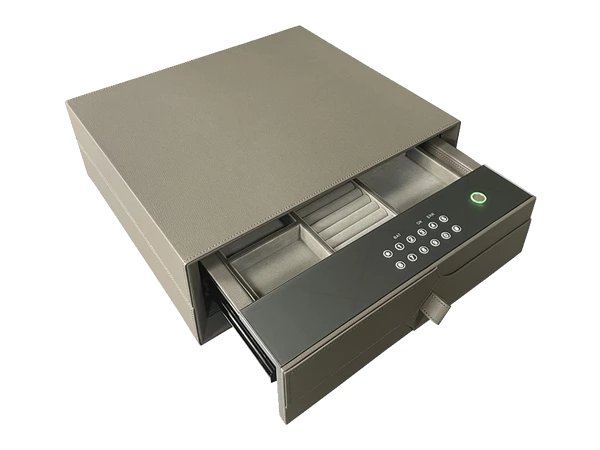
Wardrobe Safe Buying Guide for High End Home Security Storage
A wardrobe safe can turn unused closet or dressing-room space into discreet, practical storage for valuables you want close at hand. For high-end homes, the goal is not simply to hide items, but to combine everyday convenience with layered protection, thoughtful design, and a finish that belongs inside a refined interior. This guide explains what to look for, how to compare options, and when a hidden wardrobe safe or bespoke solution may be the better choice.
What should a wardrobe safe protect in a high-end home?
A wardrobe safe should protect the valuables you use often enough to keep nearby, but not so casually that they belong in an open drawer. In a luxury home, that may include watches, jewelry, passports, private documents, collectible accessories, heirlooms, backup cards, small electronics, or personal items that require both privacy and controlled access. The best safe is chosen around what you store, how often you access it, and how discreetly it can be integrated into the room.
Start by separating your valuables into three groups: daily-use items, occasional-use items, and long-term storage items. Daily-use pieces need a layout that is fast and comfortable, while long-term items can sit deeper inside the safe or in separate compartments. This simple exercise helps you avoid buying a safe that is either too small, too exposed, or too inconvenient to use consistently.
A well-planned wardrobe safe should support your habits rather than interrupt them. If you wear watches every morning, shallow velvet-lined drawers may matter more than a large open cavity. If you travel often, a passport and document shelf should be easy to reach. If several people in the household need access, user management becomes as important as physical construction.

Why wardrobe safes suit luxury home security
A wardrobe is a natural location for secure storage because it is already connected to personal routines. Dressing rooms, master closets, and private suites often hold the items people handle before leaving home or before entertaining. When the safe is built into that environment, secure storage becomes part of the routine instead of an extra chore.
Discretion is another advantage. A hidden wardrobe safe can sit behind a cabinet door, mirror panel, sliding section, drawer front, or custom joinery. Unlike a freestanding safe that announces itself, a concealed installation can reduce visual attention while preserving the elegance of the room.
High-end home security is also about layers. A safe should not be the only defense; it should work with access control, alarms, cameras, lighting, and good household procedures. Still, a quality wardrobe safe creates an important final barrier between valuables and unauthorized hands, especially when it is anchored properly and placed thoughtfully.
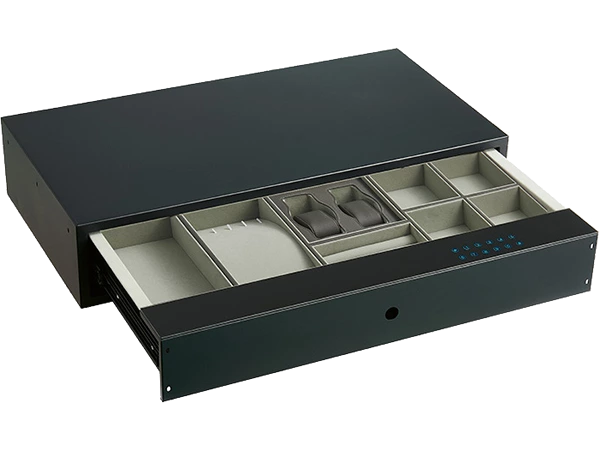
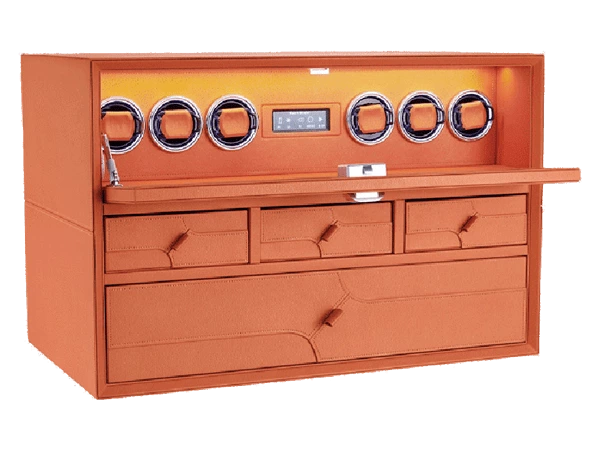
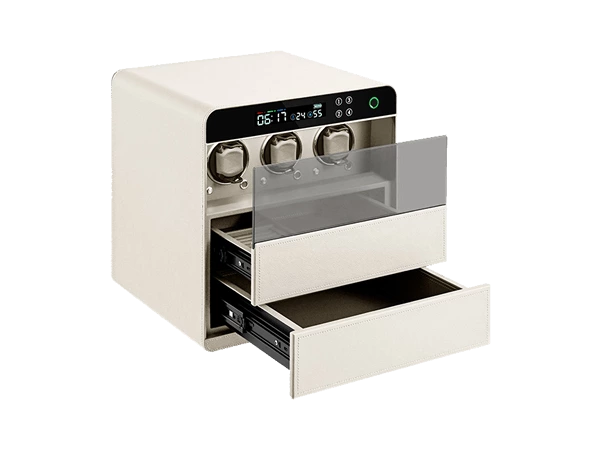
There is also an aesthetic benefit. A luxury home safe no longer has to look purely industrial. Interior linings, drawer systems, watch winders, lighting, leather, suede, timber veneer, and custom cabinetry can make the safe feel like part of the wardrobe design rather than an afterthought.
The right safe starts with your storage habits
Before comparing models, think through how the safe will be used on an ordinary day. Many buyers focus on lock technology first, but layout and placement often determine whether the safe becomes a daily security habit or a beautiful box that is rarely opened.
Ask yourself what needs to happen in the first 30 seconds of use. Do you want to remove a watch, select earrings, grab travel documents, place a wallet inside, or store a laptop? A compact safe may be enough for jewelry and passports, but larger accessories, document folders, and boxed collectibles need more depth and shelf flexibility.
It also helps to consider who should not have access. The concern may be burglary, visiting contractors, guests, household staff, children, or simple privacy within a busy home. Each scenario affects the choice of lock, location, and access permissions.
A practical pre-buy checklist
Use this checklist before speaking with a supplier, installer, or custom safe manufacturer:
- List the items you plan to store now, then allow room for future additions.
- Measure the available wardrobe space, including door swing, drawer clearance, depth, and nearby obstructions.
- Decide whether you need daily access, occasional access, or both.
- Identify who needs authorized access and whether each user needs a separate code or fingerprint.
- Consider whether the safe should be visible, semi-concealed, or fully hidden behind joinery.
- Think about interior organization, such as watch drawers, jewelry trays, document shelves, lighting, or padded compartments.
- Confirm whether the wall, floor, or cabinet structure can support secure anchoring.
- Plan for power needs if the safe includes lighting, smart alerts, dehumidification, or watch winders.
This preparation makes conversations more productive. Instead of asking for “the best wardrobe safe,” you can describe the precise storage problem you want solved.
Is a fingerprint wardrobe safe worth it?
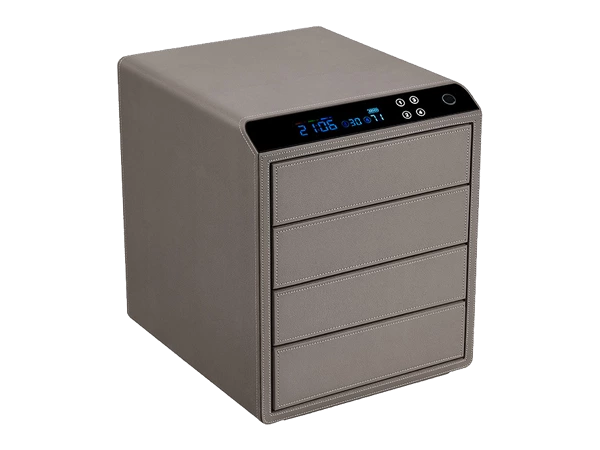
A fingerprint wardrobe safe is worth considering when you want fast access without relying only on keys or memorized codes. Biometric entry can be especially useful for daily-use valuables because it reduces friction: you touch the reader, open the safe, take what you need, and close it again. The value depends on the quality of the biometric system, backup access options, and whether the safe allows proper user management.
Fingerprint access is popular because it feels intuitive. For busy mornings, late-night returns, or moments when you do not want to enter a code in view of someone else, biometric entry can be convenient. It can also help reduce the problem of shared codes being passed around too casually.
However, biometrics should not be the only thing you evaluate. A good safe should include reliable backup methods, such as a secure keypad process, emergency override protocol, or mechanical key system depending on the design. You should also ask how many fingerprints can be stored, whether individual users can be deleted, and how the safe behaves after repeated failed attempts.
What to check in biometric access
When reviewing a fingerprint model, look beyond the sales description and ask practical questions:
- Does the scanner work reliably with dry, wet, aged, or slightly worn fingerprints?
- Can you enroll more than one finger per user for backup?
- Can the administrator add and remove users easily?
- Is there an audit trail or access log if smart wardrobe security features are included?
- What happens when the battery is low or power is interrupted?
- Does the safe lock out temporarily after repeated failed attempts?
- Is there a discreet backup entry method that does not compromise security?
A fingerprint lock can be excellent, but only when paired with strong construction, secure installation, and sensible household access rules. Convenience should support security, not replace it.
Smart wardrobe security adds control and visibility
Smart wardrobe security can make a safe more useful in a modern home, especially when several people, properties, or staff schedules are involved. Features may include app notifications, user access logs, tamper alerts, low-battery warnings, timed access permissions, or integration with broader home security systems. These tools do not make the safe physically stronger by themselves, but they can make activity more visible and easier to manage.
For example, an alert that the safe was opened while you were away may prompt you to review camera footage or check household access. A low-battery reminder may prevent the inconvenience of a lock that needs emergency attention. Separate user profiles can also make it easier to grant access to a spouse, trusted family member, or assistant without sharing one master code.
Smart features should be chosen with privacy in mind. Ask how access data is stored, whether remote functions can be disabled, and what happens if the home network is down. A safe should remain secure and usable even when the smart layer is unavailable.
The most useful smart features are usually the ones that solve real behavior problems. If you travel frequently, remote alerts may matter. If multiple people use the safe, access records may help. If you simply want a secure jewelry compartment in your dressing room, a simpler electronic or biometric lock may be enough.
Construction details matter more than appearances
A wardrobe safe can be beautifully integrated, but its real value depends on how it resists forced access. The outer appearance may be hidden behind cabinetry, so pay attention to what you cannot see at first glance: steel thickness, door design, hinge protection, locking bolts, relockers, anchoring points, and resistance to prying.
The door is often the most attacked part of a safe. A well-built door should feel solid, close cleanly, and resist leverage around the frame. Hinges should be protected by the safe’s design, especially if they are external. Locking bolts should engage securely and not feel loose or flimsy.
Anchoring is just as important. A small safe that is not fixed properly can be removed and attacked elsewhere. In wardrobe installations, anchoring may involve the floor, wall, structural framing, or a reinforced cabinet system. This should be planned before the cabinetry is finished, not improvised afterward.
Fire protection is another consideration, especially for documents, photographs, drives, and heirlooms. Not every wardrobe safe is designed for fire resistance, and not every fire-rated safe is ideal for luxury wardrobe integration. If fire protection matters, discuss it early so you do not trade away the feature for aesthetics without realizing it.
A hidden wardrobe safe needs careful design
A hidden wardrobe safe works best when concealment looks natural. The safest-looking concealment is often the least theatrical: a cabinet panel that matches the rest of the wardrobe, a mirror that belongs in the dressing area, a drawer stack with one secure section, or a closet compartment that does not draw attention. Overly clever hiding places can become obvious if they interrupt the room’s design language.
Concealment should also be practical. If opening the safe requires moving heavy boxes, removing clothing rails, or performing a complicated sequence, you may stop using it. A hidden safe should be easy for authorized users and difficult for everyone else.
Lighting, ventilation, and access clearance are easy to overlook. Built-in safes need enough room for the door to open fully and for drawers or trays to slide out. If the safe contains electronics, watches, leather goods, or delicate jewelry, the internal environment should be considered as part of the plan.
Discreet placement ideas
Depending on the room layout, a hidden wardrobe safe may be placed in several ways:
- Behind a full-height wardrobe door that blends with other panels.
- Inside a private dressing island, with secure drawers built into the structure.
- Behind a mirror or decorative panel, provided the mechanism is durable and easy to use.
- Within a shoe or accessory wall where the safe front is concealed by matching joinery.
- In a master closet corner where sightlines from the bedroom or hallway are limited.
- Behind a secondary locked cabinet door for an added privacy layer.
The right placement depends on your wardrobe design, the value and type of items stored, and how visible the area is to guests or service providers.

Interior organization protects the items too
Security is not only about keeping people out. It is also about protecting items from scratches, tangling, pressure, humidity, and unnecessary handling. A luxury home safe should make valuables easy to see, easy to select, and easy to return to their proper place.
Jewelry trays can reduce clutter and prevent pieces from rubbing together. Watch cushions and dedicated compartments help preserve shape and finish. Document shelves keep passports, deeds, certificates, and personal papers from being folded or buried under heavier items. Soft linings can make the safe feel more appropriate for fine accessories, while internal lighting improves usability.
If you collect watches, ask whether the safe can accommodate winders, charging, or future additions. If you store jewelry, consider shallow drawers rather than deep compartments where small pieces disappear. If you store electronics or drives, discuss cable routing and heat management before the safe is installed.
A thoughtful interior also helps with quick inventory checks. When every item has a place, missing pieces are easier to notice. This is a practical benefit that supports both daily convenience and long-term peace of mind.
When does a custom safe manufacturer make sense?
A custom safe manufacturer makes sense when standard safes do not fit the space, match the interior, support the desired layout, or provide the right balance of concealment and access. Custom work is especially useful in luxury wardrobes where the safe must integrate with bespoke cabinetry, unusual dimensions, specialist storage, or a broader smart home plan. It can also help when you want the safe to feel like an intentional part of the room rather than a purchased object placed inside it.
Custom does not always mean larger or more complicated. Sometimes it means better proportion, a quieter visual profile, a more practical drawer layout, or a door that opens the right way for the room. It may also mean coordinating the safe body with joinery, lighting, hardware, and concealed access points.
Working with a custom provider requires clear communication. Bring measurements, photos, sketches, and a list of items you plan to store. If an interior designer, architect, or cabinetmaker is involved, include them early so security and aesthetics are not forced to compete at the last stage.
Questions to ask before commissioning a bespoke safe
A custom project should feel structured, not vague. Ask questions such as:
- What parts of the safe are custom, and what parts use proven standard components?
- How will the safe be anchored within the wardrobe or building structure?
- What lock options are available, including biometric, keypad, mechanical, and smart features?
- Can the interior be changed later if my collection grows?
- What finishes, linings, lighting, trays, and drawer systems are available?
- How will installation be coordinated with cabinetry or renovation work?
- What maintenance is required for locks, hinges, electronics, or interior features?
- How is discretion handled during delivery and installation?
These questions help you evaluate whether the supplier understands both security and high-end residential design.
Installation should be planned early
The best time to plan a wardrobe safe is before the wardrobe is built or renovated. Early planning gives you more control over dimensions, anchoring, door swing, wiring, lighting, and concealment. Waiting until the cabinetry is finished can limit options and may lead to compromises in security or appearance.
A professional installation should consider weight, structural support, access routes, and how the safe will be brought into the home discreetly. It should also account for service access. If the safe ever needs maintenance, battery replacement, lock servicing, or interior adjustment, the design should allow that without damaging the wardrobe.
For retrofit projects, the process may require more creativity. A suitable existing cabinet bay may be reinforced, or a section of the wardrobe may be modified to receive the safe. In some cases, a semi-concealed installation is more practical than trying to hide the safe completely.
Do not ignore daily ergonomics. The safe should be at a comfortable height, especially if it contains jewelry trays or watch drawers. A safe installed too low, too high, or too deep in a cabinet may technically work but feel awkward every time you use it.
Budget decisions should follow risk and use
A wardrobe safe is an investment in convenience, privacy, and protection, so budget should be linked to what you are storing and how you live. A simple lockbox inside a closet is not the same as a properly anchored, concealed, electronically controlled safe built into a luxury dressing room. The right level depends on the value of the contents, the risk profile of the home, and the importance of daily usability.
It is often helpful to divide the budget into four areas:
- The safe body and lock system. This includes construction quality, locking mechanism, fire protection if needed, and any biometric or smart features.
- Interior fittings. Jewelry trays, watch storage, lighting, soft lining, document shelves, and modular inserts can make the safe more practical.
- Concealment and cabinetry. A hidden wardrobe safe may require joinery, matching finishes, custom panels, or design coordination.
- Delivery and installation. Secure anchoring, careful placement, and discreet handling are essential parts of the finished result.
Cutting cost in the wrong area can reduce the safe’s real value. A beautiful cabinet panel is less useful if the safe behind it is poorly anchored. A sophisticated lock is less helpful if the interior is frustrating to use. Balance matters.
Common buying mistakes to avoid
Many safe-buying regrets come from decisions made too quickly. A wardrobe safe sits at the intersection of security, interior design, and everyday routine, so it deserves more planning than a standard furniture purchase.
Avoid choosing only by size. Bigger is not always better if shelves are poorly arranged or access is awkward. At the same time, buying too small can force you to stack valuables, which increases wear and makes the safe harder to use.
Avoid relying only on concealment. Hiding a weak safe does not make it strong. A hidden location helps, but the safe still needs solid construction and proper installation.
Avoid overcomplicating access. If every use feels slow or frustrating, people may leave valuables outside the safe “just for now.” A secure system should be simple enough that authorized users actually follow it.
Avoid forgetting future needs. Collections grow, families change, and homes are renovated. A little extra capacity, modular interiors, and flexible access management can make the safe useful for longer.
Avoid treating smart features as a substitute for fundamentals. Alerts, apps, and access logs are helpful, but they work best on top of a strong physical safe, not instead of one.
A simple decision path for choosing confidently
If you are comparing several options, use a step-by-step approach rather than jumping between features. This keeps the decision focused and prevents small extras from distracting you from the core purpose.
- Define the contents. Write down exactly what the safe must hold, including boxes, folders, watches, jewelry cases, and future additions.
- Choose the access style. Decide whether a key, keypad, fingerprint, smart lock, or combined system suits your household.
- Select the location. Identify whether the safe should be visible, concealed, or fully integrated into custom wardrobe joinery.
- Check construction and anchoring. Confirm that the safe can resist removal and forced access, not just look secure.
- Plan the interior. Choose trays, drawers, shelves, lighting, and protective linings around the items you actually use.
- Coordinate installation. Bring together the safe supplier, installer, cabinetmaker, designer, or builder before final dimensions are fixed.
- Set household rules. Decide who has access, how codes or fingerprints are managed, and what should always be returned to the safe.
This process turns a complicated purchase into a series of practical choices. It also helps you compare products fairly, because you are judging each one against your needs rather than against a long list of unrelated features.
Security works best as a habit
The most effective wardrobe safe is the one you use consistently. That means it must be easy to reach, comfortable to open, organized inside, and discreet enough to suit the room. If the safe fits naturally into your morning and evening routine, secure storage becomes automatic.
Good habits also include keeping access private, updating users when circumstances change, checking batteries or service needs, and returning items immediately after use. For households with staff, guests, or frequent visitors, clear routines are especially important. A safe cannot protect items that are left on a vanity, dresser, or open shelf.
For high-end homes, the ideal result is quiet confidence. The safe does not need to dominate the room or announce its purpose. It should simply work: secure when closed, elegant when integrated, and practical whenever you need it.
A wardrobe safe can be a smart upgrade for anyone who wants discreet, convenient protection for valuables kept close to daily life. Whether you choose a fingerprint wardrobe safe, a smart wardrobe security system, a luxury home safe with fine interior fittings, or a hidden wardrobe safe built with a custom safe manufacturer, the best choice will match your space, habits, and risk level. Plan early, prioritize strong fundamentals, and choose a design you will actually use every day.