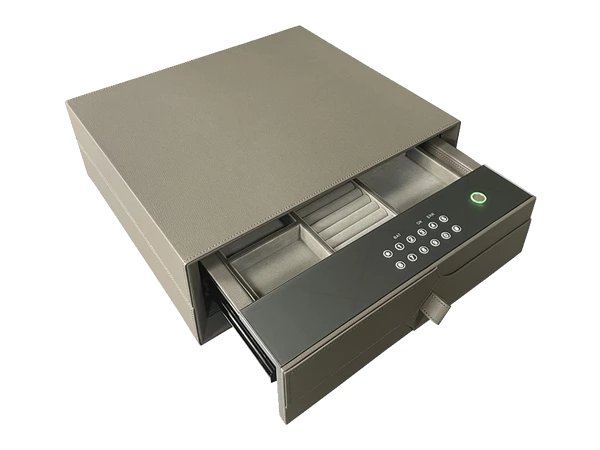
Custom Safe Drawer Layout: How We Helped a Client Store Watches Rings and Documents Together
Imagine sliding open a beautifully crafted wooden drawer in your master closet. At first glance, it appears to be a standard storage space. But with the gentle press of a concealed sensor, an inner compartment unlocks, revealing a perfectly organized sanctuary for your most prized possessions. There are no scratched watch faces, no tangled necklaces, and no crumpled birth certificates. Everything has its exact place.
Creating a flawless custom drawer layout is an art form that merges interior design, spatial reasoning, and security. Recently, we were approached by a client facing a unique but common dilemma: they needed a way to store delicate luxury watches, diamond rings, and crucial legal documents in a single, highly secure, yet easily accessible locati0n.
This project was a masterclass in custom organization. In this article, we will take you behind the scenes of how we designed the ultimate safe drawer box, explore the advanced security features we integrated, and share actionable strategies you can apply to organize every drawer in your home—from the kitchen to the garage.

The Client’s Dilemma: Chaos in the Safe
Our client had recently renovated their master bedroom and invested in a beautiful custom closet. However, they were still using a bulky, outdated, freestanding metal safe sitting awkwardly on the floor. Inside, the situation was worse. Expensive watches were stacked on top of velvet ring boxes, and vital property deeds were folded underneath passports to save space.
They wanted a solution that was invisible to guests but immediately accessible to them. They requested a closet drawer safe that would blend seamlessly with their new cabinetry. More importantly, they wanted a bespoke interior—a custom drawer layout where the watches, rings, and documents never touched or interfered with one another.
Assessing the Security Needs
Before we could design the interior, we had to establish the physical parameters of the safe itself. We decided to install a built in drawer safe directly into a reinforced section of the closet island.
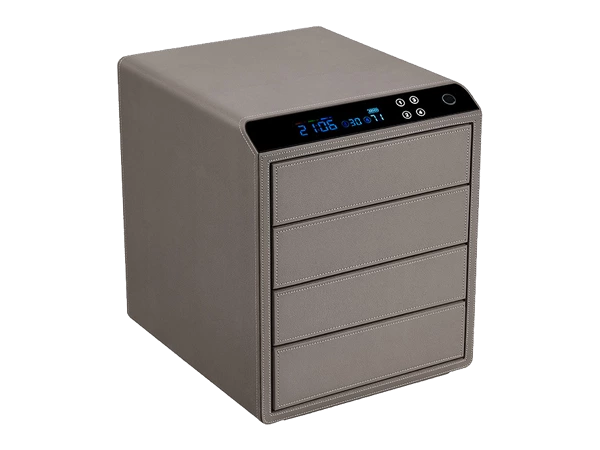
To ensure maximum security without sacrificing convenience, we explored several locking mechanisms. We discussed traditional keypads and RFID cards, but the client wanted immediate, frictionless access. We ultimately selected a state-of-the-art biometric lock drawer safe. A modern drawer safe fingerprint scanner allows the user to unlock the compartment in less than a second, even in the dark.
By integrating a drawer with safe capabilities, we eliminated the need for the clunky freestanding unit. The outer drawer face matched the surrounding oak cabinetry perfectly, effectively creating a hidden drawer safe that a casual observer would never spot.
Designing the Custom Drawer Layout
With the hardware secured, we moved to the most meticulous part of the project: the interior layout. A small drawer safe presents a unique challenge; you have limited cubic inches, and every millimeter counts.
Compartmentalizing the Valuables
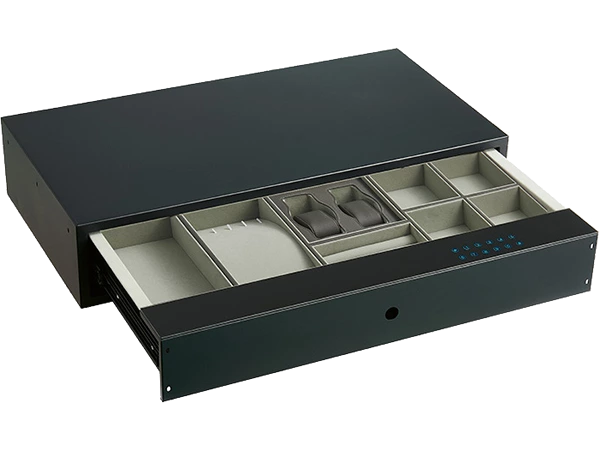
To accommodate the watches, rings, and documents, we had to think in three dimensions. We designed a multi-tiered safe drawer box with a sliding upper tray.
- The Lower Level (Documents): We reserved the spacious bottom layer for documents. Legal papers, passports, and birth certificates require flat, unbending storage. We created a custom-sized recessed tray that perfectly fit standard A4 and legal-sized envelopes, ensuring nothing would ever get crumpled when the drawer was closed.
- The Upper Sliding Tray (Jewelry & Watches): The top tier was dedicated to a tailored jewelry compartment design. We utilized custom storage drawers inserts featuring dedicated ring rolls and individual watch pillows.
Selecting the Perfect Materials
When dealing with luxury jewelry, the materials touching your items are just as important as the lock securing them. Hard plastics or rough fabrics can cause micro-abrasions on soft metals like gold and platinum.
For this project, velvet lined inserts for valuables were non-negotiable. High-quality velvet is soft, durable, and naturally absorbs minor traces of moisture, preventing tarnishing. We contrasted the rich, dark velvet with sleek walnut dividers to create an aesthetic that rivaled the display cases in high-end jewelry boutiques.
When it came to the base liners beneath the velvet trays, we had to decide between pre-cut vs trim-to-fit liners. Because this was a completely bespoke Safe Drawer, standard pre-cut liners would leave awkward gaps. We utilized high-density trim-to-fit liners, cutting them to the exact millimeter of the drawer’s interior to prevent the inserts from shifting when the drawer was rapidly opened or closed.
The Broad Principles of Custom Organization
The client was so thrilled with their new biometric lock drawer safe that they immediately asked us to overhaul the rest of their home’s storage. The truth is, the same principles we used to design their closet drawer safe can be applied to any drawer in your house.
Whether you are organizing a vanity, a kitchen island, or a workshop, success comes down to precise measurement, material selection, and strategic placement. Let's explore how these concepts translate to the rest of your home.
How to Measure Drawers for Organizers
The most common mistake people make when buying drawer inserts—whether for a hidden drawer safe or a simple cutlery tray—is improper measurement. Here is our professional method for how to measure drawers for organizers:
- Measure the Inside, Not the Outside: Always measure the interior dimensions of the drawer. The thickness of the drawer walls can vary wildly and throw off your calculations.
- Check the Clearance Height: Measure from the inside bottom of the drawer to the top edge of the drawer opening in the cabinet frame. You need to ensure your organizers (and the items in them) won't catch on the frame when you pull the drawer out.
- Account for Hardware: Check for protruding screws, interior tracks, or soft-close mechanisms that might eat into your usable space.
- The Rule of Eighths: Always subtract 1/8th of an inch from your final width and depth measurements. This provides just enough wiggle room to easily insert and remove the organizer without it getting permanently wedged.
Revolutionizing the Kitchen: Form Meets Function
After the master closet, the kitchen is usually the most chaotic area in a home. The client tasked us with maximizing small kitchen storage space in their secondary butler’s pantry, which had narrow, deep drawers.
Selecting the Right Dividers
When organizing kitchens, one of the most frequent debates is bamboo versus acrylic divider durability.
- Acrylic: Acrylic dividers are incredibly popular because they are transparent, giving a clean, modern look. They are also waterproof and easy to sanitize. However, over time, acrylic can scratch, crack under heavy pressure, and show dust easily.
- Bamboo: Bamboo is highly durable, sustainable, and brings a warm, organic feel to the cabinetry. It naturally resists warping if sealed correctly.
For the butler's pantry, we concluded that bamboo was the clear winner for heavy-duty daily use. It is widely considered one of the best materials for silverware storage because it doesn't dull the tips of knives and dampens the clattering sound of metal utensils.
Ergonomic Placement and Preventing Shifting
Having the right dividers is only half the battle. We also implemented ergonomic utensil placement strategies. This means placing the most frequently used items (like everyday forks and chef's knives) in the top drawer closest to the prep station. Seldom-used items (like turkey basters or melon ballers) were relegated to lower drawers.
A major annoyance in kitchen organization is items migrating to the back of the drawer. For preventing kitchen tools from sliding, we utilized a two-pronged approach. First, we installed grippy, rubberized trim-to-fit liners at the base of the drawers. Second, we used adjustable tension drawer separators. These spring-loaded bamboo dividers lock tightly into place from front to back, creating rigid, customized channels for spatulas, whisks, and ladles, ensuring nothing shifts when the drawer is slammed shut.
Transforming the Bathroom and Workshop
Custom organization isn't limited to jewelry and spatulas. Different rooms require vastly different approaches to spatial planning and material durability.
Spatial Optimization for Bathroom Vanities
Bathroom vanities present a unique challenge because you have to work around plumbing pipes, and you are dealing with a multitude of tiny items: cosmetics, skincare bottles, razors, and hair ties.
To achieve spatial optimization for bathroom vanities, we utilized modular storage grid systems. Unlike the rigid, built-in wooden dividers of the safe drawer, modular grids consist of individual, interlocking plastic or acrylic bins of varying sizes. This allowed us to build a custom drawer layout around the awkward U-shape of the under-sink drawer.
We used long, narrow bins for makeup brushes and toothbrushes, and small, square bins for hair clips and lip balms. The modular nature meant the client could easily lift a single bin out of the drawer to wipe away spilled lotion without having to dismantle the entire drawer system.
Heavy-Duty Workshop Tool Organization
Moving to the garage, the client needed help with heavy-duty workshop tool organization. Velvet and bamboo have no place here. Workshop drawers deal with grease, sharp metal, and immense weight.
For the workshop, we abandoned delicate dividers and opted for dual-layered organization. We used high-density Kaizen foam. By tracing the outline of wrenches, hammers, and screwdrivers onto the foam and cutting them out with a hot knife, we created a bespoke resting place for every tool. Not only does this prevent heavy metal tools from slamming into each other and denting the drawer, but it also provides immediate visual inventory—if a space is empty, you instantly know a tool is missing.
The Ultimate DIY Approach to Custom Drawers
While we utilized professional carpenters and specialized safe technicians to build the client's biometric lock drawer safe, achieving a custom drawer layout doesn't always require hiring an expert. If you are handy and want to organize your home on a budget, you can build your own inserts.
Here are our essential DIY wooden partition construction steps for creating your own drawer dividers:
- Gather Your Materials: You will need 1/4-inch thick hobby wood (poplar or pine works beautifully), wood glue, a fine-tooth hand saw or miter saw, sandpaper, and a tape measure.
- Measure and Plan: Using the measuring guidelines mentioned earlier, map out your desired custom drawer layout on a piece of paper. Determine the length of your main vertical dividers and the shorter horizontal cross-sections.
- Cut the Wood: Cut your 1/4-inch wood strips to length. Ensure the height of the wood is at least 1/2 inch shorter than the interior height of your drawer to avoid catching on the cabinet frame.
- Create Half-Lap Joints (Optional but Recommended): For a truly sturdy and professional-looking grid, notch out halfway through the wood strips where they intersect. This allows the pieces to slide into each other seamlessly, creating a rigid structure without the need for nails.
- Assemble and Finish: Dry-fit the pieces inside the drawer to ensure a snug fit. Once confirmed, apply a small bead of wood glue to the joints. Sand the top edges smooth, and finish with a food-safe mineral oil (if used in the kitchen) or a color-matched wood stain.
By following these DIY wooden partition construction steps, you can create a layout that rivals expensive store-bought solutions for a fraction of the cost.
The Big Picture: A Comprehensive Guide to Decluttering Cabinetry
What started as a request for a drawer safe fingerprint system evolved into a whole-house transformation. This highlights a fundamental truth about home design: clutter is simply a symptom of a lack of designated spaces.
If you are looking for a comprehensive guide to decluttering cabinetry, the philosophy is simple, regardless of the room:
- Purge First: Never organize items you no longer need.
- Categorize: Group items by function (e.g., baking tools, daily jewelry, important documents).
- Contain: Use the right containment strategy for the items—be it velvet lined inserts for valuables, adjustable tension drawer separators for kitchen utensils, or modular storage grid systems for cosmetics.
- Maintain: A well-designed custom drawer layout inherently encourages maintenance because it takes more effort to put something in the wrong place than in the right place.
Final Thoughts: Securing Your Peace of Mind
The evolution of home storage is moving toward a perfect blend of high-tech security and beautiful, bespoke design. Our client no longer has to kneel on the floor to wrestle with a combination dial on a clunky metal box. Instead, they simply pull a handle, touch a sensor, and are greeted by a beautifully illuminated, perfectly organized custom storage drawers system.
Whether you are looking to install a highly secure drawer with safe capabilities, seeking strategies for maximizing small kitchen storage space, or simply wanting to build your own drawer dividers, the key is intention. By thoughtfully evaluating your needs, precisely measuring your space, and selecting the right materials, you can transform any chaotic drawer into a masterpiece of organization and security. Take a look at your own drawers today—what could a custom layout do for your peace of mind?