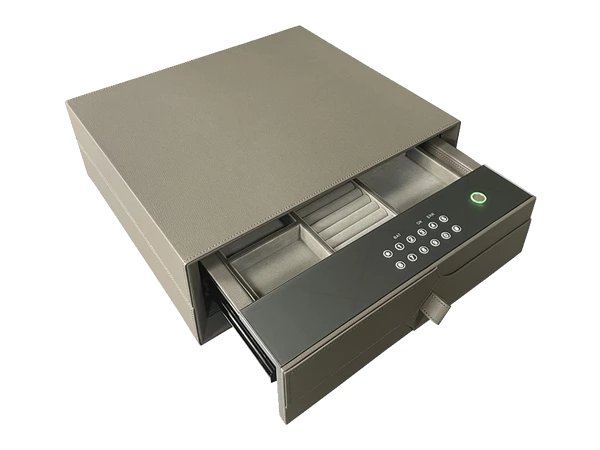
How a Dealer Used Our Biometric Jewelry Safes to Upgrade Their Product Line
It started with a simple observation by a high-end jewelry dealer we’ll call Julian. For over two decades, Julian had been selling bespoke diamond colliers, vintage luxury watches, and custom engagement rings from his boutique. His clients trusted him implicitly with their most significant investments. However, during a routine consultation, a long-time client confessed a surprising truth: she rarely wore the breathtaking sapphire necklace she had purchased the year before. The reason? It was locked away in a safe deposit box at a bank across town because she didn't feel secure keeping it at home.
Julian realized a critical gap in his business model. He was selling world-class jewelry, but he wasn't providing his clients with the means to protect and enjoy it in their daily lives. Standard hardware store safes were either too small, too easy to break into, or too abrasive on the inside for delicate precious metals.
This realization prompted Julian to partner with us to completely upgrade his product line. By offering premium jewelry safes for home use directly alongside his fine jewelry collections, he didn't just increase his revenue—he provided a holistic luxury service. His clients could finally bring their collections home.
This guide breaks down exactly what Julian learned during his deep dive into residential security, highlighting the features, ratings, and strategies you need to know to protect your own valuables. Whether you are looking for an affordable jewelry safe to start your collection or a massive vault for heirloom pieces, understanding the anatomy of modern security is paramount.

The Evolution of Residential Security
For a long time, the concept of a home safe conjured images of clunky, gray steel boxes shoved into the back of a garage. They were utilitarian, ugly, and severely lacking in organization. Throwing a delicate diamond tennis bracelet into a bare steel box is a recipe for scratched stones and tangled precious metals.
Julian’s clients needed something different. They needed a dedicated jewelry box safe—a hybrid solution that combined the impenetrable security of a bank vault with the plush, organized interior of a luxury display case. By introducing his clients to modern jewelry safes, he solved the daily friction of jewelry storage.
But what exactly makes a safe appropriate for high-value items? It comes down to a combination of certified security ratings, advanced physical defenses, modern access technology, and meticulously designed interiors.
Cracking the Code on Security Ratings
When Julian first started researching safes, he was overwhelmed by the alphabet soup of industry certifications. Many standard safes boast about being "heavy duty," but without independent testing, those are just marketing buzzwords. To truly protect fine jewelry, you must look for independent certifications.
The UL Residential Security Container Rating
The baseline for any quality home safe is the UL residential security container rating (often abbreviated as UL RSC). Granted by Underwriters Laboratories, an independent testing facility, this rating signifies that a safe has withstood a rigorous physical attack by professional technicians.
To achieve a basic RSC rating, a safe must survive five full minutes of aggressive prying, drilling, and punching using common hand tools like crowbars, hammers, and chisels. While five minutes might not sound like a long time, in the context of a loud, frantic home invasion, a burglar will almost always abandon a safe that resists their initial efforts.
Moving Up: TL-15 vs TL-30 Security Ratings
For Julian’s ultra-high-net-worth clients, a basic RSC rating wasn't enough. When dealing with collections valued in the hundreds of thousands, you have to look at commercial-grade protection. This brings us to the debate of TL-15 vs TL-30 security ratings.
- TL-15 Rating: This stands for "Tool Resistant for 15 minutes." To earn this, the safe's door and front panel must withstand a 15-minute attack from engineers using powerful tools, including high-speed carbide drills, abrasive cutting wheels, and power saws.
- TL-30 Rating: This escalates the protection to 30 minutes of continuous, aggressive tool attack. TL-30 safes are built with massive walls composed of high-strength steel and proprietary concrete amalgams designed to shatter drill bits and dull saw blades instantly.
Actionable Tip: Keep in mind that the 15 or 30 minutes refers only to the time the tools are actively touching the safe. A 30-minute test can actually take hours of real-world time to conduct. For most robust home collections, a TL-15 offers phenomenal protection, while a TL-30 is the gold standard for massive wealth preservation.
Fireproof vs Burglary Rated Safes
One of the most common mistakes homeowners make is confusing fire protection with burglary protection. When evaluating fireproof vs burglary rated safes, it is vital to understand that they are built for entirely different purposes.
A standard fire safe, like the ones sold at big-box retailers for documents, is primarily made of thin sheet metal wrapped around moisture-releasing gypsum board. It will save your passports from flames, but a burglar can pop it open with a simple screwdriver. Conversely, a pure burglary safe is made of solid steel, which conducts heat incredibly well, meaning it will cook your documents in a fire.
For high-value jewelry, you need a composite safe that offers both high burglary ratings (like an RSC or TL-15) and certified fire protection.
Safe Fire Ratings for Precious Metals
When discussing fire protection, Julian always educated his clients on safe fire ratings for precious metals. Standard fire safes are designed to keep the internal temperature below 350°F (the point at which paper chars).
However, fine jewelry has different thresholds. While pure gold melts at 1,948°F and silver at 1,763°F—temperatures rarely reached in standard house fires—delicate items are much more vulnerable. Pearls can dry out and discolor, and opals can fracture under relatively low heat due to their water content. Therefore, ensuring your safe has a rigorous fire rating (such as a 90-minute or 120-minute rating maintaining an internal temperature below 350°F) is crucial not just to prevent melting, but to prevent the destruction of delicate, heat-sensitive gems.
Anatomy of a High-Security Safe
What physically stops a burglar from accessing your valuables? Julian quickly learned that true security is layered. It isn't just about thick steel; it’s about intelligent engineering designed to thwart specific types of attacks.
Pry-Resistant Recessed Door Design
The most common way criminals attempt to open a safe is by wedging a crowbar between the door and the frame to pry it open. Premium jewelry safes combat this with a pry-resistant recessed door design. By stepping the door back into the frame and utilizing ultra-tight tolerances (often less than the width of a coin), burglars are physically unable to get a pry bar into the gap.
Hardened Steel Plate Drill Protection
If a burglar can't pry the door, they will often try to drill out the lock. High-end safes neutralize this threat by utilizing hardened steel plate drill protection. These plates are installed directly behind the lock mechanism. Often infused with ball bearings or manganese, these plates are designed to snap drill bits on contact or cause the drill bit to spin uselessly in place, protecting the vital internal workings of the lock.
Relocking Device for Tamper Protection
What happens if the burglar manages to smash the lock completely off the front of the safe? This is where the ultimate fail-safe comes in: the relocking device for tamper protection.
A relocker is a secondary, hidden locking mechanism. If the primary lock is severely impacted, drilled, or removed, a glass plate shatters or a tension wire snaps, instantly triggering spring-loaded hardened steel bolts that permanently lock the safe's door. Once a relocker fires, the safe is sealed. Even a professional locksmith will have a monumentally difficult time getting it open—which is exactly what you want when a criminal is attacking it.
Access Control: The Front Line of Defense
Security is useless if the homeowner finds it too frustrating to use. Julian’s clients were busy professionals; they didn't want to spend five minutes spinning a traditional mechanical dial just to grab a pair of earrings before a dinner party.
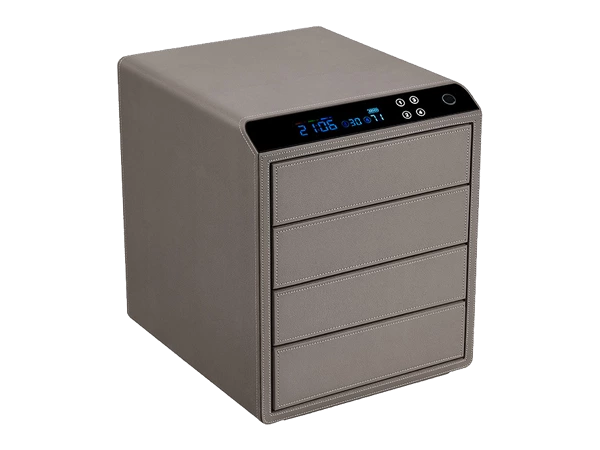
When comparing digital keypad vs biometric fingerprint access, Julian ultimately anchored his upgraded product line around biometric jewelry safes.
- Digital Keypads: These offer reliable, fast access using a 6-digit code. They are excellent, provided you don't forget your code or allow someone to look over your shoulder while you type it.
- Biometric Fingerprint Access: This represents the pinnacle of convenience and speed. By simply pressing a finger to the scanner, the safe opens in under a second. High-quality biometric locks use optical or capacitive sensors that read the sub-dermal layers of the skin, meaning they cannot be fooled by fake prints.
The introduction of biometric safes transformed Julian's business. Clients loved the "James Bond" feel of opening their vault with a fingerprint. More importantly, because access was instantaneous, clients actually used the safe daily rather than leaving their jewelry out on a nightstand out of laziness.
Inside the Vault: Organization and Luxury
A major selling point for Julian was what lay behind the heavy steel doors. A safe isn't a true jewelry safe until the interior is specifically engineered for fine accessories.
Custom Drawer Configurations
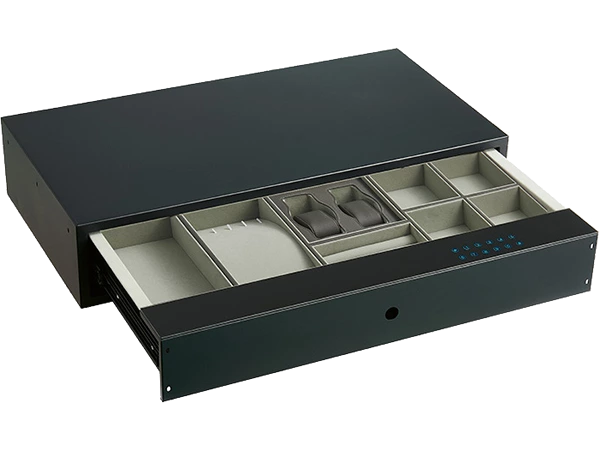
Standard shelves are entirely inadequate for jewelry. The solution lies in jewelry safes with drawers crafted from fine woods like mahogany, walnut, or curly maple. These drawers glide out on heavy-duty ball-bearing tracks, allowing clients to see their entire collection at a glance.
Finding the perfect jewelry organizer for safe interiors is highly personal. Julian worked with us to offer customizable jewelry drawer layouts. A client with a massive collection of statement necklaces requires deep drawers with hanging drops, while a client who collects rings and stud earrings needs shallow drawers packed with high-density velvet ring rolls. The ability to customize the layout ensures that no space is wasted and every piece of jewelry has a dedicated, scratch-free home.
Luxury Watch Winder Safe Features
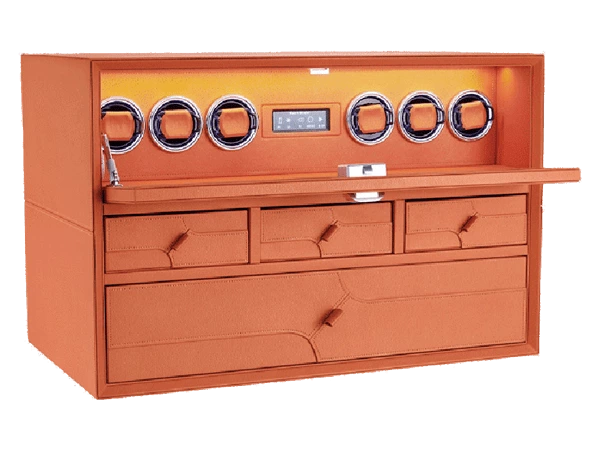
For horology enthusiasts, a safe must do more than protect; it must maintain. Automatic watches, like those from Rolex, Patek Philippe, and Audemars Piguet, rely on the kinetic movement of the wearer's wrist to stay wound. If left sitting in a static safe, the oils in the movement can coagulate, and the owner will have to tediously reset the time, date, and moon phases upon wearing them.
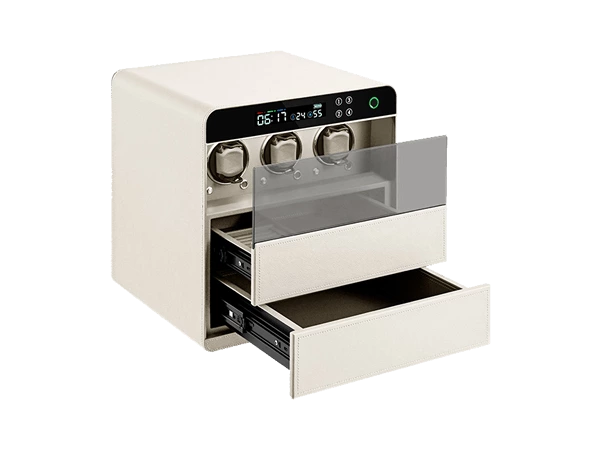
To solve this, premium safes integrate luxury watch winder safe features. These programmable modules are built directly into the safe's interior, rotating the watches on precise schedules (measuring turns per day and directionality) to keep the intricate mechanisms running perfectly. Julian found that offering integrated watch winders was the ultimate closing tool for his male clientele.
Strategic Placement and Installation
Even the most secure safe in the world can be compromised if a burglar can simply pick it up and carry it out the front door. Installation and placement are just as critical as the safe itself.
Jewelry Safes for Closets
The most popular placement among Julian’s clients was the master bedroom closet. Jewelry safes for closets provide unparalleled convenience, allowing homeowners to select their accessories while choosing their outfits. Custom cabinet makers can easily build beautiful facades around the safe, ensuring it blends seamlessly with the existing wardrobe cabinetry, leaving only the beautiful door exposed.
Hidden Wall Safe Placement Strategies
For those with smaller collections or limited floor space, a wall safe is an excellent option. When it comes to hidden wall safe placement strategies, creativity is key. Because wall safes fit flush between standard wall studs, they are incredibly easy to conceal.
- Behind Artwork: A classic choice, provided the artwork is mounted on a heavy-duty hinge for easy access.
- Behind Full-Length Mirrors: A pivoting floor mirror can easily hide a high-capacity biometric wall safe.
- False Panels: Integrating a push-to-release false panel in wainscoting or wood-paneled libraries offers brilliant concealment.
Weight Considerations for Second Floor Installation
One massive hurdle Julian faced with his clients was the sheer weight of true security. A TL-30 rated safe can easily weigh between 1,500 and 3,500 pounds. When placing a heavy safe in a master bedroom suite, weight considerations for second floor installation are a paramount concern.
Standard residential floor joists are not designed to hold a concentrated point load of 2,000 pounds. If a client wanted a heavy high-security safe upstairs, Julian would advise them to consult a structural engineer. Often, it requires opening the ceiling below to sister the joists or add steel support beams. For clients who couldn't undergo renovations, pivoting to a slightly lighter, yet highly rated RSC safe became the logical alternative.
Installing a Floor Safe in a Concrete Slab
For clients building new homes or undertaking massive renovations on the ground floor, installing a floor safe in a concrete slab is an exceptional strategy. A floor safe is literally buried in the foundation of the home, with only the heavy steel door exposed (which is then covered by a rug or a false floor vent).
This offers phenomenal burglary protection, as the concrete foundation surrounds five of the safe's six sides. It also provides ultimate fire protection, as the earth and concrete act as an enormous heat sink. However, as Julian always warned his clients, floor safes require you to get on your hands and knees to access your jewelry, which can become tiresome for daily wear. Furthermore, they are highly susceptible to an insidious threat: moisture.
Preserving Your Valuables: Maintenance and Climate Control
Burying a safe in concrete, or even placing one in a humid coastal home, introduces the risk of internal condensation. When it comes to preventing moisture and tarnish inside safes, proactive climate control is essential.
Fine jewelry and watches contain alloys and components that can oxidize or rust if exposed to high humidity over prolonged periods. Silver, in particular, will tarnish rapidly in a damp environment.
To combat this, Julian ensured every safe he sold was equipped with active moisture prevention tools.
- Desiccant Packs: For small safes, highly absorbent silica gel packs can trap ambient moisture, though they need to be "recharged" in an oven periodically.
- Electric Dehumidifier Rods: For larger safes, these "goldenrods" are plugged into the safe's internal power outlet. They slightly raise the internal temperature of the safe by just a few degrees, causing continuous air circulation that completely prevents condensation from forming on metal surfaces.
Additionally, premium jewelry safes utilize interior fabrics—like Ultrasuede or specialized tarnish-resistant velvet—that are treated to absorb sulfur gases, ensuring silver and gold pieces remain brilliant and shiny between wears.
Navigating Insurance and Affordability
As Julian’s clients upgraded their collections, they eventually had to have difficult conversations with their insurance brokers.
Insurance Requirements for High Value Jewelry
Homeowner's insurance policies typically have incredibly low limits for stolen jewelry—often capping out at $1,500 to $2,500 total, which hardly covers a single luxury watch. To fully protect their assets, homeowners must purchase specialized jewelry riders or schedule their items.
However, insurance companies are not in the business of losing money. When scheduling hundreds of thousands of dollars in fine jewelry, underwriters will impose strict insurance requirements for high value jewelry. They will demand certified appraisals, home alarm systems, and, most importantly, a certified safe.
Often, an insurance company will stipulate that the jewelry must be kept in a TL-15 or TL-30 rated safe bolted directly to the foundation. Furthermore, having a certified safe can drastically reduce monthly insurance premiums. Over the span of a decade, the discount on insurance premiums can often pay for the entire cost of the safe.
Finding an Affordable Jewelry Safe
Not every client walking into Julian's boutique was looking to secure a million-dollar diamond collection. Many were young professionals purchasing their first luxury watch or a high-quality engagement ring. They needed security, but they had a budget.
Julian discovered that an affordable jewelry safe doesn't have to mean compromising on essential security. By opting for an RSC-rated safe with a smaller footprint and simpler interior drawer configurations, clients could still attain formidable protection. The key to affordability is prioritizing structural integrity—thick steel doors, reliable biometric or digital locks, and a solid bolt-down installation—over expansive size or exotic wood finishes. A compact, well-built jewelry safe bolted firmly to the floor of a closet is infinitely more secure than a large, cheap sheet-metal cabinet.
Actionable Tips for Securing Your Collection
If you are a homeowner looking to upgrade your jewelry security, take a page out of Julian’s playbook. Here is a summary checklist of actionable steps to ensure your valuables are protected:
- Audit Your Collection: Calculate the true replacement value of your jewelry and watches. This number will dictate the level of security rating you need (RSC for under $50,000; TL-15 or TL-30 for higher values).
- Verify Certifications: Never trust marketing jargon. Look for the official Underwriters Laboratories (UL) label on the inside of the safe door to guarantee it has passed independent tool and fire tests.
- Choose the Right Access: If you plan to wear your jewelry daily, invest in a biometric lock. The ease of a fingerprint scan ensures you won't get lazy and leave your valuables on the bathroom counter.
- Prioritize Interior Organization: Don’t let your diamonds scratch your pearls. Ensure the safe has customized drawers, ring rolls, and necklace drops. If you own automatic watches, integrated winders are a must.
- Anchor the Safe: A safe is only as secure as its installation. Whether it weighs 100 pounds or 1,000 pounds, use heavy-duty wedge anchors to bolt the safe directly into the concrete foundation or sturdy floor joists.
- Control the Climate: Install an electric dehumidifier rod to keep your safe's interior dry, preventing silver tarnish and the degradation of watch movements.
- Consult Your Insurer: Before purchasing, call your insurance agent. Ask them exactly what safe rating they require for your collection and inquire about premium discounts for upgrading your security.
Conclusion: A Seamless Blend of Luxury and Fortitude
Julian’s decision to integrate biometric jewelry safes into his high-end boutique did more than just boost his bottom line; it solved a profound point of anxiety for his clients. He transformed the way they interacted with their most prized possessions.
Protecting fine jewelry at home shouldn't mean wrestling with an ugly, unorganized metal box in a cold basement. The modern era of residential security proves that you do not have to sacrifice luxury for fortitude. By understanding the rigorous UL testing behind security ratings, prioritizing mechanical defenses like hardened drill plates and recessed doors, and investing in beautifully tailored drawer layouts, you can create a personalized vault right in your own home.
When your valuables are organized, perfectly preserved, and protected by military-grade steel that opens with a simple touch of your fingerprint, you gain something far more valuable than the jewelry itself: absolute peace of mind. Bring your collection home, secure it properly, and enjoy wearing it every single day.