What Types of Hidden Safes Are Suitable for Hotel Room Security in Spain?
Hotel guests rarely think about the safe until they need somewhere to leave a passport, jewelry, cash, a watch or an important document. For hotel operators, however, the decision starts much earlier. A hotel room safe has to fit into a limited amount of furniture space, remain convenient for different guests to operate, support the overall room design and provide a sensible level of security for everyday valuables.
That combination becomes even more important in boutique hotels, luxury hotels, serviced apartments and resort projects, where a large black steel box placed inside a wardrobe can feel out of place. For hotels and hospitality projects in Spain, there is no single safe design that suits every room. A compact urban hotel in Madrid may have very different furniture requirements from a luxury resort suite in Marbella or a renovated boutique property in Barcelona. The better approach is to select the safe according to the room layout, the expected guest profile and the way the safe will be integrated into the furniture.
Quick Answer: Which Hidden Safe Works Best in a Hotel Room?
For most hospitality projects, four types are particularly practical:
| Safe Type | Best Application | Main Advantage |
| Drawer Safe | Bedside cabinets, wardrobes, dressing furniture | Easy access and discreet installation |
| Wardrobe Safe | Built-in wardrobes and guest closets | Familiar placement and efficient use of space |
| Electronic / Fingerprint Safe | Premium rooms and suites | Convenient access and modern user experience |
| Jewelry Organizer Safe | Luxury suites and VIP rooms | Better organization for watches and jewelry |
A conventional electronic wardrobe safe remains suitable for many standard hotel rooms. For projects where interior appearance matters more, however, drawer-integrated and furniture-integrated safes can provide a more refined solution.
1. Drawer Safes for Modern Hotel Furniture
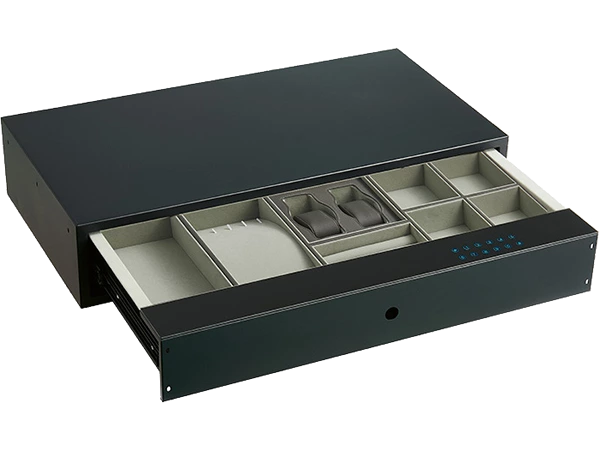
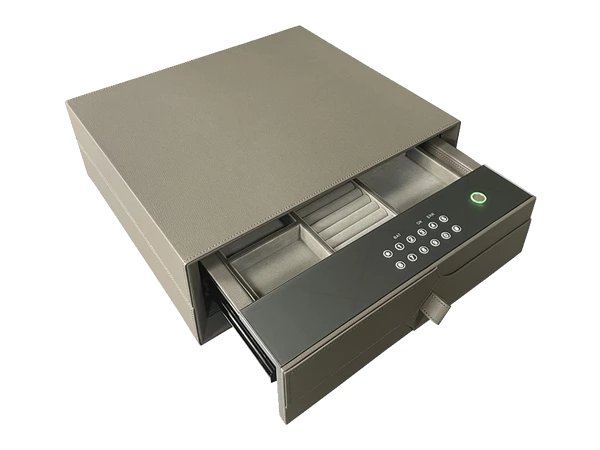
A drawer safe for a hotel room is one of the most practical options when the hotel wants security without making the safe visually dominant. Instead of installing a traditional upright safe inside a cabinet, the secure compartment is designed around a horizontal drawer format. This allows it to sit naturally inside a bedside unit, wardrobe system, dressing cabinet or custom furniture module. For the guest, the difference is noticeable. Valuables can be viewed from above rather than placed into a deep steel box. This format is particularly useful for jewelry, watches, wallets, passports, phones and smaller personal items.
Why Drawer Safes Work Well in Hotels
The main advantage is integration. A drawer safe can become part of the furniture layout rather than looking like equipment that was added after the room was designed. This matters in premium hospitality interiors, where furniture proportions, materials and finishes are carefully coordinated. A shallow drawer arrangement can also make better use of space in rooms where wardrobe depth is limited. For interior designers and FF&E suppliers, planning the safe during the furniture design stage normally produces a cleaner result than attempting to fit a standard safe after the cabinetry has already been manufactured.
2. Leather-Covered Drawer Safes for Luxury Hotel Rooms
For high-end properties, the exterior finish of the safe can be just as important as its basic dimensions. A leather-covered or microfiber leather safe offers a different visual effect from a conventional powder-coated steel hotel safe. The secure structure can remain inside while the visible surfaces are finished in a material that works more naturally with bedroom furniture.
This type of safe can be particularly suitable for: Luxury hotel suites, private villas, executive rooms, serviced residences, boutique hotels and hospitality projects where the safe is integrated into custom cabinetry. Our brown leather drawer-style model, for example, combines a compact horizontal structure with an electronic control panel and an organized interior tray. The drawer can be designed to accommodate smaller valuables while the leather exterior helps the unit sit more naturally alongside timber, leather and upholstered furniture. The aim is not to make security decorative for its own sake. The aim is to stop the security equipment from interrupting the interior.
3. Wardrobe Safes Remain a Practical Choice
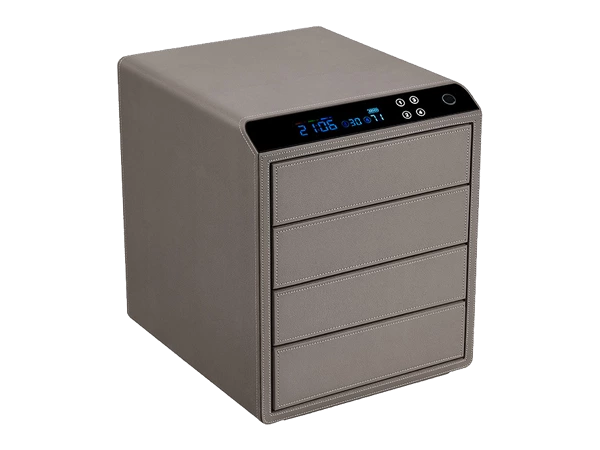
The wardrobe safe for hotel rooms is still one of the most widely understood formats from a guest's point of view. Guests already expect to look inside a wardrobe or closet when searching for an in-room safe. This reduces the learning curve and makes the safe easy to locate without placing it in the open. Wardrobe installation also makes sense from an engineering perspective because many hotel furniture packages already include a dedicated lower or middle cabinet area. The important point is to determine the safe dimensions before finalizing the furniture. If the opening is too tight, installation and future servicing become difficult. If the compartment is significantly larger than the safe, the final result may look poorly integrated. For new hotel projects, the safe supplier and furniture manufacturer should ideally confirm the cabinet dimensions, door clearance, mounting position and cable or battery access before production.
4. Hidden Safes Inside Custom Hotel Furniture
Some projects require a more discreet solution than a conventional wardrobe installation. A hidden safe inside hotel furniture can be integrated into: Bedside cabinets, dressing tables, wardrobe drawers, shelving systems, decorative wall units or custom millwork. This approach is especially useful when the designer does not want the safe to be immediately visible when the main cabinet door is opened. The exact position should still be practical. A hidden safe that is extremely difficult for a guest to reach may solve one design problem while creating another operational problem. Housekeeping and maintenance teams also need reasonable access when the safe requires inspection, battery replacement or authorized opening. Good concealment therefore means discreet placement, not inconvenient placement.
5. Electronic Hotel Safes for Everyday Guest Use
Electronic locks are widely suited to hotel environments because guests can operate them without carrying a physical key. A typical electronic hotel safe allows a temporary password or code to be entered through the control panel. Depending on the model and project requirements, management override solutions may also be incorporated. From a guest experience perspective, the interface should remain straightforward. A complicated locking sequence may look technologically advanced in a specification sheet but can generate unnecessary calls to the front desk. For hotel purchasing teams, the important questions include not only how the lock works, but also how the hotel manages forgotten codes, low battery conditions and authorized emergency access. These operational details are often more important over the lifetime of a hotel than adding unnecessary functions.
6. Are Fingerprint Safes Suitable for Hotels?
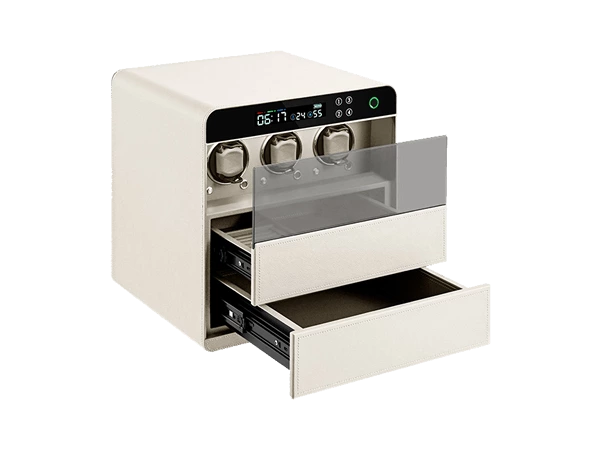
A fingerprint hotel safe can be attractive in premium rooms, VIP suites and serviced residences where the project wants a more personal access experience. Fingerprint access removes the need to repeatedly enter a numerical code. It can also complement the positioning of a modern smart room. However, the intended hotel operation should be considered carefully. Traditional hotels have a constant turnover of guests. The fingerprint enrollment and deletion process therefore needs to be intuitive and suitable for temporary users. For that reason, some projects prefer a combination of access methods rather than relying on fingerprint recognition alone. A model incorporating fingerprint and password access can offer greater flexibility, particularly in high-end hospitality or residential-style hotel projects.
7. Jewelry Safes for Luxury Suites
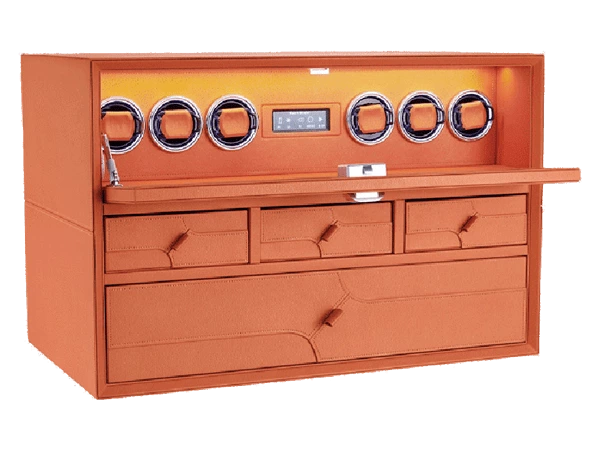
Standard hotel safes are usually designed as general storage compartments. That works well for passports, tablets, cash and documents, but it is less convenient for guests traveling with jewelry or several watches. A jewelry safe for a hotel room can provide dedicated internal organization. Instead of placing rings, bracelets, necklaces and watches together inside an empty compartment, the interior can use divided sections, trays or watch storage areas. For luxury hotels, this makes the safe feel more appropriate for the type of valuables their guests may actually carry. A well-designed organizer also helps reduce scratching and tangling between jewelry items. This category is particularly relevant for luxury suites, honeymoon suites, branded residences and resorts targeting high-value leisure travelers.
8. Why Interior Layout Matters as Much as the Lock
Hotel safe procurement often begins with specifications such as dimensions, lock type and price. Those factors matter, but they do not tell the whole story. A safe is part of a room that already contains wardrobes, luggage areas, minibar furniture, bedside tables, electrical equipment and guest storage. If its location is decided too late, several problems can appear. The cabinet may not have enough depth. The drawer may collide with another furniture component. The guest may have to kneel on the floor to use the keypad. A wardrobe shelf may block access. The exterior finish may also look inconsistent with the rest of the room. For new projects, safe selection works best when it is treated as part of the furniture planning process rather than as a separate accessory purchased at the end.
9. Choosing the Right Safe According to Hotel Type
Different hotel categories usually require different priorities.
| Hotel Type | Recommended Safe Direction | Main Consideration |
| Business Hotel | Electronic wardrobe safe | Simple operation and efficient installation |
| Boutique Hotel | Hidden drawer or furniture safe | Interior integration |
| Luxury Hotel | Leather drawer or jewelry safe | Premium finish and guest experience |
| Resort | Wardrobe or furniture-integrated safe | Storage capacity and convenient access |
| Serviced Apartment | Fingerprint/password safe | Longer stays and repeated guest use |
| VIP Suite | Jewelry organizer safe | Watches, jewelry and high-value belongings |
The table should not be treated as a strict rule. A project can combine several designs across different room categories. Standard guestrooms, for example, may use a simple wardrobe safe while executive suites use a leather drawer safe with jewelry organization. This allows the security specification to match the value and positioning of each room type.
10. What Should Spanish Hotel Buyers Consider Before Ordering?
For a hotel owner, developer, purchasing company or interior design team in Spain, several practical questions should be resolved before requesting a quotation.
| Item to Confirm | Why It Matters |
| Installation position | Determines safe dimensions and access direction |
| Cabinet internal dimensions | Prevents installation conflicts |
| Lock type | Affects guest operation and hotel management |
| Storage requirement | Determines internal capacity and organization |
| Exterior finish | Important for premium interior projects |
| Mounting method | Helps prevent unauthorized removal |
| Drawer clearance | Essential for drawer-style designs |
| Power method | Affects maintenance planning |
| Quantity by room type | Helps production and project planning |
| Branding requirements | Important for OEM or hotel group projects |
For a renovation project, actual furniture measurements are particularly important. For a new-build project, CAD drawings or cabinet drawings can usually be reviewed earlier, giving the manufacturer more flexibility to adapt the safe dimensions before mass production.
11. Standard Safe or Custom Safe: Which Is Better?
A standard hotel safe is usually the easier option when price, quick replacement and simple procurement are the main priorities. Customization becomes more useful when the project has specific furniture dimensions, luxury interior requirements or unusual storage needs. A custom hotel safe may involve changes to the overall size, drawer configuration, interior compartments, exterior material, control panel arrangement or branding. Neither route is automatically better. For a large hotel with standardized rooms, a conventional model may make the most sense. For a boutique hotel with custom-made furniture, forcing a standard safe into every room may compromise the cabinetry design. In that situation, adapting the safe to the furniture can be the more practical decision.
12. OEM Hotel Safes for Hospitality Projects
Hotel projects frequently involve more than simply buying a finished product from a catalog. Developers and procurement companies may need different quantities for standard rooms and suites. Interior designers may require a particular finish. Furniture manufacturers need accurate installation dimensions. Hotel brands may also request their own logo or control panel details. This is where working directly with a hotel safe manufacturer can be useful. Depending on production feasibility and order requirements, OEM hotel safe projects can cover areas such as:
| Customization Area | Typical Project Requirement |
| Dimensions | Match hotel furniture or wardrobe openings |
| Exterior material | Leather, microfiber or specified surface finish |
| Interior layout | Jewelry sections, watch storage or open compartment |
| Lock system | Password, fingerprint or combined access |
| Color | Coordinate with furniture finishes |
| Logo | Hotel or private-label branding |
| Drawer design | Adapt depth and usable storage |
| Packaging | Suitable for project delivery and distribution |
For larger hospitality projects, early technical communication usually saves more time than making changes after samples have already been approved.
13. How We Approach a Hotel Safe Project
When working with hotel purchasing teams, furniture suppliers or interior design companies, we normally begin with the application rather than immediately recommending a model. The first question is where the safe will be installed. Once the installation position is clear, the available dimensions, opening direction, expected contents and preferred lock system can be reviewed. For furniture-integrated projects, drawings or dimensions are particularly useful. A sample can then be developed or an existing model selected before larger-scale production. This process is especially valuable for custom drawer safes because the safe, drawer rails, cabinet dimensions and front-panel clearance all need to work together. The objective is straightforward: the safe should arrive at the project ready to fit the intended room rather than requiring extensive modification on site.
14. Security Should Not Disrupt the Interior
There was a time when a hotel safe was expected to look purely functional. That assumption is changing, particularly at the higher end of the hospitality market. Guests increasingly experience a hotel room as a complete environment. Lighting, furniture, materials, hardware and technology are expected to work together. A large industrial-looking safe can therefore feel surprisingly noticeable inside an otherwise carefully designed room. Furniture-integrated hotel safes provide an alternative. By combining the security compartment with a drawer, wardrobe or bedside cabinet, the hotel can maintain convenient access to valuables without making the safe one of the most visible objects in the room. For premium properties, this balance between security and interior integration is often where the real value lies.
15. Which Hidden Safe Would We Recommend?
If the project is a standard hotel with conventional room furniture, an electronic wardrobe safe remains a sensible solution. If the hotel is positioned in the upper-middle or luxury segment, a hidden drawer safe becomes more interesting because it can integrate much more naturally with the furniture. For executive rooms and premium suites, a leather-covered drawer safe with jewelry organization can provide a more refined guest experience. Where modern access control is an important part of the room concept, fingerprint and password models can also be considered. The final decision should therefore be based on three questions: Where will the safe be installed? What will guests normally store inside it? How visible should the safe be within the room design? Once those questions are answered, selecting the correct structure becomes much easier.
FAQ: Hidden Safes for Hotel Rooms in Spain
What is the best type of safe for a hotel room?
There is no single best type for every hotel. Electronic wardrobe safes work well for standard guestrooms, while drawer safes and furniture-integrated models are better suited to boutique and luxury hotel interiors. Premium suites may also benefit from jewelry organizer safes.
Can a hotel safe be installed inside a wardrobe or bedside cabinet?
Yes. Hotel safes can be designed for installation inside wardrobes, bedside furniture, dressing units and other suitable cabinetry. The internal dimensions and opening clearance should be confirmed before production or installation.
Are fingerprint safes suitable for hotel guests?
They can be suitable, particularly for luxury rooms, serviced apartments and VIP suites. For conventional hotels with frequent guest turnover, the fingerprint registration and reset process should be simple. Models combining fingerprint and password access can provide additional flexibility.
Can hotel safes be customized for an interior design project?
Yes. Depending on the model and project quantity, customization can include dimensions, exterior materials, internal compartments, lock configuration, color and branding. For furniture-integrated projects, cabinet drawings are useful during technical evaluation.
What should a hotel buyer provide when requesting a quotation?
The most useful information includes project quantity, room type, installation location, available cabinet dimensions, preferred safe size, lock requirements and any customization needs. For custom furniture projects, drawings can help the manufacturer evaluate the most suitable solution.
Conclusion
Selecting a hidden safe for hotel rooms in Spain is not simply a question of choosing the strongest-looking box. A good hotel safe must work for the guest, the furniture, the hotel operations team and the overall interior concept at the same time. Electronic wardrobe safes remain a reliable choice for conventional rooms. Drawer safes offer better accessibility and discreet integration. Fingerprint models can support a more modern guest experience, while leather-covered jewelry safes are particularly suitable for luxury suites and design-led hospitality projects.
For hotel owners, developers, interior designers and FF&E suppliers, the best results usually come from considering the safe early in the room planning process. When the safe dimensions, furniture layout, access method and storage requirements are coordinated from the beginning, security no longer has to feel like an afterthought. It can simply become part of the room.
CTA Section
Looking for a Custom Hotel Safe Solution?
We manufacture smart drawer safes, wardrobe safes, fingerprint and password safes, leather-covered jewelry safes and customized furniture-integrated security solutions for hospitality and residential projects. For hotels, interior design companies, furniture manufacturers, distributors and project buyers, we can evaluate the safe according to your cabinet dimensions, room layout, storage requirements and preferred finish. Send us your project quantity, installation dimensions or furniture drawings to discuss a suitable OEM hotel safe solution.