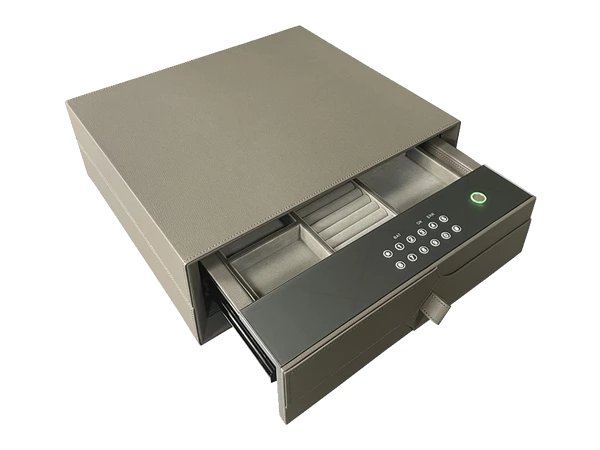
Kuwait Dealer Case: Custom Wardrobe Safe for Luxury Furniture Projects
Luxury furniture projects often succeed or fail in the details that are not immediately visible.For this Kuwait penthouse project, the wardrobe design had already established a clear visual direction: warm walnut cabinetry, balanced door proportions, discreet hardware, and an uncluttered interior. The client wanted the finished room to feel calm and carefully considered.Security was equally important.
The homeowner needed a private place for jewelry, watches, cash, passports, legal documents, and other personal valuables. A conventional freestanding safe could provide protection, but it would have looked separate from the furniture and taken up useful floor space.The dealer therefore asked us to develop a custom wardrobe safe that could be incorporated into the furniture from the beginning.The solution was not simply a small metal box placed on a wardrobe shelf. The safe body, access direction, surrounding panels, internal organization, ventilation allowance, and anchoring points all had to work with the joinery.Once installed, the visible section appeared to belong to the wardrobe. Behind that coordinated exterior was a dedicated security structure designed for controlled access and organized storage.
Project Overview
| Project Detail | Information |
| Project Location | Kuwait |
| Client Type | Luxury Furniture Dealer |
| Property Type | Private Penthouse Residence |
| Installation Area | Master Bedroom Wardrobe |
| Furniture Style | Bespoke Walnut Cabinetry |
| Product Type | Custom Built-In Wardrobe Safe |
| Storage Use | Jewelry, Watches, Cash, Passports and Documents |
| Lock Options | Biometric, Electronic Keypad or Dual Access |
| Interior Options | Jewelry Trays, Watch Compartments, Shelves and Drawers |
| Concealment Method | Coordinated Internal Wardrobe Panel |
| Installation Method | Reinforced Cabinet, Wall or Floor Anchoring |
| Customization | Size, Lock, Interior Layout, Finish and Mounting |
| Suitable Projects | Villas, Penthouses, Apartments and Luxury Furniture Projects |
Why the Kuwait Dealer Needed a Built-In Wardrobe Safe
The dealer’s main concern was integration.The wardrobe had been designed as part of the architecture of the room. Door widths, veneer direction, lighting, internal shelves, and metal details were already coordinated. Adding an exposed safe after the furniture was completed would have weakened the overall result.There were also practical concerns.The client wanted valuables to remain close to the bedroom rather than being stored in a distant utility area. Watches and selected jewelry were used regularly, while passports, cash, and documents needed to remain available but less visible.A built-in wardrobe safe addressed both needs.It placed secure storage within the client’s normal routine while allowing the furniture dealer to preserve the appearance of the original design.
The project requirements included:
- Discreet integration into walnut wardrobe cabinetry
- Secure storage for jewelry, watches, cash, and documents
- Convenient access for the homeowner
- A reliable electronic or biometric locking option
- Interior compartments suited to small valuables
- Structural anchoring that would resist easy removal
- Sufficient clearance for the safe door and internal fittings
- A finish that would not appear industrial
- Installation planning before wardrobe production
The dealer understood that a hidden safe should not be treated as a last-minute accessory. It had to be included in the furniture drawings while there was still time to adjust the cabinet structure.
A Custom Wardrobe Safe Designed Around the Furniture
A standard safe is manufactured to predetermined dimensions. A custom furniture project works differently.The wardrobe layout determines the available width, height, and depth. Shelves, hinges, lighting channels, door frames, and internal partitions all reduce the usable space. Even when a cabinet appears large from the outside, the safe may have considerably less room once these details are considered.For this project, the design process began with the wardrobe drawings.
We reviewed:
- The clear internal cabinet dimensions
- The position of shelves and vertical dividers
- The wardrobe door opening direction
- The safe door clearance
- The thickness of the cabinet base
- The position of lighting and electrical components
- The available anchoring surfaces
- The expected safe weight
- The preferred access height
- The finish of the surrounding furniture
This information helped determine the practical size of the safe.The final unit needed to fit the furniture accurately, but it also had to remain usable. A safe door that only opens halfway, a keypad positioned too low, or a drawer that collides with a wardrobe hinge can make an otherwise attractive installation frustrating to use.The most successful furniture-integrated safes are planned around real movement, not only static dimensions.
Why a Hidden Safe in a Wardrobe Works
A wardrobe offers a naturally private location because it is already part of a personal room.
However, placing a safe inside a closet does not automatically make it secure. The value of the installation comes from combining four elements:
- A suitable safe structure
- A reliable locking system
- Secure structural anchoring
- Discreet furniture integration
The wardrobe provides visual concealment, while the safe itself provides controlled access and physical resistance.For the homeowner, this arrangement offers several practical benefits.
Valuables Remain Close to the Bedroom
Jewelry, watches, and documents can be accessed without moving through other areas of the home.
The Interior Design Remains Consistent
The safe does not appear as a separate industrial object inside an otherwise refined room.
Existing Furniture Space Is Used Efficiently
A cabinet section can be planned specifically for secure storage instead of adding another freestanding product.
The Location Is Less Obvious
The safe can sit behind a coordinated internal panel or cabinet section without drawing attention.
The Interior Can Be Organized Around the Collection
Jewelry trays, watch cushions, cash compartments, document shelves, and removable inserts can be included according to the client’s needs.The final concealment arrangement should be discussed privately with the client and project team. Public case-study content should explain the design capability without revealing the exact access point used in a particular residence.
Secure Storage for Jewelry, Watches, Cash, and Documents
A wardrobe safe is often expected to hold several types of valuables at the same time.That creates an organizational challenge.Watches need padded support. Rings and earrings require smaller compartments. Necklaces need enough room to avoid tangling. Passports and documents require flat storage. Cash and compact valuables may need separate drawers.A single empty compartment would not have served the client well.
The interior options considered for this project included:
- Watch cushions
- Ring slots
- Earring compartments
- Necklace sections
- Bracelet dividers
- Soft-lined jewelry trays
- Removable organizers
- Cash compartments
- Passport storage
- Document shelves
- Adjustable dividers
- Lockable internal drawers
The arrangement can be adjusted according to the size of the collection and how frequently each item is used.Daily watches and jewelry may be placed in the most accessible tray. Documents and less frequently used items can be stored in deeper sections.This makes the safe easier to use and reduces the risk of delicate items rubbing against one another.
Jewelry and Watch Storage Options
A closet safe for jewelry should protect both the security and condition of the collection.Hard painted steel is not always the best direct contact surface for polished metal, gemstones, leather straps, or watch bracelets. For this reason, trays and compartments may be finished with softer materials.
Available interior materials may include:
- Microfiber fabric
- Suede-effect lining
- Velvet-style material
- Leather-effect surfaces
- Padded watch cushions
- Soft-touch dividers
- Removable fabric-covered trays
The color of the lining can be selected to match or contrast with the surrounding wardrobe.A warm beige interior may complement walnut cabinetry, while charcoal or dark brown can provide clearer contrast for gold and silver pieces.Material selection should also consider maintenance. Very light fabrics may show marks more easily, while some highly textured materials can collect dust. The best choice balances appearance, durability, and practical use.
Biometric and Electronic Lock Options
Luxury residential clients often want quick access without relying entirely on a visible mechanical key.
Depending on the selected safe model, available access systems may include:
- Fingerprint recognition
- Electronic keypad
- Password access
- Mechanical lock
- Fingerprint and PIN combination
- Dual-user verification
- Concealed emergency key
- External emergency power connection
- Low-battery warning
- Incorrect-entry lockout
- Alarm functions on compatible models
Fingerprint Access
A biometric wardrobe safe can provide quick access for registered users.This is useful when the safe contains watches or jewelry that are selected regularly. The homeowner can open the safe without searching for a key or entering a long code.Fingerprint performance, however, depends on the sensor and the user’s finger condition. Very dry skin, moisture, lotion, or poor fingerprint registration can affect recognition.For that reason, a practical backup method should be included.
Electronic Keypad
A digital keypad provides a familiar access method and may support multiple user codes, depending on the selected lock.It can be suitable for households where more than one authorized person needs access.
Dual Access
A combination of fingerprint and PIN access can provide additional flexibility.The fingerprint may be used for daily entry, while the password serves as a backup. Some projects may also require two-step verification, but this depends on the selected lock system.Available functions must be confirmed for each model. Access records, alarms, temporary codes, remote notifications, and application control should not be described as standard unless the chosen system genuinely supports them.
Furniture-Grade Concealment and Finish Matching
The visible finish was particularly important in this Kuwait project.The wardrobe used walnut surfaces with a consistent grain direction. A standard safe door would have interrupted that visual rhythm.The integrated design allowed the front section to coordinate with the surrounding furniture.
Possible finish options for similar projects include:
- Walnut veneer
- Oak veneer
- Painted cabinet panels
- Leather or microfiber leather
- Fabric-covered panels
- Brushed metal trim
- Custom handles
- Handle-free push-open panels
- Coordinated drawer fronts
- Soft internal lighting
The visible panel does not always need to be identical to every nearby surface. A subtle contrast can work well when it is intentional.What matters is that the safe looks like a planned part of the furniture rather than an item inserted later.
For accurate results, finishes should be confirmed with:
- Physical material samples
- Veneer references
- Paint codes
- Leather swatches
- Hardware samples
- Approved drawings
- High-quality project photographs
Digital images alone may not show the exact tone, gloss level, or grain pattern.
Secure Anchoring Inside the Wardrobe
Concealment can reduce visibility, but anchoring is what prevents the safe from being removed easily.A safe should not rely only on the furniture shelf beneath it. Decorative cabinet panels, thin MDF, and unsupported plywood may not provide enough resistance for a heavy safe.The correct mounting method depends on the site structure.
Possible anchoring surfaces include:
- Reinforced cabinet framing
- Structural timber supports
- Concrete walls
- Concrete floors
- Steel backing plates
- Hardwood reinforcement blocks
- A combination of cabinet and building structure
For the Kuwait penthouse project, the installation needed to be coordinated with the wardrobe base and the available building structure.The dealer had to ensure that the safe weight was distributed properly and that fixing points remained accessible during installation.After the safe was secured, the visible mounting hardware could be covered by the furniture finish where appropriate.The aim was to create a clean installation without weakening the connection between the safe and the structure.
Size, Weight, and Placement Planning
Safe dimensions are only one part of the installation.Weight, access height, opening direction, and cabinet strength also matter.A common mistake is selecting a safe based only on external width and height. The project team later discovers that the door cannot open fully, the lock collides with a shelf, or the cabinet base bends under the load.
Before confirming a wardrobe safe, the following details should be reviewed:
- Clear internal width
- Clear internal height
- Clear cabinet depth
- Safe door thickness
- Door opening angle
- Hinge position
- Lock projection
- Shelf clearance
- Internal wiring
- Cabinet base strength
- Wall or floor access
- Required ventilation space
- Expected safe weight when loaded
The safe should also be positioned at a practical height.A unit installed too close to the floor may be uncomfortable to access. A safe placed too high may be difficult to use when lifting jewelry trays or documents.Mid-height placement is often convenient, but the final position should reflect the homeowner’s height, the wardrobe layout, and the surrounding storage.
Sound and Daily User Experience
Luxury furniture is judged not only by appearance but also by how it feels and sounds.A heavy safe door closing inside a hollow wardrobe can create more noise than expected. Loose fittings, hard contact points, or poorly aligned panels can also make the installation feel less refined.
Where appropriate, the project may consider:
- Controlled door movement
- Soft contact points
- Felt-lined surfaces
- Accurate hinge alignment
- Secure internal fittings
- Stable trays and dividers
- Quiet electronic lock settings
- Discreet internal lighting
These details do not replace security features, but they influence how the homeowner experiences the safe every day.
Is a Closet Safe Secure?
A closet safe can provide meaningful security when it is specified and installed correctly.
Its effectiveness depends on several factors:
- Safe body construction
- Door and bolt structure
- Lock quality
- Anchoring method
- Installation location
- Concealment
- Additional home security measures
The wardrobe itself should be considered one layer, not the complete security system.
A stronger arrangement may combine:
- A lockable wardrobe section
- A properly anchored safe
- A reliable electronic or biometric lock
- Residential alarm coverage
- Access control within the property
- Appropriate privacy procedures
The exact level of protection should be selected according to the value of the items, the expected risk, and the client’s security requirements.Where a certified burglary rating is required, the corresponding tested safe model should be selected. A custom furniture finish does not create or replace a certified security classification.
Moisture Management for Enclosed Wardrobe Safes
Enclosed cabinetry can have different temperature and airflow conditions from the surrounding room.In Kuwait properties, air-conditioned interiors may experience temperature differences between the room, cabinet, wall, and exterior environment. Depending on site conditions, these differences can contribute to moisture or condensation inside enclosed furniture.
This is particularly relevant when storing:
- Watches
- Jewelry
- Leather goods
- Passports
- Paper documents
- Photographs
- Electronic data devices
Moisture management options may include:
- Rechargeable desiccant packs
- Sealed document sleeves
- Anti-tarnish strips
- Small concealed ventilation gaps
- Regular humidity checks
- Avoiding direct contact with potentially damp walls
- Appropriate air circulation around the safe
- A compatible low-power dehumidifying solution where suitable
The right approach depends on the room, wall location, air-conditioning pattern, and availability of power.A wardrobe safe should not be sealed into the furniture without considering long-term access, maintenance, battery replacement, and environmental conditions.
Fire-Resistant Storage Considerations
Some clients request fire protection for documents and heirlooms.A product should only be described as fireproof or fire-rated when the selected model has been tested according to a recognized standard.Fire insulation adds thickness, weight, and volume. This can reduce the available interior space and affect how easily the safe fits into a wardrobe.
When document protection is required, the project should confirm:
- Applicable test standard
- Protection duration
- Tested internal temperature
- Safe dimensions
- Safe weight
- Installation limitations
- Certification documents
Furniture integration alone does not provide a fire rating.If the selected safe does not have verified fire-test data, the page should avoid making fireproof claims.
Wardrobe Safe Versus Wall Safe
Designers and homeowners often compare wardrobe safes with wall safes.The right choice depends on the building structure, required capacity, access habits, and interior design.
A Wardrobe Safe May Be More Suitable When:
- The safe needs to integrate with custom furniture
- Daily access is important
- Jewelry and watches require organized trays
- Retrofitting the furniture is easier than opening a wall
- The wall contains electrical, plumbing, or mechanical services
- The safe may need greater depth than the wall allows
- Furniture concealment is part of the design
A Wall Safe May Be More Suitable When:
- The wall structure allows secure installation
- A shallow concealed safe is sufficient
- The client prefers a fixed architectural location
- Wardrobe space is limited
- Furniture integration is not required
For this Kuwait project, the wardrobe solution was more practical because the client wanted secure storage inside the bedroom furniture and the dealer could coordinate the installation during the joinery stage.
Built-In Wardrobe Safe Options
A wardrobe safe can be configured in several ways, depending on the furniture and storage requirements.
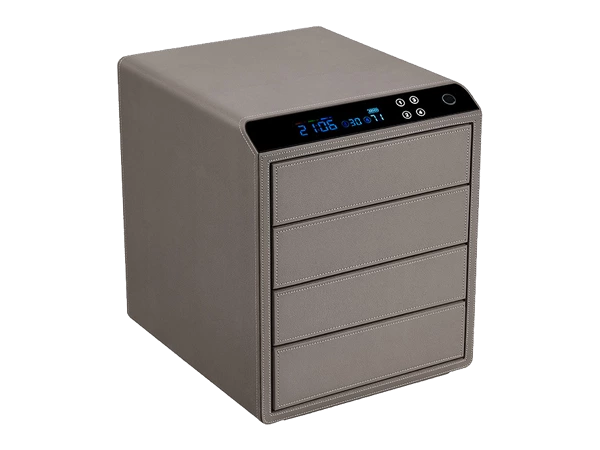
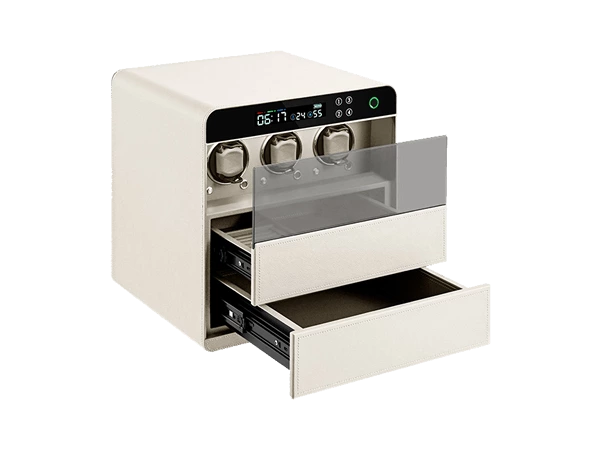
Compact Cabinet Safe
A compact unit is suitable for:
- Jewelry
- Watches
- Passports
- Cash
- Small documents
- Compact electronics
It can fit inside a cabinet bay or reinforced shelf section.
Drawer-Style Safe
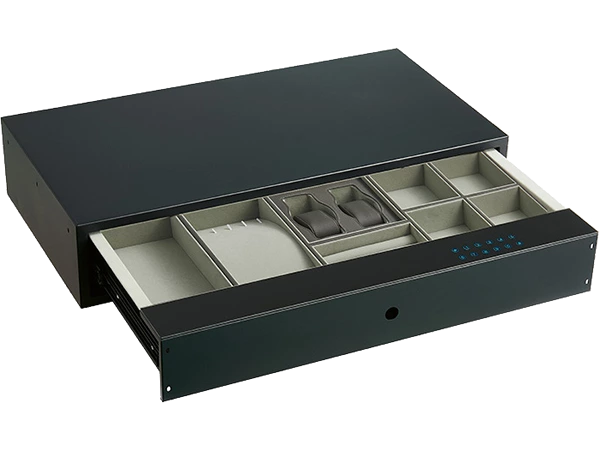
A drawer safe provides convenient access and organized storage.It may be suitable for jewelry, watches, documents, and frequently used valuables. The drawer rail capacity and cabinet reinforcement must be considered.
Tall Wardrobe Safe
A taller safe may be used for:
- Handbags
- Laptops
- Larger document folders
- Collectibles
- Multiple shelves
- Higher-capacity storage
Its weight and anchoring requirements are usually greater.
Furniture-Integrated Jewelry Safe
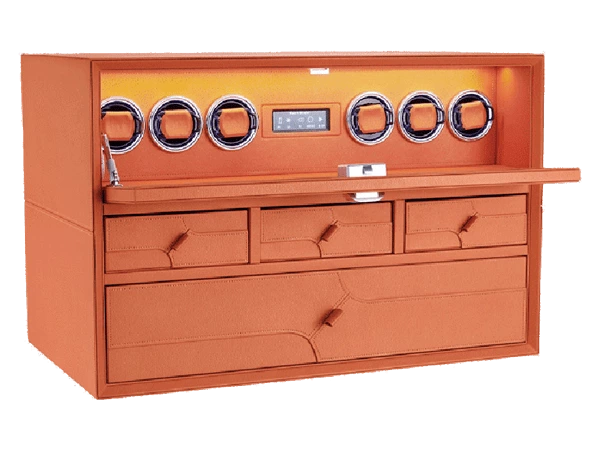
This option combines a safe body with soft-lined trays, watch compartments, and decorative furniture finishes.It is particularly suitable for master wardrobes and private dressing rooms.
Custom Configuration Options
Each wardrobe project has different dimensions and design requirements.The following elements may be customized within the technical limits of the selected safe structure.
Safe Dimensions
- Exterior width
- Exterior height
- Exterior depth
- Internal usable capacity
- Door opening direction
- Number of storage levels
- Shelf spacing
- Drawer depth
Locking System
- Fingerprint recognition
- Electronic keypad
- Mechanical lock
- Fingerprint and PIN combination
- Dual-user access
- Emergency key
- External power connection
- Alarm functions on compatible models
Interior Layout
- Watch cushions
- Ring slots
- Necklace compartments
- Earring sections
- Bracelet storage
- Jewelry trays
- Cash compartments
- Passport storage
- Document shelves
- Adjustable dividers
- Lockable inner drawers
Interior Finish
- Microfiber fabric
- Velvet-style lining
- Suede-effect material
- Leather-effect surfaces
- Padded dividers
- Removable trays
Exterior Integration
- Wood veneer panel
- Painted cabinet panel
- Leather or microfiber leather
- Fabric-covered panel
- Metal trim
- Custom handle
- Handle-free front
- Coordinated drawer face
Installation Details
- Cabinet anchoring
- Wall anchoring
- Floor anchoring
- Steel backing plate
- Reinforced cabinet base
- Concealed fixing points
- Ventilation allowance
- Cable management
- Internal lighting
Actual availability depends on the safe model, project quantity, engineering review, furniture structure, and material selection.
Typical Project Specifications
| Specification | Available Project Options |
| Product Type | Custom Built-In Wardrobe Safe |
| Application | Bedroom Wardrobe, Walk-In Closet or Dressing Room |
| Safe Body | Reinforced Steel Structure |
| Lock Options | Biometric, Electronic, Mechanical or Dual Access |
| Storage Use | Jewelry, Watches, Cash, Passports and Documents |
| Interior | Soft-Lined Trays, Shelves, Drawers and Dividers |
| Exterior Finish | Coordinated with Wardrobe Cabinetry |
| Installation | Cabinet, Wall, Floor or Combined Anchoring |
| Lighting | Optional Internal Lighting Where Suitable |
| Moisture Control | Desiccant, Ventilation Gap or Compatible Solution |
| Dimensions | Customized According to Furniture Layout |
| Suitable Projects | Villas, Penthouses, Apartments and Luxury Joinery |
Exact dimensions, steel thickness, lock functions, safe rating, internal fittings, finish, and installation method must be confirmed before production.
Our Custom Project Process
A built-in safe project requires coordination between the buyer, safe manufacturer, furniture dealer, joinery workshop, and local installer.
1. Project Requirement Review
We begin by confirming:
- Project location
- Property type
- Installation area
- Items to be stored
- Required capacity
- Preferred lock
- Furniture design
- Project quantity
- Delivery schedule
2. Furniture Drawing Review
The dealer provides cabinet drawings, available dimensions, finish references, and relevant construction details.
We review the safe opening, door direction, mounting area, cabinet strength, wiring, and required clearances.
3. Safe Configuration
A suitable safe body, lock system, internal storage layout, and installation method are selected.
4. Technical Drawing Confirmation
The safe dimensions and key installation details are confirmed before production.
The approved drawings should also be reviewed by the furniture workshop to prevent conflicts.
5. Material and Finish Approval
Veneer, paint, leather, lining, metal trim, and hardware references are confirmed where applicable.
6. Production
The safe body, locking structure, internal fittings, and decorative components are manufactured according to the agreed specification.
7. Quality Inspection
Inspection may include:
- Lock operation
- Fingerprint or keypad function
- Door alignment
- Bolt movement
- Interior fitting
- Surface finish
- Lighting
- Emergency access
- Packaging condition
8. Packaging and Delivery
Packaging is planned according to the safe dimensions, weight, finish, transport method, and destination.International delivery arrangements for Kuwait should be confirmed during the quotation stage.
9. Installation Coordination
Technical information can be provided to the local dealer, furniture contractor, or installation team.The final anchoring method must be selected according to actual site conditions.
Pricing and Custom Quotation
A custom wardrobe safe is priced according to its final specification.
Main pricing factors include:
- Safe dimensions
- Steel body construction
- Lock system
- Security rating, where required
- Interior layout
- Jewelry and watch trays
- Lining material
- Exterior furniture panel
- Internal lighting
- Ventilation requirements
- Installation accessories
- Order quantity
- Packaging
- Delivery destination
- Project support requirements
To prepare an accurate quotation, please provide:
- Project location
- Property type
- Furniture drawings
- Available cabinet dimensions
- Items to be stored
- Preferred lock type
- Required internal layout
- Exterior finish reference
- Installation structure
- Required quantity
- Delivery city in Kuwait
- Expected project schedule
Photographs, joinery drawings, and material samples can help improve the accuracy of the recommendation.
Who Is This Solution Designed For?
A custom wardrobe safe is suitable for residential and hospitality projects where security must work with the interior design.
Typical clients include:
- Luxury furniture dealers
- Wardrobe manufacturers
- Joinery companies
- Interior designers
- Architects
- Property developers
- Fit-out contractors
- Hotel developers
- Private villa owners
- Penthouse owners
- Jewelry collectors
- Luxury watch collectors
- Residential security consultants
It is especially suitable when a visible freestanding safe would interrupt the room design or occupy valuable floor space.
Why Work with a Custom Safe Manufacturer?
Working directly with a manufacturer allows the safe and furniture details to be coordinated together.
Manufacturer support may include:
- Product model selection
- Custom dimension evaluation
- Lock recommendation
- Jewelry interior planning
- Furniture panel coordination
- Anchoring guidance
- Technical drawing confirmation
- OEM and private-label support
- Packaging design
- International shipping coordination
- Installation reference information
Early technical communication helps reduce dimensional conflicts and site modifications.
Frequently Asked Questions
Is a wardrobe safe secure?
A wardrobe safe can provide meaningful protection when it has a suitable steel structure, reliable lock, secure anchoring, and appropriate installation. The wardrobe adds concealment, but it should not replace the security provided by the safe itself.
Can a wardrobe safe be installed in an existing closet?
It may be possible. The available cabinet dimensions, base strength, door clearance, wall or floor access, and mounting points should be reviewed before selecting the safe.
Can the interior be customized for jewelry and watches?
Yes. Depending on the model, the interior may include watch cushions, ring slots, necklace sections, earring compartments, jewelry trays, document shelves, and removable dividers.
Is biometric access available?
Fingerprint access is available on compatible models. Electronic keypad, mechanical, hybrid, and emergency access options may also be available. Exact functions depend on the selected lock.
How is a built-in wardrobe safe anchored?
The safe may be anchored to a reinforced cabinet frame, structural wall, floor, steel backing plate, or a combination of these surfaces. The appropriate method depends on the furniture and building structure.
Can the safe match walnut furniture?
Yes. The visible panel and surrounding furniture components may be coordinated with walnut veneer, painted cabinetry, leather, microfiber leather, fabric, or selected metal details.
Can the safe include internal lighting?
Optional internal lighting may be available where the safe structure and power arrangement allow it.
How can moisture be controlled inside a wardrobe safe?
Depending on site conditions, rechargeable desiccant packs, document sleeves, anti-tarnish strips, ventilation gaps, or compatible dehumidifying solutions may be considered.
Is the wardrobe safe fireproof?
Only a model with a relevant and verifiable fire test should be described as fireproof or fire-rated. The applicable standard and protection duration must be confirmed for the selected safe.
Can you manufacture custom sizes?
Custom dimensions may be available after technical evaluation. The safe structure, lock, furniture opening, anchoring method, order quantity, and manufacturing limitations must be considered.
Can you supply wardrobe safes for Kuwait projects?
Yes. We can support product configuration, custom manufacturing, packaging, and international delivery planning for residential, hotel, furniture, and interior projects in Kuwait.
Request a Custom Wardrobe Safe Quotation
A successful wardrobe safe should feel like part of the furniture while providing a dedicated layer of protection for the homeowner’s valuables.For this Kuwait penthouse project, early coordination between the dealer, furniture workshop, safe manufacturer, and installation team made it possible to preserve the walnut wardrobe design without treating security as an afterthought.
Share your wardrobe drawings, installation dimensions, preferred lock, internal storage requirements, finish references, and project schedule with our team. We will review the information and recommend a suitable built-in wardrobe safe configuration.Contact us to request a customized quotation for a wardrobe safe for your villa, penthouse, apartment, hotel, or luxury furniture project in Kuwait.