A Thailand Hotel Suite Project: Adding Digital Safe Without Changing Room Design
When guests check into a luxury hotel suite overlooking the pristine beaches of Phuket or the vibrant cityscape of Bangkok, they expect an experience that seamlessly blends world-class aesthetics with absolute security. For interior designers and hotel managers, this presents a unique challenge: how do you provide top-tier security for guests' valuables without disrupting the carefully curated ambiance of a five-star room?
This exact dilemma was the focal point of a recent, large-scale renovation project in a premier Southeast Asian resort. The goal was to integrate a highly secure, modern Thailand hotel suite digital safe into a space defined by traditional teak wood, bespoke Thai silk panels, and minimalist modern architecture. The mandate was clear—the security had to be invisible until needed, intuitively easy to use, and impenetrable to unauthorized access.
Upgrading a property's security infrastructure requires far more than simply placing a metal box on a closet shelf. It involves understanding the intricate balance between form and function, the latest advancements in electronic locking mechanisms, and the psychology of the modern traveler.
Here is an in-depth look at how the design and security teams successfully navigated this project, setting a new standard for integrating digital lock safes into luxury spaces without compromising a single element of the room’s design.

The Design Challenge: Blending Security with Aesthetics
In the realm of high-end hospitality, the visual narrative of a room is paramount. Every piece of furniture, every lighting fixture, and every texture is chosen to evoke a specific feeling. Traditional safes, with their bulky hinges, drab grey paint, and industrial dials, instantly shatter this illusion of tailored luxury.
However, security is a non-negotiable amenity. International travelers carry passports, expensive jewelry, significant amounts of cash, and high-end electronics. They require the peace of mind that usually comes with a traditional bank safe deposit box, but with the immediate accessibility of their own room.
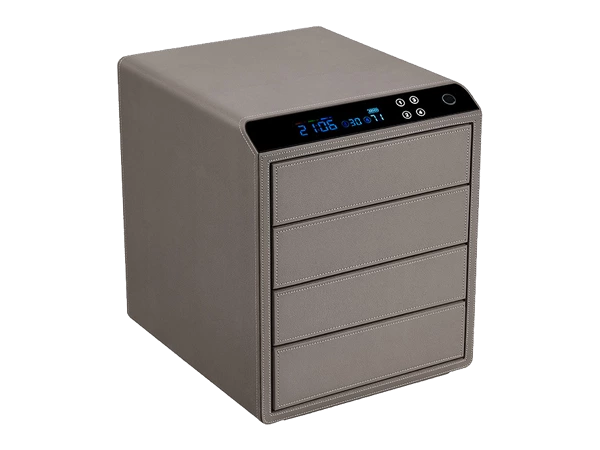
The solution lay in the careful selection and placement of a small digital safe. By moving away from massive, heavy-duty floor safes and instead opting for a sleek, compact digital safe box, the design team was able to hide the security apparatus in plain sight.
Custom Cabinetry Integration
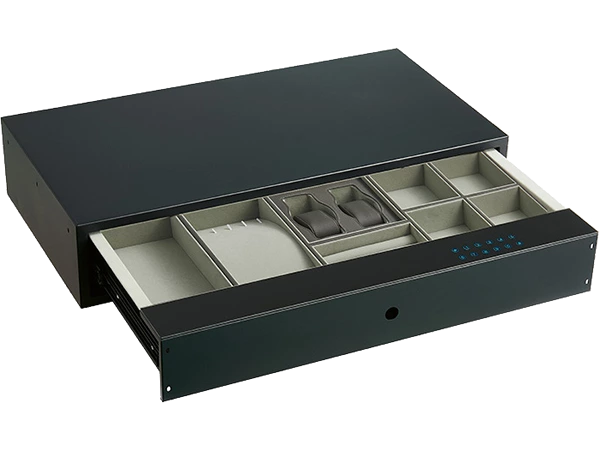
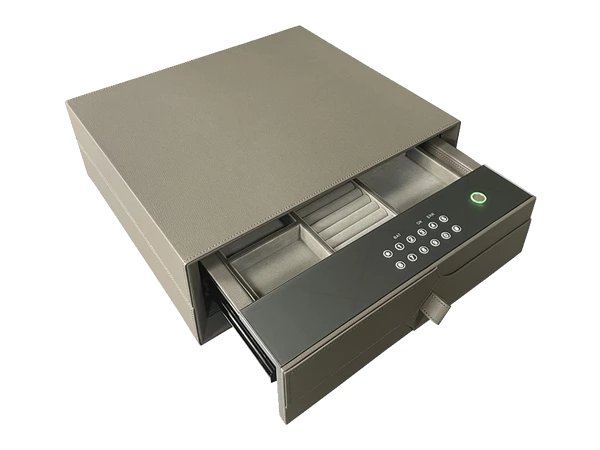
To preserve the suite’s design, the digital safe was integrated directly into bespoke wardrobe cabinetry. Instead of resting on a standard shelf, a custom-built, felt-lined drawer was designed to house an electronic digital safe. The drawer front matched the surrounding teak wood, effectively camouflaging the unit. When pulled out, the guest is presented with a top-opening digital keypad safe, allowing for easy access without having to crouch down in a dark closet.
This approach proved that high-level security does not have to be an eyesore. It can be a seamless, elegant part of the guest experience.

Selecting the Right Technology: Keypad, Biometric, or Dial?
When evaluating the market for hotel room safes, the project team had to analyze various locking mechanisms to determine what would work best for a transient, diverse guest population. The evolution of security technology offers several distinct options, but not all are suited for the fast-paced hospitality environment.
Comparing Mechanical Dial and Digital Entry
Historically, mechanical dials were the gold standard for security. They are highly reliable and immune to power outages or electromagnetic interference. However, when comparing mechanical dial and digital entry systems for a hotel setting, the digital option wins by a landslide. Mechanical dials require precision, time, and patience—things a tired traveler who just wants to lock up their passport and hit the beach does not want to deal with. A digital safe offers rapid, frictionless access, making it the obvious choice for guest convenience.
Biometric Fingerprint Scanner vs Electronic Keypad
The next debate centered on cutting-edge technology: biometric fingerprint scanner vs electronic keypad interfaces. Biometric safes, which open with the scan of a fingerprint, are incredibly popular in personal residential settings because they offer instant, keyless entry tailored to one specific user.
However, in a hotel suite project, biometrics present significant logistical hurdles. Programming and erasing fingerprint data for new guests every few days is inefficient and prone to technical errors. Furthermore, environmental factors such as humidity, wet hands from the pool, or even minor cuts can interfere with fingerprint scanners.
Ultimately, the team selected a high-quality digital keypad safe. Keypads are universally understood, highly reliable, and allow guests to set their own temporary codes in seconds. It provides the perfect middle ground between advanced security and user-friendly operation.

Essential Features of a Premium Hotel Safe
Not all digital lock safes are created equal. To meet the stringent demands of a five-star resort, the chosen electronic digital safe had to possess a specific set of premium features designed for ultimate protection and maximum guest convenience.
Robust Construction and Hardware
Security is only as good as the physical materials used. The project specifications required adherence to strict solid steel construction thickness standards. The selected safes featured laser-cut, tightly fitted solid steel doors that eliminate pry points, alongside a 14-gauge steel body.
Furthermore, to prevent the entire unit from simply being carried out of the room, the installation team utilized specialized anti theft mounting hardware for heavy safes. Using high-tensile steel lag bolts anchored directly into the structural framework of the building, the safes were rendered virtually immovable.
Fire Protection
While theft is a primary concern, fire is an equally devastating threat to valuables. The project mandated the use of UL rated fireproof security boxes. A UL (Underwriters Laboratories) rating ensures that the safe has undergone rigorous, independent testing to withstand extreme temperatures for a specified period (typically 30 to 60 minutes) while keeping internal temperatures low enough to protect fragile paper documents, passports, and digital media.
Enhancing the Guest Experience
Beyond sheer security, the chosen safes included features specifically designed to elevate the user experience:
- Programmable Guest Codes for Hotel Style Vaults: The software on these safes allows for temporary, intuitive code programming. A guest simply inputs a 4-to-6 digit code of their choosing and presses "lock." When they check out, the safe is left open and automatically resets for the next guest.
- Internal LED Lighting for Dark Storage: Hotel closets are notoriously dim. Integrating internal LED lighting for dark storage ensures that when the safe door springs open, the interior is flooded with a soft, bright light, allowing guests to easily locate dark items like wallets or cell phones.
- Silencing Keypad Beeps for Stealth Access: For couples or families traveling together, differing sleep schedules are common. The chosen safes feature an option for silencing keypad beeps for stealth access. This allows a guest to retrieve an item early in the morning or late at night without the loud, electronic chirps waking up their sleeping partner.
Fail-Safes and Maintenance: Preparing for the Unexpected
Even the most sophisticated technology occasionally runs into issues, and human error is an inevitable part of the hospitality industry. A critical phase of the Thailand suite project was establishing protocols for lockouts, power failures, and routine maintenance.
Addressing Guest Lockouts
One of the most frequent calls to a hotel's front desk is from a panicked guest asking, "what happens if I forget my safe combination just hours before my flight?"
To mitigate this, the chosen safes incorporate the benefits of dual entry locking systems. While the primary access is via the digital keypad, the hotel management holds a secure override method. This ensures that a guest is never permanently locked out of their valuables.
Manual Override Protocols
In the event of a forgotten code or a complete electronic malfunction, the management relies on emergency manual override key access. Hidden behind a discreet, magnetic faceplate on the safe's exterior is a high-security, laser-cut keyhole. Only the hotel’s Director of Security holds the master keys, allowing them to manually unlock the safe in the presence of the guest, completely bypassing the electronic system.
Dealing with Power Issues
Electronic safes rely on internal power to operate the motorized locking bolts. A common concern is opening electronic safe with dead battery situations. Fortunately, modern safes are designed with fail-safes for this exact scenario.
Most high-quality digital lock safes have an external power terminal—usually a small port hidden near the keypad. If the internal batteries die while the safe is locked, the security team can plug a temporary, external 9-volt battery pack into this port to power the keypad just long enough for the guest to input their code and open the door. Once open, the internal batteries can be replaced safely.
Battery Maintenance
To prevent dead battery lockouts from happening in the first place, understanding the battery lifespan for electronic locking mechanisms is vital. Typically, a high-grade alkaline battery in a hotel safe will last between 12 to 18 months, depending on the frequency of use.
As part of the project's handover, the hotel's maintenance team was provided with a strict preventative maintenance schedule. Safes are programmed to display a low-battery warning light weeks before they actually fail, giving the staff ample time to replace the batteries during routine room turnovers.
Security Management: The Master Code
For digital overrides, hotel management utilizes a master code. This is a highly guarded, deeply encrypted sequence that can open any safe on the property in case of an absolute emergency (such as a guest abandoning the room while leaving the safe locked).
Knowing how to change master code on electronic safe systems is a critical security protocol. In this resort, the master code is rotated every time there is a change in senior security personnel. The process typically involves accessing a hidden programming button on the inside of the open safe door, entering the current master code, followed by a specific sequence of keystrokes to input and verify the new master code. This ensures that former employees cannot return and access guest valuables.

Translating Hotel Security to Residential Use
The success of integrating these discreet, highly secure units into luxury hotel suites has not gone unnoticed by the residential sector. Interior designers and homeowners who experience these systems while traveling often want to replicate this level of sophisticated security in their own homes.
Homeowners are increasingly turning away from massive, heavy gun safes for their everyday valuables, seeking out top rated keypad home security lockers instead. The principles applied in the Thailand hotel project translate perfectly to a residential master bedroom or home office.
The Appeal of the Hidden Digital Safe
Just like in a luxury suite, homeowners want their security to be invisible. A small digital safe can be bolted into a custom walk-in closet, mounted inside a deep desk drawer, or hidden behind bespoke wall paneling. By utilizing a digital safe box, homeowners can keep everyday carry items—like watches, cash, and passports—secure yet immediately accessible.
Customizing for the Home
While the programmable guest codes for hotel style vaults are perfect for transient visitors, residential users usually program a permanent, highly memorable code. However, they still benefit immensely from the other hotel-grade features.
The internal LED lighting for dark storage is just as useful in a home closet as it is in a hotel. Homeowners also deeply appreciate the benefits of dual entry locking systems. Knowing that there is an emergency manual override key access hidden away gives homeowners peace of mind that a fried circuit board or a forgotten code will not result in a costly visit from a professional locksmith.
Furthermore, homeowners living in areas prone to wildfires or those simply wanting to protect vital documents heavily prioritize UL rated fireproof security boxes, adopting the same stringent standards demanded by five-star resorts.
The Installation Process: Precision and Care
To fully appreciate how seamless this integration was, one must understand the meticulous installation process undertaken by the project contractors. Installing a Thailand hotel suite digital safe is a precise operation that requires coordination between carpenters, electricians, and security technicians.
Step 1: Structural Reinforcement
Before the custom cabinetry was even installed, the walls and floors of the suites were reinforced. Anti theft mounting hardware for heavy safes requires a solid anchor point. The construction team installed reinforced steel plates behind the drywall and deep into the concrete subfloor to ensure that once the safe was bolted down, it became a structural part of the building.
Step 2: Cabinetry Alignment
The teak cabinetry was built with exacting tolerances. The drawer designed to hold the safe had to account for the exact dimensions of the unit, plus the necessary clearance for the door to swing open on its hidden hinges. Furthermore, ventilation was considered to ensure the electronic components of the safe did not overheat in the tropical Thai climate.
Step 3: Anchoring and Calibration
Once the cabinets were in place, the safe was inserted and bolted through the cabinetry directly into the reinforced structural points. Technicians then calibrated the electronic keypad, set the initial master codes, and tested the internal LED lighting for dark storage and the toggle switch for silencing keypad beeps for stealth access.
Step 4: Final Aesthetic Polish
The final step involved aesthetic camouflage. Custom-cut felt padding was placed around the exterior of the safe within the drawer to prevent any rattling, and the drawer tracks were upgraded to heavy-duty, soft-close sliders to accommodate the weight of the solid steel construction.
The end result was a seamless interaction: a guest opens a beautiful wooden drawer, interacts with a highly responsive digital keypad, and secures their valuables with zero friction and total confidence.
Frequently Asked Questions Addressed During the Project
When training the hotel staff to manage this new fleet of digital lock safes, several operational questions arose. Clarifying these points ensures a smooth experience for both staff and guests.
Why not use mechanical safes to avoid battery issues entirely? While comparing mechanical dial and digital entry highlights the battery-free nature of dials, the sheer convenience of a digital interface outweighs the minor maintenance requirement of changing batteries. Guests expect modern, fast technology, and a dial is simply too cumbersome for luxury hospitality.
Are these safes completely fireproof? No safe is entirely fireproof indefinitely. However, by utilizing UL rated fireproof security boxes, the hotel ensures that the contents will survive a standard room fire long enough for emergency services to extinguish the blaze. The rating guarantees a specific time and temperature threshold, which is generally more than sufficient for localized hotel fires.
Can a hacker open the digital keypad? Modern hotel room safes are equipped with anti-tamper lockouts. If an incorrect code is entered multiple times in succession, the keypad will freeze for a predetermined amount of time (usually 15 to 30 minutes). This prevents "brute force" hacking attempts where someone tries to guess the combination.
How heavy does a safe need to be to be secure? Weight is a factor, but mounting is more important. Even a relatively light small digital safe becomes incredibly secure when fastened with proper anti theft mounting hardware for heavy safes. A 50-pound safe bolted directly into a concrete floor with lag screws is far more secure than a freestanding 200-pound safe that can be loaded onto a hand truck.
The Broader Impact on Hospitality Design
The successful implementation of this security system in the Thailand suite project has set a benchmark for future developments in the region. It proved that designers no longer have to compromise their vision to accommodate necessary security hardware.
By carefully evaluating the specific needs of the end-user—opting for a digital keypad safe over complex biometric systems, prioritizing solid steel construction thickness standards, and ensuring features like silencing keypad beeps for stealth access—the project delivered a flawless amenity.
Furthermore, the robust operational protocols put in place, from knowing exactly how to change master code on electronic safe systems to managing the battery lifespan for electronic locking mechanisms, guarantee that the hotel staff can maintain this high level of service for years to come.
Conclusion
Integrating high-level security into luxury interior design requires a thoughtful, multi-disciplinary approach. The Thailand hotel suite project perfectly illustrates how a carefully selected digital safe can seamlessly blend into a high-end environment without disrupting the aesthetic flow of the room.
By moving away from outdated mechanical systems and avoiding overly complex biometric scanners, the design team found the perfect balance with a sophisticated electronic digital safe. Through the use of custom cabinetry, robust anti-theft hardware, and a deep understanding of the guest experience, they provided a solution that is as elegant as it is impenetrable.
Whether outfitting a five-star resort overlooking the Andaman Sea or upgrading the security of a private residential master suite, the principles remain the same. True luxury lies in peace of mind, and with modern digital lock safes, that peace of mind can be beautifully hidden in plain sight.