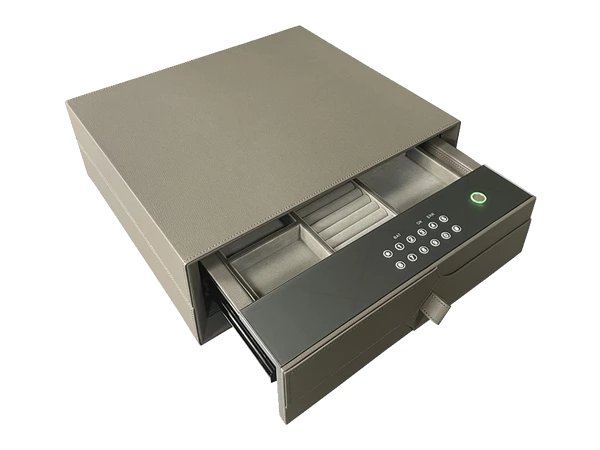
Vietnam Furniture Factory Case: Built-In Wardrobe Safe Modules for Production
A European furniture importer approached a factory in Vietnam with a practical production problem.The importer wanted to add built-in safes to a premium bedroom furniture collection. However, the safe could not become a completely separate custom project every time the wardrobe width, internal shelving, or drawer arrangement changed.The solution needed to be repeatable.It also had to fit naturally into the wardrobe, remain convenient for the homeowner, and give local installation teams clear requirements for mounting and maintenance.A conventional freestanding safe was not suitable for the product line. It occupied separate floor or shelf space and looked disconnected from the furniture. A small portable safe could fit inside a cabinet, but it would not provide the required integration or structural installation.
The importer and Vietnam furniture factory therefore worked on two standardized built-in wardrobe safe modules:
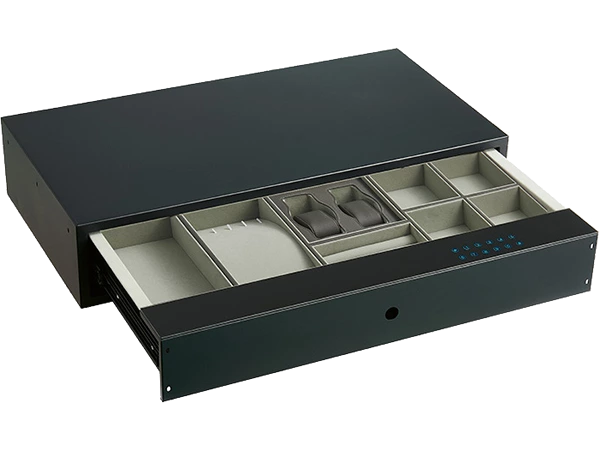
- A drawer-style wardrobe safe
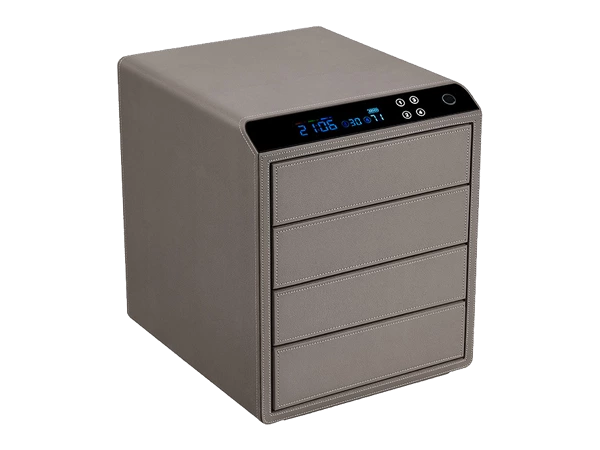
- A cabinet-integrated wardrobe safe
These modules were developed to cover common residential storage needs while avoiding an excessive number of sizes and configurations.The project was not simply about concealing a metal box. It required coordination between the safe structure, furniture drawings, drawer rails, visible panels, electronic locks, cabinet reinforcement, and installation procedure.
Project Overview
| Project Detail | Information |
| Production Location | Vietnam |
| Client Type | European Furniture Importer |
| Product Application | Premium Bedroom Wardrobes |
| Main Product | Built-In Wardrobe Safe |
| Safe Configurations | Drawer Module and Cabinet Module |
| Main Storage Use | Jewelry, Watches, Passports, Cash and Documents |
| Lock Options | Fingerprint, Electronic PIN or Hybrid Access |
| Furniture Integration | Coordinated Front Panel and Cabinet Structure |
| Installation | Reinforced Furniture and Structural Anchoring |
| Production Goal | Repeatable Modules for Multiple Wardrobe Widths |
| Sample Stage | Confirm According to Actual Project Records |
| Production Quantity | Add Actual Quantity or Order Range |
| Final Approval | Add Verified Sample or Production Result |
Why the Importer Needed Standardized Safe Modules
Custom furniture projects often involve different cabinet widths, internal layouts, panel materials, and hardware systems.If every wardrobe safe is redesigned from the beginning, the process becomes difficult to manage.The factory may need a new drawing, a new sample, a new installation method, and different packaging for every order. Small dimensional changes can also affect the lock position, safe-door clearance, product weight, and mounting points.The importer wanted a more controlled product structure.Instead of offering an unlimited number of safe sizes, the project focused on two modules that could be adapted to several wardrobe configurations.
The main requirements included:
- Compatibility with different wardrobe widths
- Repeatable production dimensions
- Clear furniture opening requirements
- Optional fingerprint and electronic locks
- Separate storage for jewelry and documents
- Furniture-grade visible panels
- Secure structural anchoring
- Practical battery and maintenance access
- Load-rated rails for the drawer module
- Limited variation in packaging and spare parts
- Installation information for local contractors
This approach allowed the furniture brand to offer a built-in safe without turning every order into a new engineering project.
Why a Wardrobe Safe Must Be Planned Early
A built-in wardrobe safe should be included while the furniture drawings are still being prepared.
Adding a safe after the wardrobe has already been manufactured can create several problems:
- The cabinet may not have enough clear depth.
- The safe door may collide with a shelf or hinge.
- The furniture base may not support the product weight.
- There may be no suitable anchoring surface.
- The keypad may be difficult to reach.
- A furniture front may interfere with the lock.
- Battery replacement may require partial disassembly.
- Drawer rails may not have the required load rating.
Early coordination gives both manufacturers time to adjust the design.The safe manufacturer can provide the product dimensions, door movement, mounting points, weight, and maintenance requirements. The furniture factory can then prepare the correct cabinet opening, reinforcement, panel layout, and installation access.
Module A: Drawer-Style Wardrobe Safe
The first configuration was a drawer-style wardrobe safe.This module uses a steel safe body installed on load-rated sliding rails. A furniture front can be coordinated with the surrounding wardrobe drawers, allowing the product to fit the visual language of the bedroom furniture.The drawer format is suitable when the homeowner prefers waist-height access and a clear view of the stored contents.
Typical storage may include:
- Luxury watches
- Rings and bracelets
- Cash
- Passports
- Personal documents
- Keys
- Access cards
- Data drives
- Small electronic devices
When the drawer opens, the user can see the internal layout from above. This is often more convenient for jewelry and watches than reaching into a deep cabinet safe.
Main Design Considerations
The drawer module required attention to:
- Safe-body dimensions
- Drawer extension
- Rail load rating
- Cabinet side clearance
- Front-panel alignment
- Furniture-frame reinforcement
- Lock position
- Cable or battery access
- Interior tray height
- Anti-removal mounting
- Loaded center of gravity
The safe drawer had to operate smoothly without placing excessive stress on the surrounding cabinet.
Drawer Rail Capacity and Furniture Load
The rail system is one of the most important parts of a safe drawer.
An ordinary furniture drawer may carry clothing or accessories. A safe drawer must support the combined weight of:
- The steel safe body
- Locking components
- Drawer front
- Jewelry trays
- Internal lining
- Stored valuables
Standard furniture slides should not automatically be used for a loaded safe drawer.
Before confirming the rails, the project team should review:
- Empty safe weight
- Expected loaded weight
- Required extension
- Rail mounting method
- Cabinet side-panel strength
- Drawer width and depth
- Front-panel weight
- Operating-cycle requirements
- Anti-removal structure
- Expected long-term use
When the drawer is pulled forward, its center of gravity also moves away from the cabinet. This increases the load on the rails and furniture structure.The cabinet may therefore require a reinforced base, thicker side panels, internal framing, or a structural backing system.
Drawer Alignment and Daily Operation
A premium furniture product should not feel heavy, loose, or poorly aligned.The drawer front should remain level with the neighboring panels when closed. It should also move without scraping the cabinet or causing visible gaps.
The factory needed to control:
- Rail position
- Side spacing
- Front-panel dimensions
- Safe-body level
- Drawer stops
- Lock clearance
- Interior load distribution
Soft-close functions may be considered where the hardware is rated for the full working load. A standard soft-close rail designed for an ordinary wooden drawer may not be suitable for a steel safe.The complete system should be tested with the expected interior fittings and load rather than with an empty drawer only.
Module B: Cabinet-Integrated Wardrobe Safe
The second configuration was a cabinet-integrated safe installed within a reinforced wardrobe section.Unlike the drawer module, this version uses a fixed safe body with a conventional opening door. It can be coordinated with wardrobe shelving, internal cabinet panels, or a dedicated valuables-storage area.
This format may be more suitable when:
- Greater internal height is required
- Document storage is a priority
- Drawer extension space is limited
- Fixed structural mounting is preferred
- The wardrobe includes a dedicated safe compartment
- The user needs adjustable shelves
The exact concealment arrangement remains private. The public case study focuses on the production and furniture-integration requirements rather than the client’s final placement.
Main Design Considerations
The cabinet module required confirmation of:
- Clear furniture opening
- Safe-door direction
- Door-opening angle
- Lock projection
- Shelf positions
- Hinge clearance
- Structural mounting surface
- Furniture-panel thickness
- Battery access
- Interior shelf arrangement
- Ventilation allowance
- Service access
A safe may fit inside the wardrobe but still be difficult to use if the door cannot open fully. The surrounding shelves and hinges must therefore be shown on the same technical drawing.
Drawer Safe Versus Cabinet Safe
The two modules were designed for different furniture and user requirements.
| Design Factor | Drawer-Style Safe | Cabinet-Integrated Safe |
| Access Direction | Pull-Out, Top View | Front-Opening Door |
| Typical Use | Jewelry, Watches, Cash | Documents, Valuables, Electronics |
| Furniture Requirement | Load-Rated Rails | Reinforced Fixed Cabinet |
| User Experience | Clear View from Above | Traditional Safe Access |
| Space Requirement | Drawer Extension Area | Door-Swing Clearance |
| Interior Layout | Trays and Dividers | Shelves, Drawers or Compartments |
| Main Structural Concern | Rail Load and Cabinet Balance | Anchoring and Door Clearance |
| Suitable Installation | Wardrobe Drawer Module | Cabinet or Shelf Section |
Neither structure is automatically better.The right choice depends on the available space, stored items, access preference, and furniture design.
Standardizing Sizes Across Several Wardrobe Widths
The importer initially wanted one safe size for every wardrobe.In practice, one size could not serve every storage requirement efficiently.A very small model would not accommodate larger document folders or multiple jewelry trays. A larger model could waste cabinet space in compact wardrobes and add unnecessary weight.The cooperation therefore focused on two practical capacity groups.
Compact Module
Suitable for:
- Jewelry
- Watches
- Passports
- Cash
- Keys
- Small documents
- Data drives
Medium Module
Suitable for:
- Larger document folders
- Tablets
- Multiple jewelry trays
- Compact electronics
- Larger personal valuables
The final capacity should always be confirmed against the actual internal dimensions.A product should not be described as laptop-compatible unless the safe’s internal width, depth, height, and opening can accommodate the intended laptop size.
Dimension Control for Furniture Production
For repeatable production, both the importer and factory needed a clear dimensional standard.
The safe manufacturer should provide:
- External width
- External height
- External depth
- Internal usable dimensions
- Product weight
- Door thickness
- Door-opening angle
- Lock projection
- Drawer travel
- Mounting-hole locations
- Required installation clearances
- Battery-maintenance space
The furniture factory should provide:
- Clear cabinet width
- Clear cabinet height
- Available depth
- Shelf and drawer positions
- Hinge locations
- Cabinet-base thickness
- Side-panel thickness
- Rail installation area
- Available anchoring surface
- Surrounding hardware
- Cable or lighting routes
- Furniture-front dimensions
Using only the external wardrobe dimensions is not sufficient.Internal hardware, backing panels, decorative frames, and lighting channels can reduce the usable opening.
Lock and Access Options
The product line was planned with several possible lock configurations.Actual availability depends on the selected safe model.
Fingerprint Access
A biometric wardrobe safe provides quick access for registered users.This can be useful for watches, jewelry, passports, and valuables that are accessed regularly.
Fingerprint recognition may be affected by:
- Dry skin
- Moisture
- Lotion
- Surface residue
- Finger position
- Registration quality
- Sensor quality
For this reason, a backup access method should be retained.
Electronic PIN
A digital keypad gives the user a familiar method of opening the safe.
Depending on the lock, available functions may include:
- User PIN
- Multiple registered users
- Incorrect-entry lockout
- Low-battery warning
- Silent operating mode
- Emergency external power
- Alarm functions
- Event records on compatible models
Hybrid Access
Fingerprint and PIN access can be combined.The fingerprint may be used for regular entry, while the PIN serves as a backup. Selected locks may also support dual verification, although this should be confirmed before production.
Mechanical and Emergency Access
Depending on the configuration, backup access may include:
- Mechanical emergency key
- External emergency power
- Administrator access
- Secondary authorized user
Emergency keys should be stored separately from the wardrobe safe.Available biometric, alarm, event-record, connected, and emergency-opening functions depend on the selected lock system and safe configuration.
Why the Importer Selected Fingerprint and PIN Options
The importer wanted access methods that could suit premium residential buyers without creating an overly complicated user experience.Fingerprint access offered convenience, while a PIN provided a familiar backup.
The final lock choice also had to consider:
- Control-panel dimensions
- Available door or drawer space
- Battery replacement
- Emergency opening
- User instructions
- Spare-part availability
- After-sales support
- Export-market requirements
A lock should not be selected only because it has the longest feature list.It also needs to be practical for manufacturing, maintenance, and long-term use.
Interior Storage for Jewelry and Watches
The drawer module was particularly suitable for organized jewelry and watch storage.
Available interior features may include:
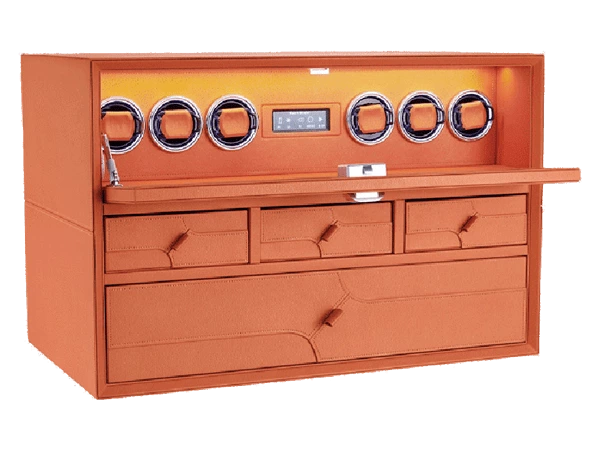
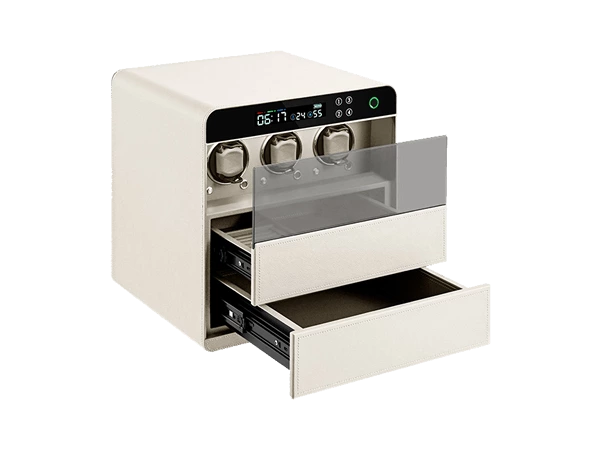
- Individual watch cushions
- Ring channels
- Earring compartments
- Necklace sections
- Bracelet dividers
- Removable jewelry trays
- Adjustable partitions
- Covered storage areas
- Lockable inner sections
The internal layout should be based on the intended collection.A customer with several large watches may need wider compartments. A customer who mainly stores rings and earrings may prefer more small divisions.The number of compartments should not be finalized before the internal dimensions and product collection are confirmed.
Passport, Cash, and Document Storage
The cabinet module may include:
- Passport compartments
- Cash dividers
- Document shelves
- Removable folders
- Adjustable shelves
- Full-width drawers
- Lockable inner storage
Document sizes should be checked carefully.A compartment that holds passports may not accommodate property documents, certificates, or full-size folders.The importer should define the intended contents before approving the internal arrangement.
Interior Materials
The safe interior can be fitted with protective materials for jewelry, watches, and delicate valuables.
Options may include:
- Microfiber fabric
- Suede-effect lining
- Velvet-style material
- Leather-effect surfaces
- Padded dividers
- Removable fabric-covered trays
- Soft watch cushions
Possible colors include:
- Warm beige
- Light gray
- Charcoal
- Dark brown
- Cream
- Muted blue
- Custom colors subject to material availability
Material selection should consider:
- Appearance
- Durability
- Cleaning
- Long-term wear
- Color consistency
- Material availability
- Replacement requirements
Very light materials may show marks more easily, while heavily textured fabrics may collect dust.
Furniture Panel and Finish Coordination
The visible safe section can be coordinated with the wardrobe design.
Possible finishes include:
- Wood veneer
- Painted furniture panels
- Laminate
- Genuine leather where specified
- Microfiber leather
- Fabric-covered surfaces
- Brushed metal trim
- Decorative stitching
- Custom handles
- Handle-free fronts
For accurate matching, the importer should provide:
- Physical material samples
- Veneer references
- Paint codes
- Leather swatches
- Hardware samples
- Approved drawings
- High-resolution photographs
Digital images alone may not show the precise grain, sheen, texture, or color temperature.
The visible panel should also leave sufficient clearance for:
- Lock operation
- Safe-door movement
- Drawer movement
- Emergency access
- Battery replacement
- Mounting
- Future maintenance
Structural Anchoring
Concealment does not replace structural installation.A compact wardrobe safe that is not anchored may still function as a portable lockbox.
The safe may be connected to:
- Reinforced cabinet framing
- Structural wall
- Concrete floor
- Steel backing plate
- Hardwood reinforcement
- A combination of furniture and building structure
Thin decorative panels or unsupported MDF should not be used as the only fixing surface.
The furniture and installation drawings should identify:
- Approved safe mounting points
- Cabinet reinforcement
- Wall or floor relationship
- Available fastener access
- Nearby electrical services
- Drawer or door clearance
- Product weight
- Expected loaded weight
The final fastener type and mounting method should be determined by the local installation team after reviewing the actual site structure.
Installation Information for Local Contractors
The importer required a repeatable installation document for local furniture and fitting teams.
The guide should include:
- Safe external dimensions
- Product weight
- Mounting-hole positions
- Required cabinet opening
- Door or drawer movement
- Minimum clearances
- Lock-panel access
- Battery replacement
- Furniture-front alignment
- Approved mounting surfaces
- Final operating checks
The guide should not disclose a client’s exact hiding position or provide unnecessary security-sensitive details.
After installation, the contractor should test:
- Lock operation
- Fingerprint registration
- PIN access
- Emergency access
- Door or drawer movement
- Furniture alignment
- Mounting stability
- Battery access
- Interior trays
- Lighting where included
Physical Security Features
Depending on the selected model, physical features may include:
- Reinforced steel body
- Strengthened door or drawer front
- Anti-pry edges
- Protected hinge structure
- Multi-point locking bolts
- Tamper-resistant lock mounting
- Secure fixing points
- Incorrect-entry lockout
- Alarm functions on compatible locks
- Lockable internal compartment
The safe should not be described as theft-proof, impossible to open, or bank-grade without relevant test evidence.
Its performance depends on:
- Steel construction
- Lock design
- Furniture reinforcement
- Anchoring
- Installation quality
- User access management
- Wider residential security measures
If a certified burglary rating is required, the corresponding tested model should be selected.
Concealment and Client Privacy
A wardrobe safe may reduce unnecessary visibility, but no concealment method guarantees that a safe will remain undiscovered.
The final placement should be selected according to:
- Furniture structure
- User access height
- Mounting points
- Door or drawer movement
- Maintenance access
- Surrounding hardware
- Daily convenience
Exact placement and access arrangements should remain private between the importer, furniture factory, client, and installer.The public case study should demonstrate manufacturing and integration capability without publishing the customer’s precise security arrangement.
Moisture Management in Enclosed Furniture
Enclosed wardrobe sections may have limited airflow.
This is relevant when the safe stores:
- Jewelry
- Watches
- Leather straps
- Passports
- Documents
- Cash
- Data drives
- Small electronics
Routine moisture-management options may include:
- Rechargeable desiccant packs
- Sealed document sleeves
- Anti-tarnish strips
- Removable moisture-control containers
- Small ventilation allowances
- Regular humidity checks
- Compatible low-power dehumidifying devices
The correct approach depends on the safe structure, cabinet design, room conditions, and access to power.Moisture-control accessories do not make an uncertified safe waterproof.The product should remain accessible for cleaning, battery replacement, lock inspection, and moisture-control maintenance.
Fire-Resistance Considerations
A safe should only be described as fireproof or fire-rated when the selected model has been tested according to an applicable standard.
When certified fire protection is required, the importer should confirm:
- Test standard
- Protection duration
- Test temperature
- Internal temperature limit
- Applicable safe model
- Certification documents
- Installation limitations
Fire insulation adds thickness and weight. It may reduce the available internal space and affect furniture reinforcement requirements.Adding a wood panel or installing the safe inside a wardrobe does not create a fire rating.Fire resistance, water resistance, and routine humidity management should be treated as separate requirements.
Sampling and Product Approval
The two safe modules required evaluation before production.
A typical approval process may include:
- Importer requirement review
- Wardrobe drawing review
- Initial safe-module selection
- Technical drawing preparation
- Lock and interior confirmation
- Sample production
- Furniture-fit evaluation
- Drawer or door movement testing
- Mounting review
- Finish and panel approval
- Pre-production confirmation
- Mass-production release
The sample should be evaluated inside the intended furniture structure where possible.
Testing the safe separately may not reveal:
- Rail misalignment
- Cabinet deflection
- Door collision
- Insufficient maintenance access
- Furniture-panel gaps
- Mounting problems
- Lock-position conflicts
Quality Inspection Before Production Release
Inspection may include:
- External dimensions
- Internal dimensions
- Product weight
- Safe-body construction
- Door or drawer alignment
- Lock operation
- Fingerprint recognition
- PIN access
- Emergency opening
- Low-battery indication
- Locking-bolt movement
- Rail movement
- Interior tray fit
- Furniture-front alignment
- Mounting-hole position
- Surface finish
- Packaging condition
Only functions included in the actual model should appear on the inspection checklist.
Repeatable Production Specifications
After sample approval, the project documentation should clearly define:
- Safe model number
- External dimensions
- Internal dimensions
- Lock specification
- Interior layout
- Rail model
- Furniture-front dimensions
- Mounting points
- Product weight
- Packaging
- Labeling
- User manual
- Spare parts
- Quality requirements
Changes after approval should be documented rather than communicated only through informal messages.This is particularly important when production involves multiple companies, including the safe manufacturer, furniture factory, importer, and local installation team.
OEM and Private-Label Options
Depending on the product model and order quantity, customization may include:
Product Configuration
- Safe dimensions
- Drawer or cabinet structure
- Door direction
- Lock type
- Interior layout
- Jewelry trays
- Watch cushions
- Document storage
- Lighting
- Mounting points
Furniture Integration
- Wood veneer panel
- Painted front
- Leather or microfiber leather
- Metal trim
- Custom handle
- Handle-free panel
- Coordinated drawer face
Branding
- Logo badge
- Laser marking
- Product label
- Custom model number
- Barcode
- User manual
- Branded carton
- Private-label packaging
All customization details should be approved before mass production.
MOQ, Samples, and Production Lead Time
MOQ depends on:
- Safe model
- Lock system
- Custom dimensions
- Interior configuration
- Furniture panel
- Branding
- Packaging
- Tooling requirements
- Order quantity
A standard module with a custom logo may have different requirements from a newly engineered drawer safe.
Sample lead time may be affected by:
- Material availability
- Lock availability
- Interior materials
- Furniture-panel sample
- Technical drawing approval
- Custom tooling
Mass-production lead time depends on:
- Order quantity
- Product complexity
- Approved sample
- Lock supply
- Packaging
- Quality inspection
- Shipping arrangement
Exact MOQ, sample cost, development charges, and lead time should be stated in the formal quotation.
Export Packaging
Wardrobe safes are heavy products and require suitable export packaging.
Depending on the model and transport method, packaging may include:
- Reinforced carton
- Protective foam
- Corner protection
- Moisture-resistant bag
- Wooden case
- Palletized packaging
- Product label
- Installation accessories
- User manual
- Spare keys or management items
Furniture-grade front panels require additional protection against scratching, impact, and pressure during transport.
Project Result
The cooperation established two repeatable built-in wardrobe safe modules:
- A drawer-style module for jewelry, watches, cash, and compact valuables
- A cabinet-integrated module for documents, passports, electronics, and larger storage requirements
The final production framework included defined furniture openings, door or drawer clearances, lock options, mounting requirements, interior configurations, and panel interfaces.This gave the importer a more controlled way to add safes to several wardrobe designs without developing a completely different product for every cabinet width.The actual number of samples, production quantity, supported wardrobe dimensions, and final delivery results should be added from verified project records before publication.
Typical Project Specifications
| Specification | Available Project Options |
| Product Type | Built-In Wardrobe Safe Module |
| Safe Structures | Drawer-Style or Cabinet-Integrated |
| Main Application | Premium Bedroom Wardrobes |
| Storage Use | Jewelry, Watches, Passports, Cash and Documents |
| Lock Options | Fingerprint, Electronic PIN, Hybrid or Mechanical |
| Interior | Jewelry Trays, Watch Cushions, Shelves and Dividers |
| Furniture Finish | Veneer, Painted Panel, Leather or Metal Trim |
| Drawer System | Load-Rated Rails for Drawer Module |
| Mounting | Reinforced Cabinet, Wall, Floor or Combined Structure |
| Moisture Management | Desiccant, Document Sleeves or Ventilation Allowance |
| Dimensions | Standardized or Customized Subject to Evaluation |
| Branding | Logo, Labels, Manuals and Packaging |
| Suitable Buyers | Importers, Wardrobe Brands and Furniture Manufacturers |
Exact dimensions, lock functions, steel structure, rail capacity, certification, interior layout, and mounting method must be confirmed for the selected product.
Who Is This Solution Designed For?
Built-in wardrobe safe modules are suitable for:
- Furniture importers
- Wardrobe manufacturers
- Custom furniture brands
- Joinery factories
- Cabinetry workshops
- Interior fit-out contractors
- Property developers
- Hotel furniture suppliers
- Safe distributors
- Private-label home-security brands
- Luxury apartment projects
- Private villa projects
The modular approach is especially useful for businesses that need repeatable specifications across several furniture designs.
Why Work with a Wardrobe Safe Manufacturer?
Working directly with a safe manufacturer allows the safe structure, lock, furniture interface, mounting, and interior organization to be reviewed together.
Manufacturer support may include:
- Module selection
- Custom dimension evaluation
- Lock recommendation
- Drawer rail coordination
- Jewelry and document layout
- Furniture-panel matching
- Technical drawings
- Mounting information
- Sample production
- Quality inspection
- Private-label branding
- Export packaging
- Spare-part support
Early technical communication reduces the risk of dimensional conflicts after the wardrobe enters production.
Pricing and Quotation Requirements
The price of a built-in wardrobe safe depends on the final specification.
Main pricing factors include:
- Safe dimensions
- Steel-body construction
- Door or drawer structure
- Lock system
- Rail specification
- Interior trays and shelves
- Furniture front
- Lighting
- Fire rating where applicable
- Branding
- Packaging
- Order quantity
- Tooling
- Spare parts
- Delivery destination
To prepare an accurate quotation, please provide:
- Company and target market
- Furniture application
- Wardrobe drawings
- Clear internal dimensions
- Preferred safe structure
- Required lock
- Interior-storage requirements
- Furniture-finish references
- Estimated quantity
- Branding requirements
- Packaging requirements
- Delivery destination
- Expected project schedule
Frequently Asked Questions
What is a built-in wardrobe safe?
A built-in wardrobe safe is a dedicated steel safe designed to be installed within a wardrobe, closet, cabinet, drawer module, or other reinforced furniture section.
What is the difference between a drawer safe and a cabinet safe?
A drawer safe opens through a pull-out structure and usually provides a top view of the contents. A cabinet safe uses a front-opening door and may offer greater height, shelving, or document-storage capacity.
Can the safe dimensions be customized?
Custom dimensions may be available after technical evaluation. The lock, door structure, drawer rails, internal capacity, mounting points, product weight, and order quantity must be considered.
Which locking systems are available?
Depending on the model, options may include fingerprint recognition, electronic PIN, fingerprint and PIN access, mechanical locks, emergency keys, and external emergency power.
Can the interior be customized for jewelry and watches?
Yes. The interior may include watch cushions, ring channels, necklace compartments, jewelry trays, cash sections, passport storage, and adjustable dividers.
What furniture drawings are required?
The safe manufacturer normally requires clear cabinet dimensions, shelf and drawer positions, hinge locations, furniture-panel thickness, mounting surfaces, opening clearance, and surrounding hardware details.
How is the safe secured inside the wardrobe?
The safe may be connected to reinforced cabinetry, a structural wall, a floor, a steel backing plate, or a combination of suitable surfaces.
Can the visible panel match the wardrobe?
The safe front may be coordinated with wood veneer, painted panels, laminate, leather, microfiber leather, metal trim, handles, or handle-free furniture fronts.
Can the drawer module use soft-close rails?
Soft-close rails may be considered when they are rated for the combined weight of the safe, furniture front, interior fittings, and stored contents.
Are fire-rated wardrobe safes available?
Selected fire-rated models may be available. The applicable test standard, duration, certification, product weight, and dimensions must be confirmed.
Can samples be produced before mass production?
Sample production may be available depending on the model and customization. Sample costs, development charges, and lead time are confirmed in the quotation.
Do you provide OEM and private-label services?
Depending on the order, OEM services may include dimensions, locks, interiors, furniture panels, logos, product labels, manuals, model numbers, and packaging.
Can you support furniture factories outside Vietnam?
Yes. Product configuration, drawings, samples, manufacturing, packaging, and export planning can be discussed for importers, wardrobe factories, furniture brands, and project buyers in different markets.
Request a Built-In Wardrobe Safe Quotation
A successful wardrobe safe is not simply a metal box placed inside a cabinet.Its dimensions, lock, door or drawer movement, rail load, interior layout, furniture structure, mounting method, visible finish, and maintenance access all need to work together.This Vietnam furniture factory cooperation shows how two standardized modules can support several wardrobe designs while keeping production and installation requirements under control.Share your wardrobe drawings, clear internal dimensions, preferred module, lock requirements, interior-storage needs, furniture finish, estimated quantity, and project schedule with our team.We will review the information and recommend a suitable built-in wardrobe safe configuration for your furniture collection or residential project.