Thailand Hotel Case: Smart Drawer Safe for Premium Guest Rooms
For this Thailand hotel project, the design team needed an in-room safe that could be incorporated into the guest-room furniture rather than placed visibly on a wardrobe shelf.The hotel wanted guests to have a convenient place for passports, cash, watches, jewelry, and compact electronic devices. At the same time, the safe had to support the hotel’s operational requirements, including simple guest use, controlled staff override, battery maintenance, and secure installation.
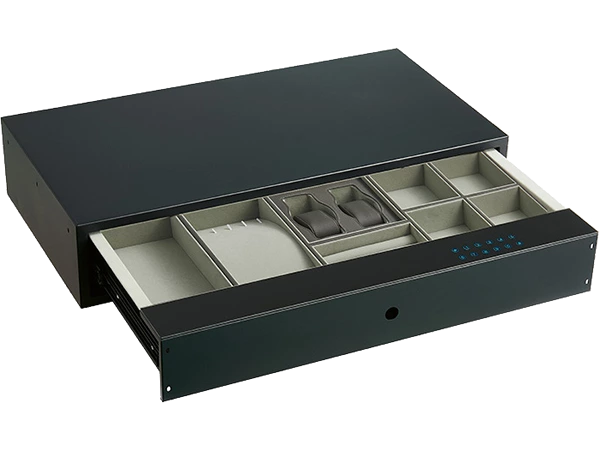
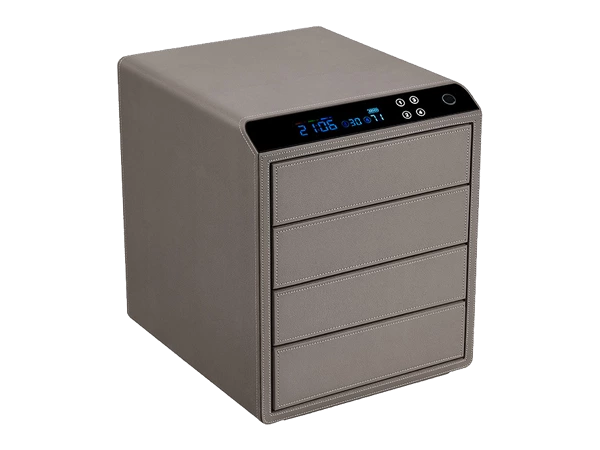
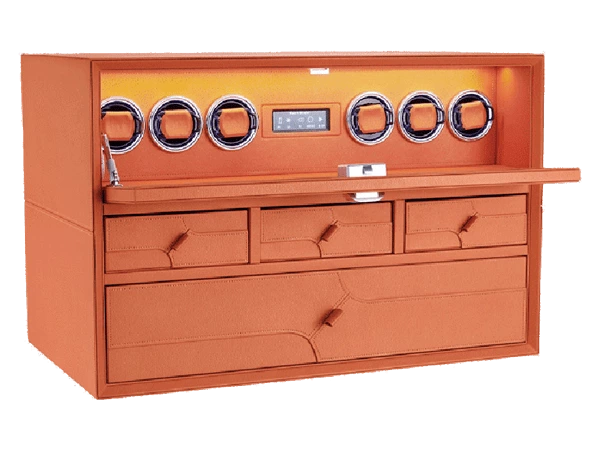
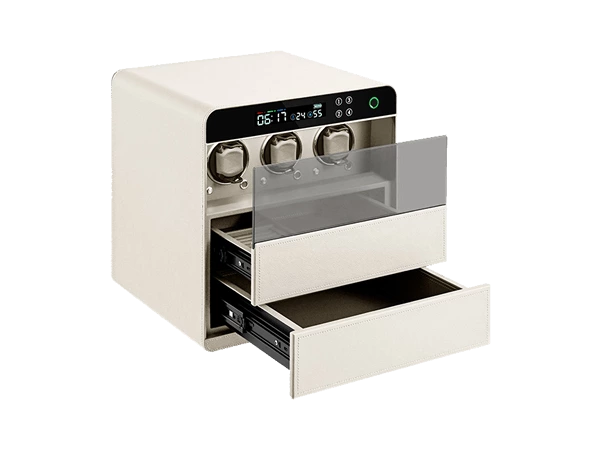
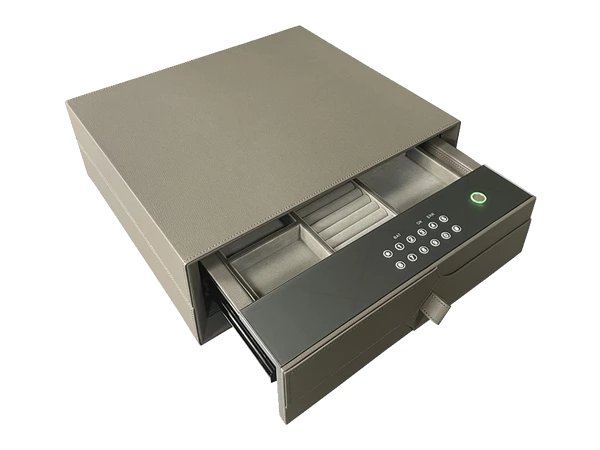
A conventional black safe box would have met the basic storage requirement, but it did not fit the room concept. It would also have occupied valuable shelf space and remained visible whenever the wardrobe doors were opened.The selected direction was a smart hotel drawer safe integrated into the furniture layout.The drawer format allowed the safe to sit within a wardrobe, vanity, console, or other reinforced cabinet section. When closed, the drawer front could align with the surrounding furniture. When opened, guests could view and access their valuables without reaching into a deep shelf-mounted box.
The product was planned together with the room furniture rather than added after the cabinetry had already been completed. This made it possible to review the safe dimensions, drawer travel, rail load, mounting points, lock position, operating instructions, and maintenance access before production.For guest privacy and hotel security, the exact installation position and management procedures used in the property are not disclosed.
Project Overview
| Project Detail | Information |
| Project Location | Thailand |
| Property Type | Premium Hotel or Resort |
| Installation Area | Guest-Room Wardrobe, Vanity or Console |
| Product Type | Smart Hotel Drawer Safe |
| Main Storage Use | Passports, Cash, Watches, Jewelry and Devices |
| Guest Access | Electronic PIN or Compatible Digital Lock |
| Hotel Management | Authorized Staff Override and Event Records Where Supported |
| Maintenance | Low-Battery Warning and Emergency Access |
| Installation | Reinforced Furniture and Structural Anchoring |
| Customization | Size, Lock, Finish, Branding and Instructions |
| Project Quantity | Confirm According to Actual Project |
| Room Category | Confirm According to Actual Guest-Room Type |
Why the Hotel Selected a Drawer Safe
Hotel rooms have to balance several competing requirements.Furniture must provide enough storage without making the room feel crowded. Housekeeping needs clear access for cleaning. Maintenance staff require practical access to batteries and lock components. Guests expect the safe to be easy to find and simple to operate, but it should not dominate the room visually.A drawer safe offered a practical response to these requirements.Unlike a conventional shelf safe, a drawer-format unit brings the contents toward the guest when opened. Passports, jewelry, cash, and watches remain visible from above rather than sitting at the back of a dark cabinet.
The drawer format may also improve the use of available furniture space. Depending on the room design, the safe can be planned within:
- A guest-room wardrobe
- A vanity unit
- A luggage or dressing console
- A bedside cabinet
- A television cabinet
- A desk or work area
- A custom furniture wall
- A hospitality storage unit
The hotel’s main requirements included:
- Simple operation for first-time guests
- A drawer layout compatible with the furniture design
- Electronic access without a visible mechanical key
- Authorized staff override capability
- Event records where supported
- Low-battery notification
- Emergency opening provisions
- Secure attachment to reinforced furniture
- Convenient battery and maintenance access
- Clear guest instructions
- A durable structure suitable for repeated use
- A finish coordinated with the room interior
These requirements made the safe part of the guest-room planning process rather than a separate equipment purchase.
A Smart Safe Designed Around Guest-Room Furniture
Furniture integration begins with accurate dimensions.The exterior size of a wardrobe or console does not show how much usable space is actually available. Hinges, decorative panels, drawers, shelves, lighting channels, cable routes, and back panels all reduce the clear opening.
Before confirming the safe model, the project team should review:
- Clear cabinet width
- Clear cabinet height
- Available cabinet depth
- Drawer-front dimensions
- Rail installation space
- Furniture-base thickness
- Side-panel strength
- Safe-drawer extension distance
- Lock-panel clearance
- Surrounding hinge and shelf positions
- Battery-maintenance space
- Structural mounting points
A safe may appear to fit in the drawing but still be difficult to operate if the drawer cannot extend fully. The keypad may also become uncomfortable to use if it sits too close to a shelf or decorative panel.The furniture supplier and safe manufacturer should therefore review the same approved dimensions before production.This coordination is especially important in hotel projects because a small dimensional issue can be repeated across dozens or hundreds of guest rooms.
Drawer Movement and Rail Capacity
A hotel drawer safe is considerably heavier than an ordinary furniture drawer.
The rail system must support:
- The steel safe body
- Locking components
- Drawer front
- Interior lining
- Stored valuables
- Repeated guest operation
Standard furniture slides should not automatically be assumed to support the combined load.
The project team should confirm:
- Empty safe weight
- Expected loaded weight
- Rail load rating
- Full-extension or partial-extension movement
- Drawer width
- Drawer depth
- Side clearance
- Front-panel alignment
- Furniture-frame reinforcement
- Drawer stop or anti-removal structure
- Long-term cycle requirements
The center of gravity also changes when the safe is pulled forward. A wide or heavily loaded drawer can place additional stress on the surrounding furniture.For a premium guest room, the drawer should move smoothly without twisting, scraping, or creating excessive noise. The front panel should remain aligned with the furniture after repeated use.
Guest Access and Daily Operation
A hotel room safe must be understandable to a guest who has never used that particular model before.Complex controls increase the likelihood of incorrect operation and front-desk support calls. The guest interface should therefore be simple and clearly labeled.
Depending on the selected electronic lock, a typical guest process may include:
- Place valuables inside the drawer
- Close the drawer completely
- Enter a temporary guest PIN
- Confirm the code according to the lock instructions
- Check that the safe is locked
- Re-enter the same PIN to open it
The exact sequence depends on the lock system.
Helpful interface features may include:
- Illuminated keypad
- Clear display
- Simple confirmation button
- Audible or visual feedback
- Incorrect-entry warning
- Low-battery indicator
- Interior operating label
- Multilingual instructions
- Automatic code reset after guest departure
The hotel should test the final instructions with employees who were not involved in the product selection. This can reveal unclear wording before the safes are installed in every room.
Guest PIN and Electronic Lock Options
Many hotel safes allow each guest to create a temporary PIN during the stay.
Depending on the selected system, available options may include:
- Four- to six-digit guest PIN
- Motorized locking bolts
- Automatic locking
- Incorrect-entry lockout
- LED or LCD display
- Audible confirmation
- Silent mode
- Low-battery warning
- Emergency external power
- Staff management access
- Event records
The PIN should reset according to the hotel’s operating procedure after the guest checks out or the safe is opened through an authorized management process.Exact guest-code length, reset behavior, lockout settings, and display functions must be confirmed during model selection.
What Makes a Hotel Safe “Smart”?
The term “smart hotel safe” can refer to several different levels of functionality.A basic electronic safe may offer a guest PIN and a staff override. A more advanced lock may include event records, management devices, room-number assignment, battery information, or connection to a broader hotel management system.
Possible functions include:
- Guest-set PIN
- Digital display
- Motorized lock
- Automatic locking
- Incorrect-entry lockout
- Low-battery monitoring
- Staff override device
- Mechanical emergency access
- Event records
- Room-number assignment
- Management software
- Central monitoring on compatible systems
Not every model supports every function.Available guest-access, event-record, staff-override, alarm, battery-monitoring, and emergency-opening functions depend on the selected lock system and hotel configuration.The hotel should define which functions are operationally necessary before selecting the product. A longer feature list is not always more useful if staff are not trained to manage those functions.
Authorized Staff Override
Guests may forget their PIN, close the drawer before setting a code correctly, or leave the safe locked after checkout.The hotel therefore needs a controlled method for authorized access.
Depending on the lock, override options may include:
- Management device
- Authorized master code
- Mechanical emergency key
- External power connection
- Approved service tool
Override access should not be available to all employees.
The hotel should establish:
- Which departments may authorize an opening
- Which employees may use the management device
- How employee permissions are issued
- Where emergency keys or devices are stored
- How each intervention is recorded
- Whether guest identification is required
- Whether the guest should be present
- How permissions are removed when an employee leaves
- How management devices are audited and maintained
The manufacturer should not publish default master codes, bypass sequences, or detailed emergency-opening procedures on a public project page.These details should be supplied only through controlled technical documentation.
Event Records and Audit Functions
Compatible hotel safe locks may record selected operating events.
Depending on the system, records may include:
- Guest opening
- Guest locking
- Incorrect PIN attempts
- Staff override
- Emergency-key access
- Battery-related events
- Date and time
- User or management-device identification
Before purchasing, the hotel should confirm:
- Number of stored events
- Types of events recorded
- How records are retrieved
- Whether a handheld device is required
- Whether date and time are included
- Whether data remains after battery removal
- Whether records can be exported
- Whether special software is required
Event records can support the hotel’s internal review process, but they should not be presented as a guarantee against loss or misuse.Where the selected lock does not support event records, the page should not describe this function as standard.
Low-Battery Warning and Battery Access
Battery management is an important operational issue in hotel projects.A residential safe may be opened occasionally. A hotel safe can be used repeatedly by different guests, and its batteries must be checked as part of a regular maintenance schedule.
Depending on the lock, low-battery status may be indicated through:
- Display message
- Warning icon
- Audible alert
- Management-device reading
- External system on compatible configurations
The hotel should also confirm:
- Battery type
- Number of batteries
- Expected service interval
- Battery-compartment location
- Whether the compartment is accessible when locked
- Emergency external-power method
- Replacement procedure
- Whether settings remain after battery replacement
Battery access should not require major furniture disassembly.The furniture drawings must leave enough space for maintenance staff to reach the compartment without damaging the drawer front, rails, or surrounding finish.
Emergency Opening
Electronic systems require a backup plan.
Depending on the safe model, emergency access may include:
- External emergency power
- Authorized management device
- Mechanical emergency key
- Service connection
- Manufacturer-approved maintenance procedure
The selected method should be documented and controlled by the hotel.Emergency keys and management tools should be stored securely, and access should be limited to authorized staff. The hotel should also maintain a written process for situations involving a locked safe, a departing guest, or an electronic failure.
Secure Furniture Integration
A safe installed inside furniture should not rely only on the cabinet shelf beneath it.If the safe can be removed together with the drawer or cabinet panel, the installation provides limited resistance to quick removal.
Possible mounting points include:
- Reinforced cabinet frame
- Structural furniture base
- Steel backing plate
- Hardwood reinforcement block
- Structural wall
- Concrete floor
- A combination of furniture and building structure
Thin decorative panels and unsupported MDF should not be treated as the only mounting surface.
The installation plan should consider:
- Safe weight
- Loaded weight
- Furniture-frame strength
- Rail mounting
- Approved fixing points
- Wall or floor construction
- Access to fasteners
- Nearby electrical services
- Door and drawer clearance
- Future maintenance
- Protection of visible finishes
The safe should be installed through the manufacturer’s approved anchoring points using suitable hardware for the actual structure.Detailed fastener specifications should be determined by the local installation team after reviewing the site.
Physical Security Features
A smart interface should be supported by an appropriate physical structure.
Depending on the selected hotel safe model, features may include:
- Reinforced steel body
- Strengthened drawer or door front
- Anti-pry edges
- Concealed or protected hinges
- Motorized locking bolts
- Tamper-resistant lock installation
- Secure mounting holes
- Incorrect-entry lockout
- Internal protective lining
- Alarm functions on compatible models
A hotel drawer safe should not be described as theft-proof or impossible to open.
Its performance depends on:
- Steel construction
- Lock design
- Furniture strength
- Anchoring
- Installation quality
- Staff procedures
- Key and override management
Where a specific burglary or fire rating is required, the hotel must select a model tested to the relevant standard.
Storage for Passports, Jewelry, Cash, and Devices
The internal capacity should match the items guests are likely to store.
Common items include:
- Passports
- Cash
- Watches
- Rings
- Necklaces
- Wallets
- Travel documents
- Memory cards
- Tablets
- Compact electronic devices
- Small laptops where dimensions allow
The hotel should not describe a model as laptop-compatible unless the internal dimensions and opening can accommodate the intended laptop size.
Before approval, confirm:
- Internal width
- Internal height
- Internal depth
- Opening dimensions
- Drawer travel
- Maximum recommended load
- Passport storage orientation
- Tablet or laptop dimensions
- Space required by interior lining
Jewelry and Watch Interior Options
Premium hotels may specify a softer internal finish for watches and jewelry.
Available options may include:
- Microfiber lining
- Suede-effect material
- Velvet-style fabric
- Removable jewelry tray
- Watch cushion
- Ring section
- Soft internal mat
- Adjustable divider
The lining should be durable enough for repeated hotel use and easy to clean or replace.Highly delicate materials may look attractive but may not be practical for rooms with frequent guest turnover. The hotel should balance appearance with maintenance requirements.
Internal Lighting
Interior lighting can help guests see smaller valuables.
Depending on the safe structure, lighting options may include:
- Battery-powered LED
- Drawer-activated light
- Door-activated light
- Low-voltage wired light
- Rechargeable lighting module
The lighting should not interfere with:
- Locking bolts
- Interior capacity
- Drawer movement
- Battery access
- Emergency opening
- Guest items
The maintenance team should be able to replace or service the light without removing the complete safe from the furniture.
Furniture Finish and Visual Integration
The visible drawer front can be coordinated with the surrounding guest-room furniture.
Possible finishes include:
- Wood veneer
- Painted panel
- Laminate
- Leather or microfiber leather
- Fabric-covered panel
- Brushed metal trim
- Custom handle
- Handle-free drawer front
Material matching should be confirmed through:
- Physical samples
- Veneer references
- Paint codes
- Hardware samples
- Approved furniture drawings
- High-resolution photographs
A digital image alone may not show the exact grain, texture, sheen, or color.The decorative front must also leave enough clearance for safe operation, maintenance, emergency access, and drawer movement.
Guest Instruction Labels
Hotel guests may speak different languages and may not be familiar with the lock.
Clear instructions can reduce incorrect operation.
Customization options may include:
- Hotel logo
- Model-specific operating steps
- Multilingual label
- Numbered opening instructions
- Low-battery message
- Front-desk contact information
- QR code linking to an approved guide
- Customized keypad wording
- Room-use notice
Instruction labels should be short enough to read quickly.Long warnings and technical explanations are better placed in the hotel’s digital room guide or operating manual.
Hotel Branding and OEM Customization
Hotel groups, furniture suppliers, and distributors may require customized products for a project.
Depending on model and quantity, options may include:
Product Configuration
- Custom dimensions
- Drawer direction
- Internal capacity
- Lock system
- Interior lining
- Lighting
- Mounting-hole arrangement
- Furniture front panel
Branding
- Hotel logo
- Brand badge
- Printed control-panel branding
- Custom product label
- Customized model number
- User instructions
- Branded manual
- Private-label packaging
Operational Settings
- Guest PIN length
- Auto-lock behavior
- Incorrect-entry lockout
- Event-record capacity
- Management-device configuration
- Room-number assignment
- Low-battery warning
- Authorized override method
All functions and settings must be confirmed for the selected model before mass production.
Maintenance Planning
Hotel safes require an organized maintenance plan.
The hotel should prepare procedures for:
- Battery inspection
- Battery replacement
- Lock testing
- Management-device testing
- Event-record retrieval
- Emergency-key control
- Drawer and rail inspection
- Loose-fastener checks
- Interior cleaning
- Instruction-label replacement
- Staff training
- Spare-part management
The maintenance schedule may vary according to room occupancy, lock type, battery specification, and product usage.The hotel should also keep a suitable quantity of approved spare parts.
Possible spare parts include:
- Batteries
- Keypads
- Lock modules
- Management devices
- Emergency keys
- Drawer rails
- Lighting modules
- Interior mats
- Operating labels
Staff Training
A smart hotel safe is only effective when hotel employees know how to manage it.
Relevant staff may include:
- Front-desk personnel
- Security employees
- Engineering staff
- Housekeeping supervisors
- Duty managers
- IT staff for connected systems
Training should cover:
- Normal guest operation
- Low-battery warnings
- Authorized override procedure
- Guest identity verification
- Event-record retrieval
- Management-device security
- Emergency opening
- Battery replacement
- Incident documentation
- Escalation procedures
Detailed training content should be provided through controlled manuals rather than public website copy.
Project Result
The completed configuration provided a dedicated valuables drawer within the guest-room furniture while preserving the clean visual layout of the room.Guests could store passports, cash, watches, jewelry, and compatible electronic devices without using a visible shelf-mounted safe. The hotel retained access to the battery compartment and authorized management system, while the safe body was secured to a reinforced furniture structure.
Planning the safe and furniture together also reduced the need for changes after installation.The project demonstrates that a hotel drawer safe can support both guest convenience and hotel operations when the product dimensions, lock functions, furniture structure, and maintenance process are reviewed before production.No unsupported claims are made regarding guest-use rates, reduced service calls, or loss prevention without verified project data.
Typical Project Specifications
| Specification | Available Project Options |
| Product Type | Smart Hotel Drawer Safe |
| Application | Premium Hotel and Resort Guest Rooms |
| Installation | Wardrobe, Vanity, Console or Reinforced Cabinet |
| Guest Access | Electronic PIN |
| Staff Access | Authorized Override System |
| Event Records | Available on Compatible Models |
| Low-Battery Warning | Available According to Lock System |
| Emergency Access | Management Device, Key or External Power |
| Interior | Standard Mat, Soft Lining or Jewelry Insert |
| Drawer System | Load-Rated Sliding Rails |
| Exterior Panel | Coordinated with Hotel Furniture |
| Branding | Hotel Logo and Customized Instructions |
| Dimensions | Standard or Customized Subject to Evaluation |
| Mounting | Reinforced Furniture, Wall or Floor Connection |
Exact dimensions, lock functions, event capacity, rail rating, certifications, emergency access, and customization must be confirmed for the selected model.
Our Hotel Project Process
1. Project Requirement Review
The hotel, furniture supplier, or contractor provides:
- Project location
- Hotel category
- Room types
- Estimated room quantity
- Installation area
- Furniture drawings
- Required safe capacity
- Lock functions
- Branding requirements
- Project schedule
2. Model Selection
A suitable safe is selected according to:
- Available furniture space
- Intended contents
- Lock requirements
- Drawer structure
- Mounting conditions
- Project budget
- Required certifications
3. Sample Evaluation
A sample may be used to evaluate:
- Guest operation
- Lock functions
- Drawer movement
- Furniture compatibility
- Interior capacity
- Instructions
- Finish
- Maintenance access
Sample availability, price, and lead time depend on the selected model and customization.
4. Technical Drawing Confirmation
The drawing should show:
- External safe dimensions
- Internal capacity
- Drawer travel
- Rail position
- Lock location
- Mounting points
- Furniture clearance
- Battery access
- Decorative front dimensions
The hotel furniture supplier should approve the drawing before production.
5. Lock and Management Confirmation
The hotel confirms:
- Guest PIN operation
- Staff override system
- Event-record requirements
- Low-battery warning
- Emergency opening
- Management devices
- Required software
- Room-number assignment
6. Branding and Instruction Approval
The project team confirms:
- Hotel logo
- Product label
- Instruction language
- Keypad wording
- Model number
- Manual
- Packaging
7. Pre-Production Approval
For customized orders, a confirmed sample or approved specification may be required before mass production.
8. Mass Production
Production begins according to the approved model, quantity, configuration, and schedule.
9. Quality Inspection
Inspection may include:
- Safe-body dimensions
- Drawer alignment
- Rail movement
- Lock operation
- Guest PIN function
- Staff override
- Event records where applicable
- Low-battery warning
- Emergency access
- Interior finish
- Logo and instruction labels
- Packaging condition
10. Packaging and Delivery
Packaging is selected according to the product weight, finish, transportation method, and project requirements.
Heavy hotel safes may require:
- Reinforced cartons
- Protective foam
- Wooden cases
- Palletized packaging
- Room-number or floor labels
- Project-based packing lists
11. Installation and Commissioning
The local furniture or installation team completes the final mounting according to the site structure.
After installation, the project team should check:
- Drawer movement
- Front-panel alignment
- Safe stability
- Guest operation
- Staff override
- Battery access
- Event records
- Emergency opening
- Instruction labels
MOQ, Samples, and Lead Time
MOQ depends on:
- Safe model
- Lock system
- Custom dimensions
- Branding
- Instruction labels
- Furniture panel
- Packaging
- Management devices
- Tooling requirements
A standard safe with a custom hotel logo may have different order requirements from a fully customized drawer safe with a new body size and hotel-specific lock configuration.
Sample and production lead times depend on:
- Product availability
- Lock availability
- Custom tooling
- Drawing approval
- Sample confirmation
- Project quantity
- Branding
- Packaging
- Shipping arrangement
Exact MOQ, sample cost, production lead time, and customization charges should be confirmed in the quotation.
Pricing Factors
The price of a smart hotel drawer safe depends on its final specification.
Main factors include:
- Safe dimensions
- Steel construction
- Drawer and rail system
- Electronic lock
- Event-record capability
- Management devices
- Emergency opening
- Interior finish
- Lighting
- Furniture front panel
- Hotel branding
- Instruction labels
- Certification
- Quantity
- Packaging
- Delivery destination
- Spare parts
- Project support
To prepare an accurate quotation, please provide:
- Hotel or project name
- Project location
- Room quantity
- Room types
- Furniture drawings
- Available dimensions
- Required internal capacity
- Preferred lock functions
- Event-record requirements
- Branding requirements
- Packaging requirements
- Delivery location in Thailand
- Expected installation schedule
Who Is This Solution Designed For?
Smart hotel drawer safes are suitable for:
- Hotels
- Resorts
- Serviced apartments
- Boutique hotels
- Business hotels
- Luxury residences
- Hotel furniture manufacturers
- Hospitality FF&E suppliers
- Interior contractors
- Hotel procurement companies
- Property developers
- Safe distributors
- Private-label hospitality brands
The drawer format is particularly relevant where the safe must integrate with custom guest-room furniture and remain accessible from above.
Why Work with a Hotel Safe Manufacturer?
Working directly with a manufacturer allows the safe, lock, furniture, branding, and management system to be reviewed together.
Manufacturer support may include:
- Model selection
- Custom dimension evaluation
- Lock recommendation
- Management-system review
- Furniture drawing coordination
- Rail and mounting guidance
- Hotel logo customization
- Instruction-label design
- Sample evaluation
- Production planning
- Export packaging
- Spare-part support
- Technical documentation
Early technical coordination can reduce furniture conflicts and installation changes across the project.
Frequently Asked Questions
What is a hotel drawer safe?
A hotel drawer safe is an in-room safe designed to open in a drawer format or to be integrated into a furniture drawer section. It allows guests to view and access valuables from above.
Where can a hotel drawer safe be installed?
Depending on the room design, it may be installed in a wardrobe, vanity, console, desk, bedside cabinet, television unit, or another reinforced furniture section.
Can guests set their own PIN?
Compatible hotel locks may allow each guest to create a temporary PIN. The code length, reset behavior, and operating sequence depend on the selected lock.
How can authorized hotel staff open a locked safe?
Depending on the model, staff may use an authorized management device, approved master access, emergency key, or external power method. Access should follow the hotel’s internal procedure.
Does the safe record opening events?
Compatible lock systems may support event records. The number of records, information stored, and retrieval method must be confirmed for the selected model.
What happens when the battery is low?
Depending on the lock, the safe may display a warning, provide an audible alert, or report battery status through a management device. Emergency external power may also be available.
Can the safe store a laptop?
Laptop compatibility depends on the safe’s internal width, depth, height, and opening dimensions. The intended laptop size should be confirmed before model approval.
Can jewelry and watches be stored inside?
Yes. Optional soft lining, jewelry trays, watch cushions, and dividers may be available, depending on the model and interior space.
Can the drawer front match the hotel furniture?
The visible front may be coordinated with wood veneer, painted panels, laminate, leather, fabric, metal trim, or selected furniture hardware, subject to technical evaluation.
How is the safe secured?
The safe may be fixed to reinforced furniture, a structural wall, a floor, a steel backing plate, or a combination of suitable surfaces.
Can hotel logos and instructions be customized?
Depending on order quantity and model, customization may include hotel logos, product labels, keypad wording, multilingual instructions, manuals, and private-label packaging.
Do you provide management devices and spare parts?
Management devices, emergency keys, lock components, rails, and other spare parts may be supplied according to the selected model and project requirements.
Can you supply OEM hotel safes for Thailand projects?
Yes. We can support model configuration, samples, furniture coordination, branding, production, packaging, spare parts, and export planning for hotel and resort projects in Thailand.
Request a Smart Hotel Drawer Safe Quotation
A hotel drawer safe should do more than fit inside a cabinet.It must be simple for guests to operate, manageable for authorized staff, accessible for maintenance, securely mounted, and compatible with the guest-room furniture.For this Thailand project, the safe was planned around the room layout, furniture structure, guest-storage requirements, lock functions, and hotel operating procedures.Share your furniture drawings, available dimensions, room quantity, required capacity, lock functions, branding needs, and project schedule with our team. We will review the information and recommend a suitable smart hotel drawer safe configuration.Contact us to request a quotation for your hotel, resort, serviced apartment, furniture package, or hospitality project in Thailand.