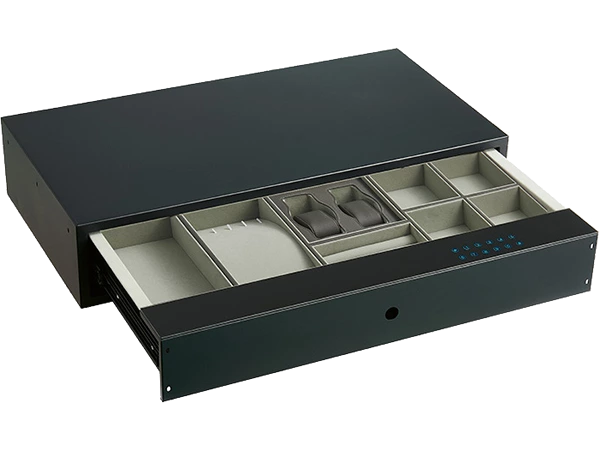
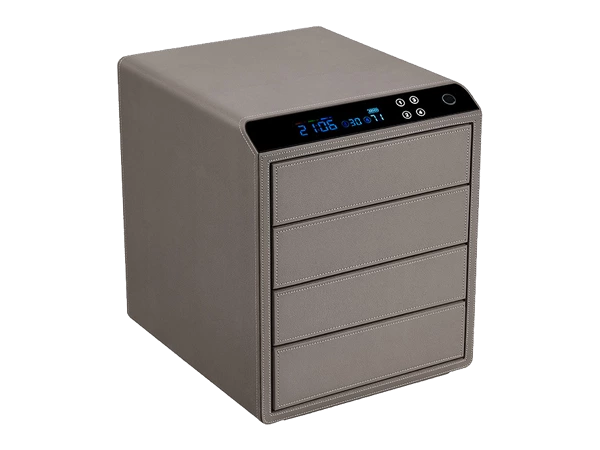
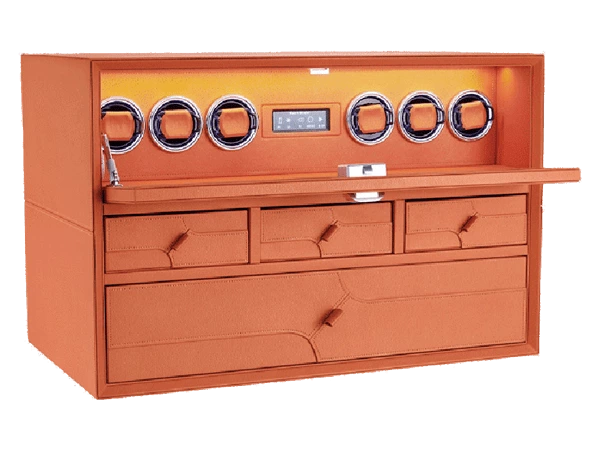
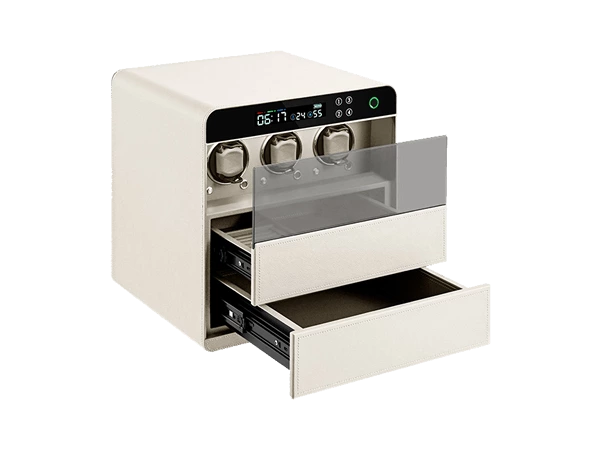
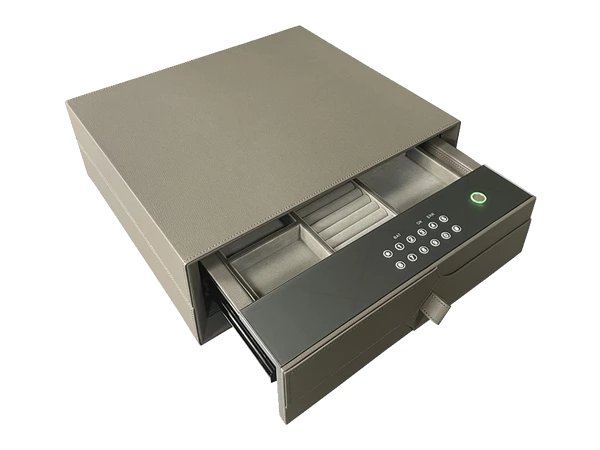
Singapore Client Case: Space-Saving Smart Safe for a Modern Apartment
The challenge was not the quantity of items. It was the limited space available in the bedroom.A freestanding safe would have occupied useful floor area and made the room feel more crowded. Placing a portable lockbox inside an ordinary cabinet would have been easier, but it would not provide the same level of organization or structural mounting.
The client also wanted the safe to remain convenient enough for regular use. Passports were accessed before travel, jewelry was selected several times a week, and emergency cash needed to remain available without being left in an unlocked drawer.The proposed solution was a compact smart safe planned around the existing cabinetry.
Instead of starting with a standard model and trying to force it into the furniture, we reviewed the available cabinet dimensions, intended storage items, access habits, lock preferences, and potential mounting surfaces.The result was a discreet residential safe configuration that used the available space efficiently while keeping the client’s valuables organized and accessible.For privacy and security, the exact position used inside the residence is not disclosed.
Project Overview
| Project Detail | Information |
| Project Location | Singapore |
| Property Type | Modern Private Apartment |
| Product Type | Compact Smart Safe |
| Main Storage Use | Jewelry, Passports, Cash and Personal Documents |
| Installation Area | Built-In Wardrobe or Residential Cabinetry |
| Access Options | Fingerprint, Electronic PIN or Hybrid Access |
| Smart Functions | Available According to the Selected Lock System |
| Mounting Method | Structural Wall, Floor or Reinforced Cabinet Anchoring |
| Interior Options | Jewelry Trays, Document Storage and Adjustable Shelves |
| Customization | Size, Lock, Layout, Finish and Installation |
| Suitable Projects | Apartments, Condominiums and Compact Residences |
Why the Client Needed a Compact Smart Safe
The client did not need a large vault. Most of the valuables were relatively small, but they required different types of storage.Jewelry needed soft surfaces and divided compartments. Passports and documents needed enough width to remain flat. Emergency cash required a separate section that could be checked quickly without removing the other contents.A standard compact safe might have provided enough total volume, but internal volume alone was not the most important consideration.
The safe also needed to:
- Fit within the available cabinet depth
- Leave sufficient clearance for the door
- Remain comfortable to access
- Support fingerprint or PIN entry
- Provide a reliable backup opening method
- Allow secure structural anchoring
- Keep jewelry separate from documents
- Preserve usable wardrobe space
- Allow future battery replacement and maintenance
- Coordinate with the surrounding interior
The project therefore focused on practical use rather than simply choosing the smallest available safe.A safe can be compact without being efficient. Poorly placed shelves, a deep but narrow compartment, or an inconvenient door direction may waste space even when the external dimensions appear suitable.
Designing the Safe Around the Apartment Cabinetry
Built-in furniture often leaves less usable space than expected.Hinges, lighting channels, drawer slides, decorative frames, back panels, and internal shelves all reduce the clear dimensions. A safe that appears to fit based on the wardrobe’s exterior size may still be unsuitable once these details are considered.
Before confirming the product, the project review covered:
- Clear internal cabinet width
- Clear internal height
- Available cabinet depth
- Cabinet-door opening direction
- Safe-door opening angle
- Hinge and shelf positions
- Back-panel thickness
- Lock and keypad clearance
- Mounting surface
- Power or charging access
- Ventilation allowance
- Maintenance space
This review prevented several common problems.For example, a safe may fit inside a cabinet but become difficult to use if the door cannot open fully. A fingerprint sensor may be positioned too close to a shelf. An interior tray may also require more vertical clearance than the original cabinet design allows.
The final configuration needed to work when opened, loaded, and used regularly—not only when shown as a rectangle on a furniture drawing.
A Space-Saving Alternative to a Freestanding Safe
In a compact apartment, every piece of furniture has to justify the space it occupies.A freestanding safe may offer greater capacity, heavier construction, and a wider choice of certified models. However, it also requires dedicated floor area and may not suit the appearance of a modern bedroom.
A furniture-integrated smart safe can be more appropriate when:
- Only compact valuables need to be stored
- Wardrobe or cabinet space is available
- Daily access is important
- The owner prefers a discreet installation
- Floor space is limited
- The safe needs to work with the room design
- The interior requires jewelry and document organization
The furniture helps reduce unnecessary visibility, but it should not be treated as the main security structure.
A secure installation still depends on:
- The safe body
- The locking system
- Structural anchoring
- Correct installation
- Responsible access management
The client chose the compact configuration because it offered a better balance between storage capacity, accessibility, and available space.
Organized Storage for Jewelry, Passports, and Cash
A compact safe should not rely on one undivided compartment.Jewelry, passports, and cash have different dimensions and should not be stored in the same way.For this project, the internal layout could be divided into several practical zones.
Available interior features may include:
- Ring slots
- Earring sections
- Necklace compartments
- Watch cushions
- Bracelet dividers
- Small jewelry trays
- Passport storage
- Cash compartments
- Document shelves
- Removable dividers
- Adjustable shelves
- Lockable inner storage
- Space for data drives or small electronics
The final number of trays, shelves, and compartments depends on the internal dimensions and the client’s collection.Frequently used jewelry can be placed in an upper tray. Passports and documents may sit in a lower or rear section. Cash can be separated from both, making it easier to review without disturbing other items.This layout uses the available capacity more effectively than a single open steel compartment.
Jewelry Storage in a Compact Safe
Small valuables can be surprisingly difficult to organize.Rings and earrings are easily mixed together. Necklaces may become tangled, while watches and bracelets can touch hard surfaces if the interior is not properly lined.
A compact safe for jewelry may therefore include:
- Narrow ring channels
- Individual earring sections
- Long necklace compartments
- Padded watch cushions
- Bracelet storage
- Removable shallow trays
- Open sections for larger pieces
- Covered compartments for private items
The interior should be planned around the collection rather than a generic jewelry-box layout.A client who mainly stores rings needs a different arrangement from someone with several watches and bracelets. The design should also leave a small amount of unused capacity for future additions.
Passport and Document Storage
Passports, certificates, insurance papers, and property documents require flatter storage.Before production, the client should confirm the approximate document dimensions and whether items will be stored inside wallets, sleeves, or folders.
Possible document-storage options include:
- Passport compartments
- Full-width shelves
- Shallow document drawers
- Adjustable dividers
- Cash and document trays
- Removable folders
- A separate inner compartment
A compartment designed only for passports may not accommodate larger certificates or document wallets.The required paper size should therefore be reviewed before confirming the safe width and internal shelf arrangement.Documents may also be stored inside sealed sleeves to reduce exposure to everyday humidity and surface wear.
Biometric Access for Daily Use
The client preferred a biometric safe because jewelry and passports were accessed regularly.Fingerprint recognition can provide a convenient daily opening method without requiring the user to carry a visible key or enter a code each time.
Depending on the selected lock system, biometric access may support:
- Registered-user fingerprints
- Multiple authorized users
- Quick daily opening
- Incorrect-entry lockout
- Low-battery warning
- Alarm functions on compatible models
- Access records on selected systems
Fingerprint recognition should still be supported by a practical backup method.
Sensor performance may be affected by:
- Dry skin
- Moisture
- Lotion
- Surface residue
- Poor fingerprint registration
- Incorrect finger placement
- Sensor quality
For that reason, the proposed lock configuration may retain PIN access, an emergency key, external emergency power, or another approved backup method.
PIN and Hybrid Access Options
An electronic PIN provides a familiar alternative to fingerprint entry.
Depending on the lock model, available functions may include:
- One or more user codes
- Administrator access
- Incorrect-entry lockout
- Low-battery warning
- Silent operating mode
- External emergency power
- Mechanical emergency access
- Alarm or notification functions
A hybrid configuration combines two opening methods.For example, the fingerprint can be used for regular access, while the PIN remains available if the sensor does not recognize the user. Some locks may also support dual verification, although this feature must be confirmed for the selected system.Emergency keys should be kept separately from the safe. Storing the override key inside the same cabinet weakens the value of the backup system.Available biometric, alarm, access-record, and emergency-opening functions depend on the selected lock and safe configuration.
Connected Features on Compatible Smart Locks
The term “smart safe” can describe anything from a basic electronic keypad to a connected system with mobile application functions.These should not be treated as the same product category.
Compatible lock systems may offer:
- Bluetooth connection
- Wi-Fi connection through a gateway
- Mobile application access
- Local or remote alerts
- Access records
- Battery-status information
- User management
- Temporary access codes
- Tamper notifications
Exact functions depend on:
- The lock model
- Connectivity method
- Application availability
- Software region
- Gateway requirements
- Internet connection
- Account setup
- Product configuration
Before specifying app control for a Singapore project, the buyer should confirm whether the application is available locally and whether remote functions require an additional gateway.A connected lock should also remain usable if the phone is unavailable or the internet connection is interrupted. Fingerprint, PIN, emergency power, or another backup access method should be considered.App functions can improve convenience, but they do not replace safe-body strength, secure mounting, or responsible user management.
Controlled Access for Family Homes
The apartment was occasionally visited by younger family members, so the client wanted to reduce unauthorized access.The product should not be described as childproof unless it has been specifically designed and tested for that claim.However, compatible access controls may help limit casual or unauthorized opening.
These may include:
- Registered fingerprints
- Private PIN management
- Automatic locking
- Incorrect-entry lockout
- Alarm functions
- Restricted emergency-key access
- User management on compatible systems
The homeowner should also:
- Avoid sharing the PIN unnecessarily
- Remove access for former users
- Keep emergency keys in another secure place
- Check that the safe locks after use
- Replace batteries before they are fully depleted
- Review alerts or records where available
These measures support controlled family access, but they should be used as part of a wider household security routine.
Furniture Integration and Exterior Finish
The client did not want the safe to look like a separate industrial product inside the apartment.
Depending on the furniture design, the visible section can be coordinated with:
- Wood veneer
- Painted cabinetry
- Leather or microfiber leather
- Fabric-covered panels
- Brushed metal trim
- Existing handles
- Handle-free furniture fronts
- Coordinated drawer or cabinet panels
The exact finish should be confirmed through physical samples, paint codes, veneer references, leather swatches, or approved drawings.Digital photographs may not show the precise color, texture, grain direction, or gloss level.
A furniture-integrated finish should look intentional, but it must not interfere with:
- Lock operation
- Door clearance
- Emergency access
- Ventilation
- Battery replacement
- Anchoring
- Future maintenance
The precise installation position and concealment arrangement used in the client’s apartment remain private.
Secure Mounting for Apartment Installations
A compact safe can be easier to remove than a large, heavy model if it is not anchored correctly.Placing the unit inside a cabinet does not provide sufficient protection when it rests loosely on a shelf or decorative panel.The safe should be connected to an appropriate structural surface.
Possible mounting surfaces include:
- Reinforced cabinet framing
- Structural wall
- Concrete wall
- Concrete floor
- Steel backing plate
- Hardwood reinforcement block
- A combination of cabinet and building structure
Thin MDF, decorative back panels, and unsupported shelving should not be treated as the only anchoring surface.
The installation plan should review:
- Safe weight
- Loaded weight
- Cabinet strength
- Wall or floor structure
- Approved anchoring points
- Door clearance
- Existing electrical services
- Cable routing
- Maintenance access
- Visibility of fasteners
Fasteners should be selected according to the actual installation surface and the safe manufacturer’s instructions.
After installation, the project team should test:
- Door movement
- Lock operation
- Fingerprint recognition
- PIN access
- Emergency opening
- Cabinet clearance
- Mounting stability
- Battery access
- Interior trays and shelves
The objective is to prevent the safe from functioning as a removable lockbox while preserving the surrounding furniture.
Selecting a Practical Installation Height
Access height can make a major difference in daily use.A safe placed too close to the floor may require the user to kneel or bend whenever opening the lock. A unit installed too high can make it difficult to see the rear compartments or remove document folders.
The appropriate height depends on:
- User height
- Furniture layout
- Safe-door direction
- Frequency of use
- Lock-panel position
- Interior depth
- Surrounding shelves and drawers
For frequently used jewelry and passports, a comfortable mid-level position may be more practical than a floor-level installation.The final location should also leave enough room for the door to open fully without striking shelves, hinges, clothing rails, or nearby furniture.
Physical Security Features
Smart access should be supported by an appropriate physical structure.
Depending on the selected model, security features may include:
- Reinforced steel body
- Strengthened door
- Anti-pry edges
- Concealed or protected hinges
- Multi-point locking bolts
- Tamper-resistant lock mounting
- Secure anchoring holes
- Incorrect-entry lockout
- Alarm functions on compatible models
- Lockable internal compartment
The safe body, door structure, lock, and mounting method should be selected according to the intended residential use and the value of the stored items.Where a certified burglary rating is required, the corresponding tested model must be selected.Furniture integration, app control, or fingerprint access does not create a certified security rating.Unsupported expressions such as “theft-proof,” “impossible to open,” or “bank-level protection” should not be used unless supported by relevant testing and documentation.
Interior Materials and Protective Lining
Jewelry and watches should not rest directly against bare painted steel.The interior can be fitted with softer materials, depending on the model and available space.
Options may include:
- Microfiber fabric
- Suede-effect lining
- Velvet-style material
- Leather-effect surfaces
- Padded watch cushions
- Soft-touch dividers
- Removable fabric-covered trays
Suitable colors may include:
- Warm beige
- Light gray
- Charcoal
- Dark brown
- Cream
- Muted blue
- Custom tones where available
The chosen material should balance appearance, durability, cleaning, and long-term wear.Very light materials may show marks more easily, while highly textured surfaces can collect dust. Removable trays should remain stable and should not interfere with the door or lock.
Internal Lighting Options
Lighting can make a compact interior easier to use.
Depending on the safe structure, possible options include:
- Battery-powered LED lighting
- Door-activated lighting
- Low-voltage wired lighting
- Rechargeable lighting modules
- Motion-activated lighting on compatible configurations
Lighting should be installed without interfering with:
- Shelves
- Jewelry trays
- Locking bolts
- Door movement
- Emergency access
- Battery maintenance
Where no permanent power is available, a replaceable or rechargeable light may be more practical.
Moisture Management for Jewelry and Documents
Enclosed cabinetry may have limited airflow.Temperature differences between air-conditioned rooms, cabinet interiors, walls, and exterior conditions can also influence humidity.
This is relevant when storing:
- Jewelry
- Watches
- Leather straps
- Passports
- Paper documents
- Cash
- Data drives
- Small electronics
Routine moisture-management options may include:
- Rechargeable desiccant packs
- Sealed document sleeves
- Anti-tarnish strips
- Removable moisture-control containers
- Small ventilation allowances
- Regular internal checks
- Avoiding direct contact with potentially damp walls
- Compatible low-power dehumidifying equipment
These measures help manage everyday humidity but do not make an uncertified safe waterproof.Desiccants also require maintenance. They need to be checked, recharged, or replaced according to the product instructions.The safe should remain accessible for cleaning, battery replacement, lock inspection, and moisture-control maintenance.
Fire and Document Protection
If passports and documents are important, the buyer may request fire protection.A safe should only be described as fireproof or fire-rated when the selected model has been tested according to a recognized standard.
The project should confirm:
- Fire-test standard
- Protection duration
- Test temperature
- Internal temperature limit
- Applicable model
- Certification documentation
- Installation limitations
Fire insulation adds thickness and weight. It may also reduce the usable capacity inside a compact safe.Water resistance requires separate construction and testing.A sealed document sleeve may offer additional protection from humidity or minor splashes, but it does not make the full safe waterproof.Fire resistance, water resistance, and routine humidity control should be treated as separate requirements.
Smart Safe Versus Traditional Safe
A smart safe is not automatically more secure than a traditional safe.The appropriate choice depends on the user’s access habits, maintenance preferences, and required features.
Potential Advantages of a Smart Safe
- Fingerprint or PIN access
- Faster daily opening
- User management on compatible locks
- Alerts on selected models
- Access records where supported
- Battery-status information
- Connected functions on compatible systems
Potential Advantages of a Traditional Safe
- Simpler operation
- Fewer electronic components
- Lower software dependency
- Mechanical lock options
- Reduced battery maintenance
- Suitability for users who do not need connected functions
In both cases, actual protection depends on:
- Safe-body construction
- Door and bolt design
- Lock quality
- Structural anchoring
- Installation
- Backup-access management
- User behavior
For this Singapore project, the smart configuration was selected because the client valued regular biometric access and wanted a compact, furniture-integrated solution.
How the Final Configuration Was Selected
The client did not select the safe simply by choosing the model with the longest feature list.
The final recommendation considered:
- Available cabinet dimensions
- Passport and document sizes
- Jewelry-storage needs
- Frequency of access
- Preferred lock method
- Mounting conditions
- Maintenance access
- Optional smart functions
- Required safety testing
- Project budget
Features that did not improve the client’s daily use were not treated as priorities.For example, app control can be useful when the client needs access records or alerts. It provides less value when the safe is used by one or two people who prefer local fingerprint access.A suitable residential safe should match the space, contents, access habits, and realistic security expectations.
Custom Configuration Options
The compact smart safe can be configured according to the available space and project requirements.
Safe Dimensions
- Exterior width
- Exterior height
- Exterior depth
- Internal usable capacity
- Door opening direction
- Shelf arrangement
- Drawer depth
- Number of storage levels
Locking System
- Fingerprint recognition
- Electronic PIN
- Fingerprint and PIN access
- Mechanical lock
- Emergency key
- External emergency power
- Low-battery warning
- Alarm functions on compatible models
Connected Functions
- Bluetooth access
- Wi-Fi connection
- Mobile application support
- Access records
- Battery-status information
- Local or remote alerts
- User management
- Temporary codes on compatible locks
Jewelry Storage
- Ring slots
- Earring compartments
- Necklace sections
- Watch cushions
- Bracelet dividers
- Removable trays
- Soft-lined drawers
Passport and Document Storage
- Passport compartments
- Document shelves
- Cash sections
- Adjustable dividers
- Removable folders
- Lockable inner storage
Interior Finish
- Microfiber lining
- Suede-effect material
- Velvet-style fabric
- Leather-effect surfaces
- Padded inserts
- Custom colors where available
Exterior Integration
- Wood veneer panel
- Painted cabinet panel
- Leather or microfiber leather
- Fabric-covered surface
- Metal trim
- Existing handle design
- Handle-free furniture front
Installation Details
- Cabinet anchoring
- Wall anchoring
- Floor anchoring
- Reinforced cabinet frame
- Steel backing plate
- Concealed fasteners
- Cable management
- Ventilation allowance
- Optional internal lighting
Actual customization availability depends on the safe model, lock system, project quantity, engineering review, furniture structure, and material selection.
Typical Project Specifications
| Specification | Available Project Options |
| Product Type | Compact Furniture-Integrated Smart Safe |
| Application | Jewelry, Passports, Cash and Documents |
| Installation Area | Wardrobe, Cabinet, Bedroom or Dressing Area |
| Safe Body | Reinforced Steel Structure |
| Lock Options | Fingerprint, Electronic, Mechanical or Hybrid Access |
| Smart Functions | Available on Compatible Lock Systems |
| Interior | Jewelry Trays, Document Storage and Adjustable Shelves |
| Interior Finish | Soft-Lined Fabric or Leather-Effect Material |
| Mounting | Cabinet, Wall, Floor or Combined Anchoring |
| Lighting | Optional Internal Lighting Where Suitable |
| Dimensions | Customized According to Available Space |
| Suitable Properties | Apartments, Condominiums and Private Residences |
Exact dimensions, steel thickness, locking functions, certification, connected features, interior fittings, and installation method should be confirmed before production.
Our Custom Project Process
A furniture-integrated smart safe project requires coordination between the client, safe manufacturer, interior designer, furniture supplier, and local installer.
1. Requirement Review
We begin by confirming:
- Project location
- Property type
- Installation area
- Items to be stored
- Required capacity
- Preferred access method
- Smart-function requirements
- Available cabinet space
- Project quantity
- Expected schedule
2. Cabinet and Space Review
The client provides cabinet drawings, room plans, photographs, or clear internal measurements.
We review:
- Usable dimensions
- Door and shelf clearance
- Cabinet structure
- Mounting surfaces
- Lock position
- Electrical access
- Ventilation allowance
- Maintenance requirements
3. Product Configuration
The safe body, lock system, internal layout, exterior finish, and mounting method are selected.
4. Smart-Function Confirmation
Where app or connected functions are required, the lock model, connectivity method, software availability, gateway requirements, and backup-access options are confirmed.
5. Technical Drawing Approval
The safe dimensions, door opening, mounting points, lock position, and internal arrangement are shown in a technical drawing for confirmation.
The approved drawing should also be reviewed by the furniture manufacturer or contractor.
6. Material and Color Approval
Interior lining, furniture panels, leather, veneer, metal trim, and other visible materials are confirmed through samples or approved references.
7. Production
The safe body, locking system, internal fittings, furniture panel, and accessories are manufactured according to the agreed specification.
8. Quality Inspection
Inspection may include:
- Fingerprint recognition
- PIN access
- Emergency opening
- App or connected functions where applicable
- Door alignment
- Locking-bolt movement
- Interior tray fit
- Surface finish
- Lighting
- Battery access
- Packaging condition
9. Packaging and Delivery
Packaging is planned according to the product dimensions, weight, finish, transport method, and destination.Delivery requirements for Singapore should be confirmed during the quotation stage.
10. Installation Coordination
Technical information can be provided to the local furniture contractor or installer.The final anchoring method must be selected according to the actual cabinet and building structure.
Project Result
The completed configuration provided a dedicated place for jewelry, passports, emergency cash, and private documents without occupying additional floor space.The cabinet integration preserved the usable area of the bedroom, while biometric and PIN access supported regular use. Structural mounting also prevented the product from functioning as a loose portable lockbox.The project showed that a compact home smart safe can work well in a space-efficient apartment when the dimensions, interior layout, lock, and installation method are planned together.Exact placement information remains confidential.
Pricing and Custom Quotation
The price of a compact smart safe depends on its final specification.
Main pricing factors include:
- Safe dimensions
- Steel-body construction
- Lock system
- Connected functions
- Interior layout
- Jewelry trays
- Document compartments
- Fire rating where applicable
- Interior lining
- Exterior furniture panel
- Internal lighting
- Mounting accessories
- Order quantity
- Packaging
- Delivery destination
- Installation support
A higher price does not automatically mean a more suitable safe.
The quotation should be evaluated against:
- Safe-body structure
- Verified lock functions
- Mounting design
- Internal capacity
- Required certification
- Software availability
- Backup-access method
- Maintenance needs
To prepare an accurate quotation, please provide:
- Project location
- Property type
- Cabinet drawings or photographs
- Clear installation dimensions
- Items to be stored
- Preferred lock method
- Required smart functions
- Interior-layout requirements
- Exterior finish reference
- Mounting conditions
- Required quantity
- Delivery location in Singapore
- Expected project schedule
Who Is This Product Designed For?
A compact smart safe is suitable for residential projects where space is limited and valuables need to remain accessible.
Typical clients include:
- Apartment owners
- Condominium owners
- Private homeowners
- Interior designers
- Architects
- Wardrobe manufacturers
- Furniture manufacturers
- Fit-out contractors
- Property developers
- Jewelry collectors
- Watch collectors
- Residential security consultants
- Safe distributors
It is particularly suitable for bedrooms, walk-in closets, built-in wardrobes, dressing areas, and other interiors where a large freestanding safe would be impractical.
Why Work with a Custom Safe Manufacturer?
Working directly with a manufacturer allows the safe dimensions, lock, connected functions, interior storage, and furniture structure to be reviewed together.
Manufacturer support may include:
- Product selection
- Custom dimension evaluation
- Lock recommendation
- Smart-function review
- Jewelry storage planning
- Passport and document layout
- Furniture panel coordination
- Technical drawing confirmation
- Anchoring guidance
- OEM and private-label support
- Packaging planning
- International shipping coordination
Early technical communication helps prevent dimensional conflicts and reduces the need for furniture modifications after installation.
Frequently Asked Questions
What size smart safe is suitable for an apartment?
The suitable size depends on the available cabinet dimensions, passport and document sizes, jewelry volume, preferred interior layout, and future storage needs.
Can the safe be installed inside an existing wardrobe?
It may be possible. The cabinet dimensions, internal structure, door clearance, mounting surface, power access, and maintenance space should be reviewed first.
Can jewelry and passports be stored together?
Yes. The interior can include separate jewelry trays, watch cushions, passport compartments, cash sections, and document shelves.
Is fingerprint access available?
Fingerprint access is available on compatible models. PIN, mechanical, hybrid, emergency-key, and external-power options may also be considered.
What happens if the fingerprint sensor does not recognize the user?
Depending on the lock, the safe may be opened through a PIN, emergency key, external power interface, or another approved backup method.
Does the safe support mobile-app control?
App control, alerts, access records, user management, and remote functions depend on the selected lock and connectivity system. Software and regional availability should be confirmed before production.
Can the safe be described as childproof?
The product should only be described as childproof when supported by relevant design and testing. Controlled user access may help reduce unauthorized opening but is not the same as certified child resistance.
How is the safe secured?
The safe may be anchored to a reinforced cabinet frame, structural wall, concrete floor, steel backing plate, or a combination of these surfaces.
Is the safe fireproof?
Only a model with relevant and verifiable fire testing should be described as fire-rated. The applicable test standard and protection duration must be confirmed.
Can internal lighting be added?
Optional lighting may be added when the safe structure, available space, power arrangement, and maintenance access allow it.
Can custom sizes be manufactured?
Custom dimensions may be available after technical evaluation. The safe body, lock, cabinet opening, mounting conditions, order quantity, and production limitations must be considered.
Can you supply smart safes for Singapore projects?
Yes. We can support product configuration, custom manufacturing, packaging, and international delivery planning for apartments, condominiums, furniture projects, and private residences in Singapore.
Request a Custom Compact Smart Safe Quotation
A compact smart safe should do more than occupy the smallest available cabinet space.It should provide organized storage, convenient access, secure anchoring, and a configuration suited to the owner’s actual routine.For this Singapore apartment project, the safe was planned around the client’s jewelry, passports, cash, cabinet dimensions, and preferred access method. The final approach provided a practical alternative to both a loose lockbox and a large freestanding safe.
Share your cabinet drawings, installation dimensions, preferred lock, smart-function requirements, interior-storage needs, and finish references with our team. We will review the information and recommend a suitable compact smart safe configuration.Contact us to request a customized quotation for a smart safe for your apartment, condominium, bedroom, wardrobe, or residential furniture project in Singapore.