Philippines Condo Project: Custom Hidden Safe Box for a Master Bedroom Wardrobe
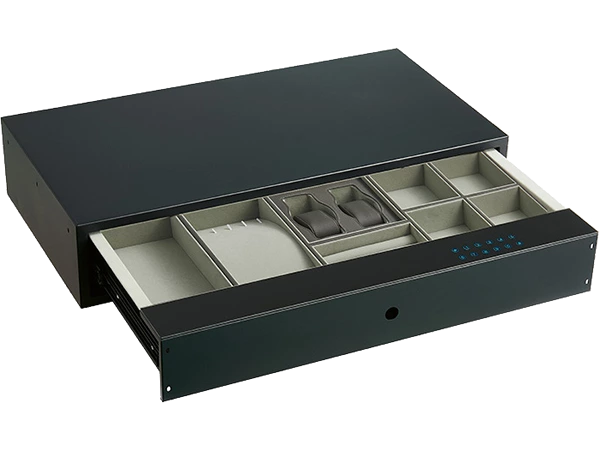
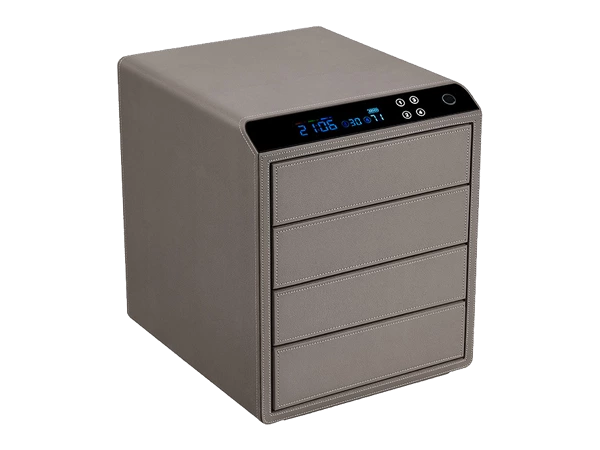
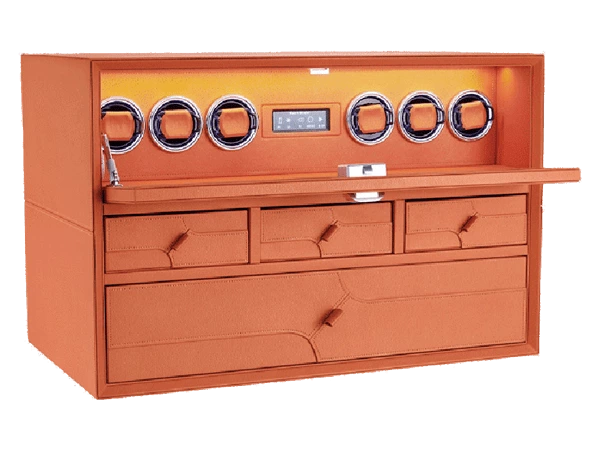
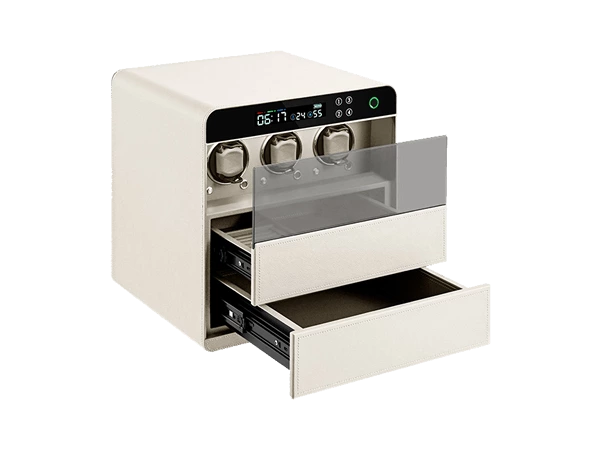
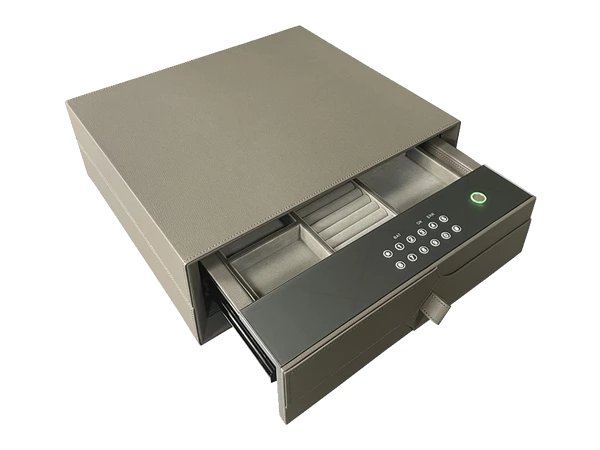
For a luxury condo project in the Philippines, a furniture manufacturer needed a valuables-storage solution that could work naturally with a master bedroom wardrobe rather than sit separately in the room. The selected product was a luxury leather hidden safe box combining an all-steel cabinet structure, intelligent touch controls, several unlocking methods, organized internal storage, and a handle-free automatic pop-up design.
The project reflects a common challenge in compact luxury residences: security storage still needs to be practical, but a conventional freestanding safe can consume usable floor or cabinet space and may not suit the visual language of fitted bedroom furniture.For this application, the safe was treated as part of the wardrobe specification. Size, color, multilayer organization, and inner-box design could therefore be considered together with the furniture rather than after the cabinetry had already been finalized.
Project Overview
This Philippine project involved a furniture manufacturer supplying a master bedroom wardrobe for a luxury condo application. The safe needed to function as a discreet storage element within that furniture environment.Unlike a stand-alone safe purchased after a room is completed, a furniture-integrated safe requires coordination between the safe configuration and the surrounding cabinetry. Overall dimensions, opening behavior, access interface, storage layout, and exterior appearance all become part of the design discussion.The selected hidden safe combines electronic access with a mechanical backup method, an automatic pop-up structure, customized interior storage, and a leather-finished appearance suitable for residential furniture applications.
| Project Item | Details |
| Market | Philippines |
| Client Type | Furniture Manufacturer |
| Application | Master Bedroom Wardrobe |
| Safe Type | Luxury Leather Hidden Safe Box |
| Cabinet Structure | All-steel fabrication |
| Control Interface | Tempered glass intelligent touch panel |
| Unlocking Methods | Fingerprint, digital password and mechanical key |
| Opening Design | Automatic pop-up, handle-free design |
| Interior Configuration | Customized storage box |
| Emergency Measures | Mechanical key and Type-C charging interface |
| Customization | Size, color, multilayer configuration and inner-box design |
| Project Objective | Integrate organized valuables storage into a luxury bedroom wardrobe while maintaining a discreet furniture appearance |
Understanding the Client’s Requirements
The main consideration was not simply finding a smaller safe. The product had to make sense inside a furniture system.For a furniture manufacturer, the safe becomes another component that must coordinate with panels, drawers, shelves, hardware, finishes, and usable storage space. Even a technically capable safe can create problems if the dimensions or opening method are considered too late in the furniture-design process.The master bedroom application also changes the visual requirement. A large exposed handle, obvious industrial control area, or utilitarian interior would be more difficult to integrate into premium bedroom cabinetry. The specified safe therefore uses an automatic pop-up structure with a handle-free exterior and a tempered glass touch-control interface.Internally, the customized storage box addresses another practical issue. Personal valuables rarely have the same dimensions. Watches, jewelry, cash, passports, documents, and small accessories benefit from organized storage rather than being placed together in one unrestricted compartment.
Project Requirements Tree
Master Bedroom Wardrobe Project
│
├── Furniture Integration
│ ├── Compact safe configuration
│ ├── Custom size
│ ├── Custom color
│ └── Handle-free appearance
│
├── Access
│ ├── Fingerprint unlocking
│ ├── Digital password
│ └── Mechanical emergency key
│
├── Daily Use
│ ├── Touch-sensitive control panel
│ ├── Automatic pop-up opening
│ └── Type-C charging interface
│
├── Valuables Organization
│ ├── Customized storage box
│ ├── Multilayer configuration
│ └── Custom inner-box design
│
└── Interior Appearance
├── Luxury leather finish
└── Clean concealed installation concept
Why a Standard Freestanding Safe Was Not the Right Fit
A freestanding safe can be appropriate when floor space is available and furniture integration is not important. That was not the design direction of this project.In a compact luxury condo, every piece of furniture has a defined function and visual relationship with the room. Adding a separate safe after the wardrobe is completed may introduce another visible object, occupy additional space, or make access less convenient.A hidden wardrobe safe approaches the problem differently. Instead of treating valuables storage as an independent appliance, the safe can be planned as part of the cabinetry.That approach is particularly relevant for furniture manufacturers because dimensions can be coordinated before the wardrobe layout is finalized. The safe’s position, surrounding clearance, and opening direction can be evaluated together with the furniture structure.The appearance also matters. Traditional safe doors often rely on visible handles or more industrial-looking controls. The specified automatic pop-up design removes the need for an exposed handle, while the tempered glass control surface creates a cleaner front appearance.Inside the safe, customizable storage offers another advantage over a simple open steel compartment. Different layers or boxes can be planned around the types of valuables the user expects to store.This does not mean a hidden safe is automatically more secure than every conventional safe. Security performance depends on construction, locking design, installation, and verified testing. No certified burglary, fire, or insurance rating has been provided for this project, so no such rating should be implied.
The Hidden Safe Solution Selected for the Project
For this project, a luxury leather hidden safe box was selected for integration with the master bedroom wardrobe.The core cabinet uses all-steel fabrication, while the visible user interface is built around a tempered glass control panel. The panel supports touch-sensitive operation and intelligent electronic unlocking.Three access methods were specified: fingerprint recognition, a digital password, and a mechanical key.Fingerprint access provides a convenient option for regular use, while the password offers an alternative electronic access method. The mechanical key serves as a backup option for situations where electronic unlocking cannot be used.The safe also incorporates a handle-free automatic pop-up design. Once the appropriate unlocking process is completed, the opening mechanism allows access without relying on a permanently exposed handle. For luxury furniture projects, this contributes to a simpler exterior and can make the product easier to coordinate visually with surrounding cabinetry.A customized storage box organizes the interior. Instead of treating the safe as one open compartment, the layout can be developed around different categories of valuables.The specified configuration also includes a Type-C interface as part of the emergency power or charging arrangement.That distinction should be stated accurately on the final website because a charging port and an emergency power input are not technically identical.
Key Safe Configuration
| Configuration | Project Specification | Why It Was Selected |
| Product Type | Luxury leather hidden safe box | Suitable for discreet residential wardrobe applications |
| Cabinet Structure | All-steel fabrication | Provides a rigid enclosed structure for the locking and storage system |
| Main Interface | Tempered glass intelligent panel | Provides a clean appearance and touch-sensitive operation |
| Primary Access | Fingerprint unlocking | Supports convenient biometric access |
| Secondary Access | Digital password | Provides an alternative electronic unlocking method |
| Emergency Access | Mechanical key | Provides a non-electronic backup access method |
| Opening Structure | Automatic pop-up design | Allows a handle-free exterior and cleaner furniture integration |
| Interior | Customized storage box | Keeps different personal valuables organized |
| Power Backup | Type-C interface | Supports the product’s specified emergency power/charging arrangement |
| Exterior Style | Luxury leather finish | Better suited to premium wardrobe and bedroom applications |
| Customization | Size and color | Helps coordinate the safe with furniture dimensions and finishes |
| Internal Customization | Multilayer and inner-box design | Allows storage to be configured around different valuables |
Access Design: Why Multiple Unlocking Methods Matter
An electronic residential safe should not depend on one access method alone.In this project, the combination of fingerprint recognition, digital password entry, and a mechanical key gives the user different ways to operate the safe according to the situation.Fingerprint access is designed for convenient regular opening without entering a code each time. A password gives another electronic option and can be useful when access needs to be managed differently.The mechanical key has a different purpose. It acts as a physical backup rather than another smart function.The Type-C interface addresses the power side of emergency use. Before the page is published, the exact Type-C function should be confirmed so the wording accurately reflects the electrical design.It is also important not to confuse multiple access methods with a certified security rating. The number of unlocking options describes usability and redundancy; it does not by itself establish burglary resistance or an insurance classification.
Why the Handle-Free Pop-Up Design Matters in Furniture Projects
The automatic pop-up structure is particularly relevant to furniture integration because it eliminates the need for a conventional protruding safe handle.In a fitted master bedroom wardrobe, handles and hardware contribute directly to the visual rhythm of the cabinetry. Introducing a large safe handle can make the storage compartment visually obvious and can conflict with minimalist door and drawer systems.A handle-free safe creates more flexibility for furniture designers. The safe can maintain a cleaner exterior while electronic unlocking controls access to the compartment.The automatic opening concept also supports daily usability. After the correct unlocking procedure, the compartment can open without the user having to pull a conventional mechanical handle.The exact opening travel, required clearances, and mounting position should still be confirmed before cabinetry production.For furniture manufacturers, this information is more important than simply knowing the external width and height. The surrounding cabinet must allow the mechanism to open without interference.
Customization for the Philippines Condo Project
Four customization areas were identified for this project: size, color, multilayer configuration, and inner-box design.These options are particularly useful when the safe is being sourced by a furniture manufacturer.
Size
A standard safe dimension may not correspond to a specific wardrobe module. Custom sizing allows the safe and furniture dimensions to be considered together.The final dimensions for this project were not supplied and should not be invented.
Color
Color customization helps the safe coordinate with the wardrobe or interior palette. This is especially relevant when part of the safe remains visible after installation.
Multilayer Configuration
A multilayer structure can divide the available internal volume more efficiently than one large compartment. The appropriate number and height of layers depend on what the end user intends to store.
Inner Box Design
The customized inner box can be developed around jewelry, watches, documents, cash, accessories, or other personal valuables. A furniture manufacturer or project buyer can therefore specify the organization requirement before the internal structure is finalized.
Customization Structure
Custom Hidden Safe Box
│
├── External Configuration
│ ├── Size
│ └── Color
│
├── Interior Architecture
│ ├── Number of layers
│ └── Layer arrangement
│
├── Storage Organization
│ └── Custom inner-box design
│
└── Furniture Coordination
├── Wardrobe dimensions
├── Installation position
└── Opening clearance
Manufacturing and Quality Considerations
A furniture-integrated smart safe combines metal fabrication, electronic access, surface finishing, opening hardware, and interior fitting within one product.The steel cabinet establishes the basic structure. Dimensional consistency becomes particularly important when the safe is intended to fit inside custom furniture, because an unexpected difference in overall size can affect the surrounding cabinet.The automatic pop-up mechanism must also align with the safe structure so that opening and closing remain smooth. For a handle-free design, the mechanism itself carries more responsibility for everyday operation.The tempered glass interface and fingerprint module require accurate fitting into the front control area. Touch response, electronic access, and the relationship between the control panel and opening mechanism should therefore be checked during product inspection.Interior workmanship is another visible quality consideration. Leather surfaces, storage boxes, corners, seams, and layer alignment are part of what the end user sees every time the safe is opened.For project packing, the visible surfaces and control interface also require protection against scratching and impact during handling.No verified inspection frequency, drop-test standard, electronic test cycle, steel thickness, burglary classification, or other numerical test data have been provided for this case. These details should only be published when factory records or technical documents are available.
From Project Requirement to Safe Configuration
The supplied project information allows the specification path to be documented to the following extent:
Philippines Luxury Condo Project
↓
Master Bedroom Wardrobe Application
↓
Furniture Manufacturer Requirement
↓
Hidden Safe Box Selected
↓
Smart Access Configuration
↓
Fingerprint + Password + Mechanical Key
↓
Furniture-Oriented Opening Design
↓
Automatic Pop-Up + Handle-Free Exterior
↓
Customization Defined
↓
Size + Color + Multilayer + Inner Box
↓
[FACT NEEDED: Drawing / Sample Confirmation]
↓
[FACT NEEDED: Production Status]
↓
[FACT NEEDED: Installation / Project Completion]
If actual technical drawings, production photographs, inspection records, packaging images, or completed installation photographs are available, adding them to this section would substantially improve the case study.They provide the kind of first-hand project evidence that buyers can evaluate directly rather than relying only on marketing statements.
The Final Result
Based on the information currently available, the documented result is a customized safe configuration designed around three project priorities: discreet wardrobe integration, intelligent access, and organized valuables storage.The handle-free automatic pop-up structure supports a cleaner furniture appearance. Fingerprint, password, and mechanical-key access provide several ways to operate the safe, while the Type-C interface adds a power-related emergency measure.
Inside, the customized storage concept allows the cabinet to be divided according to the owner’s valuables rather than being limited to a single open space.The all-steel structure provides the physical cabinet foundation, while the leather finish and tempered glass control surface move the visual presentation closer to premium residential furniture.What should not be claimed yet is an installation outcome.Until that evidence is available, the article should describe the specified project solution rather than making unsupported claims about completed installation performance.
What Buyers Can Learn From This Project
For furniture manufacturers, interior contractors, and property developers, the most important lesson is to specify a wardrobe safe early enough in the furniture process.Waiting until the wardrobe is already manufactured can create unnecessary dimensional and clearance restrictions. The safe’s width, height, depth, opening travel, power arrangement, and control-panel position should ideally be coordinated with the cabinetry.
The second consideration is access redundancy. Fingerprint access is convenient, but buyers should also evaluate what happens if electronic access or power is temporarily unavailable. Password access, a mechanical backup key, and an appropriate emergency power arrangement can make the system easier to manage.Interior organization deserves the same attention as external dimensions. A compact safe does not necessarily need a large undivided compartment. Multilayer storage and customized inner boxes can make better use of the available volume.Appearance is also important in luxury residential projects. Control panels, handles, leather finishes, and visible edges become part of the furniture design once the product is integrated into a master bedroom wardrobe.
Finally, buyers should distinguish product features from verified security performance. An all-steel cabinet, fingerprint lock, or multiple unlocking methods may be valuable product characteristics, but they should not be interpreted as a specific burglary, fire, or insurance rating unless supporting certification is available.
Frequently Asked Questions
Can a hidden safe box be customized to fit a wardrobe?
Yes. Size is one of the customization options available for this project type. For furniture integration, the buyer should provide the available internal cabinet dimensions as early as possible. It is also useful to confirm the safe’s intended position, surrounding panels, opening direction, and required clearance. The manufacturer can then evaluate whether the safe configuration is suitable for the wardrobe structure. Exact dimensional tolerances and mounting requirements should be confirmed using the final technical drawing before the furniture enters production.
What unlocking methods does this hidden safe support?
The specified model supports fingerprint unlocking, digital password entry, and a mechanical key. Fingerprint recognition is intended for convenient regular access, while the digital password provides another electronic method. The mechanical key serves as an emergency backup. The safe also includes a Type-C interface associated with emergency power or charging. The exact electrical function of that interface should be confirmed in the final technical specification before it is described in detail on a product or case-study page.
Why use a hidden wardrobe safe instead of a freestanding safe?
A hidden wardrobe safe can be useful when the project needs valuables storage without introducing another separate object into the room. In fitted bedrooms and compact luxury homes, integrating the safe with cabinetry can make more efficient use of the furniture layout and create a cleaner appearance. It also allows the safe dimensions and internal configuration to be considered during furniture design. A freestanding safe may still be appropriate where capacity, certified security performance, or a different installation method is the main priority.
Can the inside of the safe be customized for jewelry and watches?
Yes. The supplied project configuration supports multilayer customization and a customized inner-box design. These options allow the storage space to be divided according to the types of valuables being stored. For example, a project may require different areas for jewelry, watches, documents, cash, or accessories. Buyers should provide the intended storage categories and approximate requirements so the internal layout can be evaluated before production. Specific jewelry or watch compartments should not be assumed unless they are included in the confirmed design.
How does the automatic pop-up design help with wardrobe integration?
The automatic pop-up design removes the need for a conventional exposed handle. This is useful in wardrobes where clean surfaces and minimal hardware are part of the furniture design. Once the safe is correctly unlocked, the opening mechanism provides access without requiring a permanently protruding handle. The exact opening clearance still needs to be considered during cabinet design, so furniture manufacturers should obtain final product dimensions and opening requirements before determining the surrounding wardrobe structure.
What should a furniture manufacturer provide before ordering a custom wardrobe safe?
Start with the available width, height, and depth of the intended installation area. The manufacturer should also know where the safe will sit within the wardrobe, how the surrounding cabinet opens, the preferred exterior color, access-system requirements, and the intended internal storage categories. If multilayer storage or a custom inner box is required, provide the basic organization concept as well. Final drawings and technical specifications should be confirmed before mass production or furniture fabrication begins.
Planning a Similar Hidden Safe Project?
For a master bedroom wardrobe, walk-in closet, luxury apartment, villa, or custom furniture project, the most useful starting point is the installation space.Provide the available cabinet dimensions, preferred access method, desired exterior finish, intended valuables, and internal storage requirements. From there, the safe structure, multilayer arrangement, inner storage box, and furniture integration can be evaluated as one project rather than as separate decisions.For furniture manufacturers, interior contractors, safe distributors, and OEM/ODM buyers, size, color, multilayer configuration, and inner-box design can be discussed according to the intended application.