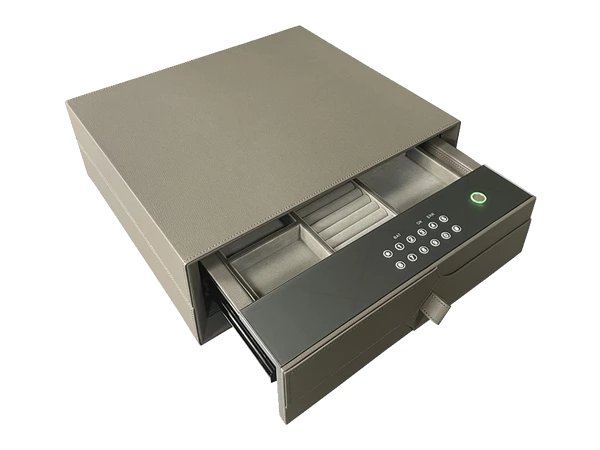
Australia Buyer Case: Custom Jewelry Safe With Drawer Compartments for a Walk-In Closet
An Australian furniture manufacturer working on a walk-in closet application required more than a conventional valuables safe. The storage needed to accommodate jewelry and other personal items in an organized way, while the safe itself had to make sense as part of a premium furniture environment.
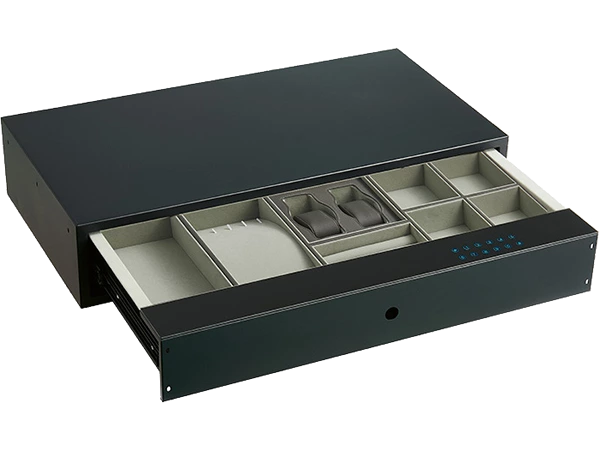
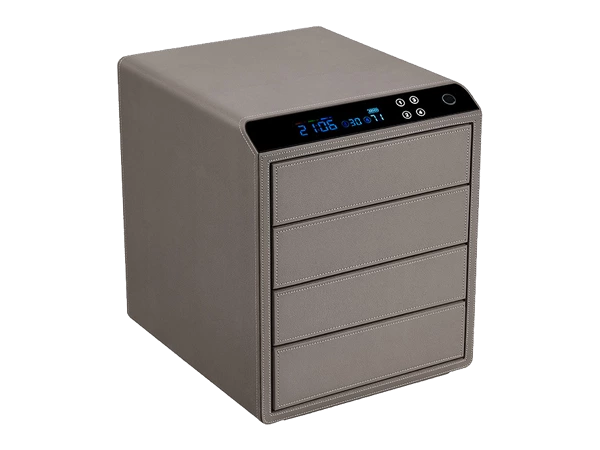
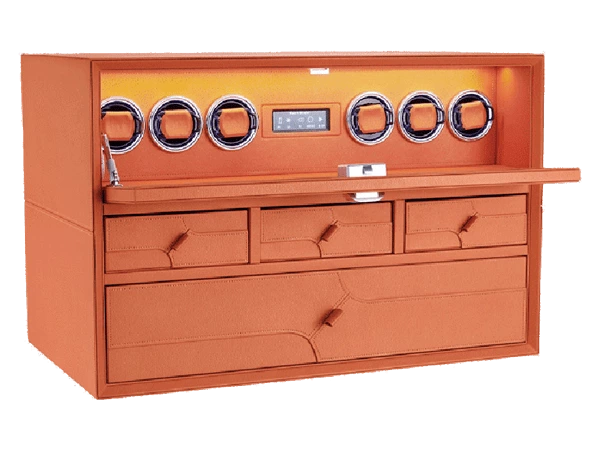
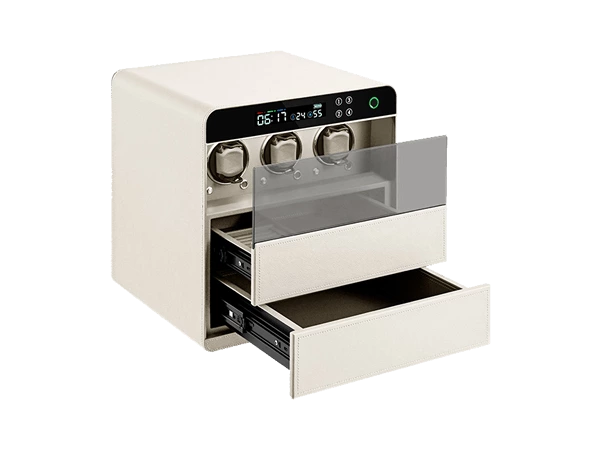
The selected configuration was a jewelry safe with drawers, combining an all-steel cabinet structure, intelligent electronic access, a tempered glass touch interface, customized internal storage, and a handle-free automatic pop-up design. Fingerprint recognition, a digital password, and a mechanical key provide different access methods, while size, color, multilayer organization, and inner-box design can be adapted according to the furniture project.The important point was not simply adding more drawers. The internal arrangement needed to turn the safe from an open security compartment into a more practical storage system for valuables used in a walk-in closet.
Project Overview
This project involved an Australian furniture manufacturer specifying a jewelry safe for a walk-in closet. That buyer profile has different priorities from someone purchasing a stand-alone residential safe after a room has already been completed.For a furniture manufacturer, the safe has to be considered alongside cabinetry dimensions, drawer arrangements, surrounding finishes, opening clearances, and storage requirements. The internal layout matters because jewelry and smaller valuables are easier to manage when separated into purpose-designed compartments rather than placed together in one large space.The selected smart jewelry safe therefore combines controlled access with customizable internal organization.
| Project Item | Details |
| Market | Australia |
| Client Type | Furniture Manufacturer |
| Application | Walk-in Closet |
| Safe Type | Jewelry Safe with Drawers |
| Cabinet Structure | All-steel fabrication |
| Control Interface | Tempered glass intelligent touch panel |
| Unlocking Methods | Fingerprint, digital password and mechanical key |
| Opening Structure | Automatic pop-up, handle-free design |
| Interior Storage | Customized storage box and drawer configuration |
| Emergency Measures | Mechanical key and Type-C interface |
| Customization | Size, color, multilayer configuration and inner-box design |
| Project Objective | Combine controlled valuables storage with organized jewelry compartments for a walk-in closet furniture project |
Understanding the Client’s Requirements
A walk-in closet creates a natural place for jewelry storage, but it also changes how a safe should be planned.The safe is positioned close to wardrobes, drawers, dressing areas, mirrors, and other personal storage. This means the user is likely to access jewelry and valuables as part of a daily routine rather than only on rare occasions. Internal organization therefore becomes an important practical requirement.
A single open safe compartment may provide enclosed storage, but rings, necklaces, watches, documents, and other small items can quickly become mixed together. Drawer-based organization gives each category a more clearly defined location.For the furniture manufacturer, dimensional coordination is equally important. The safe cannot be treated as an unrelated appliance if it needs to work within or alongside custom cabinetry. Size, external appearance, opening behavior, and internal arrangement should ideally be discussed before the surrounding furniture structure is finalized.
Project Requirements Tree
Australian Walk-In Closet Project
│
├── Valuables Storage
│ ├── Jewelry organization
│ ├── Separate drawer compartments
│ └── Multilayer storage
│
├── Controlled Access
│ ├── Fingerprint unlocking
│ ├── Digital password
│ └── Mechanical emergency key
│
├── Daily Operation
│ ├── Tempered glass touch interface
│ ├── Automatic pop-up opening
│ └── Handle-free exterior
│
├── Emergency Access
│ ├── Mechanical key
│ └── Type-C power interface
│
└── Furniture Customization
├── Custom size
├── Custom color
├── Multilayer arrangement
└── Custom inner-box design
Why a Standard Safe Was Not the Right Fit
A conventional residential safe often treats internal volume as the main specification: buyers choose a size and place valuables inside. That approach can work well for documents, cash, or larger items, but jewelry storage introduces a different organizational problem.Jewelry consists of many small objects with different shapes, materials, and storage needs. A necklace should not necessarily be stored in the same way as a ring, bracelet, watch, passport, or document.A jewelry safe with drawers addresses this by dividing the available volume into more manageable storage areas.
The walk-in closet environment also creates a stronger requirement for furniture compatibility. A large exposed handle or industrial-looking front may not work visually with a carefully designed dressing space. The specified safe therefore uses a tempered glass control interface and automatic pop-up opening that removes the need for a conventional protruding handle.There is also a space-efficiency consideration. In a custom closet, increasing overall cabinet dimensions is not always the best way to gain usable storage. A multilayer arrangement can make better use of vertical internal volume by separating valuables across several drawers or storage levels.This does not mean a drawer safe automatically provides a higher certified security level than a standard safe. Security classifications require appropriate testing and documentation. No certified burglary, fire, or insurance rating has been provided for this case, so none should be claimed.
The Jewelry Safe Solution Selected for the Project
For this project, the selected solution was a custom jewelry safe with drawers designed around smart access and organized internal storage.The cabinet uses all-steel fabrication as the structural body of the safe. The operating area incorporates a tempered glass control interface designed for touch-sensitive electronic operation.Three unlocking methods were specified: fingerprint recognition, digital password entry, and a mechanical key.The fingerprint reader provides a convenient biometric option for regular access. The digital password offers another electronic method, while the mechanical key provides a physical backup option for emergency situations.Opening is based on an automatic pop-up mechanism rather than a conventional exposed handle. For a walk-in closet, this creates a cleaner exterior and reduces the visual presence of traditional safe hardware.
Inside, customized storage boxes and drawers provide the main functional difference from a generic home safe. Internal layers can be planned around the types of valuables expected to be stored rather than relying on one undivided compartment.The product specification also includes a Type-C interface as part of the emergency power arrangement.That function should be verified before the website uses more specific electrical terminology.
Key Safe Configuration
| Configuration | Project Specification | Why It Was Selected |
| Safe Type | Jewelry safe with drawers | Supports organized storage of jewelry and personal valuables |
| Cabinet Structure | All-steel fabrication | Provides the structural body for the locking and drawer system |
| Control Interface | Tempered glass touch panel | Provides a clean user interface suitable for premium interiors |
| Primary Access | Fingerprint unlocking | Enables convenient biometric access |
| Secondary Access | Digital password | Provides an alternative electronic access method |
| Emergency Access | Mechanical key | Provides physical backup access |
| Opening Method | Automatic pop-up | Creates a handle-free exterior |
| Interior Storage | Customized storage boxes | Allows valuables to be separated and organized |
| Internal Layout | Multilayer drawer configuration | Makes better use of available internal volume |
| Emergency Power | Type-C interface | Supports the specified emergency power arrangement |
| Customization | Size and color | Helps coordinate the safe with furniture dimensions and finishes |
| Drawer Customization | Inner-box design | Allows compartment organization to reflect storage requirements |
Why Custom Drawer Compartments Matter for Jewelry Storage
The internal drawer configuration is one of the most important parts of a jewelry safe because usable storage is not determined by total volume alone.A large empty compartment may have more cubic capacity, but that does not necessarily make it more convenient for a collection of small valuables.Drawer compartments create separation.Rings and earrings can be placed in smaller sections. Bracelets and watches may require wider spaces. Necklaces or longer accessories need another type of layout. Documents and other personal valuables may need larger flat storage.
The exact compartment arrangement for this Australian project has not been supplied, so individual jewelry sections should not be invented.What can be confirmed is that the inner-box design is customizable. This allows the furniture manufacturer or project buyer to define the storage requirement before the internal layout is finalized.From a manufacturing perspective, this matters because the drawer arrangement affects more than appearance. Layer height, usable depth, opening clearance, and the relationship between the drawer structure and the safe cabinet must all remain practical.
Smart Access and Emergency Opening
Multiple unlocking options give the user more flexibility in different operating situations.For regular use, fingerprint recognition avoids the need to enter a code each time. A digital password provides an alternative electronic method.The mechanical key serves a different purpose. It is a physical backup rather than another smart feature, which can be useful when electronic unlocking is temporarily unavailable.The Type-C interface adds another emergency-related function on the power side of the system. The exact electrical role needs to be confirmed before publication.These functions should be described as access and usability features rather than proof of a certified anti-theft level.Terms such as “strong anti-theft” may be appropriate as general product marketing language only when used carefully, but they should not be converted into claims such as burglary-resistant grade, insurance-approved security, or certified anti-theft performance without corresponding documentation.
Why the Handle-Free Pop-Up Design Suits a Walk-In Closet
The automatic pop-up design reduces the visual impact of conventional safe hardware.Walk-in closets are often designed around consistent furniture lines, carefully selected handles, drawer fronts, materials, and lighting. A large protruding safe handle can interrupt that visual system.A handle-free front creates a cleaner relationship between the safe and surrounding furniture.Once the correct access process is completed, the pop-up mechanism assists with opening rather than requiring the user to operate a traditional external handle.For furniture manufacturers, however, the opening mechanism needs to be considered before installation. The surrounding cabinet must provide sufficient clearance for the safe to operate without interference.Exact installation dimensions and opening travel have not been provided.Those measurements would make this case study more useful to furniture manufacturers because they directly affect cabinetry planning.
Customization for the Australian Furniture Project
The supplied customization scope covers four areas: size, color, multilayer configuration, and inner-box design.These options are particularly relevant to a furniture manufacturer because they allow the safe specification to respond to the interior project rather than forcing the furniture to work around one standard unit.
Custom Size
Furniture modules have fixed dimensional relationships. A safe intended for a walk-in closet should therefore be checked against the available cabinet space.Width, depth, and height are only part of the discussion. Opening clearance and access to the control interface should also be considered.
Custom Color
Color customization allows visible parts of the safe to coordinate more naturally with the surrounding closet.The exact finish selected for this case has not been supplied, so no particular color should be stated.
Multilayer Configuration
Several storage levels allow the internal space to be allocated according to different categories of valuables.A buyer with a larger jewelry collection may prioritize additional shallow drawers, while another project may reserve more space for watches, documents, or larger accessories.
Custom Inner Box Design
The inner box determines how each drawer is organized.Instead of treating the internal compartment as a generic tray, the layout can be developed around the intended collection.
Customization Structure
Custom Jewelry Safe
│
├── Cabinet
│ ├── Custom size
│ └── Custom color
│
├── Internal Layout
│ ├── Number of storage layers
│ └── Drawer height allocation
│
├── Jewelry Organization
│ └── Custom inner-box design
│
└── Furniture Coordination
├── Walk-in closet dimensions
├── Safe position
└── Opening clearance
Manufacturing and Quality Considerations
A multi-drawer smart jewelry safe combines several production requirements within the same cabinet.The steel structure must provide a consistent foundation for the electronic lock, control panel, drawer system, and automatic opening mechanism.Dimensional control is particularly important when the product is intended for furniture integration. If the external cabinet differs from the confirmed specification, the surrounding closet module may no longer fit as planned.Drawer alignment is another practical consideration. Multiple internal levels need to open smoothly without interfering with surrounding surfaces or other drawers.
The tempered glass control panel and fingerprint module also require careful fitting. The interface must sit correctly within the front structure while remaining accessible during normal use.The automatic pop-up mechanism introduces another moving component that should be inspected for correct opening and closing operation.Interior storage boxes require attention to fit, alignment, edges, and visible workmanship because these details are directly exposed whenever the owner accesses the jewelry collection.Before packing, finished surfaces and the tempered glass interface should also be protected appropriately against scratches or impact during transport.
No inspection frequency, test-cycle quantity, impact-test result, steel thickness, burglary rating, fire rating, or other measured performance data have been supplied for this case. Such information should only be added when supported by verified manufacturing records or technical documentation.
From Project Requirement to Final Configuration
Based only on the confirmed project information, the process can currently be represented as follows:
Australian Furniture Project
↓
Walk-In Closet Application
↓
Jewelry Storage Requirement
↓
Jewelry Safe With Drawers Selected
↓
Access Configuration
↓
Fingerprint + Password + Mechanical Key
↓
Storage Configuration
↓
Customized Drawers + Multilayer Layout
↓
Project Customization
↓
Size + Color + Inner Box Design
↓
[FACT NEEDED: Drawing / Sample Confirmation]
↓
[FACT NEEDED: Production and Inspection]
↓
[FACT NEEDED: Shipment / Installation]
Adding real evidence from these stages would strengthen the case considerably.Technical drawings can demonstrate the actual customization process. Factory photographs can support the manufacturing narrative. Inspection images can show how the product was checked, while genuine installation photographs can establish how the completed safe relates to the walk-in closet.These forms of evidence are more useful for B2B buyers than adding unsupported performance claims.
The Final Project Configuration
Based on the supplied information, the project resulted in a jewelry-safe configuration centered on organized drawer storage, intelligent access, and furniture-oriented customization.The all-steel cabinet provides the main structural body. Fingerprint recognition and digital password access support regular electronic operation, while the mechanical key provides a backup method.The automatic pop-up structure allows the safe to use a handle-free front. This is particularly relevant in a walk-in closet, where visible hardware influences the overall appearance of the furniture.
Internally, customized drawers and a multilayer design make it possible to allocate the available storage space according to different types of valuables.Size, color, and inner-box design can then be coordinated with the furniture project.What cannot yet be stated is the completed installation result.Until that evidence is available, the page should describe the confirmed product specification and project solution rather than claiming a verified on-site outcome.
What Buyers Can Learn From This Project
For furniture manufacturers and interior designers, the first lesson is that jewelry-safe planning should begin before the closet cabinetry is completed.The overall safe dimensions are important, but so are opening clearance, access-panel position, drawer movement, power access, and surrounding furniture structure.
The second consideration is internal organization. Total safe capacity can be misleading if the interior does not reflect the type of valuables being stored. Several well-planned drawers may provide more practical use than one larger open compartment.Third, buyers should determine their access priorities. Fingerprint recognition is convenient for regular use, while passwords and mechanical backup access provide additional options. Emergency power arrangements should also be understood before installation.Fourth, customization should focus on practical requirements before decorative details. Size and drawer architecture affect whether the safe works with the furniture and the collection. Color and surface appearance can then be coordinated with the interior.
Finally, buyers should separate marketing terminology from verified security performance. Features such as all-steel fabrication, smart access, or multiple unlocking methods describe the product, but they do not automatically establish a certified burglary or insurance rating.
Frequently Asked Questions
Can a jewelry safe be customized with different drawer compartments?
Yes. Inner-box design and multilayer configuration are included in the customization scope for this project type. The internal layout can therefore be planned around the types of valuables that need to be stored. Buyers should provide information about jewelry categories, watches, documents, and other items before the design is finalized. Exact drawer quantities and compartment dimensions depend on the available internal space and confirmed project specification.
Can the size of a jewelry safe be customized for a walk-in closet?
Yes. Size customization is available, making this type of jewelry safe suitable for furniture and cabinetry projects where standard dimensions may not fit the available space. Furniture manufacturers should provide the intended installation width, height, and depth together with information about surrounding panels and opening clearance. A final technical drawing should be confirmed before the closet structure enters production.
What unlocking methods are available on this jewelry safe?
The specified configuration includes fingerprint unlocking, digital password entry, and a mechanical key. Fingerprint recognition is intended for convenient regular access, while the password provides another electronic option. The mechanical key serves as a backup method. A Type-C interface is also specified for emergency power or charging, although its exact electrical function should be confirmed before detailed technical information is published.
Why are drawers useful inside a jewelry safe?
Drawers help separate small valuables into defined storage areas instead of placing everything inside one large compartment. Different layers can be allocated to jewelry, watches, documents, and other personal items. For jewelry in particular, compartment organization can make frequently used pieces easier to locate and reduce unnecessary contact between different items. The exact internal divider design should be specified according to the collection.
Can a jewelry safe be integrated into custom closet furniture?
It can be planned for a custom closet application when the safe dimensions, opening method, surrounding clearances, and furniture structure are coordinated in advance. This Australian case involved a furniture manufacturer and a walk-in closet application, which makes early dimensional planning particularly important. Installation requirements should always be checked against the final product drawing rather than relying only on general product dimensions.
What information should a furniture manufacturer provide for a custom jewelry safe project?
Start with the available installation dimensions and the intended position inside the closet or cabinetry. Then provide the preferred access methods, color requirements, desired number of storage layers, and the types of valuables that need to be organized. If customized jewelry compartments are required, include the preferred categories or layout. These details allow the safe manufacturer to evaluate the cabinet and internal organization together before production.
Planning a Similar Jewelry Safe Project?
A custom jewelry safe is most effective when the internal organization and furniture environment are considered together.For a walk-in closet, master wardrobe, dressing room, private jewelry room, or luxury residential project, start by providing the available installation dimensions, preferred access methods, expected jewelry-storage requirements, and desired internal layout.Furniture manufacturers, interior designers, property developers, safe distributors, and OEM/ODM buyers can then evaluate size, color, multilayer configuration, and inner-box design around the actual application rather than selecting a generic safe solely by external dimensions.