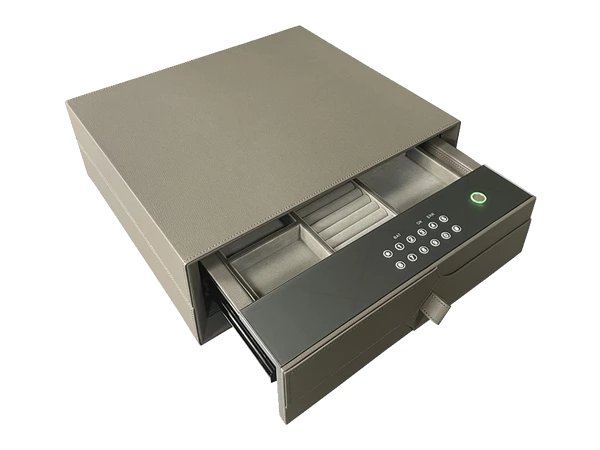
UK Client Case: Custom Hidden Wardrobe Drawer Safe for a Modern Luxury Villa
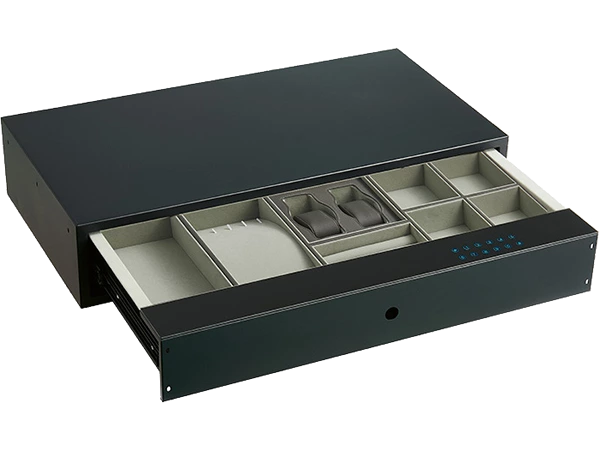
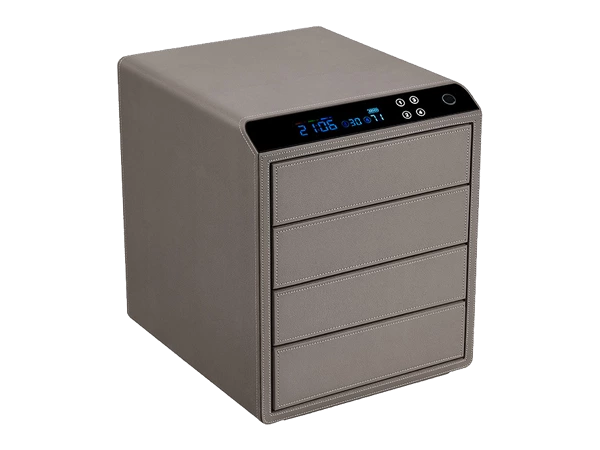
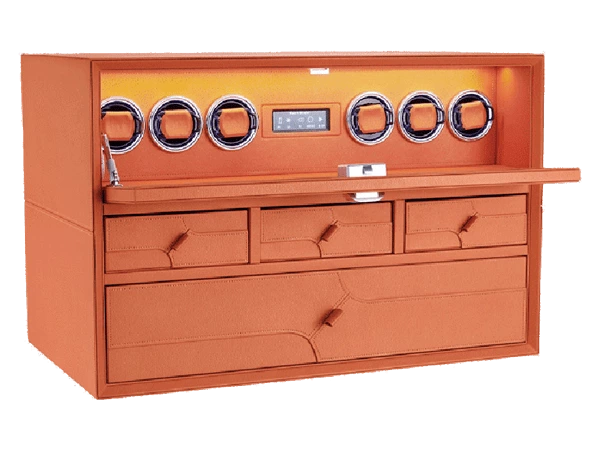
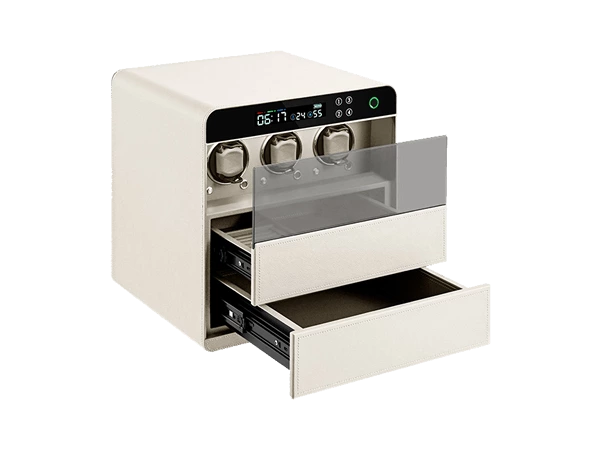
A UK interior design company working on a luxury villa renovation required a security-storage solution that could sit naturally within the home’s wardrobe system rather than appear as a separate piece of equipment. The selected product was a hidden wardrobe safe designed in a drawer format, combining electronic access, steel construction, a customized interior, and rechargeable power in a furniture-oriented structure.
The safe uses a tempered glass control interface with fingerprint and password access, together with a mechanical backup key. A thickened steel cabinet forms the main structure, while a hand-finished flannel interior provides a softer storage environment for personal valuables. Size, color, internal layers, and inner-box layout can be adjusted according to the surrounding furniture.
For an interior design project, those details matter because the safe has to satisfy two requirements at the same time: controlled valuables storage and compatibility with the architecture of the wardrobe.
Project Overview
This project was specified for a luxury villa renovation in the UK, with an interior design company responsible for the project requirement.
Unlike a safe purchased after a room has already been furnished, a hidden drawer safe becomes part of the interior planning process. Its external dimensions, opening direction, electronic interface, finish, and internal layout all have to be considered alongside the furniture system.
The selected configuration combines several access methods, a rechargeable power system, an error alarm, an all-steel cabinet, and a customizable flannel-lined interior.
| Project Item | Details |
| Market | UK |
| Client Type | Interior Design Company |
| Application | Luxury Villa |
| Safe Type | Hidden Wardrobe Drawer Safe |
| Cabinet Structure | High-strength thickened steel plate / all-steel fabrication |
| Control Interface | Tempered glass intelligent touch panel |
| Unlocking Methods | Fingerprint, digital password and mechanical key |
| Additional Security Feature | Error alarm |
| Interior | Hand-finished flannel interior |
| Power System | Rechargeable lithium battery |
| Charging Interface | Type-C |
| Customization | Size, color, multilayer configuration and inner-box design |
| Project Objective | Integrate smart valuables storage into a luxury residential wardrobe without compromising the surrounding interior design |
Understanding the Project Requirements
The central requirement was not simply to place a safe somewhere inside the villa. The safe needed to work as part of the interior.
For an interior design company, a conventional freestanding steel safe can create a visual and spatial problem. It requires its own location, may occupy usable floor space, and often introduces an industrial appearance into a room that has been designed around coordinated furniture, finishes, and architectural details.
A drawer-format hidden wardrobe safe changes the relationship between security storage and furniture. The safe can be considered during wardrobe planning, allowing its dimensions and appearance to respond to the surrounding cabinetry.
Daily usability was another part of the specification. Fingerprint access provides a fast electronic opening method, while a digital password offers an alternative. A mechanical key remains available as a physical backup.
Internally, the hand-finished flannel surface helps create a more appropriate environment for personal valuables than an exposed metal compartment.
Project Requirements Tree
UK Luxury Villa Renovation
│
├── Wardrobe Integration
│ ├── Hidden drawer format
│ ├── Custom dimensions
│ ├── Custom color
│ └── Furniture-compatible appearance
│
├── Smart Access
│ ├── Fingerprint unlocking
│ ├── Digital password
│ └── Mechanical backup key
│
├── Electronic Functions
│ ├── Tempered glass touch panel
│ ├── Error alarm
│ └── Rechargeable lithium battery
│
├── Interior Storage
│ ├── Hand-finished flannel lining
│ ├── Multilayer configuration
│ └── Custom inner-box design
│
└── Project Coordination
├── Wardrobe dimensions
├── Installation position
└── Opening clearance
Why a Standard Freestanding Safe Was Not the Right Fit
A freestanding safe can be practical where dedicated floor space is available and visual integration is not a priority. The design requirements of a luxury villa renovation are different.
Interior designers typically work with a defined furniture language. Wardrobes, wall panels, dressing areas, lighting, handles, finishes, and storage modules are planned as part of one interior. Adding a separate security cabinet after those decisions have been made can interrupt both space planning and visual continuity.
A hidden drawer safe can instead be coordinated with the wardrobe.
This matters especially where the objective is discreet everyday access. Personal valuables can remain close to the dressing or bedroom storage area rather than being moved to a separate safe elsewhere in the property.
The drawer format also allows the safe to use furniture volume more efficiently. Instead of occupying additional floor area, it can be considered within the wider storage architecture.
The internal finish creates another distinction. An exposed steel compartment may be sufficient for documents or cash, but watches, jewelry, accessories, and other personal items benefit from a softer contact surface. For this configuration, the supplied specification includes a hand-finished flannel interior.
None of these features should be interpreted as a certified burglary or insurance rating. The project information does not include an independently verified security classification, so no such rating should be claimed.
The Hidden Wardrobe Safe Solution Selected for the Project
For this project, the specified solution was a hidden wardrobe drawer safe combining an all-steel cabinet with an intelligent electronic access system and customizable interior storage.
The control area uses a tempered glass interface designed for sensitive touch operation. The clean glass surface is visually more compatible with contemporary furniture than a large mechanical control assembly.
Three unlocking methods are available.
Fingerprint recognition provides biometric access for regular use. A digital password provides another electronic option, and the mechanical key acts as a physical backup method.
The specification also includes an error alarm. This function adds an electronic warning response when incorrect access attempts occur.
The cabinet itself uses high-strength thickened steel plate according to the supplied product specification. This supports the physical structure of the safe but should not be converted into a specific burglary-resistance claim without verified testing.
Inside, the hand-finished flannel lining creates a softer contact environment for stored valuables. The interior can also be customized through multilayer configuration and different inner-box layouts.
Key Safe Configuration
| Configuration | Project Specification | Why It Was Selected |
| Safe Type | Hidden wardrobe drawer safe | Supports concealed furniture integration |
| Cabinet | Thickened all-steel construction | Provides the main structural body of the safe |
| Main Interface | Tempered glass touch panel | Creates a clean interface suited to modern interiors |
| Primary Access | Fingerprint unlocking | Provides convenient biometric access |
| Secondary Access | Digital password | Provides another electronic access method |
| Backup Access | Mechanical key | Provides physical emergency access |
| Alarm | Error alarm | Provides a warning response to incorrect access attempts |
| Interior | Hand-finished flannel lining | Creates a softer surface around personal valuables |
| Power | Rechargeable lithium battery | Allows the electronic system to be recharged |
| Charging | Type-C interface | Provides a practical charging connection |
| Custom Size | Available | Allows coordination with wardrobe dimensions |
| Custom Color | Available | Helps match the surrounding furniture |
| Internal Customization | Multilayer and inner-box design | Allows storage to be organized around different valuables |
Why the Interior Matters in a Luxury Wardrobe Safe
The inside of a residential safe is often overlooked during early specification, but for a wardrobe installation it affects everyday use.
A safe positioned near a dressing area may hold jewelry, watches, important documents, small accessories, or other personal valuables. These items do not necessarily benefit from being placed together in one open steel compartment.
The flannel-lined interior addresses the surface that valuables come into contact with. It also changes the visual character of the safe when the drawer is opened, making the inside more consistent with a premium furniture environment.
Multilayer customization adds another level of organization.
A project can allocate different heights or storage sections to different item categories rather than using all available volume as one space. Custom inner boxes can further organize that structure.
The exact number of layers and compartment design used for this UK project have not been supplied.
Providing those details later would make the case more useful to interior designers because they could see how the internal organization relates to the available drawer dimensions.
Fingerprint, Password and Mechanical Backup Access
A smart wardrobe safe benefits from having more than one access option because regular use and emergency access are different requirements.
Fingerprint recognition is designed for convenient daily operation. The user does not need to enter a password each time, which can be useful for a safe positioned within a bedroom or dressing area.
A digital password provides another electronic method. This gives the system an alternative when fingerprint access is not preferred.
The mechanical key has a different role. It functions as a physical backup rather than another electronic feature.
The electronic system is powered by a rechargeable lithium battery, with a Type-C charging interface included in the specification. This is more convenient than relying solely on disposable batteries and allows the power system to be recharged when required.
Battery capacity, charging time, operating duration, and battery-cycle data have not been provided and should not be invented.
The Role of the Error Alarm
The error alarm is intended to provide an additional electronic response when incorrect access attempts occur.
This can be useful in a smart residential safe because it makes repeated incorrect operation more noticeable rather than treating every unsuccessful attempt as an ordinary input error.
However, alarm systems vary significantly between models.
The supplied project information does not specify how many incorrect attempts trigger the alarm, how long the alarm remains active, whether access becomes temporarily locked, or how the alarm is reset.
Those details should therefore remain outside the published technical claims until the product specification is confirmed.
This communicates the supplied feature without manufacturing a security performance standard that has not been documented.
Customization for the UK Interior Design Project
Customization is especially important when the buyer is an interior design company rather than an individual retail customer.
The safe has to coordinate with the project.
Four customization areas were identified: size, color, multilayer configuration, and inner-box design.
Custom Size
The dimensions of a wardrobe safe should be established alongside the furniture structure.
Width, depth, and height affect the cabinet opening, available storage volume, and surrounding panels. For a drawer safe, travel distance and clearance are also important.
The exact project dimensions were not supplied.
Custom Color
Color customization helps visible surfaces coordinate with the wardrobe or overall interior palette.
The selected project color has not been supplied, so no finish should be invented.
Multilayer Storage
A multilayer configuration allows internal height to be divided more deliberately.
Different projects can therefore prioritize jewelry, watches, documents, accessories, or other valuables without using the same standard internal structure.
Inner-Box Design
The inner box determines how storage is organized within each level.
This is particularly useful for interior design projects because the internal experience can be specified along with the exterior furniture rather than being treated as an unrelated accessory.
Customization Structure
Custom Hidden Wardrobe Safe
│
├── Exterior
│ ├── Size
│ └── Color
│
├── Internal Structure
│ ├── Number of layers
│ └── Layer allocation
│
├── Storage Organization
│ └── Custom inner-box layout
│
└── Furniture Coordination
├── Cabinet dimensions
├── Safe position
├── Drawer clearance
└── Charging access
Manufacturing and Quality Considerations
A smart drawer safe for furniture integration combines steel fabrication, electronic components, interior finishing, drawer movement, and dimensional control in a relatively compact structure.
The steel cabinet creates the main structural base. When the safe is designed to work with custom furniture, external dimensions have to remain consistent with the confirmed specification because even a small dimensional mismatch can affect installation.
Drawer movement is another practical consideration. The safe has to open and close without interference while keeping the electronic and internal structures aligned.
The fingerprint module, tempered glass interface, password system, alarm, and battery system must also work together within the front control area.
Interior finishing requires a different type of attention. Flannel surfaces, edges, corners, joints, and internal boxes are directly visible during use. Poor alignment may not stop the electronic lock from operating, but it would reduce the perceived quality of a safe intended for a premium residential interior.
The rechargeable battery and Type-C interface should also be checked as part of the electronic system before the product is completed.
No verified test-cycle counts, alarm-test data, steel thickness measurements, battery endurance figures, burglary ratings, or fire-resistance results have been supplied for this case. These should only be published when supporting records are available.
From Project Specification to Final Solution
Only project stages supported by available information should be presented as completed.
Based on the supplied material, the process can currently be documented as follows:
UK Luxury Villa Renovation
↓
Interior Design Requirement
↓
Wardrobe-Based Safe Selected
↓
Hidden Drawer Configuration
↓
Access System Defined
↓
Fingerprint + Password + Mechanical Key
↓
Interior Specification
↓
Hand-Finished Flannel + Custom Storage
↓
Customization Scope
↓
Size + Color + Multilayer + Inner Box
↓
[FACT NEEDED: Technical Drawing Confirmation]
↓
[FACT NEEDED: Sample / Production Stage]
↓
[FACT NEEDED: Quality Inspection]
↓
[FACT NEEDED: Completed Installation]
Technical drawings, genuine factory photographs, inspection images, and completed installation photographs would make useful additions once available.
For a B2B project case, this kind of evidence is more valuable than adding unsupported promotional claims because it shows how the manufacturer translates an interior-design requirement into a physical product.
The Final Project Configuration
Based on the information currently available, the final specified configuration combines a concealed drawer structure, intelligent access, rechargeable power, steel construction, and customizable interior storage.
Fingerprint and password unlocking cover regular electronic access, while the mechanical key provides physical backup.
The tempered glass panel creates a cleaner interface for a contemporary interior. The error alarm adds a warning function for incorrect access attempts, and the rechargeable lithium battery with Type-C charging supports the electronic system.
Inside, the hand-finished flannel lining and customizable multilayer structure make the product more appropriate for jewelry, watches, and other personal valuables than a plain exposed-metal compartment.
The major design advantage is integration. Instead of introducing separate security equipment into the renovated villa, the safe can be considered as part of the wardrobe system.
A completed installation result has not been supplied.
Until then, the case should be presented as the confirmed project configuration and manufacturing solution, not as evidence of a verified completed installation.
What Buyers Can Learn From This Project
For interior designers and furniture manufacturers, the first consideration should be installation dimensions rather than the number of electronic features.
A hidden wardrobe safe must physically work with the cabinet. Width, depth, height, drawer travel, surrounding panels, access to the control area, and charging access should all be considered before the furniture drawings are finalized.
The second consideration is how the safe will be used. A regularly accessed bedroom safe benefits from convenient electronic access, but emergency access should also be understood. Fingerprint recognition, a password, and a mechanical backup each serve a different purpose.
Third, internal organization should reflect what will actually be stored. Jewelry and watches require a different interior from documents or larger valuables. Multilayer structures and custom inner boxes can make limited storage volume more useful.
Fourth, interior finish matters in premium residential projects. A safe installed inside luxury furniture is still visible whenever it is opened. Internal workmanship therefore contributes to the overall quality of the project.
Finally, buyers should distinguish product features from certified security performance. Thickened steel, fingerprint access, alarms, and electronic controls are meaningful design features, but they should not be treated as evidence of a specific burglary, fire, or insurance classification unless relevant testing documentation exists.
Frequently Asked Questions
Can a hidden safe be customized to fit a wardrobe?
Yes. Size customization is available for this product type. For a wardrobe project, the buyer should provide the available width, depth, and height together with information about surrounding panels and drawer clearance. For an interior design project, it is preferable to confirm the safe dimensions before the furniture is manufactured. Final installation planning should be based on a confirmed technical drawing rather than general catalogue dimensions.
What unlocking methods does this hidden wardrobe safe support?
The specified model supports fingerprint recognition, digital password entry, and a mechanical key. Fingerprint access is intended for convenient regular use, while the password provides an alternative electronic method. The mechanical key functions as a physical backup. The system also includes an error alarm for incorrect access attempts. Exact alarm trigger settings should be confirmed from the final technical specification.
Does the safe use disposable batteries?
The supplied configuration uses a rechargeable lithium battery rather than relying solely on disposable batteries. A Type-C charging interface is included for recharging. Battery capacity, charging time, operating duration, and cycle-life figures have not been supplied for this case and should be confirmed before those values are published on the website.
Can the inside of the safe be customized?
Yes. Multilayer configuration and inner-box design are included in the customization scope. The interior can therefore be planned according to the categories of valuables the project needs to store. Buyers should indicate whether the safe is intended primarily for jewelry, watches, documents, accessories, or a combination of items. The final compartment layout depends on the internal dimensions and confirmed storage requirements.
Why use a hidden drawer safe in a luxury villa renovation?
A hidden drawer safe can be coordinated with the wardrobe rather than introduced as a separate freestanding object. This can make better use of the available furniture space and helps interior designers maintain a cleaner visual environment. The safe can also be positioned close to the area where personal valuables are normally used. The actual installation should still account for cabinet dimensions, access clearance, charging access, and the structural requirements of the furniture.
What should an interior design company provide before ordering a custom wardrobe safe?
Start with the intended installation location and available cabinet dimensions. It is also useful to provide furniture drawings where possible, the preferred exterior color, required access methods, intended valuables, desired number of storage layers, and inner-box requirements. These details allow the safe manufacturer to evaluate the cabinet, electronic access, interior storage, and furniture relationship together rather than treating them as separate decisions.
Planning a Similar Hidden Wardrobe Safe Project?
For a luxury villa, apartment renovation, master bedroom wardrobe, walk-in closet, or custom furniture project, the most useful starting point is the installation environment.
Provide the available cabinet dimensions, intended safe position, preferred unlocking methods, finish requirements, and the types of valuables that need to be stored. If furniture drawings are already available, they can provide additional context for evaluating drawer clearance and overall integration.
For interior design companies, furniture manufacturers, property developers, safe distributors, and OEM/ODM buyers, the safe can be discussed around size, color, multilayer configuration, and inner-box design so that the security-storage solution is planned together with the furniture rather than added after the interior has already been completed.