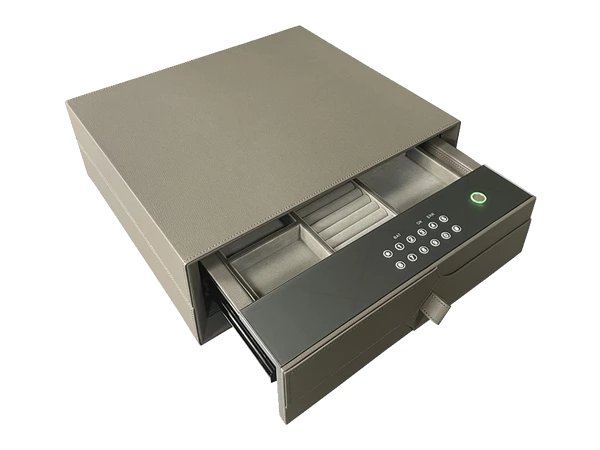
Hidden Smart Safe Drawer System Applied in Luxury Villa Interior Project in Australia
This project involved the application of a hidden smart safe drawer system in a luxury villa interior development in Australia. The project was led by a private residential developer working on a high-end villa complex where the interior design requirement focused on minimal visible hardware and full integration of functional systems into custom furniture structures.
The security concept for the villas was based on concealment rather than exposure. Instead of using standalone safes or visible locking devices, the design required a villa furniture security system that could be fully embedded within cabinets, wardrobes, and bedside furniture while remaining visually indistinguishable from standard storage components.
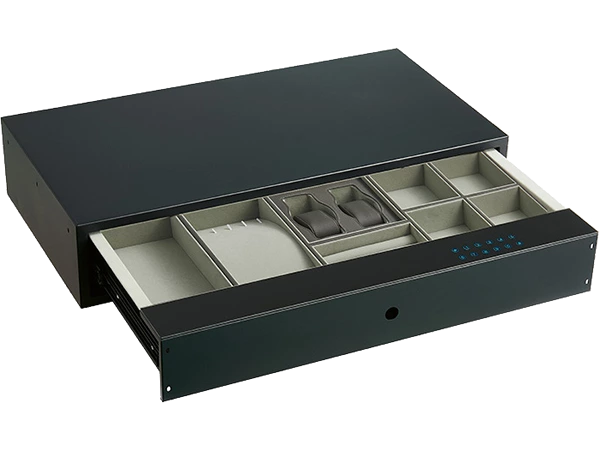
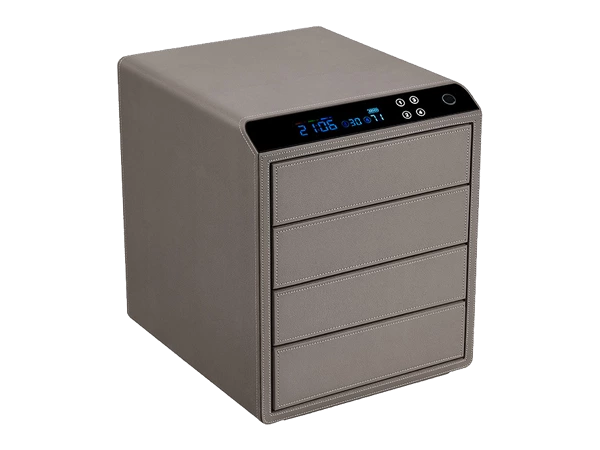
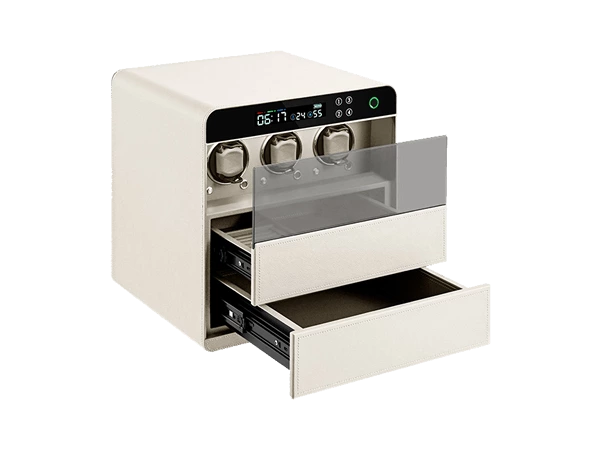
The solution selected for this project was a hidden safe drawer system integrated into multiple furniture modules throughout the villa interiors. These included master bedroom wardrobes, dressing room cabinetry, and private study storage units. Each system was installed during the furniture manufacturing stage to ensure structural consistency and alignment accuracy.
Structurally, the hidden safe drawer was designed as a concealed compartment within a standard drawer framework. The external appearance matched conventional furniture drawers, while the internal structure contained a reinforced metal housing that formed the secure storage chamber. The concealment design required precise control of panel gaps, structural depth, and internal cavity alignment to ensure that the safe function was not visually detectable during normal use.
The sliding system used reinforced linear rails selected for long-term residential use. Since villa environments typically involve low-to-medium frequency usage but high expectations for durability and silent operation, damping characteristics were optimized to ensure smooth and quiet movement. The locking mechanism was integrated into the rear section of the drawer frame, hidden from direct view and only activated when authentication conditions were met.
The electronic control system was configured for embedded residential operation, using a combination of fingerprint authentication and backup digital access. The fingerprint module was concealed within the inner edge of the drawer panel, requiring intentional interaction to activate. This placement supported both usability and concealment requirements defined by the villa design team.
In terms of system integration, one of the key engineering challenges was maintaining complete visual consistency with surrounding furniture surfaces. Since the project emphasized architectural minimalism, even minor differences in panel alignment or surface finish could affect the perceived quality of the interior design. As a result, installation tolerances were tightly controlled, and all hidden safe drawer units were calibrated individually before final furniture assembly.
The villa furniture security system also had to accommodate variations in furniture material selection, including natural wood finishes and composite board structures. These material differences affected thermal expansion and structural stability, which required adjustment of internal clearances to maintain consistent locking performance over time.
From a usage perspective, the system was designed for private residential operation with multiple authorized users within the same household. The fingerprint database supported multi-user registration while maintaining hierarchical access control, allowing different family members to access designated storage compartments without compromising overall system security.
After installation, the hidden safe drawer systems became fully integrated into the villa interiors without any visible indication of their security function. The system operated as part of the furniture architecture, supporting both functional storage and concealed security requirements without altering the visual design language of the interior space.
When you step into a modern luxury home, true elegance often lies in what you cannot see. Contemporary architectural design champions clean lines, minimalist aesthetics, and uncluttered spaces. However, this design philosophy presents a unique challenge for high-net-worth individuals: how do you secure valuables like jewelry, passports, and cash without installing a glaringly obvious, bulky metal box?
This exact challenge was beautifully resolved recently when a Hidden Smart Safe Drawer System Applied in Luxury Villa Interior Project in Australia became the gold standard for discreet home security. By blending cutting-edge biometric technology with bespoke joinery, architects and interior designers were able to provide bank-level security that remains entirely invisible to the naked eye.
In this comprehensive exploration, we will dive deep into this specific case study, analyzing the technology, the design process, and the practical application of concealed security. Whether you are an interior designer, an architect, or a homeowner upgrading your property, this article will serve as your blueprint for elegant asset protection.
The Evolution of High-End Residential Security
For decades, securing valuables meant compromising on aesthetics. Homeowners were forced to relegate their security to basement corners, behind generic paintings, or inside oversized steel boxes bolted to the floor of a closet.
When evaluating smart drawer safes vs traditional floor-mounted security, the contrast is stark. Traditional floor safes require significant structural planning, often involve pouring concrete, and force users to kneel awkwardly to access their belongings. More importantly, they are difficult to conceal in modern architectural designs.
Today, Australian high-end residential interior trends heavily favor natural light, open-plan spaces, floating cabinetry, and seamless timber finishes. Massive metal safes simply do not fit into this visual narrative. The modern homeowner demands discreet security solutions for open-plan luxury living. They want their valuables instantly accessible yet completely undetectable to guests or potential intruders. This shift in demand has given rise to the innovative drawer safe, a solution that marries high-end cabinetry with state-of-the-art locking mechanisms.
Spotlight on the Case Study: An Australian Coastal Villa
To understand the practical application of this technology, let’s look at a recent architectural triumph on Australia's eastern coastline. The clients, frequent travelers and collectors of fine watches and bespoke jewelry, required a robust security system for their master suite. Their primary directive to the design team was clear: focus heavily on protecting high-value assets without compromising interior aesthetics.
The design team’s solution was the integration of a state-of-the-art Hidden Safe Drawer. Rather than modifying the architecture to fit a safe, they integrated a smart safe directly into the custom-built walk-in wardrobe.
The successful execution of the Hidden Smart Safe Drawer System Applied in Luxury Villa Interior Project in Australia proved that security and luxury can coexist beautifully. The safe was built directly into a central floating island in the dressing room, disguised as a standard, soft-close velvet-lined accessory drawer.
The Anatomy of a Smart Safe Drawer
What exactly makes a Smart Safe Drawer different from a traditional lockbox? It comes down to accessibility, intelligence, and form factor.
A standard Safe Drawer is manufactured from reinforced, heavy-gauge steel, much like a traditional safe. However, its horizontal orientation allows it to glide out smoothly on heavy-duty telescopic runners.
When you upgrade to a Hidden Smart Safe Drawer, you are adding a layer of advanced digital intelligence. These devices ditch the traditional combination dials and physical keys in favor of biometric access control technology for homeowners.
Here are the standout features of the best biometric safe options for luxury villas:
- Capacitive Fingerprint Scanners: Unlike optical scanners that can be easily fooled, capacitive scanners read the sub-dermal layers of your skin.
- Silent Access Mechanisms: High-end models feature motorized, whisper-quiet locking bolts, allowing you to access your belongings discreetly while your partner sleeps.
- Anti-Tamper Alerts: If the drawer is forced or multiple incorrect fingerprint attempts are made, the system locks down.
- Dual-Authentication: Many systems allow for a combination of fingerprint and a digital PIN code for added layers of security.
Designing the Ultimate Master Suite
The heart of this Australian project was the master suite's dressing room. Designing a secure walk-in robe with hidden compartments requires a meticulous collaborative effort between the interior designer, the cabinet maker, and the security specialist.
Fingerprint Access Security for Private Dressing Rooms
The clients wanted to be able to walk into their closet, pick out a watch for the evening, and secure the rest of their collection in seconds. By utilizing a custom biometric drawer safe for luxury homes, the architects achieved just that.
Located discreetly beneath a glass-topped display counter, the safe appears to be just another timber-faced drawer. However, hidden neatly underneath the drawer pull is a biometric sensor. With a simple swipe of the owner's index finger, the Smart Safe unlocks instantly. Fingerprint access security for private dressing rooms eliminates the anxiety of lost keys and the hassle of remembering complex passcodes, aligning perfectly with a lifestyle of frictionless luxury.
Hidden Jewelry Safes for Master Bedroom Suites
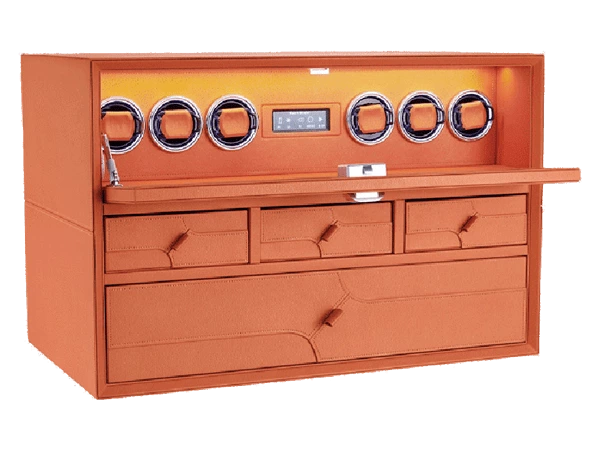
Jewelry requires special care. Traditional safes are highly industrial and can scratch delicate items. The hidden jewelry safes for master bedroom suites used in this project featured bespoke, tarnish-resistant velvet interiors. The interior layout was custom-configured with ring rolls, necklace hooks, and automated watch winders powered by a concealed internal electrical supply.
The Art of Concealment: How to Hide a Digital Safe in Custom Cabinetry
If you are wondering how to hide a digital safe in custom cabinetry, it requires precision engineering. You cannot simply place a safe inside a wooden box and expect it to look seamless. Seamless architectural integration of residential safes involves several precise steps to ensure the security unit remains undetectable.
Here are the actionable strategies used by top interior designers to conceal a Hidden Safe:
- The False Front Technique: The most effective method is attaching a custom timber or lacquer fascia directly to the steel front of the innovative drawer safe. When closed, the safe’s exterior sits perfectly flush with the surrounding cabinetry, maintaining consistent gap lines (usually around 2mm to 3mm).
- Push-to-Open Mechanisms: To avoid suspicious locks or handles, designers often use heavy-duty push-to-open mechanical systems. You press the wooden fascia, the drawer pops out a few inches, and then the hidden biometric scanner is revealed on the top lip of the steel safe inside.
- Weight Distribution and Joinery Reinforcement: A steel Safe Drawer loaded with valuables is incredibly heavy. The custom cabinetry must be built with reinforced structural supports, often utilizing a hidden steel sub-frame bolted directly to the home's structural wall studs.
- Cable Management: Because it is a smart device, the safe needs power. Concealing the low-voltage wiring requires specialized articulated cable management arms behind the drawer, ensuring the wires do not pinch or break as the drawer opens and closes over the years.
Home Automation Integration: Taking Security to the Next Level
A question frequently asked by tech-savvy homeowners is: can smart safes be integrated into home automation systems?
The short answer is yes, and doing so elevates the security of the property exponentially. When integrating smart safes into high-end Australian interiors, specialists often tie the safe's internal software into the home’s overarching smart ecosystem, such as Control4, Crestron, or Savant.
In our highlighted Australian villa project, the integration worked on several layers:
- Silent Alarms: If the safe is tampered with, or if the homeowner is forced to open it under duress (using a specific "duress fingerprint"), the home automation system silently alerts private security and local law enforcement without sounding an audible alarm.
- Lighting Triggers: Opening the safe at night can automatically trigger soft, low-level LED lighting inside the closet, ensuring the homeowner can see their valuables without turning on the harsh main room lights.
- Status Notifications: The homeowner receives push notifications on their smartphone if the safe is left open for more than three minutes, or when the internal backup battery needs replacing.
The Ultimate Guide to Luxury Home Security Installations in Australia
If you are planning to build or renovate, incorporating discreet security should be done in the earliest phases of the architectural layout. To summarize the best practices, here is your ultimate guide to luxury home security installations in Australia:
- Plan Early: Do not treat security as an afterthought. Bring your safe specialist into the conversation during the initial joinery design phase. The dimensions, weight, and power requirements of a Hidden Smart Safe Drawer must dictate the cabinet design, not the other way around.
- Focus on Climate Control: Australia’s coastal regions suffer from high humidity. When installing safes in wardrobes, ensure the cabinetry is well-ventilated to prevent moisture buildup inside the safe, which could damage delicate watch movements or important paper documents.
- Layer Your Security: A hidden safe is just one piece of the puzzle. Combine your concealed drawer with robust perimeter security, smart surveillance cameras, and shatter-resistant glass.
- Prioritize Biometrics: Keys can be copied; passwords can be guessed. Always opt for capacitive biometric scanners for the fastest, most secure access to your daily-wear items.
- Consult a Joinery Expert: The illusion of a hidden safe is only as good as the cabinet maker's skill. Ensure your joiner has experience with heavy-duty runners and flush-mount steel integrations.
Why the Hidden Drawer Concept is the Future of Home Security
The success of the concealed drawer system in luxury villas highlights a broader shift in how we view personal security. We are moving away from the industrial, institutional feel of traditional safes toward personalized, lifestyle-oriented solutions.
When you invest in high-end real estate, every square inch of your home is curated to provide comfort, beauty, and peace of mind. A hulking steel box in the corner of your bedroom shatters that illusion. Conversely, a beautifully crafted drawer that secretly houses a fortress enhances your daily routine. It allows you to interact with your most prized possessions effortlessly, safely, and entirely on your own terms.
Final Thoughts
The remarkable success of the Hidden Smart Safe Drawer System Applied in Luxury Villa Interior Project in Australia serves as a brilliant testament to modern design ingenuity. It proves that with the right technology and visionary craftsmanship, you do not have to choose between a beautiful home and a secure one.
By embracing the innovative drawer safe and advanced biometric technology, homeowners can protect their legacies seamlessly. Whether it is concealing heirlooms in custom cabinetry or linking your security to a master smart home system, the future of luxury living is undoubtedly safe, smart, and beautifully hidden.
FAQ
1.What was the main requirement of this villa project in Australia?
The project required a fully concealed storage security system integrated into furniture without any visible standalone safes or external locking devices.
2.What type of system was used?
A hidden safe drawer system embedded within custom furniture structures, forming part of a villa furniture security system.
3.Where were the systems installed?
The systems were installed in bedroom wardrobes, dressing room cabinets, and study furniture units.
4.How does the hidden safe drawer maintain concealment?
The external appearance matches standard furniture drawers, while the internal structure contains a reinforced hidden security compartment.
5.What was the main engineering challenge?
Maintaining precise structural alignment and visual consistency while ensuring reliable locking performance under long-term residential use conditions.