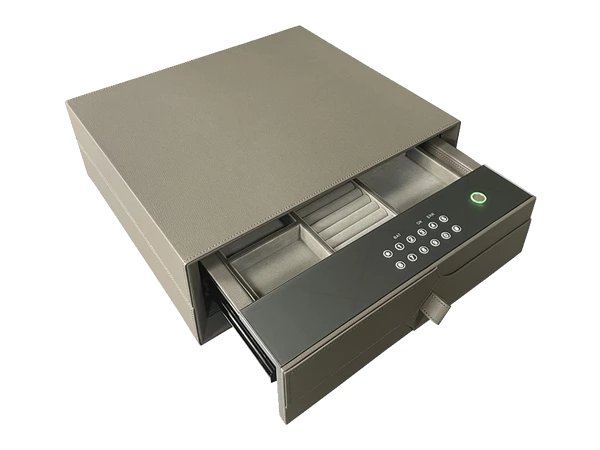
Watch Winder Safe Box Integration for Luxury Watch Retail Display Project in Switzerland
This project involved the integration of watch winder safe box systems into a luxury watch retail display environment in Switzerland. The client was a high-end watch retailer operating boutique stores in major commercial districts, where the display strategy required both product presentation and controlled security protection within the same system.
Unlike conventional retail display cases, the requirement in this project was to develop a luxury display safe system that could simultaneously perform automatic watch winding, secure storage, and controlled access management. The system had to support continuous operation during store opening hours while maintaining high visual standards consistent with luxury retail environments.
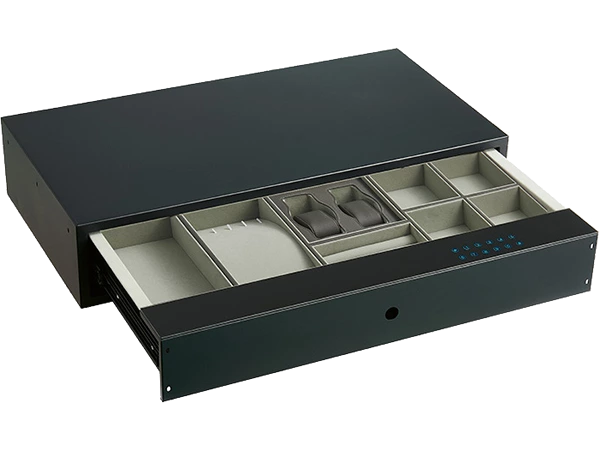
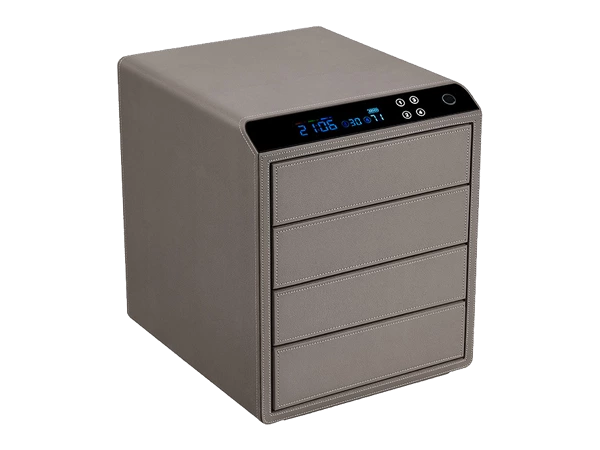
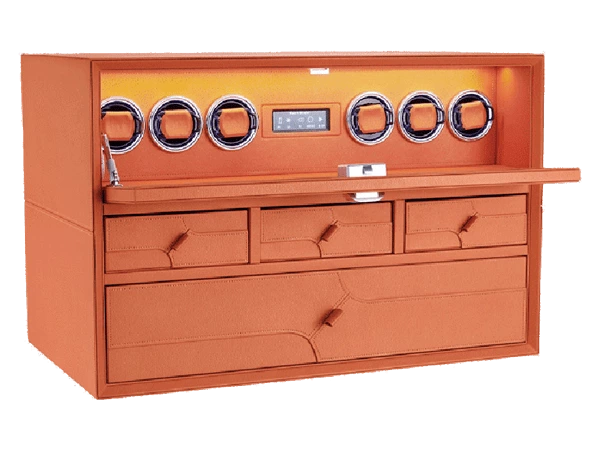
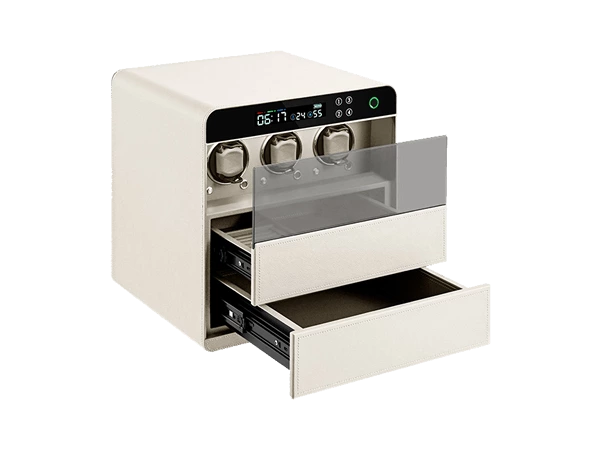
The selected solution was a watch winder safe box system embedded into custom-designed display cabinets. Each unit was integrated into the retail furniture structure, allowing watches to be displayed on rotating winding modules while remaining secured within controlled access compartments. The system was designed to operate as part of the display architecture rather than as a separate mechanical or security device.
Structurally, the system combined a reinforced cabinet frame with an internal modular compartment system. Each watch storage position was mounted on an individual winding module, allowing independent rotation control for different watches. The internal structure was engineered to minimize vibration transfer, as mechanical stability is critical for both display quality and long-term movement protection.
The locking system was integrated into the display cabinet structure using an electronic access control mechanism. Access to the watch compartments was restricted through authenticated entry, while the external display remained visually open to customers during retail operation. The locking components were concealed within the cabinet frame to maintain a clean visual presentation aligned with luxury retail standards.
The watch winding mechanism was designed to simulate natural wrist movement through controlled rotational cycles. Each module could be individually programmed for rotation direction and speed based on specific watch movement requirements. This required precise coordination between motor control units and central system management to ensure consistent performance across multiple display units.
From an engineering perspective, one of the key challenges in this project was balancing continuous mechanical operation with long-term durability. Unlike residential systems, retail environments require extended operating hours, meaning the winding motors and control circuits must maintain stability under near-continuous use conditions. Thermal management and power distribution were therefore critical design considerations.
The luxury display safe system also required integration with the store’s interior lighting and display architecture. The cabinet design had to accommodate both mechanical systems and lighting modules without affecting structural integrity or visual balance. Cable routing and control units were concealed within the furniture structure to avoid interference with the visual presentation of the watches.
In terms of procurement logic, the client selected an OEM smart storage manufacturer capable of delivering both mechanical customization and electronic control integration. The system required adaptation to different watch models, display configurations, and store layouts, which meant that modular design flexibility was more important than standardized product configuration.
After installation, the watch winder safe box systems operated as part of the retail display environment, providing both visual presentation and controlled security functionality. Watches remained continuously displayed under controlled rotation while access was restricted through integrated locking mechanisms when required.
Switzerland is undeniably the global epicenter of haute horlogerie. For luxury retailers in Geneva, Zurich, and Lucerne, showcasing mechanical masterpieces is an art form that requires a delicate balance between breathtaking presentation and impenetrable security. When undertaking a Watch Winder Safe Box Integration for Luxury Watch Retail Display Project in Switzerland, architects, security consultants, and boutique managers are tasked with creating an environment that honors the craftsmanship of the timepieces while protecting millions of francs in inventory.
In the competitive world of high-end retail, a standard glass vitrine is no longer sufficient. Modern boutiques require bespoke horological storage solutions that not only secure the inventory but also keep complex automatic movements wound, lubricated, and ready for an immediate demonstration to a discerning client.
Here is a comprehensive guide to mastering this integration, blending Swiss precision, top-tier security, and stunning visual merchandising.
The Intersection of Visual Merchandising and High Security
When designing a secure luxury watch showroom layout, the primary challenge is removing the friction between the client’s viewing experience and the boutique’s loss-prevention strategy. Traditionally, high-value watches were removed from display windows each evening and locked in a heavy vault in the back office. Today, optimizing visual merchandising with integrated security means the display itself serves as the vault.
Meeting stringent Swiss luxury retail security standards requires a multi-layered approach. The modern luxury watch safe is no longer a dark, hidden steel box; it is an architectural centerpiece. By integrating a safe box with watch winder technology directly into the showroom floor, retailers can securely showcase their finest tourbillons and perpetual calendars overnight. This seamless integration ensures that the boutique remains visually captivating 24/7, catching the eyes of window shoppers even after business hours.
Selecting the Right Vault: From Entry-Level to Ultra-Luxury
Not all retail environments require the exact same level of fortification. The choice of vault often depends on the specific inventory, locati0n, and the layout of the boutique.
For the primary showroom floor, a high end watch safe is mandatory. These units are constructed from advanced composite materials, offering immense resistance to drilling, cutting, and thermal attacks. However, a luxury watch retail space might also utilize a more affordable watch safe in the back office for staging, repairs, or less expensive quartz inventory that does not require winding capabilities.
When evaluating a Watch Winder Safe Box, the certifications are just as important as the aesthetics. European insurance companies place heavy emphasis on testing standards. Therefore, utilizing VdS certified security safes for high-end boutiques is an absolute necessity. A VdS-rated vault guarantees that the unit has undergone rigorous testing by independent German security laboratories, giving retailers and insurers peace of mind.
Furthermore, fire protection is equally critical. While a steel door might stop a burglar, extreme heat can warp delicate internal watch components in minutes. Selecting UL-rated fireproof vaults for automatic watches ensures that the internal temperature remains well below the threshold that would melt synthetic sapphire crystals or vaporize essential movement lubricants during a structural fire.
Mechanical Preservation: The Science of the Watch Winder Safe
Beyond security, the most critical function of a watch winding safe in a retail setting is preservation. Leaving an automatic watch dormant for months can cause its internal oils to pool and coagulate, leading to poor timekeeping and the need for a premature, costly service. Conversely, overwinding can cause unnecessary wear on the mainspring and winding mechanism.
Therefore, preventing watch movement damage during long-term storage is a primary concern for any boutique manager. A state-of-the-art watch winder safe is designed to mimic the natural movement of the human wrist. But because a modern Swiss boutique carries a variety of calibers—ranging from heavy platinum divers to delicate ultra-thin dress watches—a one-size-fits-all rotation simply will not work.
This is where programmable TPD settings for multi-brand collections become essential. TPD, or "Turns Per Day," dictates how many rotations a specific watch needs to stay optimally wound. A high-quality watch safe allows the retailer to program the exact TPD and directional rotation (clockwise, counter-clockwise, or bidirectional) for each individual watch. If a customer wishes to try on a Patek Philippe Nautilus or a Rolex Daytona, the watch is handed to them fully wound, displaying the correct time and date, which drastically enhances the client's purchasing experience.
Masterful Customization and Showroom Integration
A common question among architects and store designers is how to integrate watch winders into retail safes without disrupting the boutique's elegant interior design. The answer lies in collaboration between safe manufacturers and high-end millworkers.
Concealment vs. Display
There are generally two approaches to integrating a watch safe into a retail environment:
- The Hidden Fortress: For boutiques that prefer a minimalist, airy aesthetic, concealing high-security safes in commercial cabinetry is highly effective. The safes can be clad in the same rich mahogany, brushed steel, or fine leather used throughout the store. With a push of a button, motorized panels slide away to reveal the safe watch box seamlessly embedded within the wall.
- The Centerpiece Display: Alternatively, the vault can be celebrated. Customized watch winder cabinets for jewelry stores can be ordered with bullet-resistant, multi-layered glass doors. By incorporating LED illuminated watch display vaults, retailers can highlight the slow, mesmerizing rotation of the timepieces. Proper LED lighting is crucial here; it provides brilliant illumination without generating heat that could damage the watches.
Scaling Up for Large Inventories
For flagship stores carrying extensive inventory, a single luxury watch safe is rarely enough. In these scenarios, modular watch winder systems for large retail displays are the optimal solution. These systems allow retailers to stack and interlock multiple winding modules inside a massive, walk-in strongroom or a series of connected wall vaults. Modular systems offer the flexibility to add more winding nodes as the boutique's inventory expands over time.
Access Control and Insurance Compliance
Even the strongest vault is useless if the access control is compromised. In a busy Swiss retail environment, multiple managers and senior sales associates may need access to the inventory throughout the day.
When configuring the access points, retailers must evaluate biometric vs mechanical safe locks for luxury showrooms.
- Mechanical and Electronic Keypads: Traditional mechanical dials are incredibly reliable but slow to open, which can interrupt the flow of a luxury sales presentation. Electronic keypads are faster and allow for multiple user codes, but codes can be shared or shoulder-surfed.
- Biometric Locks: Fingerprint or retina scanners offer the highest level of access control. Biometric locks ensure that only authorized personnel can open the vault, providing a digital audit trail of exactly who accessed the inventory and at what time. This speed and security make biometric locks the preferred choice for a seamless customer experience.
Furthermore, integrating these systems requires a deep understanding of local regulations. Boutique managers must constantly ask: what are the insurance requirements for high-value timepiece inventory? Insurers in Switzerland usually require that safes weighing under 1,000 kg be bolted directly to the concrete floor or structural walls to prevent the entire unit from being removed. Additionally, the vault’s electronic locking system is often required to be wired directly into the store’s central alarm and seismic detection systems.
Actionable Tips for Retailers and Architects
If you are currently planning a Watch Winder Safe Box Integration for Luxury Watch Retail Display Project in Switzerland, consider these practical, actionable tips to ensure success:
- Audit Your Inventory First: Before ordering a system, calculate the exact number of automatic watches versus manual-wind or quartz watches you plan to display. This will dictate how many motorized winders you actually need, allowing you to allocate the rest of the safe's interior for static display cushions or drawer storage.
- Prioritize Silent Motors: In a quiet, luxurious consultation room, the buzzing of cheap winder motors can ruin the ambiance. Ensure your bespoke horological storage solutions utilize ultra-quiet, brushless motors (such as those made by Swiss or German component manufacturers).
- Plan for Cable Management Early: A safe box with watch winder capabilities requires continuous power. Work with your architects to ensure heavy-duty, tamper-proof power conduits are poured into the concrete floor or routed through reinforced walls before the safe is installed.
- Invest in Specialized Lighting: Ensure that the LED illuminated watch display vaults have adjustable color temperatures. Rose gold watches look best under slightly warmer light (around 3000K), while stainless steel and diamonds pop under cooler, daylight-balanced LEDs (4000K-5000K).
- Implement a Strict Maintenance Schedule: While a premium watch safe is built to last a lifetime, the internal winding motors have moving parts that wear out. Schedule annual maintenance for your winders to ensure they rotate smoothly and maintain their programmable TPD settings.
Summary and Key Takeaways
Integrating high-security storage into a luxury retail environment goes far beyond simply buying a heavy metal box. A successful Watch Winder Safe Box Integration for Luxury Watch Retail Display Project in Switzerland requires a sophisticated fusion of security engineering, interior design, and horological science.
By investing in VdS certified, UL-rated fireproof vaults, boutiques can effortlessly meet stringent insurance requirements while protecting their irreplaceable inventory. Furthermore, by utilizing customizable, modular winder systems with programmable TPD settings, retailers ensure that their mechanical masterpieces remain in pristine, ready-to-wear condition. Ultimately, mastering this integration allows luxury watch boutiques to do what they do best: provide an unforgettable, visually stunning, and highly secure experience for the world's most discerning collectors.
FAQ
1.What was the purpose of this project in Switzerland?
The project aimed to integrate watch display, automatic winding, and secure storage into a single retail furniture system for luxury watch boutiques.
2.What type of system was used?
A watch winder safe box system designed as part of a luxury display safe system integrated into retail cabinets.
3.How does the watch winding system work?
Each watch is placed on a motorized module that simulates wrist movement through controlled rotational cycles to maintain movement operation.
4.How is security managed in the display system?
Access to watch compartments is controlled through an electronic locking system embedded within the display cabinet structure.
5.What was the main engineering challenge?
The main challenge was maintaining continuous mechanical operation for watch winding systems while ensuring long-term stability and integration within retail display furniture.