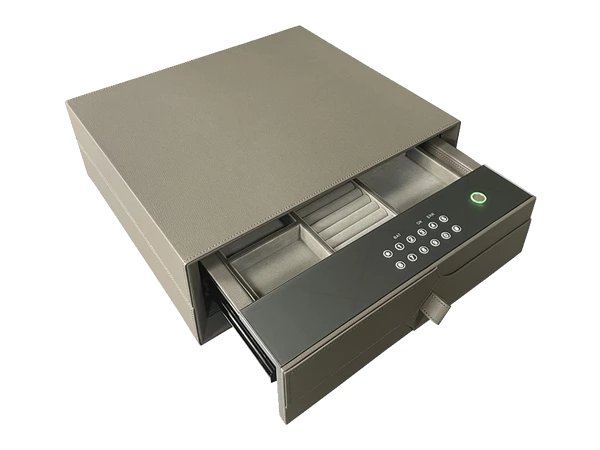
OEM Smart Safe Systems Supplied for a Custom Furniture Brand in the United States
This project involved the supply of OEM smart safe systems for a custom furniture brand based in the United States. The client was a mid-to-high end furniture manufacturer focusing on modular wardrobes, bedroom storage systems, and built-in cabinetry solutions. Their requirement was not a standalone safe product, but an embedded smart storage module that could be integrated into their existing furniture design line without affecting structural aesthetics or production workflow.
The cooperation started from a system integration requirement rather than a finished product purchase. The client had already developed a furniture platform design and needed a security module that could be standardized across multiple product series. The key requirement was to maintain design consistency while introducing controlled storage security functions inside drawers and cabinet compartments.
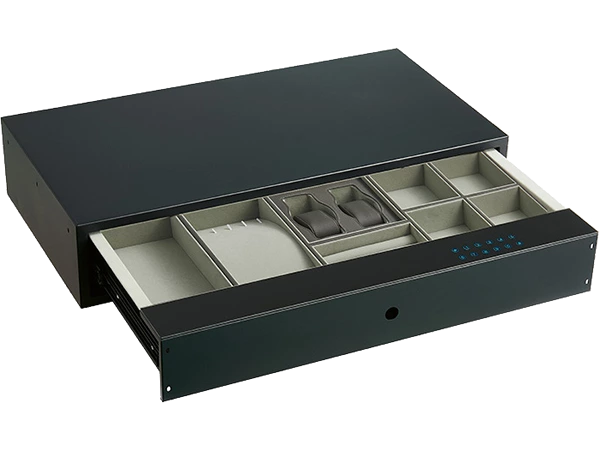
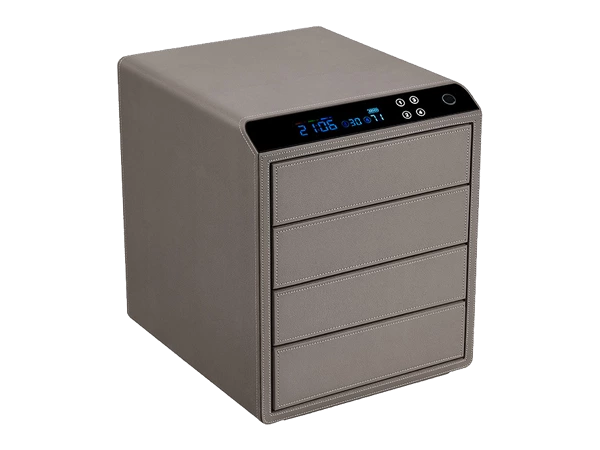
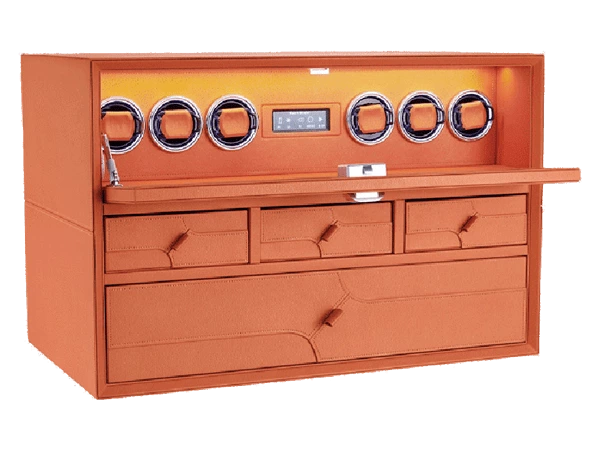
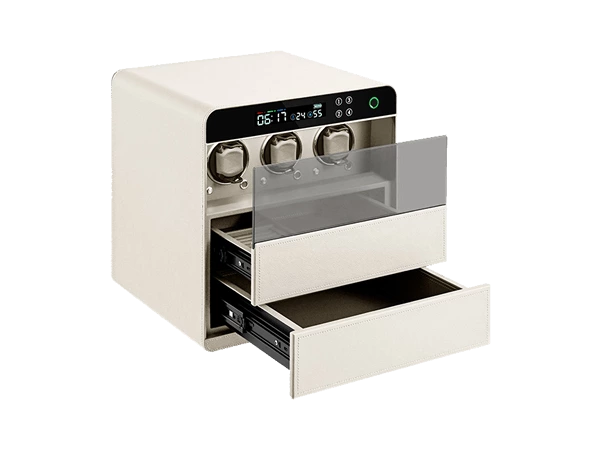
The solution provided was an OEM smart safe drawer system designed specifically for furniture integration. The system was adapted to match the client’s cabinet dimensions, internal structural spacing, and production assembly methods. Unlike conventional safe products, the system was delivered as a modular embedded unit rather than a finished standalone box, allowing it to be installed directly during furniture assembly.
Structurally, the system was based on a reinforced drawer frame combined with a concealed locking mechanism. The sliding structure used heavy-duty ball-bearing rails selected according to the client’s expected load conditions and usage frequency in residential environments. The locking mechanism was redesigned to fit within limited internal cabinet space while maintaining full engagement strength. This required adjustment of actuator stroke length and strike plate positioning to align with the furniture structure provided by the client.
The electronic system was configured around a fingerprint authentication module combined with a digital backup access method. The control board was modified for OEM integration, allowing the client to embed the system into different furniture models without changing the core electronic architecture. Firmware parameters were adjusted to support multi-user registration and simplified reset functions, which are commonly required in retail furniture applications.
From a manufacturing perspective, one of the key requirements from the U.S. furniture brand was consistency across batch production. Since the smart storage modules would be installed in multiple furniture lines, dimensional accuracy and interface standardization were prioritized. Each unit was produced with fixed mounting points and standardized electrical connectors to ensure compatibility during mass assembly.
During the development phase, multiple structural simulations were conducted to ensure that the locking mechanism would maintain stable performance even under slight variations in furniture material density and assembly tolerances. Wood-based furniture structures naturally introduce variability, so the locking interface was designed with a controlled tolerance buffer to prevent misalignment during repeated use.
Another important consideration was installation efficiency on the client’s production line. The system was designed so that it could be installed without requiring changes to existing furniture manufacturing workflows. This allowed the client to integrate smart storage hardware into their product line without modifying core production equipment or increasing assembly complexity.
The final deployment involved pilot production followed by small-batch testing in selected furniture series. Each unit was evaluated for drawer motion stability, locking reliability, fingerprint recognition accuracy, and compatibility with different cabinet configurations. After verification, the system was gradually scaled into the client’s broader product range.
From a procurement perspective, the client selected an OEM smart safe manufacturer China based on engineering adaptability rather than catalog specifications. The key decision factor was the ability to modify structural and electronic parameters according to furniture design requirements, rather than offering a fixed product model. This flexibility was essential for integrating custom furniture smart storage systems into a diversified product portfolio.
After implementation, the smart storage modules became a standardized internal component within the client’s furniture line. The system was not positioned as a visible feature but as an embedded functional layer within storage furniture, aligning with the brand’s design philosophy of minimal external hardware visibility.
The concept of luxury living has fundamentally changed over the past decade. Today, a high-end home isn't just about premium materials, expansive spaces, or designer decor; it’s about intelligent design that anticipates the homeowner's needs. Among the most pressing of these needs is the seamless integration of security. Gone are the days when protecting your valuables meant wrestling with a heavy, conspicuous metal box sitting awkwardly in the corner of a master closet. Today, the standard is discreet home security for modern interiors.
As homeowners increasingly demand a reliable smart safe for home use, manufacturers are stepping up to the challenge. A prime example of this evolution is the recent success story of OEM Smart Safe Systems Supplied for a Custom Furniture Brand in the United States. This innovative partnership highlights how the furniture industry is merging traditional craftsmanship with cutting-edge security technology, allowing users to protect their assets without compromising their interior design.
In this comprehensive guide, we will explore the intersection of luxury furniture and home security, detail the custom furniture safe integration process, and explain how top-tier hardware is redefining what it means to keep your valuables secure.
The Intersection of Luxury Furniture and Security
When designing a modern home, architects and interior designers work tirelessly to create clean, uninterrupted aesthetic lines. A bulky, traditional safe disrupts this visual harmony. As a result, the market has seen a massive surge in demand for the home smart safe—a secure enclosure designed specifically to be built into existing structures, such as wardrobes, nightstands, credenzas, and office desks.
For furniture makers, this presents a unique challenge: how to integrate smart safes into luxury furniture seamlessly. It requires a delicate balance between the structural integrity of woodcraft and the unyielding strength of steel and advanced electronics. To achieve this, leading brands are turning to Original Equipment Manufacturers (OEMs) to supply custom-engineered secure safe solutions that fit perfectly within bespoke designs.
A Benchmark of Excellence: OEM Smart Safe Systems Supplied for a Custom Furniture Brand in the United States
Recently, a highly respected bespoke furniture manufacturer in the US recognized a gap in their high-end cabinetry line. Their clients were consistently asking for built-in security for jewelry, documents, and personal defense items, but off-the-shelf safes were either too large, too heavy, or aesthetically unpleasing.
The solution was to partner with an OEM specializing in security hardware. By collaborating directly with the manufacturer, the furniture brand was able to design a proprietary smart safe box perfectly dimensioned to slide into their custom dresser drawers and executive desk pedestals.
What Are the Benefits of OEM Security Hardware?
If you are a manufacturer or a designer wondering what are the benefits of OEM security hardware, the advantages are multifold:
- Custom Dimensions: OEM partnerships allow furniture brands to dictate the exact height, width, and depth of the smart safes, ensuring zero wasted space within the cabinetry.
- Brand Consistency: The safes can be branded with the furniture maker's logo, offering a cohesive, premium experience for the end consumer.
- Seamless Aesthetic Matching: OEMs can customize the exterior finish, interior lining (such as velvet or vegan leather), and even the color of the digital display to match the furniture's hardware.
- Cost Efficiency: Buying directly from an OEM at scale reduces the per-unit cost, allowing the furniture brand to offer these high-tech add-ons at a competitive price.
Key Technologies Elevating Furniture Safes
Integrating a safe into a piece of wooden furniture requires specialized technology. The hardware must be compact, reliable, and highly secure. Let's look at the primary technologies driving this trend.
Hidden Biometric Safes for Bespoke Cabinetry
One of the most requested features in luxury furniture is biometric access. A biometric smart safe utilizes fingerprint recognition technology, allowing the owner to access their valuables in less than a second. Hidden biometric safes for bespoke cabinetry take this a step further by concealing the scanner entirely. The scanner might be mounted flush under a desk lip or behind a false drawer front, ensuring the safe remains completely invisible to guests or intruders.
RFID Furniture Security Solutions
Radio Frequency Identification (RFID) is another highly popular option. RFID furniture security solutions allow users to unlock a concealed drawer or a hidden safe compartment by simply waving a programmed keycard, fob, or even an RFID-enabled ring over a specific, hidden spot on the wood veneer. Because the signal travels through the wood, there is absolutely no visible lock, preserving the flawless exterior of the furniture piece.
Smart Lock Technology for High-End Furniture
Modern safes are equipped with advanced smart lock technology for high-end furniture. This includes anti-bounce solenoids, motorized locking bolts, and stealth modes that silence all electronic beeps. Furthermore, engineers have developed tamper-proof locking mechanisms for wood furniture. Because wood is inherently less secure than concrete or steel, these mechanisms use reinforced steel backing plates and anti-pry laser-cut doors to ensure that even if the furniture is damaged, the safe remains impenetrable.
Electronic Keypad vs Biometric Safe Locks for Furniture
When designing or purchasing a piece of secure furniture, a common debate arises: electronic keypad vs biometric safe locks for furniture. Both offer robust security, but they serve slightly different needs.
Electronic Keypad Locks:
- Pros: Highly reliable, no reliance on physical traits (which can be affected by wet or dirty hands), and easily shared with trusted family members by simply giving them the PIN.
- Cons: PINs can be forgotten, and typing a code takes slightly longer, which may not be ideal in an emergency.
Biometric Safe Locks:
- Pros: Unmatched speed and convenience. You are the key. It offers exclusive access that cannot be guessed or stolen like a PIN code.
- Cons: High-quality scanners are more expensive. Lower-quality scanners can occasionally fail to read a print on the first try if a finger is perfectly placed.
Actionable Tip: For the ultimate user experience, the best secure safe solutions combine both. A premium home safe should feature a high-resolution biometric scanner as the primary entry point, with a hidden, backlit electronic keypad as a reliable backup.
The Custom Furniture Safe Integration Process
For woodworkers and interior designers, learning how to integrate smart safes into luxury furniture is a highly valuable skill. The custom furniture safe integration process is intricate and requires foresight during the initial design phase.
- Weight Distribution Planning: Even a compact smart safe box is heavy. The furniture must be engineered with reinforced joinery and heavy-duty, undermount drawer slides capable of supporting 100+ lbs to prevent sagging over time.
- Ventilation and Wiring: If you are implementing smart home security in furniture design, you must account for power. While many safes run on batteries, high-end models may require hardwiring. Designers must route discreet wiring channels down the back of the cabinet.
- Anchoring: A safe is only as secure as its anchor. The integration process must include pre-drilled holes that allow the safe to be bolted not just to the furniture, but right through the furniture into the wall studs or floorboards.
- Concealment: The final step is camouflage. This might involve creating a false bottom in a wardrobe, integrating a drop-down panel, or designing a drawer that looks like two separate drawers from the outside but opens to reveal a single, steel-reinforced compartment.
Innovations: IoT Enabled Furniture Safe Systems
The future of securing valuables in custom built-ins lies in connectivity. The modern homeowner is accustomed to controlling their thermostat, lights, and alarm system from their smartphone. Naturally, they expect the same from their furniture.
IoT enabled furniture safe systems connect directly to a home's Wi-Fi network. These highly advanced setups offer incredible peace of mind by providing real-time data to the user. Features of an IoT-enabled smart safe include:
- Push Notifications: Receive an instant alert on your phone if the safe is opened, or if an incorrect PIN is entered multiple times.
- Tamper Alerts: Built-in vibration sensors notify the owner if someone is attempting to pry open the drawer or move the furniture.
- Remote Management: Check the battery level of your safe's locking mechanism via a dedicated app, ensuring you are never locked out due to a dead battery.
- Activity Logs: Review a timestamped history of exactly when the safe was accessed.
Guide to Selecting Smart Safe Hardware for Manufacturers
If you are a custom builder looking to elevate your product line, choosing the right hardware is paramount. A poorly made lock will reflect badly on your craftsmanship. Here is a brief guide to selecting smart safe hardware for manufacturers:
- Prioritize Certifications: Always look for UL-certified electronic safe locks. Underwriters Laboratories (UL) tests locks against rigorous standards for manipulation, ensuring they stand up to real-world break-in attempts.
- Partner with the Best: Don't source cheap, generic locks. Seek out top-rated OEM security suppliers for US brands. These suppliers understand the specific compliance, quality, and aesthetic standards required by the American luxury market.
- Look for Motorized Deadbolts: Manual turn-dials feel cheap and clunky. High-end hardware should feature motorized bolts that retract automatically and smoothly upon authentication.
- Demand Battery Backups: Ensure the hardware includes an external power-override option (such as a concealed USB-C port) so the client can power the lock externally if the internal batteries die.
Securing Valuables in Custom Built-Ins: Best Practices for Homeowners
Once you have invested in a beautiful piece of custom cabinetry featuring a concealed safe, how you use it matters. Securing valuables in custom built-ins requires strategic thinking to maximize both safety and convenience.
- Diversify Your Storage: Don't put all your eggs in one basket. Keep daily-wear jewelry in a biometric smart safe inside your master closet dressing island, but store vital documents (passports, birth certificates) in an RFID-secured compartment in your home office.
- Anchor Everything: Ensure your installation team bolts the safe through the furniture into the home's structural studs. A safe is useless if a burglar can carry the entire nightstand out the front door.
- Mind the Climate: If you are storing delicate items like vintage watches, sensitive documents, or firearms, consider adding a reusable silica gel dehumidifier inside the safe to prevent moisture buildup inside the dark, enclosed space of wooden cabinetry.
- Keep it Quiet: Ensure the stealth mode on your keypad is activated. If you ever need to access the safe in the middle of the night, you do not want loud electronic beeps echoing through your bedroom.
The Future of Interior Design and Security
The successful case of OEM Smart Safe Systems Supplied for a Custom Furniture Brand in the United States serves as a blueprint for the future of interior design. It proves that utility and beauty are not mutually exclusive. As technology continues to miniaturize and become more sophisticated, the line between high-end furniture and high-tech security will continue to blur.
For manufacturers and designers, mastering the custom furniture safe integration process is no longer just an optional up-sell; it is becoming an industry standard. Clients are actively seeking out tamper-proof locking mechanisms for wood furniture, demanding that their bespoke pieces work as hard to protect their assets as they do to elevate their home's aesthetic.
Whether you are a builder looking to source from top-rated OEM security suppliers for US brands, or a homeowner deciding between electronic keypad vs biometric safe locks for furniture, the core takeaway remains the same: modern security should be strong, smart, and completely unseen. By embracing these secure safe solutions, we can create living spaces that offer the ultimate luxury—absolute peace of mind.
FAQ
1.What was the main requirement of the U.S. furniture brand?
They required an embedded smart storage system that could be integrated into custom furniture without altering their existing design and production structure.
2.Why was an OEM approach used?
Because the system needed to be adapted to multiple furniture models, requiring flexible structural and electronic configuration rather than a fixed product design.
3.What type of product was supplied?
An OEM smart safe drawer system designed for integration into wardrobes, cabinets, and bedroom furniture systems.
4.How was installation handled in production?
The system was designed with standardized mounting interfaces so it could be installed directly during furniture assembly without changing production workflow.
5.What was the key selection factor for the supplier?
Engineering adaptability and ability to customize both structural and electronic components according to furniture design requirements.