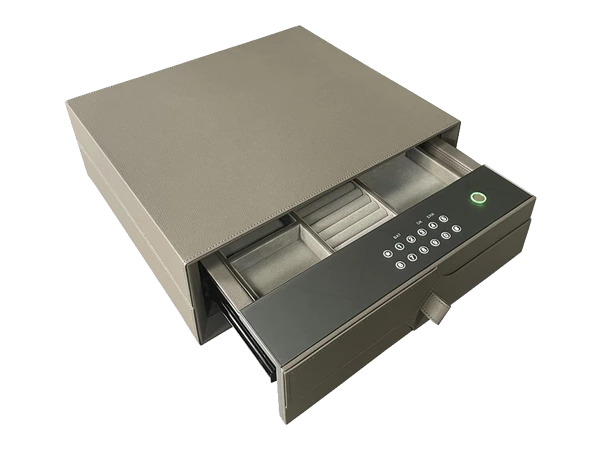
What Should Global Buyers Ask an OEM Smart Safe Manufacturer at Trade Shows
Global buyers should ask an OEM smart safe manufacturer to demonstrate product security, define customization limits, document manufacturing controls, and explain support responsibilities before discussing an order. Use the trade show meeting to collect evidence and identify gaps—not simply compare booth samples. This guide provides practical questions and a follow-up framework for evaluating suppliers against the same requirements.
What should buyers ask an OEM smart safe manufacturer first?
Start by asking who designs, manufactures, tests, and supports the exact model on display. Request the legal company name, production location, model reference, and a breakdown of work performed internally versus outsourced. Make these answers the starting point for later verification.Then define your project: destination markets, intended users, approximate order range, launch window, and required access methods. A hotel room safe, residential valuables safe, and commercial cash-storage product should not share an undefined acceptance checklist.
Ask the supplier to clarify its proposed arrangement:
- Private label: Which existing specifications remain fixed, and which branding elements can change?
- OEM: Will the factory manufacture against your drawings and requirements, and who approves engineering changes?
- ODM: Which existing design would become your ODM smart safe, and what rights would you receive to modifications?
Ask a private label safe manufacturer to separate logo and packaging work from mechanical, electronic, and software development. Require written deliverables rather than relying on the supplier’s preferred terminology.
Separate physical protection from digital convenience
Ask which protection claims apply to the complete safe, which apply only to a lock, and which have independent supporting evidence. UL Solutions lists separate standards for burglary-resistant safes and combination locks, so a lock-related claim should not substitute for evidence about the enclosure.Request the exact model designation, applicable standard, classification, issuing organization, and supporting documentation. For example, UL 687 distinguishes classifications and whether attack testing covers the door and front face or the door and body. Ask the supplier to identify the precise scope behind any claimed rating.For destination-market compliance, request a document matrix covering the proposed configuration and intended sales countries. Have a qualified compliance specialist verify applicable requirements before approving packaging or marketing claims.
Demonstrate access and recovery
For a custom biometric safe, request a demonstration using newly enrolled fingerprints rather than only the representative’s saved credentials. Ask for documented biometric test methods, acceptance criteria, and results rather than accepting an unexplained accuracy percentage.
Use this demonstration checklist:
- Enroll and remove a user, then verify that removed access no longer works.
- Enter incorrect credentials and observe the lockout and recovery process.
- Disconnect normal power and demonstrate the documented emergency-access method.
- Reset ownership and explain what happens to fingerprints, codes, and app permissions.
Record unresolved behavior for sample evaluation. Do not treat a booth demonstration as independent security testing.
Examine connected features and support
If the safe includes an app or network connection, ask where credentials and event records are stored, who can access them, and how permissions are revoked. NIST identifies data protection, interface access controls, and software updates among baseline IoT cybersecurity capabilities. Use those categories to organize your questions.Ask who controls firmware releases, how update authenticity is verified, and what happens if an update fails. The UK National Cyber Security Centre emphasizes verifying that updates come from a legitimate source and have not been altered. Request evidence of the proposed mechanism, not simply an assurance that updates are “secure.”
Define customization, ownership, and approval gates
Ask the custom safe supplier to mark every requested change as standard, configurable, or requiring development. Include enclosure dimensions, mounting, finish, keypad language, biometric module, packaging, manuals, and app branding. Request a separate cost and schedule impact for each development item.For smart safe OEM manufacturing, ask who owns tooling, drawings, firmware modifications, and branding assets. Request written terms covering access, maintenance, replacement, and transfer before authorizing development expenditure.Set approval gates for drawings, functional samples, packaging, and the production reference sample. Ask the custom safe manufacturer how it records revisions and prevents unapproved component substitutions. Your purchase specification should identify which changes require written buyer approval.
How can buyers compare quotations and production readiness?
Compare quotations against one specification and one set of acceptance requirements, rather than the headline unit price. Ask each OEM safe factory to identify exclusions, assumptions, minimum quantities, and the conditions that start its production lead time. Keep sample availability separate from confirmed production capacity.
| Area | Evidence to request |
| Order quantities | Minimums by model, finish, packaging, and customization |
| Development | Tooling charges, sample revisions, milestones, and approval responsibilities |
| Quality control | Inspection plan, functional tests, traceability, and defect-handling procedure |
| Shipment | Packaging specification, inspection access, shipment terms, and document list |
| Support | Spare parts, warranty workflow, software responsibilities, and escalation contacts |
For wholesale smart safes, ask how repeat orders will match the approved sample. Request a proposed pilot order and inspection plan before committing to broader purchasing. Leave any unverified production-capacity claim marked as pending.
Turn booth promises into a verification plan
Before leaving, assign an owner and deadline to each unanswered question. Request sample identifiers, technical documents, a quotation, and a follow-up meeting with engineering or quality staff where needed. Keep a separate record for demonstrated, documented, and still-unverified claims.Include lifecycle support in that follow-up. NIST recommends addressing cybersecurity throughout product development and lifecycle support, making support duration and end-of-life planning useful supplier discussion points.Shortlist suppliers willing to turn answers into testable specifications and written commitments. Advance to sampling, document verification, and factory assessment—not directly from a polished demonstration to a volume order.