How a Philippine Interior Contractor Used Commercial Safes in High-End Condo Projects
The skyline of Metro Manila is defined by its rapid expansion of luxury real estate. In bustling financial districts like Bonifacio Global City (BGC) and Makati, high-net-worth individuals are investing heavily in ultra-premium condominiums. But designing these elite spaces involves much more than selecting Italian marble countertops and smart home automation systems. For one premier Philippine interior contractor, the biggest challenge was something that is rarely talked about but universally demanded by affluent clients: uncompromising, bank-grade security discreetly integrated into custom cabinetry.
Standard residential safes simply do not cut it for clients who store millions of pesos in luxury watches, heirloom jewelry, and sensitive corporate documents. To solve this, the contractor had to think outside the residential box and turn to the commercial security sector.
This comprehensive guide explores how a top-tier Philippine design firm successfully integrated a high-quality china commercial safe box into their luxury condo projects. We will walk through their entire journey—from sourcing and verifying international security ratings to the structural challenges of installation and the advanced lock technologies required for the modern elite.

The Luxury Condo Security Dilemma
When designing a multi-million-peso penthouse, architects and interior contractors face a unique set of challenges. Affluent clients demand aesthetics, convenience, and absolute peace of mind. A common request is the inclusion of a hidden vault. However, the market for standard residential safes is heavily saturated with thin-metal, easily compromised lockboxes that offer little more than an illusion of safety.
Why Residential Safes Fall Short
The contractor quickly realized that what works for a standard home is woefully inadequate for a luxury condo. They started comparing hotel room safes and office vaults to show clients the stark difference in protection. Hotel-style safes—often found in standard residential closets—are designed for temporary, low-value storage. They are lightweight, easily pried open, and rarely offer genuine fire protection.
High-net-worth clients need industrial grade anti-theft storage solutions. They are storing items that would typically be found in a commercial setting: stacks of title deeds, significant amounts of foreign currency, and highly valuable jewelry. Therefore, the contractor decided to exclusively source and install commercial safes for their residential projects, bridging the gap between bank-level security and high-end residential design.
Sourcing the Right Equipment: The Global Search
Finding the perfect balance of size, weight, security rating, and price within the local Philippine market proved difficult. Local distributors often had limited stock, exorbitant markups, or lacked the specific dimensions required for custom walk-in closets. This prompted the contractor to look abroad.
The Overseas Supply Chain
The firm began researching commercial safes for sale on the global market. They quickly discovered that importing business safes from overseas suppliers offered incredible customization options. They could specify the exact dimensions, the internal shelving layouts (such as velvet-lined jewelry drawers), and the types of locking mechanisms.
Naturally, the search led them to the world’s manufacturing hub. But a common question arose during board meetings with their clients: are chinese made safes reliable for businesses and high-end residential applications?
Overcoming the Stigma of Overseas Manufacturing
The short answer is yes—if you know who to buy from. The global safe manufacturing industry relies heavily on Chinese fabrication. In fact, many renowned Western safe brands manufacture their products in specialized facilities across Asia. The secret is to bypass generic trading companies and work directly with high security commercial vault manufacturers.
By partnering with a reputable factory, the contractor was able to procure a premium china commercial safe box that met stringent international standards. These weren't the cheap, lightweight boxes found in big-box hardware stores; these were heavily armored, fire-rated units built for banks, retail stores, and elite residences.
Decoding Security Standards and Certifications
When importing security equipment, you cannot rely solely on a manufacturer's marketing brochure. You need hard, verifiable data. The interior contractor had to become an expert in global security standards to ensure they were delivering true protection to their condo clients.
Understanding Burglary Ratings
The primary concern for any high-value storage is unauthorized access. The contractor had to learn how to verify chinese safe security ratings by cross-referencing them with recognized global standards.
When evaluating a commercial security safe, the gold standard is testing by Underwriters Laboratories (UL). The contractor specifically looked for units boasting UL listed commercial burglary resistance.
- TL-15: This rating means the safe can withstand a rigorous 15-minute attack from professionals using heavy hand tools, picking tools, mechanical or electrical tools, and grinders.
- TL-30: A step up, offering 30 minutes of resistance against severe physical attacks.
For most high-end condos, a TL-15 equivalent is more than sufficient, especially when combined with the building's own 24/7 lobby security and CCTV networks.
Protecting Against the Elements: Fire and Water
In a high-rise condominium, a fire on another floor can trigger sprinkler systems, leading to a dual threat of extreme heat and severe water damage. The contractor prioritized international fire resistance certifications for safes, such as the UL Class 350 standard, which guarantees the internal temperature will not exceed 350°F (177°C) for a specified duration (usually 1 to 2 hours) while exposed to external temperatures over 1700°F.
Furthermore, because clients store critical paper assets, the firm rigorously checked the fireproof and waterproof document protection standards of every unit. Modern commercial safes utilize specialized expanding fire seals. In the event of a fire, these seals expand up to five times their size, completely sealing the door gaps to keep out both smoke and the thousands of gallons of water dumped by the building's fire suppression system.

Tailoring Commercial Vaults to High-End Lifestyles
A luxury condo isn't a bank branch, so the internal configuration of the safe must reflect the lifestyle of the user. The Philippine contractor categorized their clients' needs into three distinct profiles, sourcing a specific type of commercial safe box for each.
1. The Watch and Heirloom Collector
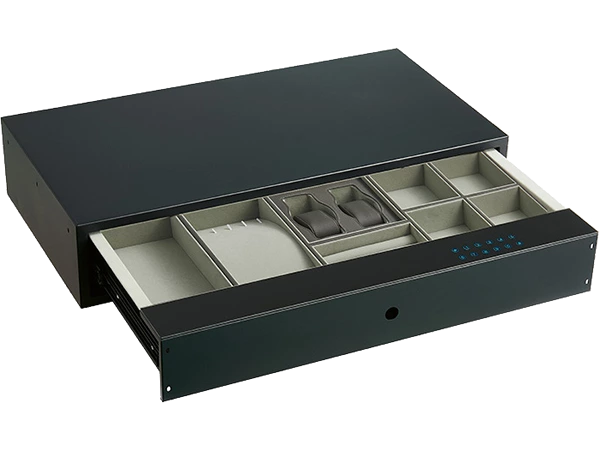
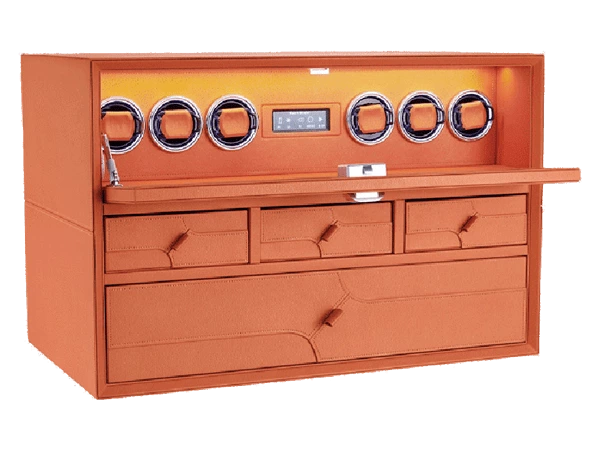
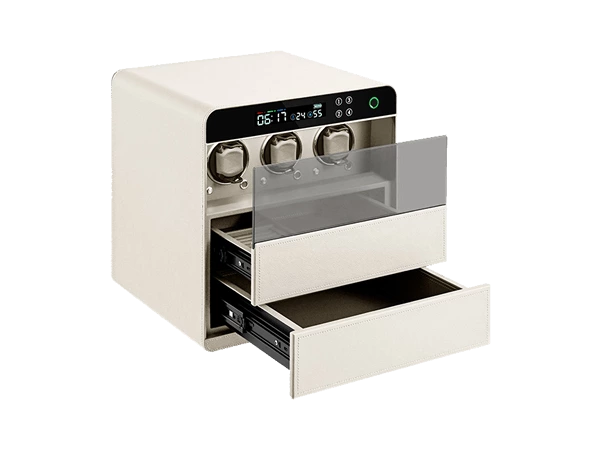
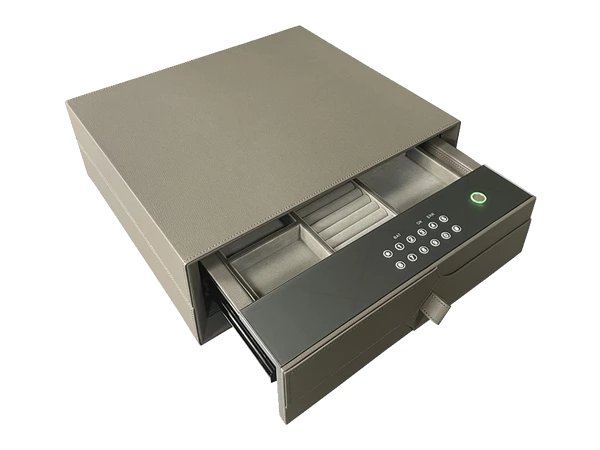
For clients with extensive collections of Patek Philippe watches or inherited diamonds, standard metal shelves are a liability. The contractor sourced a specialized commercial jewelry safe. These units are essentially scaled-down versions of commercial jewelry store safes, featuring high-gloss exterior finishes, internal watch winders, and custom-built, velvet-lined mahogany drawers. The interior architecture of these safes prevents precious metals from scratching while keeping the items impeccably organized.
2. The Home Office Executive
Many affluent individuals in BGC and Makati run their empires from expansive home offices. For these clients, the contractor integrated a discreet small commercial safe directly into custom-built mahogany bookshelves. Despite its compact size, this unit offered the same drill-resistant hard plates and relocking devices as its larger counterparts.
For clients who managed cash-intensive businesses, such as retail chains or restaurants, the contractor even installed wholesale depository safes for cash management. These feature a drop-slot or hopper, allowing the client's staff or business partners to securely deposit cash envelopes into the vault without ever having access to the main interior compartment.
3. The Master Suite Fortress
For the ultimate peace of mind, the master walk-in closet often housed a heavy duty commercial safe. These massive units, sometimes weighing upwards of 1,500 pounds, were bolted into the foundation, hidden behind a motorized false mirror or custom cabinetry. They served as the primary repository for family passports, bulk cash, large jewelry cases, and emergency assets.
The Lock Debate: Access Control for the Modern Elite
A safe is only as strong as its lock, and it is only as useful as its accessibility. High-net-worth clients demand immediate access to their valuables without fumbling with complex mechanisms. This brought up a major design consideration for the contractor: choosing the right locking technology.
Traditional vs. Modern Mechanisms
The debate between digital keypad vs mechanical dial safes is an old one, but it takes on new meaning in luxury interior design.
- Mechanical Dials: These offer unparalleled long-term reliability. They require no batteries and are immune to electronic pulses. However, they take significantly longer to open, and requiring a client to spin a dial left, right, and left again in a dimly lit closet is a poor user experience.
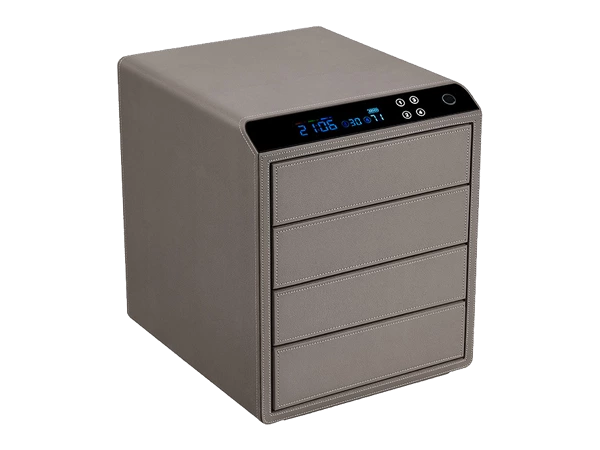
- Digital Keypads: These are fast, allow for multiple user codes, and often feature backlit screens. The contractor exclusively opted for commercial-grade digital locks (such as those made by Sargent & Greenleaf or SecuRam) to ensure reliability.
Adapting Retail Security Protocols for the Home
A luxury condo is a busy environment. There are housekeepers, personal chefs, nannies, and maintenance staff constantly moving through the space. The contractor looked at methods for preventing unauthorized access in retail environments and adapted them for domestic use.
One major innovation was integrating biometric fingerprint access for multiple employees—or in this case, for the homeowners and their most trusted estate managers. High-end commercial biometric locks can store dozens of fingerprints and keep an audit trail. If the safe is opened, the internal system logs exactly whose fingerprint was used and at what time.
Preparing for the Worst: Lock Failures
One of the biggest fears clients have is being locked out of their own wealth. The contractor proactively addressed this by educating clients on troubleshooting electronic lock failures in business safes.
Clients were taught that a dead battery does not mean the safe is broken; commercial keypads store the access code in non-volatile memory, meaning the code remains even when power is lost. By simply swapping the 9-volt battery situated on the outside of the keypad, access is immediately restored. For worst-case scenarios, the contractor ensured that all imported safes featured a redundant locking system—combining a biometric scanner with a backup high-security mechanical key override.
The Installation Challenge: Engineering and Concrete
You can purchase the most advanced vault in the world, but if two strong men can put it on a dolly and wheel it out of the condo lobby, it is completely useless. The physical installation is where the Philippine interior contractor truly proved their expertise.
Weight Constraints in High-Rise Condos
Integrating a heavy duty commercial safe into a high-rise building requires careful structural engineering. A premium commercial safe can weigh between 800 to 2,500 pounds. The contractor had to work closely with the building’s structural engineers to ensure the floor load capacity of the specific condo unit could handle the concentrated weight, often placing the safes near load-bearing shear walls rather than in the center of a room.
The Science of Anchoring
The most critical step in the installation process is anchoring heavy safes to concrete floors. This is a non-negotiable step for any true security setup.
Here is how the contractor's team executed this flawlessly:
- Site Preparation: Before the custom hardwood floors were laid, the team identified the exact locati0n for the vault in the master closet.
- Core Drilling: Using industrial hammer drills with specialized masonry bits, they drilled directly into the condo's concrete subfloor.
- Chemical Anchoring: Instead of standard expansion bolts, which can loosen over time, the team used heavy-duty chemical epoxy. They injected the epoxy into the drilled holes before inserting massive steel anchor bolts.
- Securing the Vault: Once the safe was maneuvered into place (often requiring specialized stair-climbing dollies and a team of six men), it was bolted down from the inside.
Because the bolts are only accessible from within the locked safe, a burglar cannot unbolt it. The epoxy and steel combination provides thousands of pounds of pull-out resistance. A thief would literally have to rip a chunk of the building's concrete foundation out to move the safe.
Blending Iron and Wood: The Art of Disguise
The final, and perhaps most impressive, aspect of the contractor’s work was the aesthetic integration. High-net-worth clients do not want a giant, grey steel box ruining the ambiance of their bespoke Italian-designed walk-in closet. Security is most effective when it is invisible.
Custom Cabinetry Integration
The contractor's master carpenters worked hand-in-hand with the security installation team. Once the china commercial safe box was firmly anchored to the concrete, the carpenters built the custom closet around it.
- False Fronts: The most common method of concealment was designing a custom cabinet door that perfectly matched the rest of the room. From the outside, it looks like a standard wardrobe door where one might hang winter coats. Opening this door reveals the formidable steel fascia of the commercial safe.
- Ventilation: Because some of these safes were fitted with internal watch winders and dehumidifiers (requiring power), the cabinetry was designed with hidden ventilation channels to prevent the internal electronics from overheating.
- Lighting: Motion-sensor LED lighting was integrated into the cabinetry housing. The moment the false door was opened, the keypad of the safe was perfectly illuminated, ensuring a seamless and luxurious user experience.

Actionable Tips for Homeowners and Contractors
For interior designers, contractors, or homeowners looking to replicate this level of high-end security, the Philippine design firm’s journey offers several critical takeaways:
- Never Settle for Retail Big-Box Safes: If you are storing tens of thousands of dollars in valuables, investing in a true commercial security safe is mandatory. The cost difference is negligible compared to the value of what you are protecting.
- Do Your Homework on Overseas Suppliers: When importing business safes from overseas suppliers, always ask for video proof of their manufacturing process, verify their ISO certifications, and demand to see third-party testing certificates for fire and burglary resistance.
- Always Anchor: A safe that isn't bolted down is just a very heavy carrying case for a thief. Anchoring heavy safes to concrete floors is the single most important step in the installation process.
- Plan Early: Do not treat a safe as an afterthought. Bring it up during the architectural planning phase. This ensures the floor can support the weight, power outlets can be run inside for watch winders, and the cabinetry can be built to hide it seamlessly.
- Think About Usability: Choose a locking mechanism that fits your daily life. If you access your safe daily to retrieve your watch, a biometric lock is vastly superior to a mechanical dial.
The Future of Residential Security
The line between commercial and residential design continues to blur. As the world becomes more complex, the sanctuary of the home becomes ever more important. The affluent residents of luxury condos in Manila, much like their counterparts in New York, London, and Dubai, are realizing that ultimate luxury is total peace of mind.
The success of this Philippine interior contractor highlights a massive shift in the industry. They moved away from viewing security as an ugly necessity and embraced it as a core component of high-end design. By understanding the intricacies of industrial grade anti-theft storage solutions, navigating the logistics of global sourcing, and mastering the art of covert installation, they elevated the standard of luxury living.
Whether it is a commercial jewelry safe guarding generations of family heirlooms, or a robust document vault protecting the deeds to a real estate empire, the integration of commercial-grade security into the modern home is no longer just a trend—it is a fundamental requirement. By applying the stringent standards of banks and high-end retail to the domestic sphere, architects and designers can ensure that their clients’ most treasured possessions remain precisely where they belong: safe, secure, and perfectly hidden.