How We Solved a Client’s Concern About Hotel Safe in Luxury Bedrooms
It started with a seemingly simple request from the general manager of a luxury boutique hotel in downtown Manhattan. The property had recently undergone a multi-million-dollar renovation, upgrading everything from the Egyptian cotton linens to the smart-room lighting systems. However, amidst the overhaul of aesthetics and comfort, a critical operational detail had been overlooked: the in-room security.
Guests paying premium rates were traveling with high-value items—fine jewelry, expensive camera gear, sensitive corporate documents, and high-end electronics. When a VIP guest approached the concierge and pointedly asked, “Are guest room vaults secure in this building?”, the general manager realized that their aging, clunky, out-of-date safes no longer aligned with the property's luxury standard.
They needed an upgrade, and they needed it quickly. They reached out to us, an experienced hotel safe supplier, to completely overhaul their in-room security strategy. What followed was a comprehensive journey into the mechanics of hospitality security, guest psychology, and seamless design integration. Here is exactly how we solved this client's concern, transforming an often-overlooked amenity into a cornerstone of guest trust.

The Dilemma: When Luxury Meets Vulnerability
The modern traveler is hyper-aware of risk. Protecting valuables while traveling is no longer just about zipping up a suitcase; it requires robust, reliable, and user-friendly infrastructure provided by the accommodation. Our client’s existing setup featured outdated safes with physical keys and faded keypads that frequently jammed.
During our initial consultation, we identified three core challenges the hotel was facing:
- Aesthetic Incongruence: The old safes looked like industrial gray metal boxes, completely clashing with the bespoke walnut wardrobes they were housed inside.
- Size Limitations: Guests could barely fit a passport and a wallet inside. Modern guests needed space for 15-inch and 17-inch laptops.
- Operational Headaches: Housekeeping and management were wasting hours every week dealing with lockouts, lost keys, and guests who had forgotten their codes.
The hotel’s management knew that to maintain their five-star rating, they needed a comprehensive overhaul. They didn't just need a product; they needed complete hotel safe solutions that addressed design, functionality, and risk management.
Understanding the Legal and Psychological Landscape
Before recommending a specific hotel room safe box, we sat down with the hotel's legal and management teams to discuss the broader implications of in-room security.
Navigating Hotel Limited Liability
Many hoteliers and guests misunderstand the legalities of lost or stolen property. Understanding hotel limited liability for guest property is vital. In most jurisdictions, innkeeper's liability laws state that a hotel's financial responsibility for a guest's lost valuables is strictly limited—often to a few hundred dollars—provided the hotel offers a secure place to store valuables and posts the required legal notices.
However, if a hotel fails to provide adequate security, or if a guest can prove negligence (such as a malfunctioning safe that the hotel knew about), those liability caps can be thrown out in court. By providing a top-tier hotel safe, the property was not only offering an amenity but also fortifying its legal protections.
Guest Room Safe vs Front Desk Deposit Box
The management team initially wondered if they should just encourage guests to store high-value items at the front desk. We analyzed the long-standing debate of guest room safe vs front desk deposit box.
While front desk deposit boxes are highly secure and often recommended for items of extreme value (like heirloom diamonds or massive amounts of cash), they represent a massive inconvenience for the modern traveler. A business executive does not want to ride the elevator down to the lobby at 11:00 PM to retrieve their laptop to answer an email, only to return it to the front desk at midnight. Convenience is the ultimate luxury. Guests demand the autonomy of a secure safe in hotel rooms, allowing them to access their items 24/7 without staff intervention.
Sourcing the Perfect Solution: Key Features of the Modern Hotel Safe
As a dedicated hotel safe box supplier, we knew that a one-size-fits-all approach would not work for a luxury boutique property. We needed to curate a safe box for hotel environments that met very specific criteria. Here is how we broke down the technical requirements for our client.
Laptop Size Digital Security Features
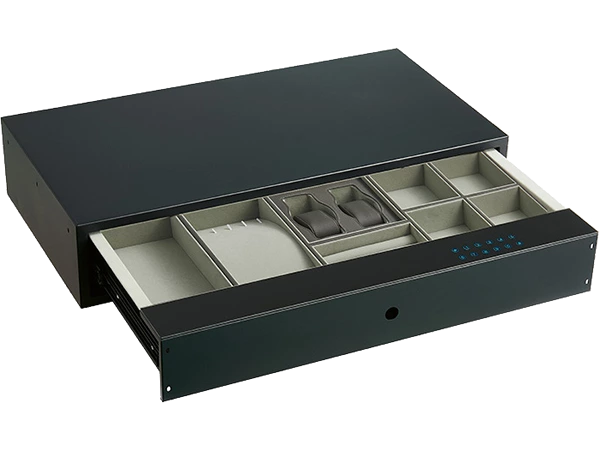
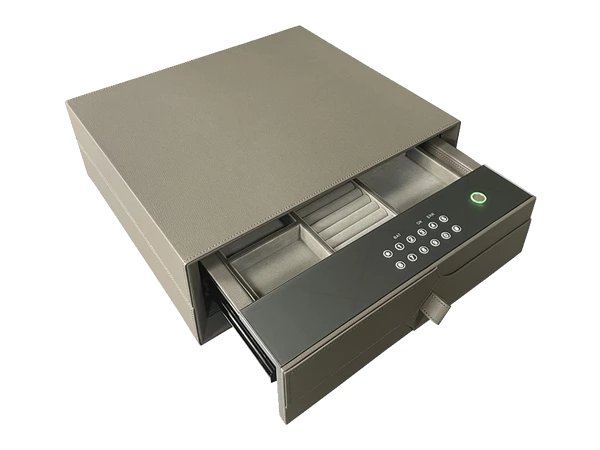
The days of the tiny "wallet-sized" safe are over. We mandated that the new units must feature laptop size digital security features. The safes we selected were designed with a wide, deep interior capable of comfortably housing a 17-inch laptop, a professional DSLR camera, multiple passports, and a jewelry roll.
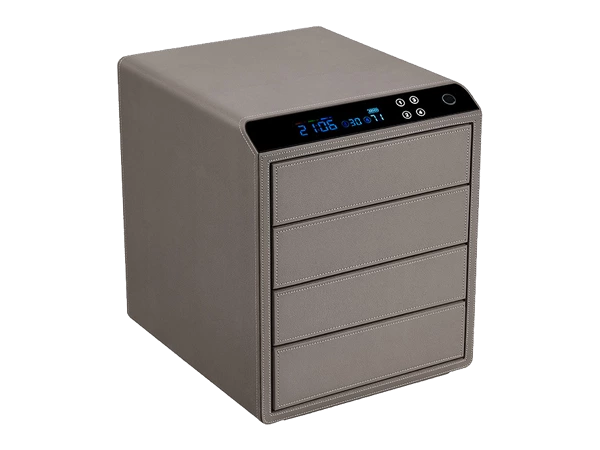
The digital features included a high-contrast, illuminated LED display. This ensured that guests could easily read the numbers they were typing, even if the safe was tucked into a dimly lit closet. The keypad buttons were highly responsive, providing tactile feedback to prevent mis-keying.
The Locking Mechanism: Reliability Above All
One of the most heavily debated topics in our consultation was the type of lock to use. We conducted a deep dive into biometric vs keypad locking mechanisms.
Biometric safes (fingerprint readers) are incredibly popular in residential settings. However, in a hospitality environment, they present unique challenges. Guests change every few days. A biometric scanner must be kept perfectly clean; otherwise, lotions, natural oils, or slight cuts on a guest's finger can cause the scanner to fail, leading to frustrating lockouts. Furthermore, some guests have privacy concerns about a hotel scanning and storing their biometric data, even if it is temporarily.
We advised the client to stick with a premium, state-of-the-art digital keypad. It is universally understood, highly reliable, and poses no data privacy concerns.
To back up the keypad, the safe featured a motorized locking bolt mechanism. Unlike manual safes where the guest has to physically turn a knob to throw the bolts, a motorized mechanism automatically extends and retracts the solid steel locking bolts when the correct code is entered. This not only feels more luxurious and seamless but also ensures the bolts are fully engaged every time the safe is closed, significantly preventing in-room theft.
Designing for Inclusivity: ADA Compliant Guest Room Storage
Luxury means comfort for all guests. During the room design phase, we collaborated with the hotel's interior architects to ensure that a percentage of the safes provided ADA compliant guest room storage.
Under the Americans with Disabilities Act (ADA), storage elements must be situated within specific reach ranges. We ensured that the hotel room safe units in accessible rooms were installed at a height no lower than 15 inches and no higher than 48 inches from the floor. Furthermore, the push-button keypads and motorized doors required less than five pounds of force to operate and did not require tight grasping, pinching, or twisting of the wrist. This attention to detail protected the hotel from compliance issues and demonstrated a profound commitment to guest accessibility.
The Installation Process: Securing the Vault
Having the best hotel safe deposit box in the world means nothing if a thief can simply pick up the entire box and walk out the front door. We had to ensure the installation was absolutely impenetrable while protecting the hotel's custom cabinetry.
We developed a custom secure floor mounted installation guide tailored to the hotel’s specific wardrobe designs. Here is the protocol we implemented:
Step 1: Structural Assessment
We evaluated the base of the closets and the structural flooring beneath them. In some ground-floor luxury suites, we were able to bolt directly into the concrete subfloor. In upper-level suites, we utilized heavy-duty mounting hardware secured into the reinforced steel framing of the custom wardrobes.
Step 2: The Hardware
Standard screws are insufficient for securing a hotel safe. We utilized heavy-duty, tamper-proof expansion bolts. These bolts are designed to expand inside the mounting hole, making it nearly impossible to pull the safe upward or forward.
Step 3: Concealment and Aesthetics
To maintain the luxury feel, the safes were installed flush against the back wall of the closet, with bespoke wooden trim framing the steel box. This made the safe look like an integrated piece of the architecture rather than an afterthought.
Step 4: The Pull Test
Once installed, our technicians performed a rigorous stress test, applying hundreds of pounds of pull-force to ensure the safe would not budge. This level of physical security is what truly answers the guest's question of whether their valuables are genuinely secure.

Operational Excellence: Managing the Day-to-Day
With the physical hardware securely in place, our job was only half done. The most common point of failure in hospitality security best practices is human error. A hotel safe is interacted with by thousands of different people every year. We had to equip the hotel staff with the knowledge and tools to manage these interactions flawlessly.
Guest Education: Simplicity is Key
Guests are tired after a long flight; they do not want to read a manual to lock away their passports. We designed an elegant, minimalist placard that sat gracefully on top of the safe, explaining exactly how to use hotel room safe features.
The instructions were distilled into three simple steps:
- Place valuables inside and close the door tightly.
- Enter a personal 4-to-6 digit code and press "LOCK."
- To open, enter the same code.
By making the process frictionless, we drastically increased the utilization rate of the safes, thereby lowering the risk of items being left unsecured in the room.
Troubleshooting: What to Do If Hotel Safe Won't Open
Even with the best systems, guests will occasionally face issues. The most common scenario is a guest rushing to check out and realizing they cannot open their safe. We established a clear, panic-free protocol for the hotel staff regarding what to do if hotel safe won't open.
First, the protocol required the front desk to verify the guest's identity. This is a critical security step. A thief could easily call down to the front desk posing as the guest, claiming they forgot their code. Staff were trained to check government-issued ID against the reservation before any safe override could be initiated.
Resolving the Issue: Resetting Forgotten Electronic Lock Code
Once identity was confirmed, the security manager was dispatched. In the old days, resetting forgotten electronic lock code sequences involved master codes that were often poorly kept secrets among the staff. This was a massive security vulnerability.
We eliminated static master codes entirely. Instead, we provided the hotel with a highly encrypted, handheld CEU (Computerized Emergency Unit).
The Ultimate Failsafe: Emergency Override Key for Hospitality Safes
In the rare event of a total electronic failure—such as a completely dead internal battery that cannot be jump-started from the outside—there must be a physical backup. We supplied a highly restricted emergency override key for hospitality safes.
This key is not a standard brass key. It features a high-security, laser-cut track design that cannot be duplicated at a local hardware store. We implemented a strict chain-of-custody protocol for this key. It was locked inside the general manager's master safe, requiring dual-custody (two managers present) to sign it out. This ensured that no single employee ever had unilateral access to guest valuables.
Elevating the Ecosystem: Advanced Hospitality Security Best Practices
Our role as a premier hotel safe supplier went beyond just dropping off boxes and installing them; we helped the hotel integrate these safes into an elite, overarching security ecosystem.
The Power of the Audit Trail
The defining feature that elevated our solution to a true luxury standard was the safe's audit trail capability. Every time the safe was locked, unlocked, or encountered an error, the internal computer logged the exact date, time, and method of entry (e.g., guest code, CEU device, or mechanical key).
Why is this important? Imagine a scenario where a guest claims a $10,000 watch was stolen from their locked safe. In the past, this would result in a massive insurance claim, police investigations, and a severe hit to the hotel's reputation.
With the new audit trail system, the hotel's security director could plug the CEU into the safe and download the lock history. If the audit trail showed that the safe had not been opened since the guest locked it two days prior, the hotel could definitively prove that the item was not stolen from the safe. (More often than not, the guest eventually finds the watch at the bottom of their suitcase). Conversely, if the safe was opened, the audit trail would show exactly what time it occurred, which could then be cross-referenced with the electronic door lock logs to identify exactly who was in the room. This forensic capability acts as an incredible deterrent to internal theft and drastically reduces fraudulent liability claims against the hotel.
Preventative Maintenance Protocols
To prevent the dreaded "dead battery lockout," we instituted a preventative maintenance schedule. Housekeeping managers were trained to read the low-battery warning indicators on the safe's LED screen. Batteries were scheduled for proactive replacement every 18 months, long before they had the chance to fail. Furthermore, the maintenance team routinely checked the alignment of the motorized locking bolt mechanism, ensuring it continued to glide smoothly and quietly.
Staff Training Seminars
We conducted hands-on training seminars for the hotel's front desk, housekeeping, and security teams. We role-played various scenarios: a guest who locked their passport inside 10 minutes before their airport taxi arrived; a guest who accidentally typed the wrong code three times and triggered the 15-minute anti-tamper lockdown; and a guest inquiring about the specific dimensions of the safe for their expensive camera equipment.
By empowering the staff with comprehensive knowledge, they were able to project confidence. When a guest asked a staff member about the security of the room, the staff didn't just point to the closet; they could articulate the robust features of the safe, reinforcing the guest's perception of staying in a premium, secure environment.
The Broader Impact on Guest Experience
When you stay at a luxury property, peace of mind is the ultimate amenity. It is an invisible service. A guest shouldn't have to consciously worry about their belongings; the security should fade seamlessly into the background of their experience.
By upgrading to our modern hotel safe solutions, the hotel achieved exactly this. The sleek, dark-slate finish of the safes perfectly complemented the interior design. The motorized doors opened with a satisfying, quiet mechanical hum that felt inherently secure. The spacious interiors accommodated the realities of modern travel gear.
Most importantly, the hotel saw a dramatic shift in their operational metrics. Guest complaints regarding safes dropped by 95% within the first three months of installation. Time spent by security personnel responding to lockouts was reduced to a fraction of what it used to be. The hotel's legal team breathed a sigh of relief knowing that the stringent audit trails and robust mounting procedures firmly protected the property from liability loopholes.
A Guide for Hoteliers: How to Choose Your Next Safe
If you are a hotel operator or manager reading this case study and realizing your property's in-room security is lagging, here is a concise checklist based on our experience with this luxury client:
- Assess Your Demographics: Are your guests business travelers with large laptops, or leisure travelers with jewelry? Ensure your safe in hotel environments is appropriately sized. Always err on the side of larger capacity.
- Demand an Audit Trail: Never purchase a safe that cannot tell you when and how it was opened. This feature alone will save you thousands of dollars in liability claims.
- Prioritize Ease of Use: The keypad should be intuitive. If a guest needs a manual to lock their safe, the design has failed.
- Enforce Strict Override Protocols: The emergency override is your most vulnerable point. Treat the CEU device and the mechanical override keys like pure gold. Institute dual-custody access rules.
- Focus on Installation: A safe is only as secure as the bolts holding it down. Ensure your maintenance team follows a rigorous installation guide, mounting the units to structural elements of the room.
- Ensure ADA Compliance: Do not overlook accessibility. Ensure your storage solutions are reachable and usable by all guests to maintain inclusivity and legal compliance.
The Future of Hospitality Security
The landscape of hotel security is always evolving. We are already seeing the early stages of integration between hotel safe units and guest smartphone apps, allowing guests to lock and unlock their safes via Bluetooth using the same digital key they use to enter their room. While these technologies are exciting, the core principles we applied for our Manhattan client will always remain the same: robust physical security, foolproof electronic reliability, and seamless guest convenience.
When travelers ask themselves, are guest room vaults secure, the answer should never be ambiguous. It should be a resounding, undeniable "yes."
Conclusion
Solving our client’s concern wasn't just about swapping out metal boxes; it was about elevating their entire approach to hospitality. By acting as a comprehensive hotel safe box supplier and consultant, we helped them navigate the complex intersection of luxury design, strict legal liabilities, and operational efficiency.
We replaced their anxiety-inducing, outdated hardware with spacious, laptop-friendly safes featuring state-of-the-art motorized locking bolt mechanisms. We protected their assets through rigorous floor-mounted installations and advanced CEU audit trails. We empowered their staff with the protocols needed to handle forgotten codes and emergency overrides with quiet, professional efficiency.
Ultimately, protecting valuables while traveling is a fundamental promise a hotel makes to its guests. By investing in premium in-room security, this luxury boutique hotel didn't just protect laptops and watches; they protected their brand's reputation, ensuring that every guest who walked through their doors could truly relax, knowing their most prized possessions were entirely safe.